
Navigating Crypto News

CoinFeather
Navigating Crypto News
Quick market read from this story
Rakuten Wallet's expansion to include XRP, XLM, DOGE, SHIB, and TON signifies a broadening of regulated crypto access in Japan, potentially attracting retail and institutional interest.
The inclusion of XRP, alongside other tokens, positions Rakuten Wallet to capitalize on potential institutional adoption within Ripple's ecosystem and the retail appeal of meme coins.
Rakuten's promotional campaign for XRP trading aims to incentivize user engagement and adoption, suggesting a strategic effort to boost platform activity and liquidity for new listings.
Source, catalyst, and sector overlap from the latest feed.
Dogecoin's price is consolidating in a tight range between $0.088 and $0.100, indicating market indecision and a lack of strong directional momentum. The failed breakout above the falling wedge pattern suggests that short-term bearish sentiment persists, with sellers controlling price action near resistance levels. A decisive move above $0.100 could signal a bullish reversal, while a breakdown below $0.088 risks further downside, making these levels key for traders to monitor.
The U.S. government's revised Medicare Advantage payment rates, increasing by 2.48% for 2027 and including risk adjustment changes, signal a significant revenue boost for health insurers like UnitedHealth, potentially driving near-term price appreciation. The market's strong reaction, with UnitedHealth stock jumping 8%, indicates investor relief from previous uncertainty and a renewed confidence in the health insurance sector's earnings outlook, shifting focus to upcoming Q1 2026 earnings reports. While the payment increase provides a more stable framework and eases policy concerns, ongoing challenges such as rising medical costs and healthcare utilization remain critical factors for sustained recovery, suggesting a cautious approach to long-term upside.
Live Feed
Loading the broader stream in the same flow as the homepage feed.

New phone logs suggest Argentine President Javier Milei had more direct communication with a LIBRA meme coin backer on launch night than previously disclosed, potentially reopening investigations into his alleged ties. The emergence of seven calls between Milei and a LIBRA entrepreneur, alongside references to regular payments, challenges prior exonerations and could impact perceptions of presidential involvement in crypto scandals. While no direct evidence of Milei receiving payments has surfaced, the ongoing federal probe and new communications raise questions about the integrity of crypto promotions and the need for clearer disclosure regulations.

This is not a blockchain fantasy cooked up in a shady Discord chat. I’m a licensed builder with a real lot in Birmingham, Alabama, with the deed in hand. The lot already has a concrete driveway, front sidewalk, and detached garage. I have the completed building plans from my architect for a 1,200-square-foot home. I’m […] The post The First Home Built On-Chain? This Birmingham Builder is Actually Doing It appeared first on The Coin Republic.

Key Insights: Bitcoin price was hovering near the $70,000 mark at press time. Crypto market participants were zeroed in on this critical zone. Market analysts believe these next few moves could set the tone for what comes next for BTC price. Top Analyst Reveals Next Steps for Bitcoin Price Ali Martinez, a well-known crypto analyst, […] The post Bitcoin Price: Analyst Reveals New Bull Market Blueprint as BTC Nears $70K appeared first on The Coin Republic.

The Biden administration's crypto policy, characterized by regulation-by-enforcement rather than clear rules, is argued to have stifled American innovation and driven compliant businesses offshore. The article criticizes the dismissal of blockchain's utility in facilitating low-cost cross-border remittances, a critical service for millions globally. The author contends that the administration's approach, including 'Operation Choke Point 2.0,' harmed consumers and legitimate businesses by cutting them off from financial services without due process. The piece refutes the notion that Bitcoin's volatility or speed limitations negate its value, highlighting its security and the broader ecosystem's growth despite regulatory uncertainty.
XRP lost its foundation and is no longer bringing profits to traders.
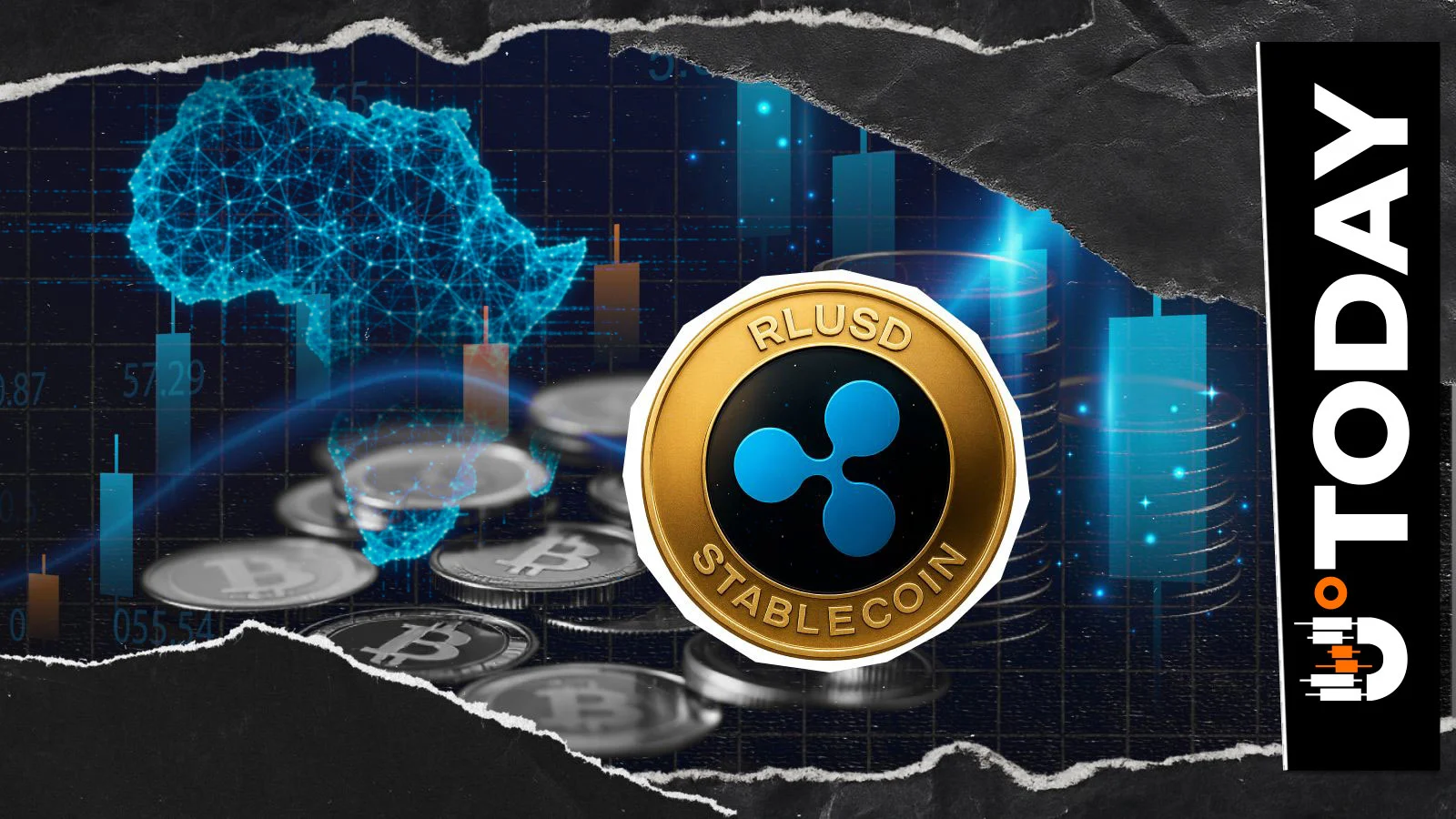
Ripple's expansion into Africa, driven by a 52% YoY surge in on-chain activity and regulatory clarity in key nations, signals a strategic focus on a high-growth emerging market. The emphasis on RLUSD adoption and partnerships with regional fintechs like Chipper Cash and Yellow Card indicates Ripple's intent to leverage stablecoins for institutional payments and financial infrastructure in Africa. The development highlights a trend of established crypto firms targeting regions with increasing regulatory frameworks and significant on-chain growth, potentially unlocking new avenues for adoption and revenue.

Schwab's analysis highlights that even a 1-3% crypto allocation can significantly increase portfolio risk due to extreme volatility, suggesting investors must prioritize risk tolerance over return expectations. The report frames crypto as a high-risk satellite holding rather than a core asset, emphasizing that its suitability depends on individual risk capacity and investment horizon, not just potential returns. Schwab's research implies that traditional portfolio allocation models may be insufficient for crypto, advocating for a risk-budgeting approach that acknowledges the asset class's speculative nature and potential for large drawdowns.

Polymarket's recent pricing overhaul has dramatically boosted its fee generation, positioning it as a top-tier DeFi protocol with a significant share of the prediction market revenue. The substantial fee generation, coupled with a $600 million investment from ICE, signals growing institutional interest in on-chain prediction markets, despite ongoing regulatory scrutiny. Polymarket's transition to a new USDC-backed token and its continued focus on high-volume markets suggest a strategic move to enhance stability and user engagement. Despite strong revenue growth and institutional backing, regulatory challenges from various jurisdictions pose a persistent risk to Polymarket's operational expansion.

South Korea's enhanced regulatory framework mandates 5-minute asset reconciliation for exchanges, significantly increasing operational costs and compliance burdens. The lifting of the 8-year ban on corporate crypto investment, with a 5% allocation cap on top 20 coins, signals a cautious but significant step towards institutional adoption in the region. The delay and potential abolition of the crypto gains tax, coupled with offshore capital flight, highlights ongoing uncertainty and the government's struggle to balance revenue generation with market growth. The expansion of the wholesale CBDC pilot to nine commercial banks and its use for government disbursements indicates a maturing digital currency infrastructure with potential implications for future payment systems.

Bitcoin is consolidating near its 200-week EMA around $68,300, indicating market indecision as traders await geopolitical developments and potential escalations with Iran. Despite heightened geopolitical tensions and rhetoric, both US stocks and Bitcoin have shown resilience, suggesting that markets may be discounting immediate risk and have priced in previous patterns of escalation and de-escalation. Technical analysis suggests potential downside for Bitcoin, with overhead resistance at $72,000 and a trend indicating a sweep of lower liquidity levels, which could strengthen a reversal if it occurs.

DOGEBALL is launching a gaming-focused Layer 2 solution on Ethereum, aiming for low transaction costs and fast speeds to support its ecosystem and potential integrations with gaming companies. The project is currently in its presale phase, having raised over $180,000 with a defined timeline and community incentives, indicating early investor interest in the gaming and Layer 2 sector. With a total supply of 80 billion tokens and 15% allocated for liquidity, DOGEBALL's tokenomics and staking options during presale suggest a focus on ecosystem growth and participant engagement.

The departure of key Aave contributors (BGD Labs, ACI, Chaos Labs) creates a significant operational void, potentially impacting Aave's risk management and governance execution during the critical V3/V4 transition. Aave Labs is consolidating functions previously handled by external teams, aiming for faster execution and clearer responsibility, but faces the challenge of replicating the operational density of the previous federated model. Despite contributor exits, Aave's strong market position in DeFi lending, evidenced by its TVL and stablecoin dominance, provides a structural resilience, though a second operational incident could erode confidence. The recent wstETH liquidation event, though minor in financial terms, highlights the operational risks during the V3/V4 overlap and underscores the importance of Aave Labs successfully managing the new integrated structure.
Signal context only. Validate with price action, liquidity, and risk limits before taking a position.
