
Navigating Crypto News

CoinFeather
Navigating Crypto News

Quick market read from this story
South Korea's enhanced regulatory framework mandates 5-minute asset reconciliation for exchanges, significantly increasing operational costs and compliance burdens.
The lifting of the 8-year ban on corporate crypto investment, with a 5% allocation cap on top 20 coins, signals a cautious but significant step towards institutional adoption in the region.
The delay and potential abolition of the crypto gains tax, coupled with offshore capital flight, highlights ongoing uncertainty and the government's struggle to balance revenue generation with market growth.
The expansion of the wholesale CBDC pilot to nine commercial banks and its use for government disbursements indicates a maturing digital currency infrastructure with potential implications for future payment systems.
Source, catalyst, and sector overlap from the latest feed.
Geopolitical tensions are driving a broad crypto market sell-off, with the total market cap down 2.05% and significant liquidations occurring, primarily impacting long positions. Bitcoin and Ethereum are experiencing declines, with altcoins showing more pronounced losses, indicating a market-wide risk-off sentiment driven by escalating Middle East conflict fears. While short-term price action is negative due to geopolitical headlines, some technical indicators suggest that the market may be in a late-stage fear phase, potentially limiting further downside if the conflict does not escalate beyond current expectations. A disruption in the Strait of Hormuz could lead to higher energy prices and inflation, creating macro headwinds for risk assets like crypto by delaying potential monetary policy easing.
Live Feed
Loading the broader stream in the same flow as the homepage feed.
Geopolitical escalation in the Middle East, specifically U.S. strikes on Iran's oil export hub and threats concerning the Strait of Hormuz, are driving crude oil prices sharply higher, indicating heightened supply risk premiums. The market is pricing in a greater probability of extended regional conflict, which could lead to sustained disruptions in oil supply chains and increased volatility across energy markets. Reduced tanker traffic through the Strait of Hormuz, a critical global oil chokepoint, signals immediate supply chain stress that could impact refiners and importers if disruptions persist.
Institutional investors allocated $119.6 million to XRP last week, representing over 53% of total crypto fund inflows, signaling a strong preference for the asset amidst broader market recovery. Despite recent monthly outflows, the significant weekly inflow into XRP, outpacing Bitcoin and Solana, suggests a potential positive catalyst for its price and a shift in institutional sentiment. The substantial inflow into XRP funds, coupled with recent spot Bitcoin ETF inflows, indicates a broader return of institutional capital to the crypto market, potentially signaling a near-term rebound.

DeFi yields have collapsed below TradFi rates, forcing investors to face higher smart contract risks for lower returns as regulation and exploits mount.
Shiba Inu will be integrated into Rakuten Wallet alongside other top digital currencies.
Dogecoin's price is consolidating in a tight range between $0.088 and $0.100, indicating market indecision and a lack of strong directional momentum. The failed breakout above the falling wedge pattern suggests that short-term bearish sentiment persists, with sellers controlling price action near resistance levels. A decisive move above $0.100 could signal a bullish reversal, while a breakdown below $0.088 risks further downside, making these levels key for traders to monitor.

This is not a blockchain fantasy cooked up in a shady Discord chat. I’m a licensed builder with a real lot in Birmingham, Alabama, with the deed in hand. The lot already has a concrete driveway, front sidewalk, and detached garage. I have the completed building plans from my architect for a 1,200-square-foot home. I’m […] The post The First Home Built On-Chain? This Birmingham Builder is Actually Doing It appeared first on The Coin Republic.
Key Insights: Bitcoin price was hovering near the $70,000 mark at press time. Crypto market participants were zeroed in on this critical zone. Market analysts believe these next few moves could set the tone for what comes next for BTC price. Top Analyst Reveals Next Steps for Bitcoin Price Ali Martinez, a well-known crypto analyst, […] The post Bitcoin Price: Analyst Reveals New Bull Market Blueprint as BTC Nears $70K appeared first on The Coin Republic.

The winding down of Split Capital, a profitable hedge fund, signals a potential shift in crypto market dynamics away from momentum-based trading strategies. Founder Zaheer Ebtikar's move to Plasma, a stablecoin infrastructure startup, suggests a strategic pivot towards foundational financial system development over speculative trading. The closure of a successful hedge fund highlights broader challenges within the crypto hedge fund sector, potentially indicating a need for adaptation to evolving market conditions. Ebtikar's conviction in Plasma's stablecoin vision, backed by significant funding and strategic investors, positions the startup as a key player in the next phase of crypto's evolution.
XRP lost its foundation and is no longer bringing profits to traders.
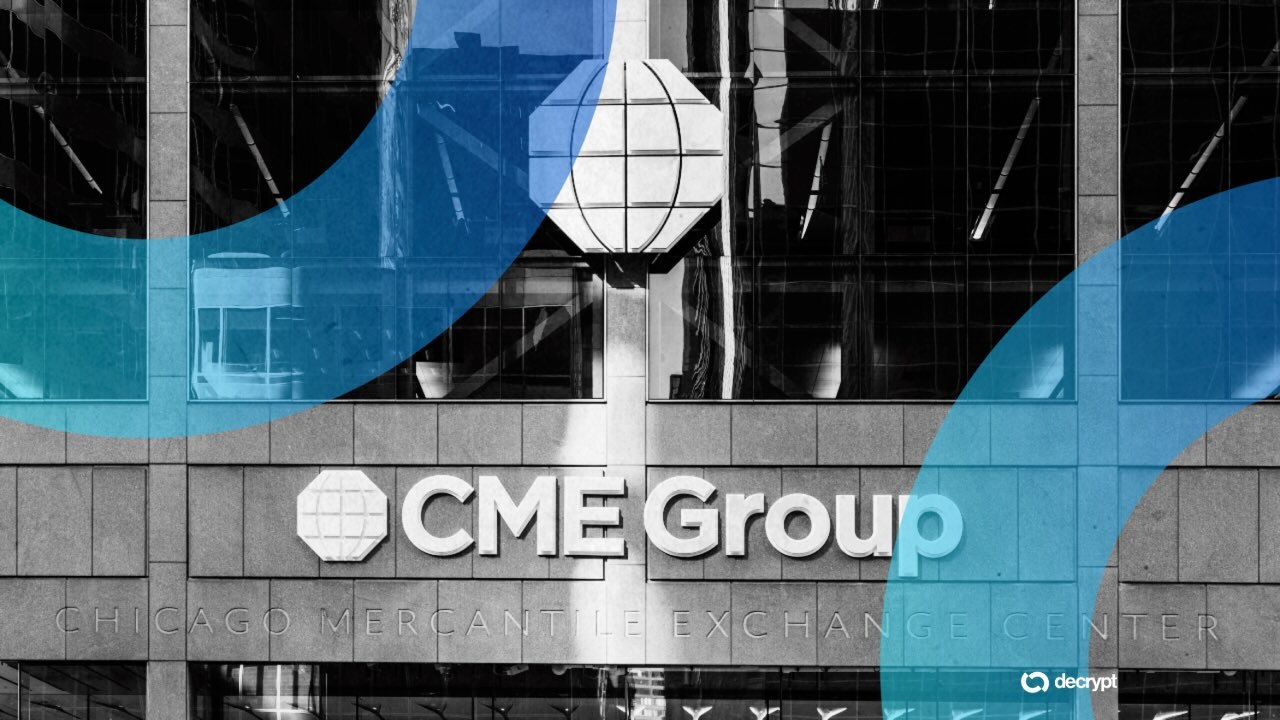
CME Group's expansion into AVAX and SUI futures signifies growing institutional interest in a broader range of altcoins beyond Bitcoin and Ethereum, potentially increasing demand and liquidity for these assets. The launch of new futures contracts, coupled with CME's upcoming 24/7 trading shift, suggests an evolving derivatives market infrastructure that could attract more sophisticated trading strategies and capital into the crypto space. The addition of AVAX and SUI futures provides regulated avenues for market participants to hedge or speculate on these Layer 1 tokens, enhancing capital efficiency and potentially influencing their price discovery mechanisms.
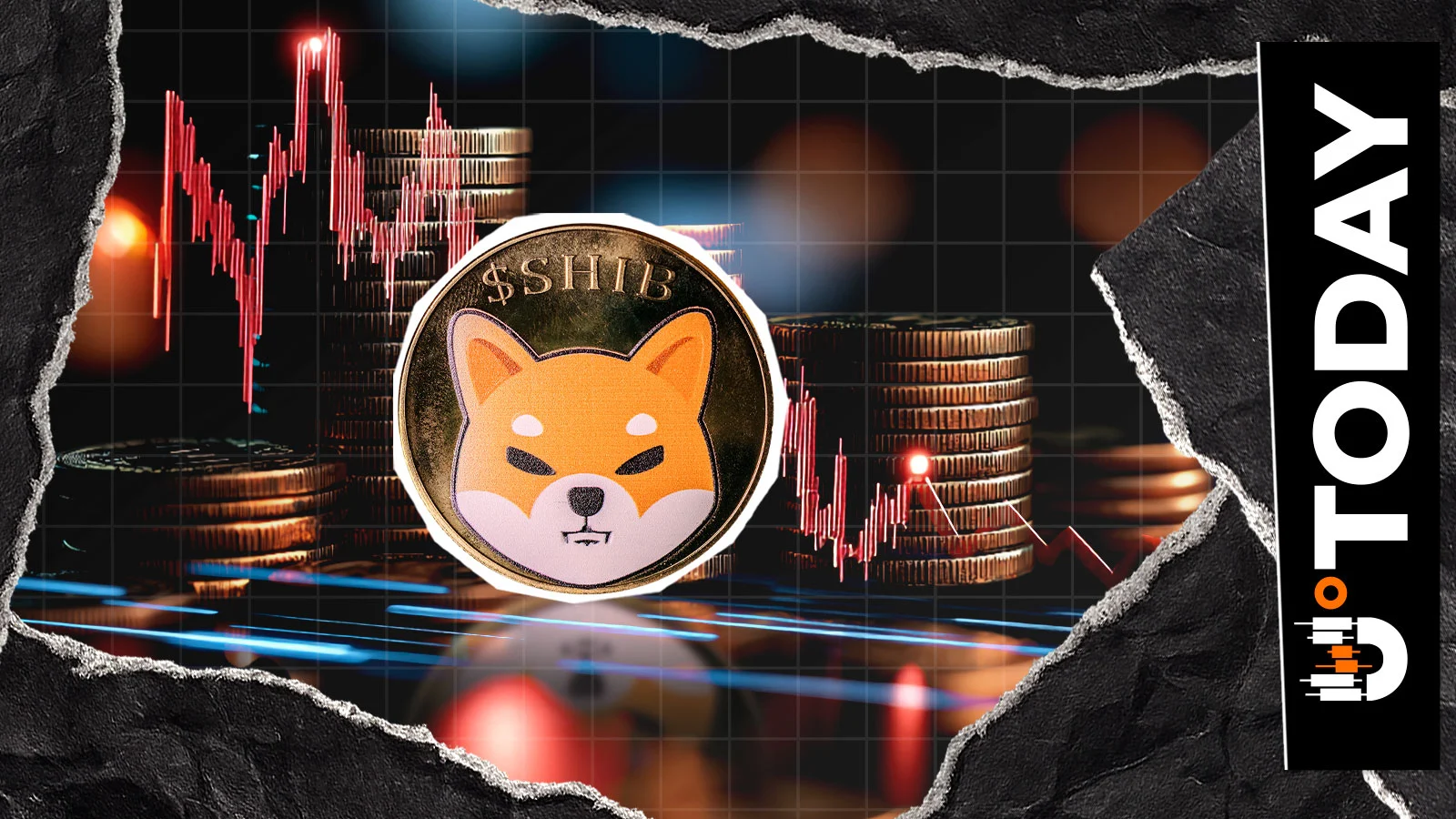
Despite Shiba Inu (SHIB) trading 93% below its all-time high, its historical performance shows significant gains from its all-time low, indicating potential for recovery if market conditions improve. The potential passage of the U.S. Clarity Act is highlighted as a key development that could boost institutional investor sentiment and potentially drive SHIB towards target prices of $0.000007 and $0.00001. Shiba Inu's upcoming listing on Rakuten wallet presents a new accessibility channel, which could increase user adoption and trading volume, though its immediate price impact remains uncertain amidst broader market declines.

Schwab's analysis highlights that even a 1-3% crypto allocation can significantly increase portfolio risk due to extreme volatility, suggesting investors must prioritize risk tolerance over return expectations. The report frames crypto as a high-risk satellite holding rather than a core asset, emphasizing that its suitability depends on individual risk capacity and investment horizon, not just potential returns. Schwab's research implies that traditional portfolio allocation models may be insufficient for crypto, advocating for a risk-budgeting approach that acknowledges the asset class's speculative nature and potential for large drawdowns.
Signal context only. Validate with price action, liquidity, and risk limits before taking a position.
Bitcoin's price action around $68,000 is critically poised, with a geopolitical deadline at 8 PM ET acting as a binary catalyst for either a short squeeze above $70,000 or a sharp decline towards $60,000 if tensions escalate. Negative funding rates indicate retail traders are positioned for a downturn, while substantial ETF inflows and institutional accumulation suggest underlying demand is absorbing selling pressure, setting up a potential short squeeze scenario on positive geopolitical news. The divergence between retail selling and institutional buying, coupled with negative funding, implies that the current price floor is supported by long-term holders, making the $68,000 level a key inflection point influenced by both market structure and external geopolitical events.
