
Navigating Crypto News

CoinFeather
Navigating Crypto News

Quick market read from this story
The departure of key Aave contributors (BGD Labs, ACI, Chaos Labs) creates a significant operational void, potentially impacting Aave's risk management and governance execution during the critical V3/V4 transition.
Aave Labs is consolidating functions previously handled by external teams, aiming for faster execution and clearer responsibility, but faces the challenge of replicating the operational density of the previous federated model.
Despite contributor exits, Aave's strong market position in DeFi lending, evidenced by its TVL and stablecoin dominance, provides a structural resilience, though a second operational incident could erode confidence.
The recent wstETH liquidation event, though minor in financial terms, highlights the operational risks during the V3/V4 overlap and underscores the importance of Aave Labs successfully managing the new integrated structure.
Source, catalyst, and sector overlap from the latest feed.
The SEC's decision on intermediary definitions for tokenized stocks will determine whether blockchain innovation primarily benefits incumbents or opens new revenue streams for decentralized infrastructure like wallets and smart contract platforms. A ruling favoring Citadel Securities' broad interpretation of intermediaries could keep tokenized equities within traditional financial wrappers, limiting disruption and preserving existing fee structures. Conversely, adopting the Blockchain Association's narrower, function-based view could foster competition by allowing decentralized applications to capture value, potentially accelerating broader adoption of on-chain equity trading. The current $946 million tokenized stock market serves as a test case, with the SEC's framework poised to shape the future control and economic distribution of a potentially trillion-dollar asset class.
Live Feed
Loading the broader stream in the same flow as the homepage feed.
Geopolitical escalation in the Middle East, specifically U.S. strikes on Iran's oil export hub and threats concerning the Strait of Hormuz, are driving crude oil prices sharply higher, indicating heightened supply risk premiums. The market is pricing in a greater probability of extended regional conflict, which could lead to sustained disruptions in oil supply chains and increased volatility across energy markets. Reduced tanker traffic through the Strait of Hormuz, a critical global oil chokepoint, signals immediate supply chain stress that could impact refiners and importers if disruptions persist.
Institutional investors allocated $119.6 million to XRP last week, representing over 53% of total crypto fund inflows, signaling a strong preference for the asset amidst broader market recovery. Despite recent monthly outflows, the significant weekly inflow into XRP, outpacing Bitcoin and Solana, suggests a potential positive catalyst for its price and a shift in institutional sentiment. The substantial inflow into XRP funds, coupled with recent spot Bitcoin ETF inflows, indicates a broader return of institutional capital to the crypto market, potentially signaling a near-term rebound.
Cardano whale wallets have increased by 5.2% over nine weeks to 424, indicating accumulation at lower price levels despite ADA's recent 4% decline. The divergence between whale accumulation and negative derivatives sentiment, with short positions dominating, suggests a cautious market outlook despite on-chain accumulation. Potential Mastercard integration discussions could drive future adoption and transaction activity for ADA, though current price action remains near critical support at $0.24. The Cardano Foundation's backing of governance actions and treasury plans signals ongoing network development, but immediate price impact is unclear.
Geopolitical tensions are driving a broad crypto market sell-off, with the total market cap down 2.05% and significant liquidations occurring, primarily impacting long positions. Bitcoin and Ethereum are experiencing declines, with altcoins showing more pronounced losses, indicating a market-wide risk-off sentiment driven by escalating Middle East conflict fears. While short-term price action is negative due to geopolitical headlines, some technical indicators suggest that the market may be in a late-stage fear phase, potentially limiting further downside if the conflict does not escalate beyond current expectations. A disruption in the Strait of Hormuz could lead to higher energy prices and inflation, creating macro headwinds for risk assets like crypto by delaying potential monetary policy easing.

DeFi yields have collapsed below TradFi rates, forcing investors to face higher smart contract risks for lower returns as regulation and exploits mount.

New phone logs suggest Argentine President Javier Milei had more direct communication with a LIBRA meme coin backer on launch night than previously disclosed, potentially reopening investigations into his alleged ties. The emergence of seven calls between Milei and a LIBRA entrepreneur, alongside references to regular payments, challenges prior exonerations and could impact perceptions of presidential involvement in crypto scandals. While no direct evidence of Milei receiving payments has surfaced, the ongoing federal probe and new communications raise questions about the integrity of crypto promotions and the need for clearer disclosure regulations.
Shiba Inu will be integrated into Rakuten Wallet alongside other top digital currencies.
Dogecoin's price is consolidating in a tight range between $0.088 and $0.100, indicating market indecision and a lack of strong directional momentum. The failed breakout above the falling wedge pattern suggests that short-term bearish sentiment persists, with sellers controlling price action near resistance levels. A decisive move above $0.100 could signal a bullish reversal, while a breakdown below $0.088 risks further downside, making these levels key for traders to monitor.

Americans lost over $11.4 billion to crypto scams in the past year, a 22% increase, indicating a significant and growing threat to retail investors. The FBI report highlights the increasing sophistication of crypto fraud, with organized criminal enterprises, often based in Southeast Asia, exploiting victims through complex schemes. With 181,565 complaints and an average loss of $62,604 per case, the data underscores the substantial financial damage inflicted on individuals, with many losing life-changing sums. The rise in crypto scams contributes to a broader surge in online fraud, signaling a rapidly evolving threat landscape that requires heightened vigilance from market participants.

This is not a blockchain fantasy cooked up in a shady Discord chat. I’m a licensed builder with a real lot in Birmingham, Alabama, with the deed in hand. The lot already has a concrete driveway, front sidewalk, and detached garage. I have the completed building plans from my architect for a 1,200-square-foot home. I’m […] The post The First Home Built On-Chain? This Birmingham Builder is Actually Doing It appeared first on The Coin Republic.

Key Insights: Bitcoin price was hovering near the $70,000 mark at press time. Crypto market participants were zeroed in on this critical zone. Market analysts believe these next few moves could set the tone for what comes next for BTC price. Top Analyst Reveals Next Steps for Bitcoin Price Ali Martinez, a well-known crypto analyst, […] The post Bitcoin Price: Analyst Reveals New Bull Market Blueprint as BTC Nears $70K appeared first on The Coin Republic.
XRP ETFs experienced significant inflows ($119.6M), outperforming Bitcoin and indicating a potential shift in institutional interest driven by regional regulatory clarity, particularly in Europe. Overall crypto investment products saw a net inflow of $224M, reversing a down week, with Switzerland leading global activity ($157.5M) over the U.S. ($27.5M), suggesting a geographic rotation in capital deployment. Ethereum continues to face outflows ($52.8M), highlighting persistent regulatory uncertainty impacting investor sentiment towards the asset, contrasting with XRP's recent strong performance. The strong rebound in Bitcoin ETF inflows ($471.3M on Monday) suggests that despite XRP's recent surge, Bitcoin remains a primary focus for institutional capital, especially with renewed positive momentum.

Bitcoin's price action around $68,000 is critically poised, with a geopolitical deadline at 8 PM ET acting as a binary catalyst for either a short squeeze above $70,000 or a sharp decline towards $60,000 if tensions escalate. Negative funding rates indicate retail traders are positioned for a downturn, while substantial ETF inflows and institutional accumulation suggest underlying demand is absorbing selling pressure, setting up a potential short squeeze scenario on positive geopolitical news. The divergence between retail selling and institutional buying, coupled with negative funding, implies that the current price floor is supported by long-term holders, making the $68,000 level a key inflection point influenced by both market structure and external geopolitical events.

The winding down of Split Capital, a profitable hedge fund, signals a potential shift in crypto market dynamics away from momentum-based trading strategies. Founder Zaheer Ebtikar's move to Plasma, a stablecoin infrastructure startup, suggests a strategic pivot towards foundational financial system development over speculative trading. The closure of a successful hedge fund highlights broader challenges within the crypto hedge fund sector, potentially indicating a need for adaptation to evolving market conditions. Ebtikar's conviction in Plasma's stablecoin vision, backed by significant funding and strategic investors, positions the startup as a key player in the next phase of crypto's evolution.
XRP lost its foundation and is no longer bringing profits to traders.
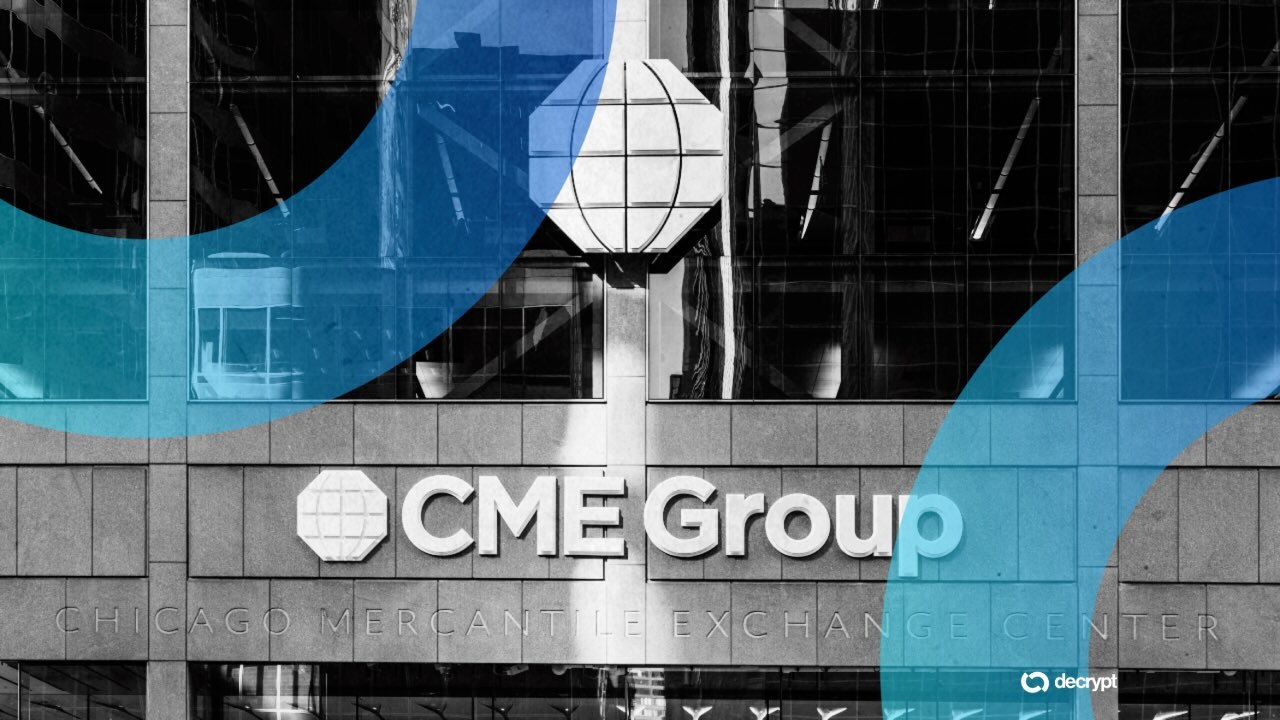
CME Group's expansion into AVAX and SUI futures signifies growing institutional interest in a broader range of altcoins beyond Bitcoin and Ethereum, potentially increasing demand and liquidity for these assets. The launch of new futures contracts, coupled with CME's upcoming 24/7 trading shift, suggests an evolving derivatives market infrastructure that could attract more sophisticated trading strategies and capital into the crypto space. The addition of AVAX and SUI futures provides regulated avenues for market participants to hedge or speculate on these Layer 1 tokens, enhancing capital efficiency and potentially influencing their price discovery mechanisms.
Despite Shiba Inu (SHIB) trading 93% below its all-time high, its historical performance shows significant gains from its all-time low, indicating potential for recovery if market conditions improve. The potential passage of the U.S. Clarity Act is highlighted as a key development that could boost institutional investor sentiment and potentially drive SHIB towards target prices of $0.000007 and $0.00001. Shiba Inu's upcoming listing on Rakuten wallet presents a new accessibility channel, which could increase user adoption and trading volume, though its immediate price impact remains uncertain amidst broader market declines.
Signal context only. Validate with price action, liquidity, and risk limits before taking a position.
The current state of quantum computing, while advancing, remains far from posing an immediate threat to Bitcoin's cryptography, with estimates suggesting a cryptographically relevant machine is still years, if not decades, away. While recent research has revised down the estimated resources needed for a quantum attack on Bitcoin, the practical barriers to accessing and operating such a facility-scale machine remain extremely high for malicious actors. The primary risk to Bitcoin and similar cryptocurrencies lies in the race between quantum computing development and the adoption of post-quantum cryptography, with migration deadlines like NIST's 2035 target being crucial. The significant capital investment and infrastructure required for quantum computing development suggest that the first credible threats will likely emerge from state-backed programs or misuse of top-tier labs, rather than independent criminal operations.
