
Navigating Crypto News

CoinFeather
Navigating Crypto News

Quick market read from this story
Circle is proactively addressing future quantum computing threats by implementing quantum-resistant security measures for its upcoming Arc blockchain, signaling a forward-thinking approach to long-term network integrity.
The planned 2026 mainnet launch of Arc with quantum-resistant wallets and signature systems indicates a strategic move by Circle to secure its stablecoin ecosystem against potential future cryptographic vulnerabilities.
Google's recent warnings about quantum computers potentially breaking Bitcoin security underscore the urgency of Circle's proactive security measures, highlighting a growing industry concern for post-quantum cryptography.
Circle's phased roadmap for Arc, extending quantum-resistant protections to validators and network infrastructure beyond initial wallet security, suggests a comprehensive strategy for enterprise-focused blockchain resilience.
Source, catalyst, and sector overlap from the latest feed.
Bitcoin Everlight introduces a new architecture aiming to provide passive Bitcoin rewards by acting as a specialized routing layer, potentially offering an alternative to traditional mining and staking. The project, identified by ticker BTCL, has secured over $2.5M in funding and is currently in Phase 4 of its presale, with a planned mainnet launch for live BTC distributions. With a total supply capped at 21 billion tokens and a low minimum contribution, Bitcoin Everlight targets retail investors seeking accessible ways to grow BTC holdings, positioning itself as an infrastructure play. Audited by Spywolf and Solidproof, and with KYC completed by Vital Block, the project emphasizes transparency and security, aiming to enhance Bitcoin's payment layer without altering consensus rules.
Live Feed
Loading the broader stream in the same flow as the homepage feed.

Bitcoin and Ether are consolidating within a two-month range, mirroring a historical pattern that preceded a price breakdown, suggesting potential downside risk if support levels fail. Geopolitical tensions and high oil prices are creating a bearish macro environment for risk assets like crypto, increasing inflation fears and weighing on market sentiment. Despite broad market apathy, AI and privacy tokens are showing relative strength, indicating a potential rotation into niche sectors based on perceived fundamental value rather than speculative hype. Derivatives market data shows cautious institutional conviction with stable open interest and neutral funding rates, suggesting a lack of strong positioning for a major breakout in either direction.
Over 100 major banks are actively testing Ripple's payment solutions, indicating significant institutional interest in leveraging blockchain for cross-border transactions and treasury management. Ripple's integration with SWIFT and its Treasury platform, supporting XRP and RLUSD, positions it as a key infrastructure provider bridging traditional finance with digital assets, enhancing efficiency and compliance. The widespread testing by established banks suggests a pragmatic adoption of blockchain technology to improve existing financial systems rather than a disruptive overhaul, potentially leading to increased demand for Ripple's services.

The current state of quantum computing, while advancing, remains far from posing an immediate threat to Bitcoin's cryptography, with estimates suggesting a cryptographically relevant machine is still years, if not decades, away. While recent research has revised down the estimated resources needed for a quantum attack on Bitcoin, the practical barriers to accessing and operating such a facility-scale machine remain extremely high for malicious actors. The primary risk to Bitcoin and similar cryptocurrencies lies in the race between quantum computing development and the adoption of post-quantum cryptography, with migration deadlines like NIST's 2035 target being crucial. The significant capital investment and infrastructure required for quantum computing development suggest that the first credible threats will likely emerge from state-backed programs or misuse of top-tier labs, rather than independent criminal operations.
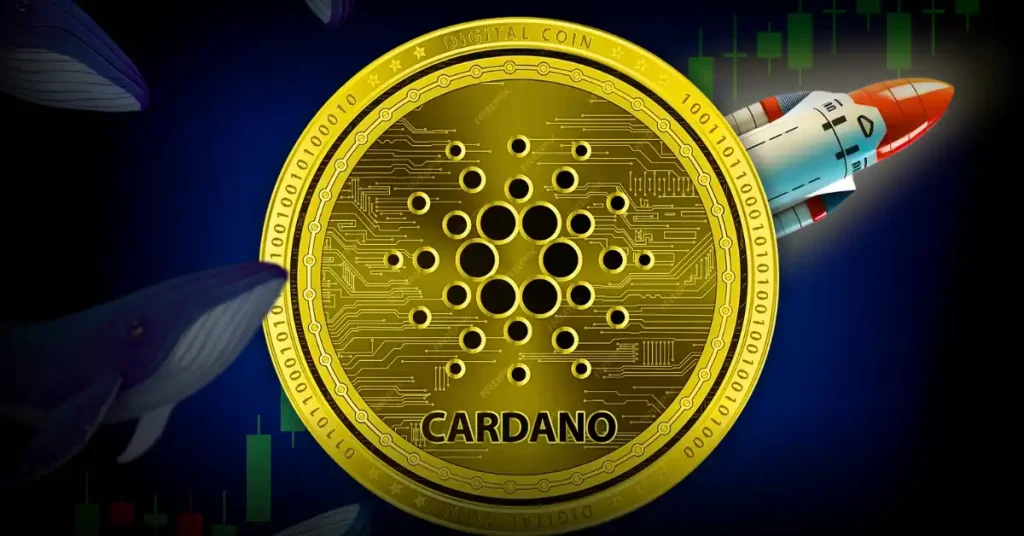
Cardano whales are accumulating ADA at a 4-month high, signaling potential accumulation before a broader market recovery, despite current price weakness. The divergence between whale accumulation and bearish derivatives sentiment suggests a potential turning point for ADA, with large holders positioning ahead of retail sentiment. ADA is testing a critical support range between $0.22 and $0.28, where holding above could confirm bullish continuation patterns like a double bottom or falling wedge reversal. While on-chain data shows accumulation, negative funding rates in derivatives indicate short-term traders remain bearish, creating a divergence that traders should monitor for potential shifts.

BTC correlation with an ETF tracking software comany stocks broke sharply from near-total alignment to near zero after the conflict started.
The article positions Pepeto's presale as a potentially higher-return investment compared to XRP and Ethereum, citing its lower entry price, confirmed Binance listing, and a live exchange as key differentiators. XRP's six consecutive monthly losses and Ethereum's limited projected upside (21%) are contrasted with Pepeto's presale, which claims 100x potential from a single listing event. The narrative emphasizes the importance of early entry in crypto, drawing parallels between past successes of XRP and Ethereum and the current opportunity presented by Pepeto's presale, backed by a known founder and audited contracts.

Bitcoin's stochastic RSI is exhibiting patterns that closely mirror the end of the 2022 bear market, suggesting a potential bottoming phase and subsequent recovery. The current price action and indicator readings are being compared to the early 2023 rebound, implying that historical patterns could signal a bullish continuation if similar conditions persist. While technical indicators show bullish parallels to past recoveries, traders should monitor for a potential bear flag breakdown on the daily chart, which could negate the optimistic outlook. The analysis highlights the importance of the weekly standard RSI for potential bullish divergence, a signal that previously coincided with significant price bottoms.
Shiba Inu's price is under significant pressure, down nearly 93% from its all-time high, with current trading levels around $0.000006 and projections indicating limited upside potential for 2026. Weak on-chain activity, declining trader interest, and a broader meme coin market contraction from $109B to $34B are key factors contributing to SHIB's downtrend. The Shibarium Layer-2 network is experiencing a sharp decline in transaction volume post-exploit, with current activity significantly lower than previous peaks, impacting the ecosystem's overall health. Rising exchange inflows of SHIB tokens suggest holders may be preparing to sell, further exacerbating downward price pressure in the near term.
Bitcoin ETFs experienced their largest single-day inflow since February, totaling $471 million, indicating renewed institutional interest potentially driven by geopolitical positioning ahead of a US-Iran deadline. While geopolitical tensions and potential Strait of Hormuz disruptions are influencing oil prices and market sentiment, analysts suggest institutional accumulation in Bitcoin ETFs is more about structured allocation than a direct bet on conflict resolution. The sustained demand for Bitcoin ETFs, coupled with Bitcoin's resilience, suggests underlying support near current levels, though a significant bull run may still depend more on global liquidity than immediate geopolitical events.
Signal context only. Validate with price action, liquidity, and risk limits before taking a position.
Rwanda's central bank has issued a direct warning against Bybit's P2P platform for facilitating trades involving the Rwandan franc, citing illegality and financial risks. This regulatory action by Rwanda highlights a growing trend of emerging markets imposing stricter controls on crypto P2P services to protect local currencies and financial stability. The development underscores the ongoing tension between crypto platforms seeking broader accessibility and national regulators prioritizing financial sovereignty and consumer protection.
