
Navigating Crypto News

CoinFeather
Navigating Crypto News

Quick market read from this story
Japan Exchange Group's proposed exclusion of crypto-heavy firms from indices poses a direct threat to Metaplanet's market positioning and potential institutional demand.
Despite regulatory headwinds, Metaplanet's CEO reaffirms a strong commitment to its Bitcoin strategy and ecosystem expansion, signaling resilience and a focus on long-term value creation.
The potential exclusion from TOPIX could trigger significant selling pressure on Metaplanet's stock as index-tracking funds are forced to divest, mirroring past volatility seen with MicroStrategy.
Market participants should monitor JPX's final decision and Metaplanet's engagement with regulators, as policy discussions alone can influence stock prices ahead of official rule changes.
Source, catalyst, and sector overlap from the latest feed.
The Drift Protocol hack highlights a concerning shift in attacker tactics from direct code exploits to sophisticated social engineering targeting developers, indicating increased sophistication in crypto security threats. The $280 million loss underscores the significant financial risks associated with decentralized finance protocols, particularly concerning the trust-based collaboration models used by development teams. The connection to the Radiant Capital exploit suggests potential organized, possibly state-sponsored, activity, raising broader concerns about coordinated attacks on the DeFi ecosystem. This incident necessitates a re-evaluation of security protocols within DeFi, emphasizing the need for enhanced contributor verification, device security, and access controls beyond traditional smart contract audits.
Live Feed
Loading the broader stream in the same flow as the homepage feed.
Strive's continued Bitcoin accumulation, despite significant unrealized losses, signals a strong conviction in its treasury strategy and potential long-term price appreciation. The company's expansion into Bitcoin treasuries and its role in a proposed ETF highlight a growing trend of traditional finance integrating with digital assets. ASST stock's 5% rise post-purchase indicates positive market reception to Strive's aggressive Bitcoin acquisition strategy and balance sheet disclosures.

Sales of bitcoin by prominent holders and executive exits could give hope to the battered crypto sector.

Key Takeaways Dimon’s shareholder letter comments blockchain-based competitors. The letter states JPMorgan must roll out its own blockchain technology. Digital […] The post JPMorgan’s CEO Places Blockchain Inside the Bank’s Core Competitive Strategy appeared first on Coindoo.
TAO price has broken above a key $300 resistance level, flipping it to support, indicating strong bullish momentum for short-term traders. Despite the bullish price action, overheated futures markets and bearish liquidation signals suggest a potential for a sharp pullback, warning traders against excessive leverage. The current market structure, with high leveraged positions between $300-$350, mirrors past overheating phases that preceded significant corrections, implying a risk of downside repricing.

The increasing sophistication of AI tools lowers the barrier for malicious actors to exploit software vulnerabilities, posing a growing cybersecurity threat to the crypto industry which lost over $1.4 billion in 2023. OpenAI CEO Sam Altman's warnings about AI's dual-use potential, including enabling more powerful cyberattacks, highlight an urgent need for enhanced security measures and regulatory preparedness within the crypto space. The reliance on AI-generated code introduces potential new systemic risks, necessitating a focus on robust defenses like mathematically verified code and hardware security to mitigate future exploits.
Geopolitical tensions surrounding Iran and the Strait of Hormuz are driving crude oil prices higher, indicating a market sensitive to supply disruption risks. Despite OPEC+ agreeing to increase output, the limited impact suggests that physical supply constraints and ongoing conflict developments are overriding production adjustments, keeping upward pressure on prices. President Trump's ultimatum introduces a clear deadline for potential US strikes, increasing volatility and creating a near-term catalyst for price action based on geopolitical outcomes. The market is caught between hopes for a ceasefire and fears of escalation, leading to elevated volatility and rapid price reactions to news flow regarding the conflict and Strait of Hormuz access.

JPMorgan CEO Jamie Dimon acknowledges blockchain-based competitors and tokenization as a fundamental challenge to traditional banking, signaling a strategic imperative for the bank to accelerate its own blockchain initiatives. The increasing adoption of tokenization by both traditional finance players like BlackRock and crypto-native firms highlights a structural shift in financial services, pressuring incumbents to innovate or risk losing market share. Dimon's focus on underlying blockchain infrastructure and tokenization, rather than specific cryptocurrencies like Bitcoin, indicates a strategic prioritization of the technology's application in core banking functions over speculative assets. JPMorgan's continued investment in its Onyx/Kinexys unit and JPM Coin demonstrates a commitment to leveraging blockchain for institutional clients, positioning the bank to benefit from the efficiency gains and new product offerings enabled by tokenization.

A significant shift in sentiment among top Binance traders, with 69% now holding long positions on SHIB, suggests anticipation of a near-term price impulse. The stabilization of SHIB at the $0.000006 support level, coupled with strong bullish positioning from 'smart money,' indicates a potential for a breakout towards $0.000008 if current levels hold. Shiba Inu is being treated as a beta play on Ethereum by large traders, implying that ETH's price movements could significantly influence SHIB's performance, albeit with higher volatility.
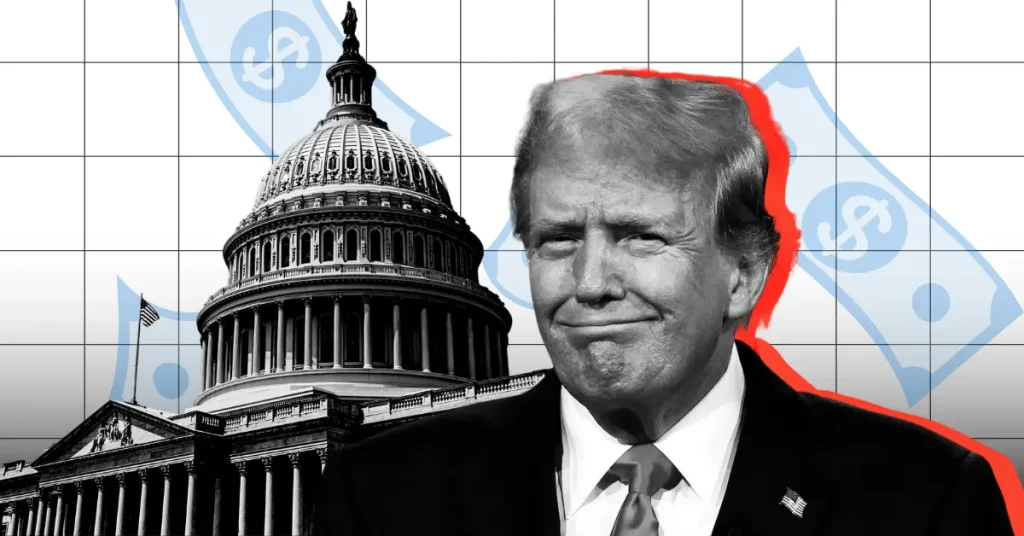
The U.S. Treasury's launch of 'Trump Accounts' utilizing BNY Mellon and Robinhood signals a potential expansion of traditional finance integration with retail investment platforms. While the program focuses on stock index funds, the involvement of Robinhood, a platform with significant crypto user engagement, could indirectly increase exposure to broader financial market participation. The initiative aims to foster long-term wealth creation for minors, suggesting a forward-looking approach to financial education and market engagement by governmental bodies.
Polygon's on-chain activity, particularly the 30-day moving average of Daily Active Addresses (DAA), shows a sustained upward trend, indicating a strengthening network effect and growing demand for blockspace, which is a fundamental precursor to price appreciation. Significant accumulation by 'whale' and institutional investors, specifically in the 100,000 to 10 million POL holding range, suggests high-conviction accumulation and a potential fundamental floor for the asset, aligning with rising active addresses for a bullish outlook. Price predictions for Polygon (MATIC/POL) indicate potential highs of $0.7548 by 2026 and $4.94 by 2030, contingent on continued ecosystem growth, adoption of scaling solutions like zkEVM, and successful reclamation of key resistance levels.
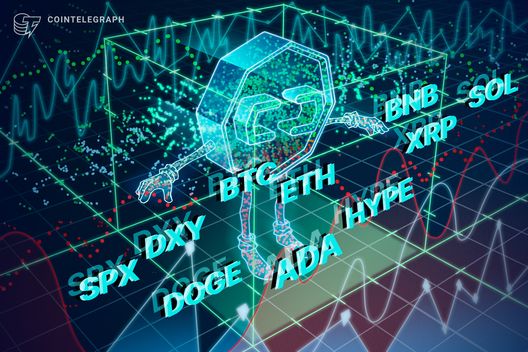
Bitcoin's failure to sustain the $70,000 level suggests bears remain in control, with some analysts predicting a drop below $60,000, indicating potential downside risk for the broader market. Despite bearish sentiment indicators for Bitcoin, contrarian signals from social media chatter suggest a potential shift in market psychology, hinting at a possible near-term reversal. Major altcoins are showing resilience by bouncing off support levels, but their recovery prospects are tied to Bitcoin's ability to break key resistance zones, highlighting interdependency within the crypto market.
Signal context only. Validate with price action, liquidity, and risk limits before taking a position.
Bitcoin whales and sharks incurred over $30 billion in realized losses during Q1, marking the worst quarter for these large holders since 2022. Long-term Bitcoin holders are experiencing deeper losses (around 25%) compared to short-term holders, suggesting potential capitulation and weakening conviction. While Bitcoin exchange reserves saw an uptick, they have since cooled, indicating that long-term buyers may still be moving coins off-exchange, but the overall trend suggests a potential floor price is being tested. The current market dynamics, with significant realized losses among large holders and a shift in holder behavior, mirror past consolidation periods that preceded bearish capitulation, raising concerns about the near-term price floor.
