
Navigating Crypto News

CoinFeather
Navigating Crypto News

Quick market read from this story
XRP's price is testing resistance at $1.34, with a significant 1,237% liquidation imbalance favoring shorts, indicating strong market disbelief in a sustained rally.
The upcoming Tokyo summit, featuring Ripple representatives and major Japanese financial figures, could be a catalyst for XRP, though short-term price action hinges on holding support at $1.28.
While bears are positioned with a lower max pain level, the current liquidation trend suggests a potential shift favoring bulls if XRP can break above $1.35 towards $1.50.
Source, catalyst, and sector overlap from the latest feed.
A significant shift in sentiment among top Binance traders, with 69% now holding long positions on SHIB, suggests anticipation of a near-term price impulse. The stabilization of SHIB at the $0.000006 support level, coupled with strong bullish positioning from 'smart money,' indicates a potential for a breakout towards $0.000008 if current levels hold. Shiba Inu is being treated as a beta play on Ethereum by large traders, implying that ETH's price movements could significantly influence SHIB's performance, albeit with higher volatility.
Ripple's upcoming XRP-focused event in Japan, co-organized with XRPL Japan, signals a strategic push to highlight XRP's role in institutional adoption and RWA tokenization. The event's focus on DeFi, RWA tokenization, and blockchain payments, alongside participation from major firms like SBI Holdings and a16z Crypto, suggests a concerted effort to expand XRP Ledger's utility and integration within the Asian market. Given Japan's established market for Ripple and the event's emphasis on institutional use cases, this development could bolster confidence and potentially drive demand for XRP as adoption narratives gain traction.
Live Feed
Loading the broader stream in the same flow as the homepage feed.
Strive's continued Bitcoin accumulation, despite significant unrealized losses, signals a strong conviction in its treasury strategy and potential long-term price appreciation. The company's expansion into Bitcoin treasuries and its role in a proposed ETF highlight a growing trend of traditional finance integrating with digital assets. ASST stock's 5% rise post-purchase indicates positive market reception to Strive's aggressive Bitcoin acquisition strategy and balance sheet disclosures.

Sales of bitcoin by prominent holders and executive exits could give hope to the battered crypto sector.

Bernstein's 'Outperform' rating and $67 price target for Figure Technology (FIGR) suggest a significant undervaluation, driven by accelerating loan originations and the expansion of its tokenized credit platform. Figure's use of the Provenance blockchain to streamline HELOC origination, reportedly saving 117 basis points per loan, highlights the potential for blockchain technology to improve efficiency in traditional finance sectors like lending. Despite strong operational performance and a bullish outlook from analysts, Figure's stock has faced headwinds, underscoring the broader market volatility impacting digital asset-linked equities and the challenges of valuing innovative fintech companies.
Arbitrum (ARB) is showing signs of stabilization near a key demand zone, suggesting a potential shift from a prolonged downtrend to a recovery phase if it can reclaim resistance levels around $0.12. Price predictions for ARB indicate a significant upside potential, with targets ranging from $0.70-$1.20 by 2026 and potentially reaching $6 by 2030, contingent on sustained ecosystem growth and market sentiment. Despite strong ecosystem relevance as a leading Layer-2 solution, ARB's price action has faced prolonged weakness, highlighting the critical need for a structural breakout to confirm a sustained recovery.

EDX Markets' bid for a federal trust bank charter signals a strategic move by Wall Street firms like Citadel and Fidelity to integrate crypto's back-end infrastructure within the U.S. banking perimeter, potentially reshaping institutional access and custody. The proposed modular structure, separating order matching from custody and settlement under federal supervision, aims to import traditional market structure efficiencies into crypto, addressing concerns over vertically integrated exchange risks. This development represents a significant regulatory action that could establish a new layer of institutional crypto infrastructure, potentially creating a durable competitive moat for federally chartered entities and shifting the market's economic center of gravity away from venue-centric models. While EDX has processed significant trading volume, the ultimate success hinges on institutional adoption and whether this federally supervised trust-bank model proves superior to existing crypto venues and bilateral arrangements for execution, custody, and capital efficiency.

Key Takeaways Dimon’s shareholder letter comments blockchain-based competitors. The letter states JPMorgan must roll out its own blockchain technology. Digital […] The post JPMorgan’s CEO Places Blockchain Inside the Bank’s Core Competitive Strategy appeared first on Coindoo.

The Drift Protocol hack highlights a concerning shift in attacker tactics from direct code exploits to sophisticated social engineering targeting developers, indicating increased sophistication in crypto security threats. The $280 million loss underscores the significant financial risks associated with decentralized finance protocols, particularly concerning the trust-based collaboration models used by development teams. The connection to the Radiant Capital exploit suggests potential organized, possibly state-sponsored, activity, raising broader concerns about coordinated attacks on the DeFi ecosystem. This incident necessitates a re-evaluation of security protocols within DeFi, emphasizing the need for enhanced contributor verification, device security, and access controls beyond traditional smart contract audits.

The increasing sophistication of AI tools lowers the barrier for malicious actors to exploit software vulnerabilities, posing a growing cybersecurity threat to the crypto industry which lost over $1.4 billion in 2023. OpenAI CEO Sam Altman's warnings about AI's dual-use potential, including enabling more powerful cyberattacks, highlight an urgent need for enhanced security measures and regulatory preparedness within the crypto space. The reliance on AI-generated code introduces potential new systemic risks, necessitating a focus on robust defenses like mathematically verified code and hardware security to mitigate future exploits.
Geopolitical tensions surrounding Iran and the Strait of Hormuz are driving crude oil prices higher, indicating a market sensitive to supply disruption risks. Despite OPEC+ agreeing to increase output, the limited impact suggests that physical supply constraints and ongoing conflict developments are overriding production adjustments, keeping upward pressure on prices. President Trump's ultimatum introduces a clear deadline for potential US strikes, increasing volatility and creating a near-term catalyst for price action based on geopolitical outcomes. The market is caught between hopes for a ceasefire and fears of escalation, leading to elevated volatility and rapid price reactions to news flow regarding the conflict and Strait of Hormuz access.

XRP price is consolidating near a critical $1.27 support level, indicating potential capitulation as realized losses spike and only 43.4% of supply is in profit. While the broader structure remains bearish below $1.80, fading downside momentum and declining selling volume suggest a potential volatility expansion is imminent. Traders should monitor the $1.27 support and $1.80 resistance levels closely, as a hold above the former could signal a recovery, while a break below could accelerate losses toward $1.12.

JPMorgan CEO Jamie Dimon acknowledges blockchain-based competitors and tokenization as a fundamental challenge to traditional banking, signaling a strategic imperative for the bank to accelerate its own blockchain initiatives. The increasing adoption of tokenization by both traditional finance players like BlackRock and crypto-native firms highlights a structural shift in financial services, pressuring incumbents to innovate or risk losing market share. Dimon's focus on underlying blockchain infrastructure and tokenization, rather than specific cryptocurrencies like Bitcoin, indicates a strategic prioritization of the technology's application in core banking functions over speculative assets. JPMorgan's continued investment in its Onyx/Kinexys unit and JPM Coin demonstrates a commitment to leveraging blockchain for institutional clients, positioning the bank to benefit from the efficiency gains and new product offerings enabled by tokenization.
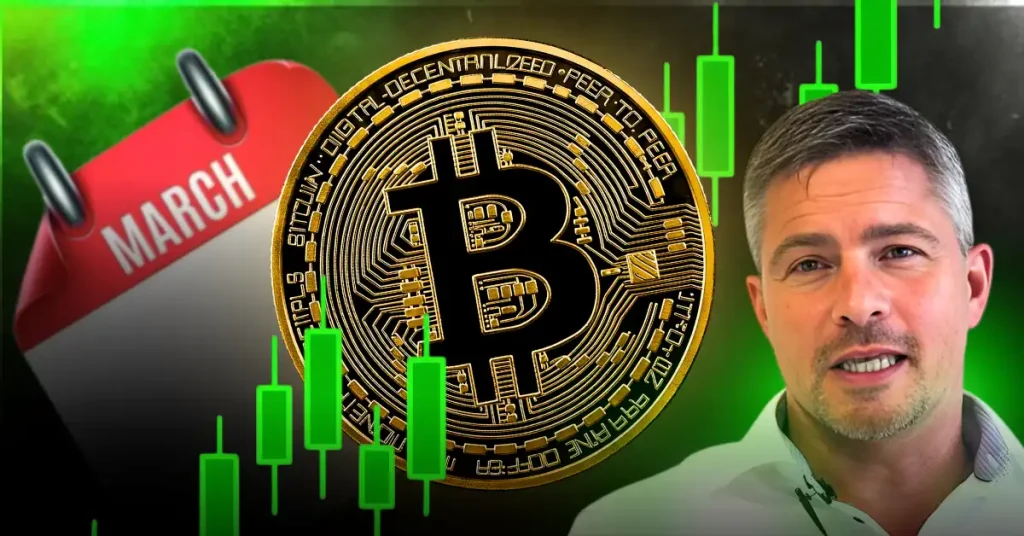
Bitcoin is currently in a prolonged basing phase with support identified between $58,000 and $59,000, suggesting that a sustained upward move will require multiple retests of this level. The absence of typical bottoming signals such as oversold upturns, breadth extremes, or extreme sentiment readings indicates that a durable low has not yet been confirmed. A continued equity market correction and widening credit spreads create an unfavorable macro backdrop for risk assets like Bitcoin, implying that even geopolitical de-escalation may not be sufficient to reverse current market damage. Traders are advised to exercise patience, avoid chasing short-term relief rallies, and wait for a stronger weight of evidence before aggressively increasing exposure to Bitcoin.
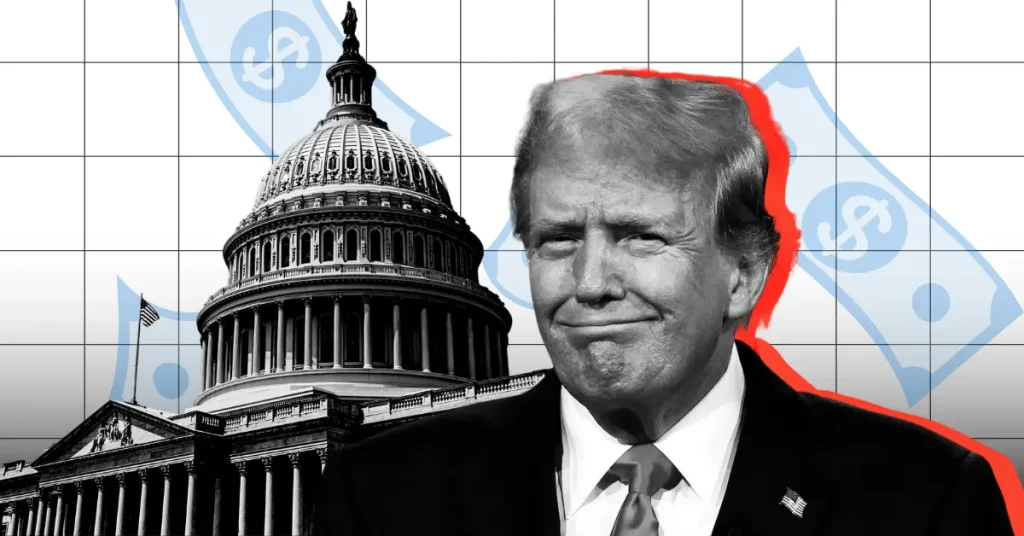
The U.S. Treasury's launch of 'Trump Accounts' utilizing BNY Mellon and Robinhood signals a potential expansion of traditional finance integration with retail investment platforms. While the program focuses on stock index funds, the involvement of Robinhood, a platform with significant crypto user engagement, could indirectly increase exposure to broader financial market participation. The initiative aims to foster long-term wealth creation for minors, suggesting a forward-looking approach to financial education and market engagement by governmental bodies.
Signal context only. Validate with price action, liquidity, and risk limits before taking a position.
No explicit catalyst tagged.
