
Navigating Crypto News

CoinFeather
Navigating Crypto News
Quick market read from this story
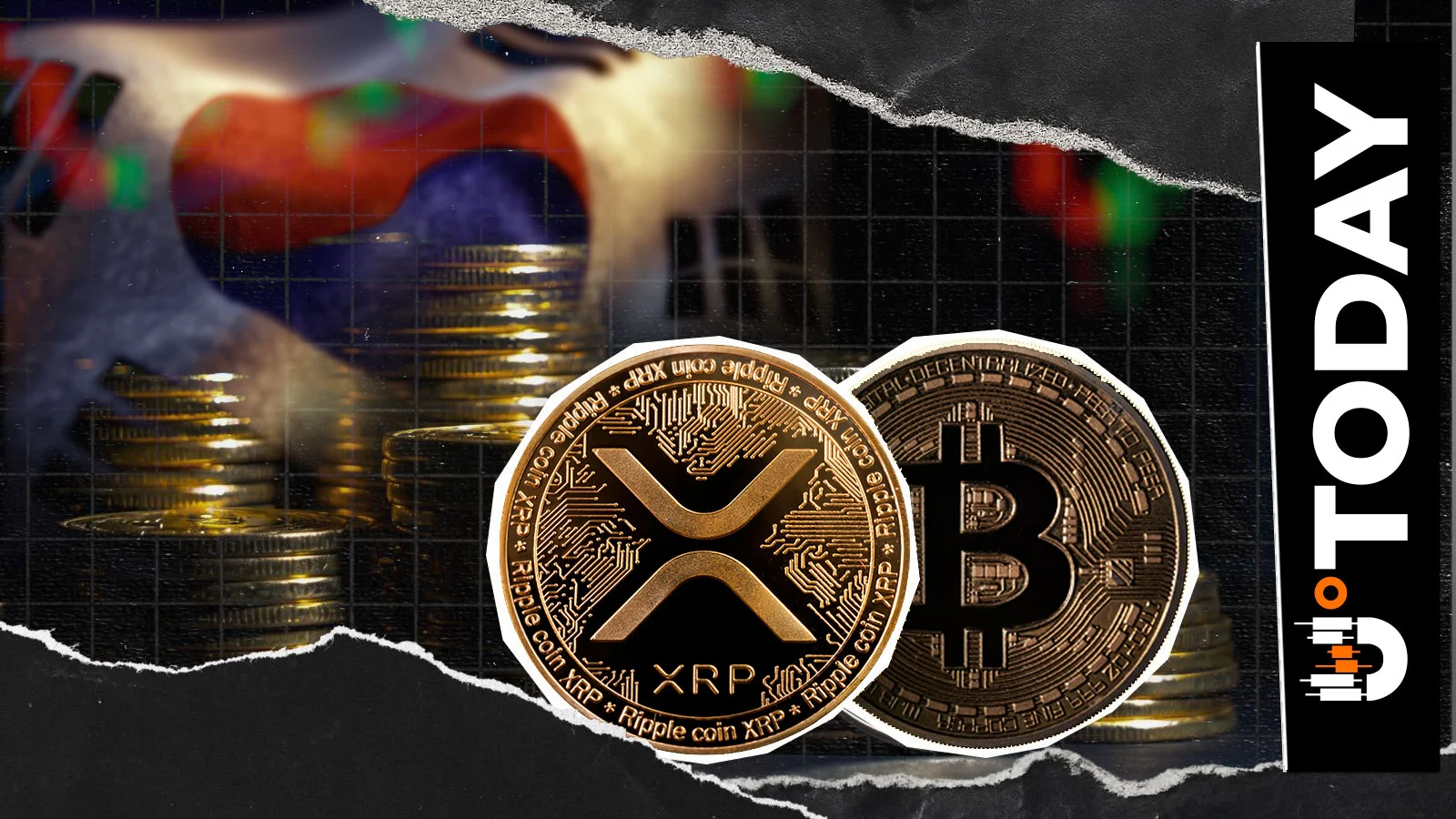
XRP's surge to become the most traded asset on South Korea's Upbit exchange, surpassing Bitcoin, indicates strong localized demand and trading interest.
The increased trading volume and open interest in XRP derivatives, coupled with negative funding rates, suggest potential for further price appreciation in the short term.
Despite the localized trading dominance, the broader market impact remains to be seen, though XRP ETFs have seen significant institutional inflows, hinting at growing investor confidence.
Source, catalyst, and sector overlap from the latest feed.
A significant shift in sentiment among top Binance traders, with 69% now holding long positions on SHIB, suggests anticipation of a near-term price impulse. The stabilization of SHIB at the $0.000006 support level, coupled with strong bullish positioning from 'smart money,' indicates a potential for a breakout towards $0.000008 if current levels hold. Shiba Inu is being treated as a beta play on Ethereum by large traders, implying that ETH's price movements could significantly influence SHIB's performance, albeit with higher volatility.
Live Feed
Loading the broader stream in the same flow as the homepage feed.

Sales of bitcoin by prominent holders and executive exits could give hope to the battered crypto sector.
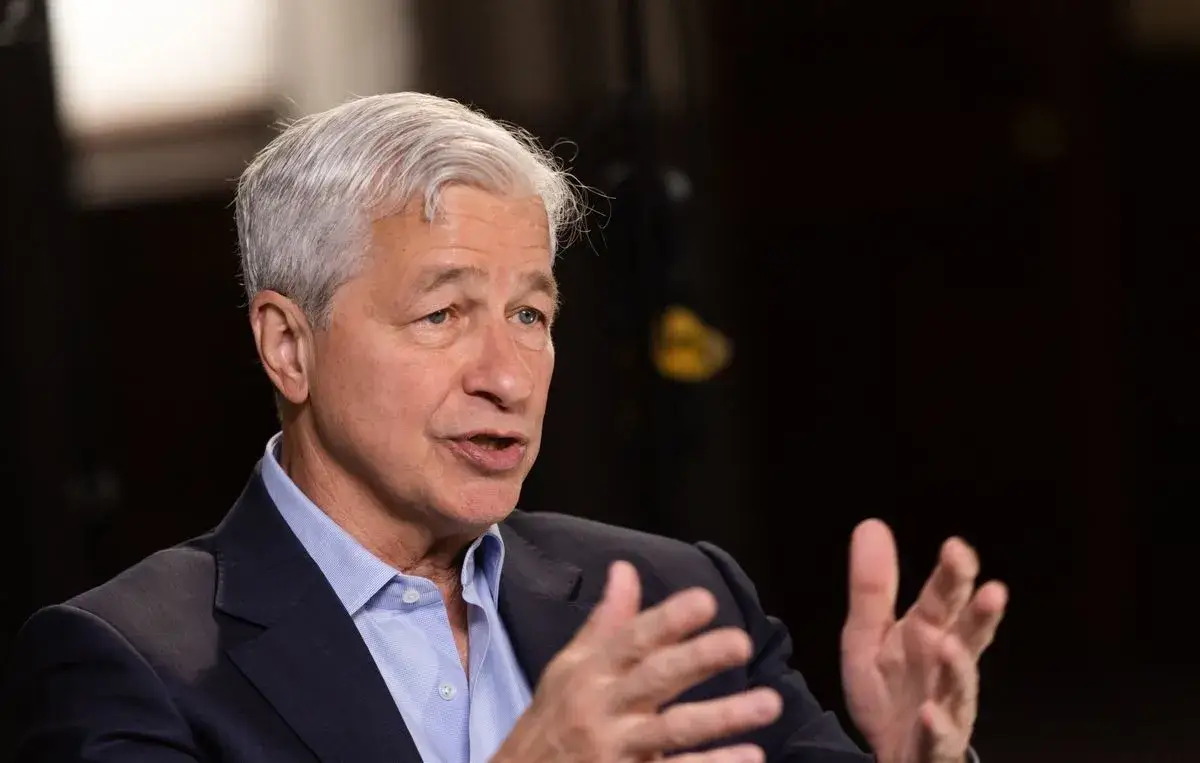
Key Takeaways Dimon’s shareholder letter comments blockchain-based competitors. The letter states JPMorgan must roll out its own blockchain technology. Digital […] The post JPMorgan’s CEO Places Blockchain Inside the Bank’s Core Competitive Strategy appeared first on Coindoo.

The Drift Protocol hack highlights a concerning shift in attacker tactics from direct code exploits to sophisticated social engineering targeting developers, indicating increased sophistication in crypto security threats. The $280 million loss underscores the significant financial risks associated with decentralized finance protocols, particularly concerning the trust-based collaboration models used by development teams. The connection to the Radiant Capital exploit suggests potential organized, possibly state-sponsored, activity, raising broader concerns about coordinated attacks on the DeFi ecosystem. This incident necessitates a re-evaluation of security protocols within DeFi, emphasizing the need for enhanced contributor verification, device security, and access controls beyond traditional smart contract audits.
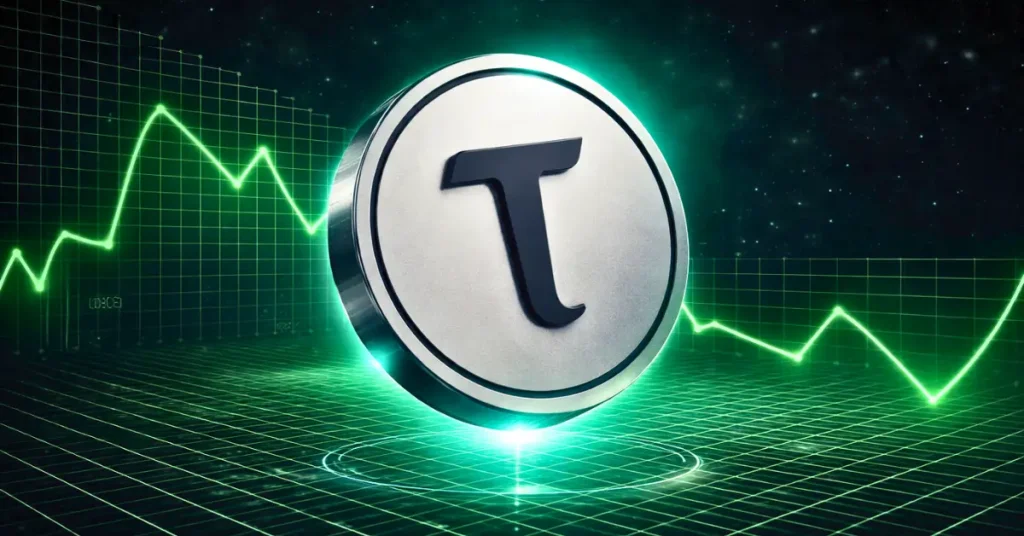
TAO price has broken above a key $300 resistance level, flipping it to support, indicating strong bullish momentum for short-term traders. Despite the bullish price action, overheated futures markets and bearish liquidation signals suggest a potential for a sharp pullback, warning traders against excessive leverage. The current market structure, with high leveraged positions between $300-$350, mirrors past overheating phases that preceded significant corrections, implying a risk of downside repricing.

The increasing sophistication of AI tools lowers the barrier for malicious actors to exploit software vulnerabilities, posing a growing cybersecurity threat to the crypto industry which lost over $1.4 billion in 2023. OpenAI CEO Sam Altman's warnings about AI's dual-use potential, including enabling more powerful cyberattacks, highlight an urgent need for enhanced security measures and regulatory preparedness within the crypto space. The reliance on AI-generated code introduces potential new systemic risks, necessitating a focus on robust defenses like mathematically verified code and hardware security to mitigate future exploits.
Geopolitical tensions surrounding Iran and the Strait of Hormuz are driving crude oil prices higher, indicating a market sensitive to supply disruption risks. Despite OPEC+ agreeing to increase output, the limited impact suggests that physical supply constraints and ongoing conflict developments are overriding production adjustments, keeping upward pressure on prices. President Trump's ultimatum introduces a clear deadline for potential US strikes, increasing volatility and creating a near-term catalyst for price action based on geopolitical outcomes. The market is caught between hopes for a ceasefire and fears of escalation, leading to elevated volatility and rapid price reactions to news flow regarding the conflict and Strait of Hormuz access.

Circle's Arc Network is proactively addressing the future threat of quantum computing by integrating post-quantum signature support into its upcoming mainnet launch. The phased roadmap for quantum resistance across wallets, validators, and infrastructure suggests a strategic approach to long-term security, potentially setting a precedent for other Layer-1 blockchains. While the quantum threat is projected for years ahead, the proactive stance by Arc, contrasted with the ongoing discussions for Bitcoin and Ethereum, highlights a potential competitive advantage for early adopters of quantum-resistant technology.

XRP price is consolidating near a critical $1.27 support level, indicating potential capitulation as realized losses spike and only 43.4% of supply is in profit. While the broader structure remains bearish below $1.80, fading downside momentum and declining selling volume suggest a potential volatility expansion is imminent. Traders should monitor the $1.27 support and $1.80 resistance levels closely, as a hold above the former could signal a recovery, while a break below could accelerate losses toward $1.12.
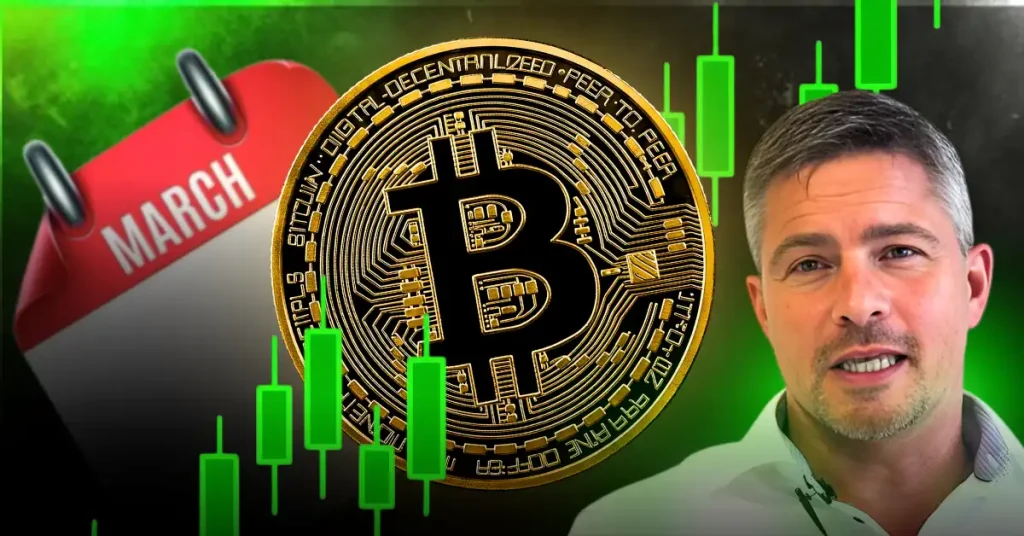
Bitcoin is currently in a prolonged basing phase with support identified between $58,000 and $59,000, suggesting that a sustained upward move will require multiple retests of this level. The absence of typical bottoming signals such as oversold upturns, breadth extremes, or extreme sentiment readings indicates that a durable low has not yet been confirmed. A continued equity market correction and widening credit spreads create an unfavorable macro backdrop for risk assets like Bitcoin, implying that even geopolitical de-escalation may not be sufficient to reverse current market damage. Traders are advised to exercise patience, avoid chasing short-term relief rallies, and wait for a stronger weight of evidence before aggressively increasing exposure to Bitcoin.
Polygon's on-chain activity, particularly the 30-day moving average of Daily Active Addresses (DAA), shows a sustained upward trend, indicating a strengthening network effect and growing demand for blockspace, which is a fundamental precursor to price appreciation. Significant accumulation by 'whale' and institutional investors, specifically in the 100,000 to 10 million POL holding range, suggests high-conviction accumulation and a potential fundamental floor for the asset, aligning with rising active addresses for a bullish outlook. Price predictions for Polygon (MATIC/POL) indicate potential highs of $0.7548 by 2026 and $4.94 by 2030, contingent on continued ecosystem growth, adoption of scaling solutions like zkEVM, and successful reclamation of key resistance levels.

The appeals court ruling clarifies that Kalshi's event contracts, including sports-related ones, fall under CFTC regulation, not state gambling laws, establishing a significant legal precedent for prediction markets. This decision strengthens Kalshi's operational framework and potentially opens avenues for broader market participation by defining regulatory jurisdiction, though further appeals to the Supreme Court are anticipated. The ongoing jurisdictional battles highlight regulatory uncertainty for novel financial products, suggesting a need for clearer frameworks that could impact other platforms and assets operating in similar spaces.
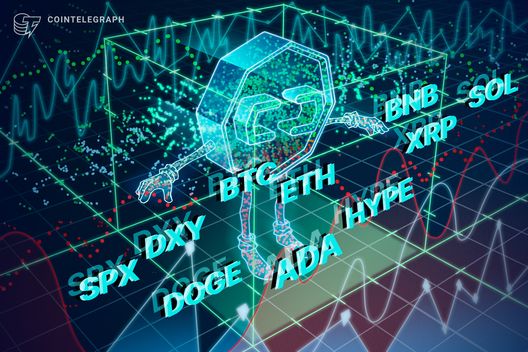
Bitcoin's failure to sustain the $70,000 level suggests bears remain in control, with some analysts predicting a drop below $60,000, indicating potential downside risk for the broader market. Despite bearish sentiment indicators for Bitcoin, contrarian signals from social media chatter suggest a potential shift in market psychology, hinting at a possible near-term reversal. Major altcoins are showing resilience by bouncing off support levels, but their recovery prospects are tied to Bitcoin's ability to break key resistance zones, highlighting interdependency within the crypto market.

The classification of XRP as a digital commodity by regulators signals a shift towards institutional adoption and integration into traditional finance's settlement infrastructure. Macro analyst Dr. Jim Willie posits that XRP, gold, and blockchain are foundational to a new financial system, driven by global distrust in the US dollar and increasing debt levels. The DTCC's potential use of XRP for settlement, processing quadrillions in transactions, suggests a profound price implication if even a small fraction of this volume is captured, with a hypothetical price target of over $500 cited. Regulatory clarity on digital assets is interpreted as governments actively shaping the transition from legacy financial rails to a new architecture, with XRP positioned as a key settlement bridge.
Signal context only. Validate with price action, liquidity, and risk limits before taking a position.
No explicit catalyst tagged.
XRP's price is testing resistance at $1.34, with a significant 1,237% liquidation imbalance favoring shorts, indicating strong market disbelief in a sustained rally. The upcoming Tokyo summit, featuring Ripple representatives and major Japanese financial figures, could be a catalyst for XRP, though short-term price action hinges on holding support at $1.28. While bears are positioned with a lower max pain level, the current liquidation trend suggests a potential shift favoring bulls if XRP can break above $1.35 towards $1.50.
