
200+ crypto news providers in one place.

CoinFeather
200+ crypto news providers in one place.

Quick market read from this story
Bitcoin has fallen below significant moving averages, indicating potential for increased downside pressure
Shiba Inu shows a hidden bullish divergence on momentum indicators despite a bearish price trend
XRP's rising trendline support around $1.30 has been invalidated, leaving it in a vulnerable phase
The market is experiencing weak demand and uncertainty, with short-term bounces risking further selling opportunities.
Deep Dive
Bitcoin (BTC) is facing increased downside pressure after losing key support zones, while Shiba Inu (SHIB) and XRP are struggling to regain momentum. The current market action indicates a weaker position for Bitcoin, with no strong technical underpinnings below current levels.
Bitcoin has broken out of consolidation patterns and fallen below significant moving averages that historically dictated medium- and long-term trends. This suggests buyers no longer hold a majority in the market. Attempts at recovery have been short-lived, indicating reactive demand rather than confident buying. Each bounce risks becoming another selling opportunity, and the $60,000 psychological floor may not hold if bearish momentum intensifies. Sharp downside movements and activity spikes, coupled with thinning liquidity after support breaks, point to aggressive repositioning and forced exits, increasing volatility.
Shiba Inu has fallen through several trendlines and local support levels, leaving it in a technically problematic position. Despite the overall downward trend and weak price action, momentum indicators are showing signs of stabilization, suggesting that selling pressure may be lessening even as the price declines. This mismatch between price and momentum is known as a bullish divergence, though it remains concealed due to the prevailing bearish market structure. For a significant recovery, SHIB would need to retake adjacent resistance areas.
XRP has lost its rising trendline around the $1.30 zone, which had served as a buffer and a guideline for recovery. This invalidation of the bullish setup makes recovery efforts more difficult, as the trendline acted as a psychological anchor for traders. The market has become unclear, and confidence is waning. Major moving averages remain above XRP's price, limiting upside potential and supporting a bearish mood. Without a clear technical framework like a strong consolidation zone or support level, XRP is more susceptible to erratic fluctuations and further downward pressure. A recovery narrative remains weak until XRP establishes a new support structure or reclaims the broken trendline.
Source, catalyst, and sector overlap from the latest feed.
Ripple unlocked 1 billion XRP from escrow, valued at approximately $1.377 billion. XRP price saw minimal reaction, rising 0.9% post-unlock, despite a 16.45% drop in February. Solana led market rebound with an 11% price surge to $88.89 following a $500M liquidation event. Elon Musk drew parallels between AI firm Anthropic and the collapsed FTX exchange.
Ripple executed its largest RLUSD stablecoin mint to date, totaling 69 million tokens. The minted RLUSD tokens are reportedly routed to the Gemini exchange. RLUSD market cap has surpassed $1.5 billion, indicating significant supply growth. Recent exchange integrations and partnerships, including Binance and LMAX Group, are driving RLUSD adoption.
Bitcoin surged past $69,000, triggering over $80 million in short liquidations. MicroStrategy shares rallied alongside BTC after a significant new purchase. Analyst Tom Lee predicts a crypto market bottom and April rally.
Michael Saylor's firm Strategy purchased 3,015 BTC for $204.1 million, increasing its total holdings to 720,737 BTC. Peter Schiff sarcastically commented on the purchase, continuing the gold vs. Bitcoin debate.
Cardano's ADA has formed an hourly death cross, signaling potential bearish momentum amidst a broader market liquidation event. Development continues with preparations for the Protocol Version 11 hard fork, including node upgrades and Plutus cost model updates.
Fundstrat's Tom Lee predicts a market-wide revival in March. Lee reiterates a $200,000-$250,000 target for Bitcoin in 2026. Ethereum is projected to reach $7,000-$9,000 by early 2026. AI-driven productivity, strong corporate earnings, and government support are cited as key drivers.
Crypto markets declined as geopolitical tensions escalated following reports of a US-Israel strike on Iran. Bitcoin dropped to around $66,127 from a brief high of $68,000. Ethereum fell to near $1,947, down approximately 2.46% in 24 hours. Investors moved towards traditional safe-haven assets like oil, gold, and silver, indicating reduced risk appetite for crypto.
Ethereum to implement Proposer-Builder Separation (ePBS) and Fork-Choice-Enforced Inclusion Lists (FOCIL) via Glamsterdam and Hegota upgrades this year. ePBS aims to decentralize block building and mitigate MEV, while FOCIL will prevent transaction censorship. Cardano's upcoming Midnight sidechain will offer similar privacy and transaction separation benefits. ETH and ADA prices are showing positive movement, influenced by broader market rallies and Bitcoin's performance.
Solana price is consolidating within a three-week triangle pattern. A break above $88.60 resistance is eyed as a key signal for potential upside. Solana has reclaimed the Ichimoku cloud on the four-hour chart for the first time since January. Moving averages (50 MA crossing 100 MA) also indicate a short-term momentum shift.
Live Feed
Loading the broader stream in the same flow as the homepage feed.
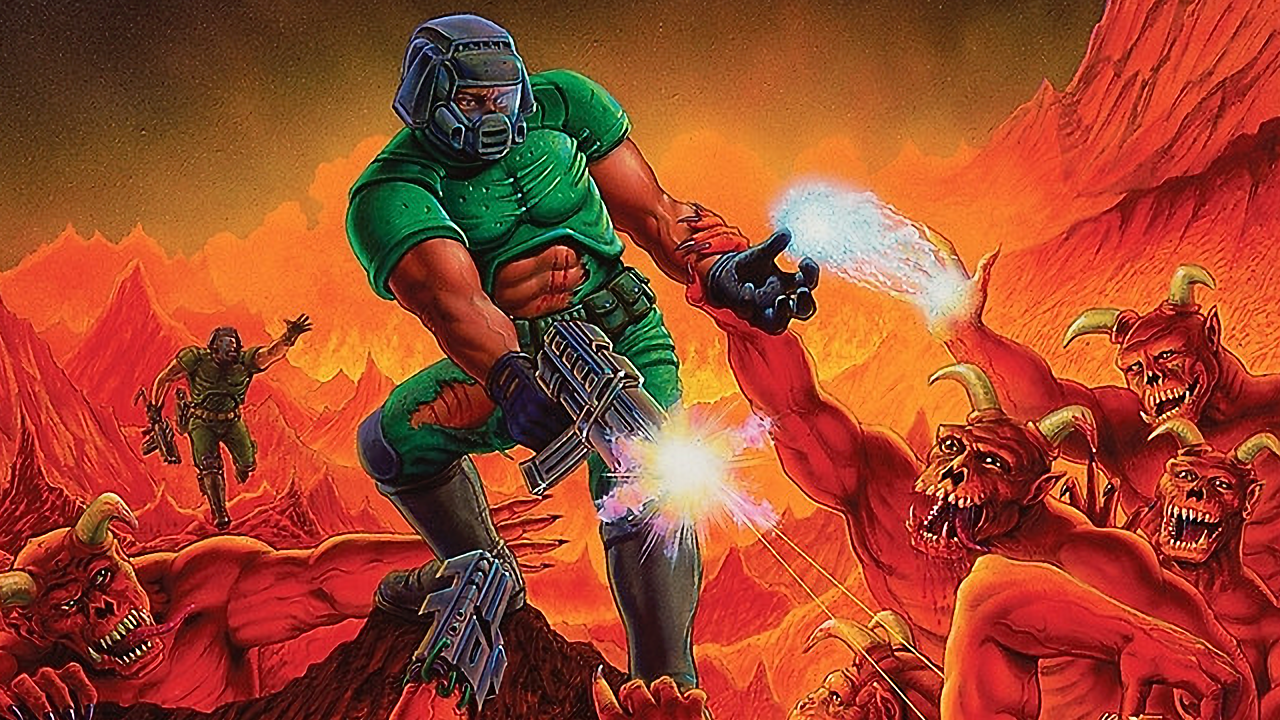
Human brain cells successfully trained to play the classic video game Doom. Experiment uses 200,000 living human neurons connected to the game via electrical stimulation and software. Cells learn through feedback and rewards, demonstrating adaptability and learning capabilities outside the brain. This development extends the 'Can it run Doom?' benchmark into biological computing.
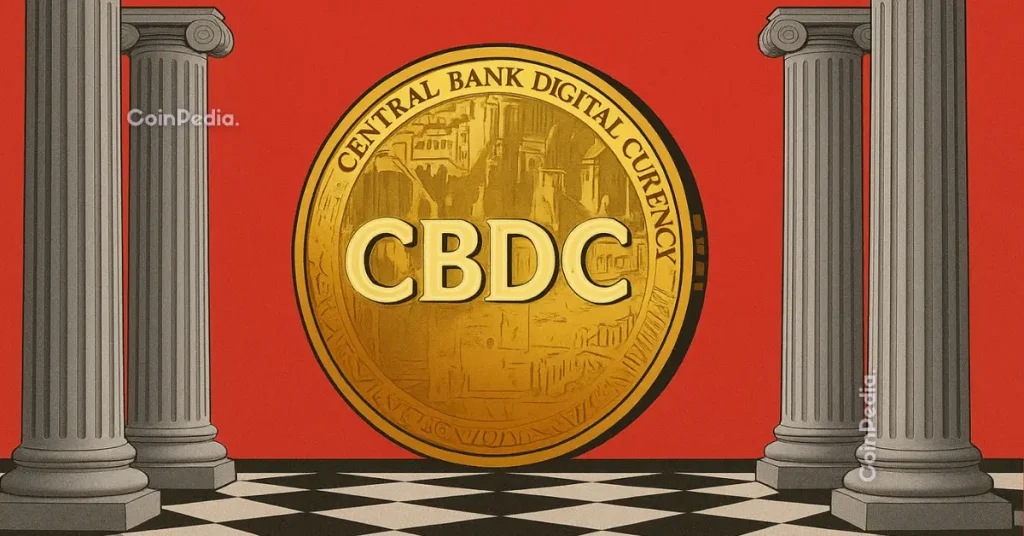
US Senate bill proposes ban on Central Bank Digital Currency (CBDC) development until 2031. The proposed ban is linked to claims of 'broken promises' regarding CBDC development. This legislative action indicates potential regulatory headwinds for CBDC initiatives in the US.
US Senate advances housing bill including a provision to ban central bank digital currency (CBDC) issuance until end of 2030. White House formally backs the bill, indicating President Trump would sign it if it reaches his desk. The CBDC ban is embedded within a broader housing package, a strategic move by House conservatives. Federal Reserve has previously stated any US CBDC would require explicit congressional approval and remains exploratory.

Iranian crypto outflows surged over 700% to over $500,000 within minutes of US-Israeli airstrikes. Outflows reached nearly $3 million in one hour on Nobitex, Iran's largest crypto exchange. Internet blackouts enforced by the Iranian regime significantly curbed further outflows. TRM Labs disputes capital flight conclusion, citing a downturn in transactions and volume due to internet restrictions.

US Senate Banking Committee includes provision banning Fed CBDC issuance until 2031. Bipartisan "21st Century ROAD to Housing Act" aims to boost housing supply. White House supports the bill and explicitly backs the CBDC provision. Ban includes exceptions for private dollar-denominated currencies preserving privacy.

Deloitte has completed the first attestation report for Tether's USAT stablecoin. USAT reserves totaled $17.6 million against $17.5 million in circulating supply as of Jan. 31. USAT reserves consist of cash and U.S. Treasuries held domestically. This move aims to build trust for USAT within the U.S. regulatory framework, differentiating it from Tether's global USDT.

New biodegradable packaging film developed from milk protein, starch, and volcanic clay. Material exhibits 1,000x reduction in water vapor permeability compared to similar biopolymer films. Film fully degrades in soil within approximately 13 weeks. Potential for low-tech scaling and application in developing countries.

PayPay, holding a 40% stake in Binance Japan, is pursuing a Nasdaq IPO aiming to raise up to $1.1 billion. The IPO targets a valuation exceeding $10 billion for the Japanese payments firm. PayPay's partnership with Binance Japan aims to integrate crypto with its cashless payment services. The IPO listing was postponed due to global market volatility following geopolitical events.

US authorities are seeking to recover $327,829 in USDt linked to a romance scam. The funds were traced to cryptocurrency wallets seized by the Justice Department. Tether has frozen approximately $4.2 billion in USDt connected to illicit activities since 2023.
Bitcoin mixers enhance privacy by obscuring transaction origins through pooling and redistribution. Mixero.io offers CoinJoin with an optional Monero bridge, starting at 0.7% fees. Tornado Cash, a decentralized Ethereum mixer, has over $1 billion TVL. Wasabi Wallet integrates CoinJoin with a 0.3% coordinator fee, waived for small transactions.
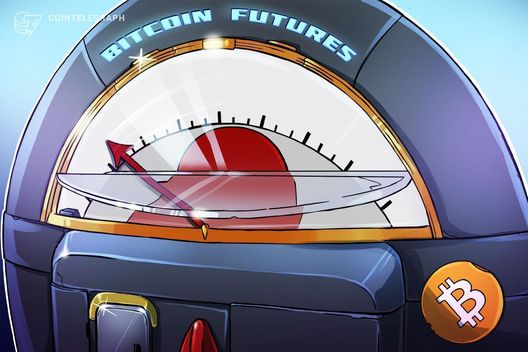
Bitcoin futures open interest declined to $32 billion, lowest since August 2024 in BTC terms. Annualized premium on Bitcoin monthly futures dropped to 2%, indicating reduced demand for leveraged positions. Despite futures demand drop, CME Bitcoin futures open interest remains at $7.5 billion, suggesting institutional presence. Bitcoin options market shows balanced demand with put-to-call premiums near 0.7, indicating no major stress.

US prosecutors seek forfeiture of $327,829 in USDT linked to a crypto romance scam. Victim was defrauded after being convinced to invest in a fake cryptocurrency opportunity. Funds were laundered through multiple wallets and converted to USDT. This action follows recent warnings from US prosecutors about crypto-related romance scams.

Core Scientific reported Q4 revenue of $79.8 million, missing estimates of $122.08 million. The company posted a Q4 loss of $0.42 per share, wider than the expected $0.08 loss. Core Scientific is expanding its colocation platform and AI-focused infrastructure services. Riot Platforms reported Q4 revenue of $647.4 million, significantly exceeding estimates.

TD Securities views NYSE's tokenized equities plan as a market structure turning point for institutional adoption. The NYSE platform aims for 24-hour trading and near-instant settlement of tokenized stocks and ETFs. This development integrates blockchain settlement within existing US market rules and NBBO requirements. Tokenized assets, particularly RWAs, have seen continued capital inflows despite broader market volatility.
Signal context only. Validate with price action, liquidity, and risk limits before taking a position.
