
Navigating Crypto News

CoinFeather
Navigating Crypto News
Quick market read from this story
Major corporations like Coca-Cola and American Airlines exploring on-chain payments via Ripple Treasury signals a significant shift towards enterprise adoption of blockchain for treasury functions.
The integration of Ripple Treasury with traditional systems like SWIFT indicates a closing gap between legacy finance and digital assets, potentially driving broader institutional interest and capital inflow.
This development highlights the practical application of blockchain technology in improving cross-border payments, liquidity management, and decision-making for large enterprises, moving beyond speculative use cases.
Source, catalyst, and sector overlap from the latest feed.
The CLARITY Act's legislative progress is facing increased scrutiny due to ethical concerns surrounding Donald Trump's memecoin activities, potentially influencing the bill's final provisions and market structure framework. Despite ethical headwinds from memecoin controversies, key figures like David Sacks and Treasury Secretary Scott Bessent are pushing for the CLARITY Act's swift passage, signaling a coordinated effort to establish regulatory clarity before the upcoming elections. Disagreements persist between law enforcement and DeFi advocates regarding provisions that could exempt crypto developers from licensing, creating a complex negotiation dynamic that could impact innovation and regulatory oversight. Coinbase's renewed support for the CLARITY Act, following earlier objections, indicates a potential resolution on stablecoin interest payment provisions and suggests growing industry alignment towards the bill's passage.
Live Feed
Loading the broader stream in the same flow as the homepage feed.
World Liberty Financial's governance token WLFI experienced a significant market cap drop of $427 million due to concerns over its DeFi loan strategy and a proposed token unlock. The project's substantial USDC loans from Dolomite, collateralized by a large portion of WLFI supply, have raised fears of potential bad debt for the DeFi protocol if liquidated. A proposed governance vote to unlock early holder tokens introduces supply-side pressure, potentially exacerbating price declines if not managed with a clear vesting schedule. Despite assurances of not being near liquidation, the lack of clarity on debt repayment and the transfer of borrowed stablecoins to exchanges suggest underlying financial strain.

Public disputes between founders of major exchanges like OKX and Binance, while not directly impacting trading, can create reputational noise and highlight ongoing governance or historical issues. The resurfacing of decade-old allegations between Star Xu and CZ, triggered by CZ's memoir, suggests lingering unresolved conflicts that could potentially resurface in future regulatory or legal contexts. The $1 billion wager proposed by CZ and rejected by Xu due to compliance concerns underscores the increasing regulatory scrutiny on major crypto entities and their founders.
Japan's regulatory clarity classifying crypto as financial products is a key driver for the current market rally, potentially increasing institutional confidence and adoption. Bitcoin is testing a critical resistance zone between $72,000 and $76,000, with a sustained break above this level potentially signaling a move towards $85,000–$86,000. Ethereum's bullish inverse head and shoulders pattern remains intact above $2,150–$2,250, targeting $2,430, but a break below this support would invalidate the setup. XRP is holding a crucial support zone around $1.30–$1.35, suggesting limited downside risk as long as this level is maintained, with potential sideways trading expected.

Cardano's golden cross on the 2-hour chart signals a potential short-term bullish trend, but its ability to sustain momentum hinges on breaking out of the current $0.233-$0.2935 range. The increase in Cardano whale addresses holding over 10 million ADA to a four-month high suggests accumulating sentiment from larger holders, potentially creating a bullish divergence if price remains suppressed. Despite the golden cross, ADA's price action remains range-bound, indicating that broader market sentiment and macroeconomic factors, such as inflation and Fed policy, are currently overshadowing technical signals. The emergence of signs of a structural floor in the broader crypto market, coupled with ADA's sideways trading, suggests a period of consolidation before a potential breakout, influenced by overall market trends.

Everything EV token is experiencing a surge in attention driven by high staking APRs, attracting both genuine believers and short-term opportunists. Despite increased user interest and staking activity, a significant decline in Total Value Locked (TVL) suggests that capital is not remaining committed, raising sustainability concerns. The project's reliance on high yields and limited liquidity venues indicates a potentially fragile growth model, warranting a cautious approach to its price action. While the project highlights its experienced team and self-funded capital, market performance is ultimately dictated by capital flows, which currently show signs of volatility.
Softer than expected Core CPI data suggests the Federal Reserve may maintain its pause on interest rate hikes, creating a more favorable environment for large-cap altcoins like XRP. XRP's ability to hold above $1.34 despite rising energy prices indicates resilience, with the market interpreting the inflation report as acceptable and avoiding significant sell-offs. The current market sentiment, influenced by the Fed's potential pause and the crypto market's role as a hedge against instability, provides an upward bias for XRP without triggering excessive volatility.
Bitcoin's surge past $73,000 was primarily driven by energy price inflation due to geopolitical tensions, while core CPI remained subdued, suggesting the Federal Reserve is unlikely to alter its monetary policy stance in the immediate future. The upcoming US-Iran peace talks this weekend present a potential catalyst for further Bitcoin gains if a de-escalation occurs, easing energy price pressures and strengthening the case for eventual rate cuts. While Bitcoin has broken key psychological levels, sustained price action above $73,000 and a confirmed breakout above $75,000 will be critical indicators for the continuation of the current rally.
Deribit to register a Bitcoin and Ethereum options expiry event that is worth $2.2 billion.
The revival of Ryoshi's founding principles for Shiba Inu emphasizes community holding and contribution, signaling a focus on long-term resilience over short-term price action. While the message aims to reinforce community commitment, it lacks specific catalysts or developments, suggesting a neutral near-term market implication for SHIB. The article references broader market catalysts like CPI data, indicating that SHIB's price movement may be more influenced by macroeconomic factors than internal messaging.
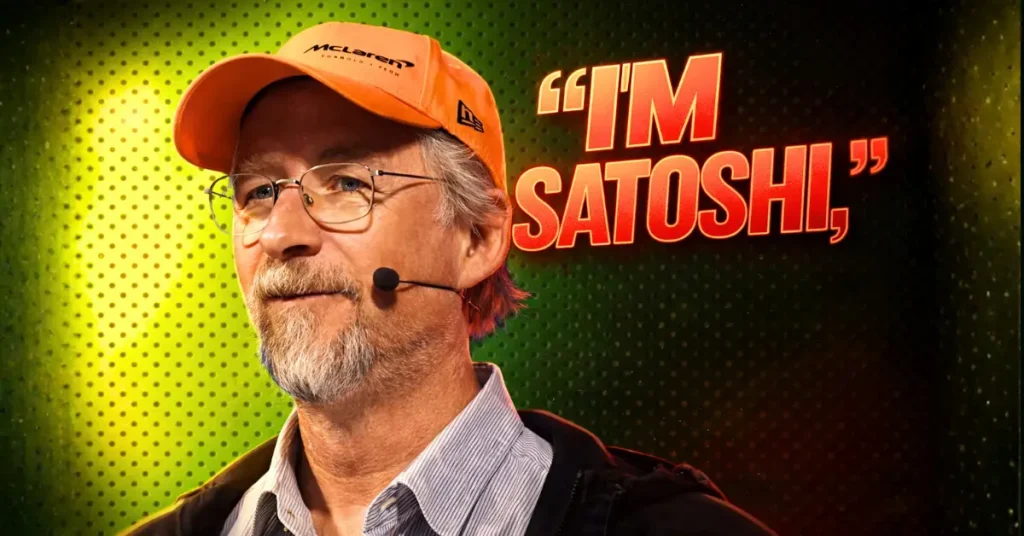
Adam Back, CEO of Blockstream, has publicly denied being Satoshi Nakamoto in response to a New York Times investigation, reinforcing his prior statements. Back's detailed response, including his confirmation of receiving the first email from Satoshi Nakamoto in 2008, adds context to the ongoing mystery but does not provide definitive proof of Satoshi's identity. The market impact of this denial is likely minimal as it reiterates existing information and does not introduce new catalysts for price movement in Bitcoin or related assets.
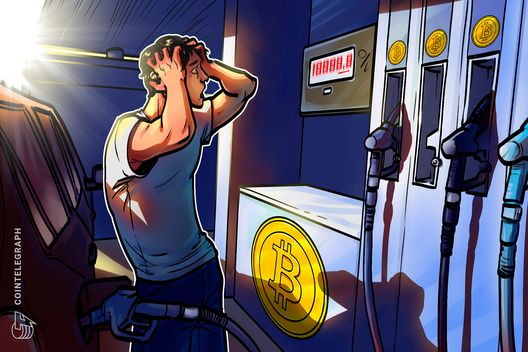
Bitcoin approached new local highs near $73,000 following slightly cooler-than-expected US CPI data, indicating potential positive market sentiment despite significant gasoline price increases. The mixed inflation signals, with a historic surge in gasoline prices but overall CPI below expectations, suggest continued uncertainty regarding Federal Reserve interest rate policy, limiting immediate strong directional moves. Traders are closely monitoring key resistance levels around $73,000-$74,000 and support near $71,000, with price action within a narrowing wedge pattern suggesting a potential breakout is imminent.

The White House has issued a warning to staff regarding the use of confidential information for market bets, following suspicious oil futures trades that coincided with a major policy announcement on Iran. This event has intensified scrutiny on potential insider trading by officials and politically connected individuals, potentially leading to stricter regulations for prediction markets and commodity futures. Multiple bipartisan bills have been introduced in Congress aimed at banning government officials, including members of Congress and the President, from participating in prediction markets, signaling a significant regulatory push.

Adam Back's assertion of Satoshi Nakamoto's British nationality, while speculative, adds a narrative layer to the ongoing mystery surrounding Bitcoin's creator. The discussion around Satoshi's identity and potential motivations for anonymity, referencing historical cryptography figures, highlights the enduring importance of privacy and security in the crypto space. While this news is primarily narrative-driven, it touches upon the foundational aspects of Bitcoin's origin, which could indirectly influence long-term sentiment for BTC holders.
Signal context only. Validate with price action, liquidity, and risk limits before taking a position.
Concerns over centralized governance within Bittensor, highlighted by Covenant AI's exit, have triggered a significant price drop for TAO, signaling investor apprehension about the project's decentralization claims. The dispute, involving accusations of concentrated power and suspended subnet emissions, has led to an 18.7% decline in TAO's price, indicating a negative market reaction to governance issues. While Bittensor's founder denies direct control over emissions, the market's interpretation of these governance disputes as a fundamental flaw could lead to sustained downward pressure on TAO.
