
Navigating Crypto News

CoinFeather
Navigating Crypto News

Quick market read from this story
A debate on Cardano's decentralization versus network usage, sparked by a researcher's 'ghost town' claim, highlights a key tension for investors evaluating its long-term utility.
The partnership between Midnight Network and Worldpay signals a push towards real-world use cases and compliance in privacy-focused solutions, potentially boosting Cardano's adoption narrative.
Despite ongoing development and new partnerships, the core debate around Cardano's low transaction volume versus its claimed decentralization creates uncertainty for near-term price action.
Analysts suggest ADA may be in a long-term accumulation phase, but the current decentralization debate could influence investor perception and future price breakouts.
Deep Dive
The decentralization of the Cardano crypto network has become a focal point of discussion, with a prominent researcher labeling it the most decentralized blockchain while simultaneously criticizing its low network usage. This debate unfolds against a backdrop of new partnerships, including Worldpay joining the Midnight Network, and ongoing development, as analysts suggest Cardano's price may be in a long-term accumulation phase.
Digital asset researcher Justin Bons asserted that Cardano is now the most decentralized blockchain. However, he characterized the network as a “ghost town” due to low activity levels, questioning the sufficiency of decentralization without strong network usage and scalability. Bons argued that a balance between decentralization and practical utility is crucial for blockchains to have a real impact, aligning with the original cypherpunk movement's ideals.
Members of the Cardano community countered Bons' assessment, highlighting approximately 120 million transactions processed to date. They also pointed to recent integrations like USDCx, with over $14 million minted, and advancements in LayerZero integration and zero-knowledge proofs as indicators of growth. Despite these points, Bons maintained his stance, citing an average network usage of around 0.3 transactions per second and comparing it unfavorably to blockchains processing hundreds or thousands of transactions per second.
In parallel, the Cardano ecosystem is seeing progress through related projects. The Midnight Network, focused on privacy and compliance, has partnered with Worldpay, a major payment infrastructure provider serving over six million merchants and processing trillions of dollars annually. Worldpay will act as a federated node operator on Midnight, supporting its upcoming mainnet operations.
This collaboration aims to test a stablecoin payment system using USDG, demonstrating how merchant networks can adopt blockchain settlement while adhering to AML and KYC requirements. The initiative will also prioritize transaction data confidentiality for both B2B and B2C payments, reflecting a broader effort to integrate real-world use cases into the Cardano ecosystem.
Market analysis suggests that the ADA price may be undergoing a long-term accumulation phase, with the cryptocurrency trading within a range of $0.25 to $0.18 for an extended period. Some analysts predict significant price increases, potentially reaching $1, $3, and beyond, should momentum return. This perspective is based on the idea that prolonged periods of low price movement can precede strong breakouts.
However, the ongoing debate surrounding Cardano's decentralization and network usage could influence investor perception. While low usage might raise concerns, continued development and strategic partnerships like the one with Worldpay could bolster investor confidence. The differing viewpoints—critics emphasizing activity and scalability versus supporters highlighting steady progress and long-term plans—are expected to shape Cardano's future trajectory.
Source, catalyst, and sector overlap from the latest feed.
Bitcoin's open interest surge alongside a price drop and declining CVD indicates aggressive selling pressure, potentially driven by new short positions and long liquidations. The BTC price is testing a critical support zone between $69,000 and $70,000, with a breakdown potentially leading to a significant correction, while holding support could signal a renewed upward push. Recent outflows from spot Bitcoin ETFs, totaling $163.5 million on March 18, suggest a temporary cooling of institutional demand, coinciding with broader market risk-off sentiment.
Bitcoin Everlight introduces a novel infrastructure layer designed to generate passive BTC-denominated fees through transaction routing, offering an alternative to direct Bitcoin acquisition for retail investors. The project's dual-phase reward system, transitioning from fixed BTCL APY during presale to performance-based BTC distribution post-mainnet, presents a structured incentive model for early participants. With completed smart contract audits and KYC verifications, Bitcoin Everlight aims to build trust before its token generation event, mitigating some presale risks. The tiered shard system, offering varying APY rates and future BTC earning potential based on commitment levels, provides a clear framework for user engagement and potential upside.
Bitcoin ETFs experienced significant outflows totaling $163.5 million, breaking a seven-day streak of inflows, which suggests a potential shift in institutional sentiment and could pressure BTC price downwards in the short term. The outflows from Bitcoin ETFs, particularly from major players like Fidelity and BlackRock, coincide with broader market volatility driven by geopolitical tensions, indicating that macro factors are currently outweighing positive ETF demand. The breaking of the inflow streak and subsequent price dip below $70,000, coupled with increased liquidations, signals a potential short-term bearish trend for Bitcoin as leveraged positions are unwound. Ethereum ETFs also saw outflows, suggesting a broader risk-off sentiment affecting not just Bitcoin but also other major digital assets, potentially indicating a temporary cooling of institutional interest across the crypto market.
Visa's new CLI tool enables AI agents to execute payments directly, bypassing traditional APIs and enhancing machine-to-machine transactions. Stripe-backed Tempo's blockchain launch focuses on high-throughput stablecoin payments for automated agents, signaling a push for specialized infrastructure. The simultaneous launches of Visa's CLI and Tempo's blockchain highlight a competitive race to establish standards for AI-driven payment systems. These developments indicate a significant shift towards programmable payments and autonomous financial agents, potentially impacting future transaction infrastructure.
US regulators have classified XRP as a digital commodity, shifting oversight to the CFTC and providing significant regulatory clarity that could reduce barriers for institutional adoption. Despite the positive regulatory development, XRP's price has not yet recovered to previous highs, indicating that market sentiment is still influenced by broader macro factors and Bitcoin correlation. The joint interpretive guidance from the SEC and CFTC establishes a more structured regulatory framework for crypto assets, potentially impacting how other major non-stablecoin cryptocurrencies are classified. While regulatory clarity is a positive step, the market awaits further legislative developments and consistent execution to fully unlock institutional engagement and broader adoption for XRP.
Ondo Finance's expansion to over 250 tokenized assets, including major institutional products like BlackRock's IBIT, signifies a maturing RWA market and increased adoption of tokenized securities. The integration of Ondo's offerings by major exchanges like Bitget and Binance, with Bitget capturing significant trading volume, highlights growing accessibility and demand for tokenized traditional assets within the crypto ecosystem. The RWA sector's substantial growth, reaching $27.35B in distributed value and demonstrating strong performance, positions tokenized stocks as a significant and rapidly expanding segment within digital finance.
XRP's potential $3 price target in April hinges on a confluence of catalysts including Fed rate decisions and the CLARITY Act, coupled with sustained low open interest, mirroring conditions that previously fueled a significant rally. While XRP's price action is tied to macroeconomic factors and regulatory developments, Remittix presents an alternative investment thesis focused on immediate revenue generation from its live payment infrastructure, aiming for substantial returns independent of XRP's speculative drivers. The article contrasts XRP's reliance on external catalysts and market momentum with Remittix's operational revenue model, suggesting that projects with tangible utility and early traction in large markets like cross-border payments offer a more predictable and potentially higher upside than established assets awaiting broader market shifts.
The XRP Ledger's integration of Agent Commerce, enabling AI agents to transact autonomously, signals a significant shift towards programmable economies and machine-to-machine payments. Ripple's $5 million investment in t54 underscores a strategic bet on AI-driven DeFi and the infrastructure required for autonomous transactions, potentially positioning XRPL as a key platform for future digital commerce. This development aligns with broader industry trends, as highlighted by Coinbase's CEO, suggesting that autonomous agents, rather than human traders, may drive the next wave of crypto adoption and transaction volume. By embedding trust layers like escrow and instant settlement, XRPL is building a foundation for a self-operating marketplace, reducing reliance on intermediaries and paving the way for trillions in on-chain payments.
Nvidia's expanded deal with AWS to supply 1 million GPUs through 2027 signifies a deepening reliance on its AI infrastructure stack by major cloud providers, driven by a significant shift towards inference workloads which now represent two-thirds of AI compute. The substantial commitment from AWS highlights the growing demand for AI processing power and suggests that despite developing its own chips, AWS will continue to integrate Nvidia's full stack, creating high switching costs and solidifying Nvidia's foundational role in AI infrastructure. This development underscores the rapid evolution of AI infrastructure, with Nvidia increasingly acting as the underlying layer for cloud providers, impacting competition and the economics of running AI models at scale.
Coinbase's tokenization of its Bitcoin Yield Fund on Base signifies a growing trend of traditional finance products integrating with blockchain infrastructure. The use of the ERC-3643 standard highlights a focus on regulatory compliance, enabling identity and eligibility checks at the token level for institutional access. This development, alongside similar initiatives from BlackRock and Fidelity, suggests a broader institutional push towards on-chain asset management and yield generation for non-native crypto assets. The launch on Base, Coinbase's own Layer 2 network, reinforces its strategic positioning and ecosystem development within the broader Ethereum scaling landscape.
The upcoming $1.7 billion Bitcoin options expiry near the $70,000 'max pain' level introduces significant short-term price uncertainty as market makers aim to minimize payouts. Ongoing selling pressure from short-term holders, with over 28,000 BTC sent to exchanges at a loss, suggests potential capitulation that could precede a market bottom, though confirmation is pending. Bitcoin's relative resilience against geopolitical pressures impacting gold and equities indicates a potential maturation of crypto as an asset class, though this remains to be seen. The approaching critical threshold on the Realized Cap Impulse indicator, particularly the long-term version nearing negative territory, historically signals the mid-phase of a bear market, warranting close observation.
Central banks, including the Fed and ECB, are revising inflation forecasts upward due to rising energy prices, signaling a potential shift towards a 'higher-for-longer' interest rate environment. Bitcoin's recent dip below $70,000 is interpreted as a direct market reaction to the repricing of global monetary policy expectations, highlighting its sensitivity to macro liquidity conditions. The narrative of imminent interest rate cuts is being challenged by persistent inflation concerns, suggesting that Bitcoin's primary macro tailwind may be weakening, potentially leading to further downside if energy prices remain elevated. The market is now pricing in a higher probability of interest rate hikes rather than cuts from major central banks, forcing a reassessment of risk asset valuations, with Bitcoin acting as an immediate barometer for this liquidity recalibration.
Cardano's DeFi ecosystem has achieved a new record with over 520 million ADA locked, driven by the successful launch of USDCx and recent regulatory clarity from the SEC classifying ADA as non-security. The combination of a robust stablecoin offering (USDCx) and reduced regulatory uncertainty is expected to attract further liquidity, potentially propelling Cardano's TVL towards the one billion ADA milestone in the near future. Anticipation for the upcoming v11 hard fork, which aims to boost Cardano's transaction throughput to 1,000 TPS, adds another layer of fundamental development supporting potential growth in DeFi activity.
Live Feed
Loading the broader stream in the same flow as the homepage feed.

Derivatives markets are signaling increased demand for downside protection, with rising skew and backwardation indicating traders are bracing for near-term volatility events. Despite a brief oil-driven risk-on sentiment, broader market fragility persists as indicated by falling equity futures, suggesting caution for crypto assets. While major cryptocurrencies remain range-bound, pockets of strength in altcoins like QNT and FET, driven by specific catalysts such as listings, suggest selective opportunities may emerge. The stabilization of Bitcoin open interest and normalized funding rates indicate a pause in speculative fervor, but the cautious institutional conviction suggests a lack of strong directional bias.

South Korea's National Tax Service is outsourcing custody of seized crypto following a significant security lapse that led to a $4.8 million loss, indicating a move towards formalizing digital asset management by government entities. The NTS's initiative to select a private custodian by H1 2026, coupled with the formation of a new task force, signals a structural effort to improve security and operational procedures for confiscated digital assets. This development highlights the ongoing challenges governments face in securely managing seized cryptocurrencies, potentially influencing other jurisdictions to review their own custody protocols.

The BTC/Gold ratio is exhibiting classic bottoming signals with oversold RSI recovery and an impending MACD bullish cross, historically preceding significant Bitcoin rallies against gold. Bitcoin's price action is at a critical juncture, needing to defend the $68,000-$70,000 support zone, which includes the 200-week EMA, to avoid a potential retest of lower range lows. Technical indicators suggest a potential macro bottom for Bitcoin relative to gold, mirroring patterns from previous cycles that led to substantial price appreciation.

The expiration of $2.1 billion in Bitcoin and Ethereum options today introduces potential short-term volatility as markets may gravitate towards 'max pain' levels of $70,000 for BTC and $2,150 for ETH. While options expiries can cause price swings, the current expiry value is slightly lower than the previous week's, potentially moderating the immediate impact on market dynamics. Recent outflows from spot Bitcoin ETFs add a layer of caution, suggesting some investor hesitancy that could influence price action around the options expiry event.
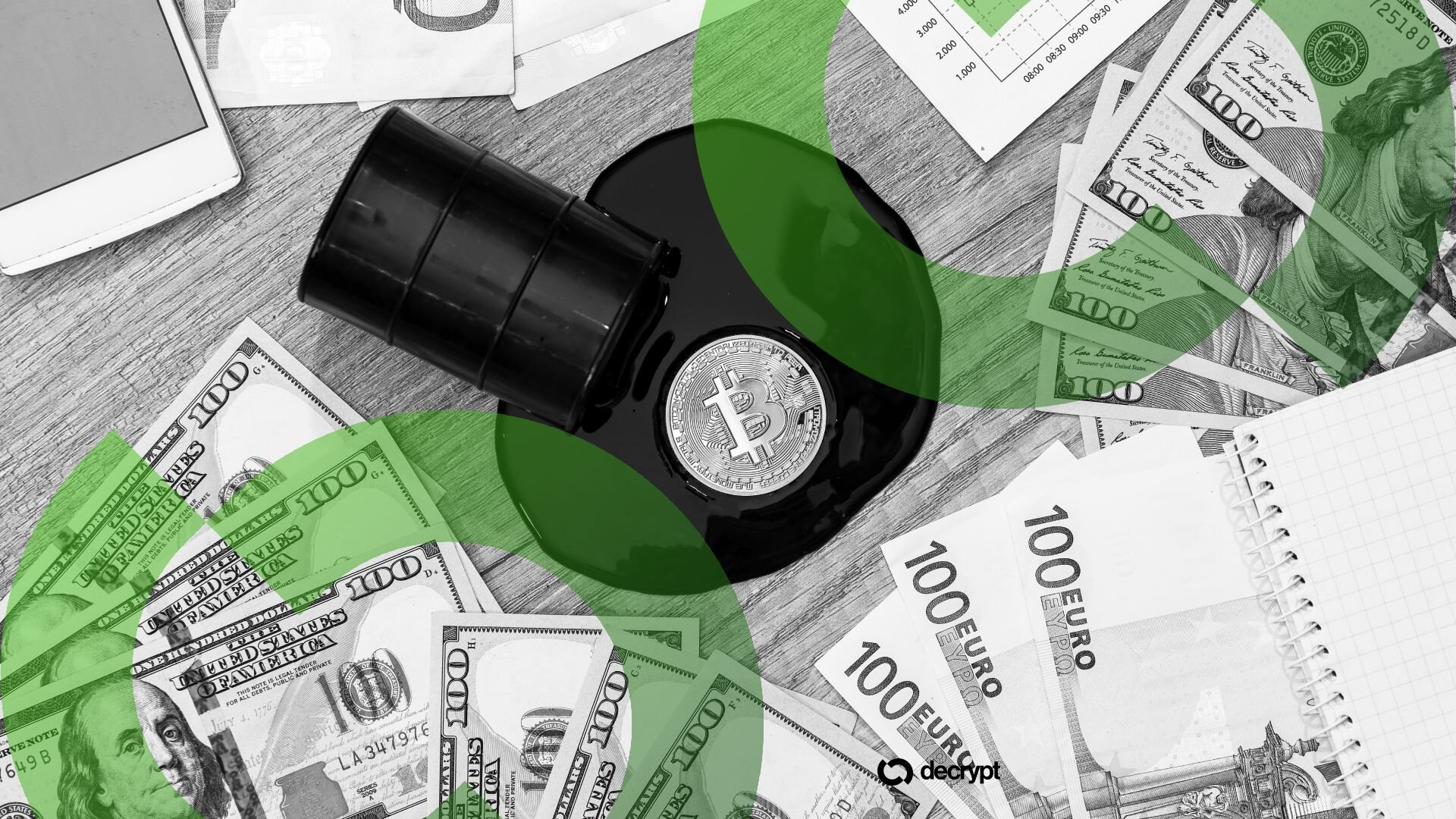
Bitcoin's rally to $71K is directly linked to potential U.S. sanctions relief on Iranian oil, suggesting a short-term correlation between geopolitical energy market shifts and crypto asset performance. The market's sensitivity to oil price swings and Middle East geopolitical events highlights Bitcoin's increasing integration into broader risk portfolios, making it susceptible to macro-economic and geopolitical shocks. Analysts warn of potential further oil price increases to $200 per barrel if the Strait of Hormuz is disrupted, which could negatively impact Bitcoin by potentially keeping interest rates higher for longer, dampening risk appetite.

The World Gold Council's 'Gold as a Service' proposal aims to standardize tokenized gold infrastructure, potentially increasing fungibility and liquidity for assets like XAUT and PAXG by creating shared backend systems for custody, compliance, and redemption. Bybit's launch of a yield-bearing product on Tether Gold (XAUT) simultaneously addresses gold's traditional weakness of earning no yield, suggesting a market push to make tokenized gold more competitive with stablecoins. The WGC's initiative, backed by its success with the GLD ETF, signals a significant institutional effort to overhaul the tokenized gold market, aiming to bridge the gap between the $5 billion tokenized gold market and the $163 billion traditional gold ETF market. While the 'Gold as a Service' proposal is conceptual and requires industry adoption, it represents a potential structural upgrade for the tokenized gold sector, aiming to attract broader investor participation by simplifying trust and accessibility.

Hyperliquid's market cap surge past Cardano highlights a market rotation towards platforms demonstrating strong user activity and revenue generation, potentially signaling a shift in investor preference. Arthur Hayes' $150 price target for HYPE, based on its revenue-sharing buyback model, suggests a bullish outlook for exchanges with sustainable tokenomics, contrasting with slower-growing ecosystems. While Cardano shows a technical buy signal, its slower ecosystem growth and current market cap underperformance relative to Hyperliquid indicate a need for renewed adoption to regain momentum.

Dogecoin's price action is diverging from whale accumulation, indicating a potential lack of retail interest and reliance on speculative momentum rather than fundamentals. Remittix is presented as a utility-focused alternative to meme coins like Dogecoin, targeting the $19 trillion payments market with a live product and exchange listings. The narrative suggests a shift from 'attention economy' meme coins to 'necessity economy' protocols, implying a potential rotation of capital towards projects with tangible use cases.
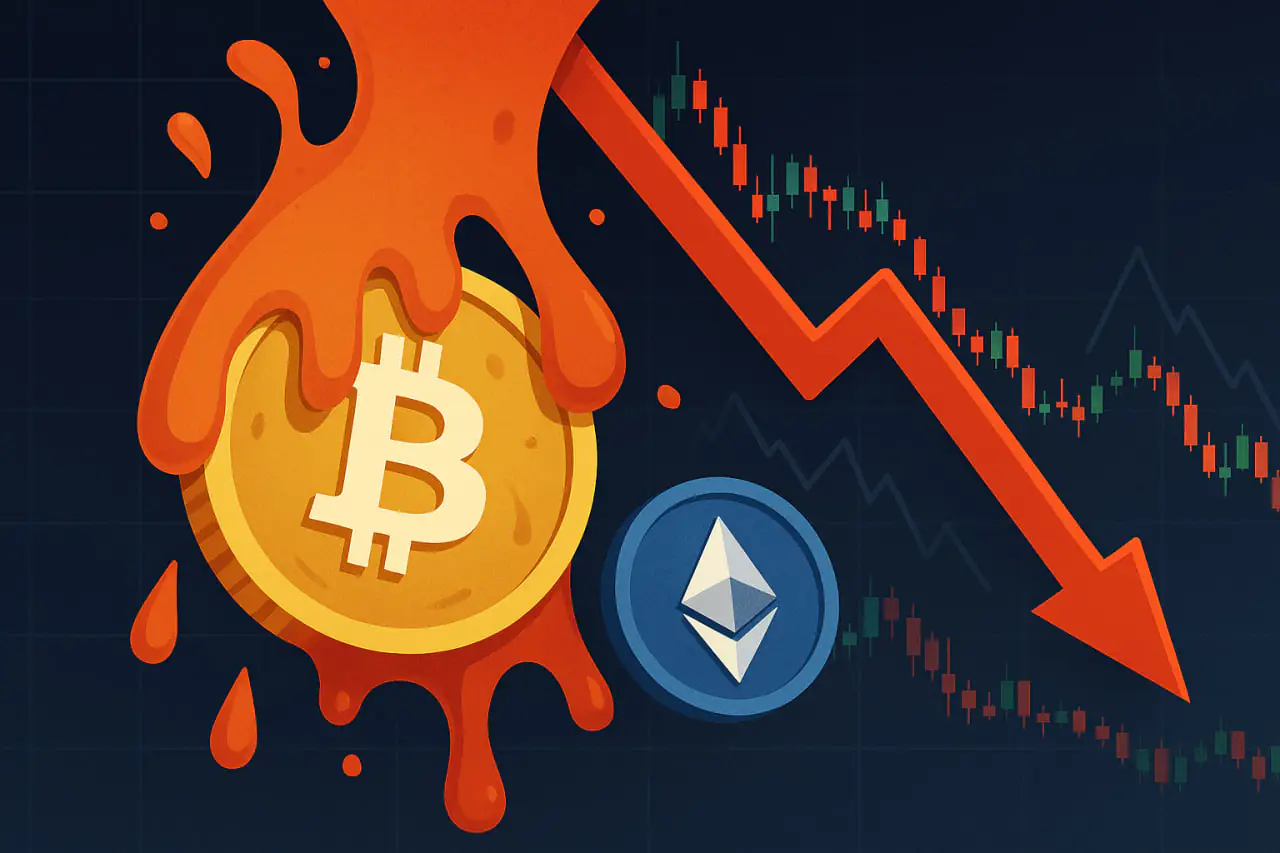
Bitcoin and Ethereum ETFs experienced significant net outflows totaling $90 million and $131 million respectively on March 19, signaling a reversal from earlier inflows and a cooling of institutional demand amid weakening price momentum. The broad-based outflows from major issuers like BlackRock and Fidelity suggest a shift in institutional sentiment, with investors becoming more reactive to short-term price movements and contributing to downside pressure. The alignment of negative ETF flows with consolidating spot prices for BTC and ETH indicates a potential loss of upward momentum, as the market relies less on ETF inflows to absorb selling pressure. While Solana ETFs saw minimal activity and XRP ETFs stalled, the overall trend of outflows from major crypto ETFs points to a cautious institutional stance, reflected in the 'extreme fear' sentiment and subdued Altcoin Season Index.
XRP is consolidating near a critical $1.45 support level, with increasing trading volume across major exchanges suggesting building momentum for a potential breakout. The asset's price action is tightening within a six-year compression pattern, indicating a significant expansion phase may be imminent, with analyst projections suggesting a potential $3-$8 range. Elevated trading volumes on platforms like Binance and Upbit, coupled with XRP recently surpassing BNB in market cap and strong regional demand in South Korea, signal growing institutional and retail interest.
The launch of BlackRock's staked ETH ETF, attracting hundreds of millions in inflows, signals strong institutional demand for Ethereum's yield-generating capabilities and is a key driver of its recent price surge. While ETF inflows are boosting ETH price, analysis suggests that approximately 75% of recent gains are driven by this liquidity rather than core network usage, indicating a potential for volatility if inflows slow. The Remittix (RTX) presale success, raising over $29.7 million, highlights strong retail interest in payment-focused tokens and their potential to bridge blockchain technology with real-world financial transactions. The confluence of institutional ETF demand for ETH and retail interest in payment solutions like Remittix suggests a dual-pronged market narrative: institutional yield-seeking and grassroots payment adoption.
Global finance leaders increasingly view digital asset solutions as essential for competitiveness, indicating a significant shift in institutional adoption trends. Stablecoins are evolving beyond payment tools to become a primary treasury management instrument, with 74% of finance leaders recognizing their potential to enhance cash-flow efficiency. Fintech firms are leading the charge in digital asset integration, with a notable portion accepting stablecoin payments and driving demand for comprehensive custody and orchestration services. The strong demand for integrated custody and compliance solutions highlights a maturing institutional market seeking reliable infrastructure partners for digital asset operations.
Signal context only. Validate with price action, liquidity, and risk limits before taking a position.
