
Navigating Crypto News

CoinFeather
Navigating Crypto News
Quick market read from this story
The Federal Reserve's decision to hold interest rates steady and signal fewer rate cuts than anticipated presents a headwind for risk assets like Bitcoin by maintaining elevated capital costs.
Despite the 'higher for longer' rate environment, Bitcoin's narrative as a hedge against fiat debasement could be reignited by the Fed's acknowledgment of 'sticky' inflation, creating a dual market dynamic.
The FOMC's hawkish dot plot, projecting minimal to no rate cuts in 2026 and a revised higher long-run terminal rate, suggests a prolonged period of tighter monetary conditions impacting crypto market liquidity.
Deep Dive
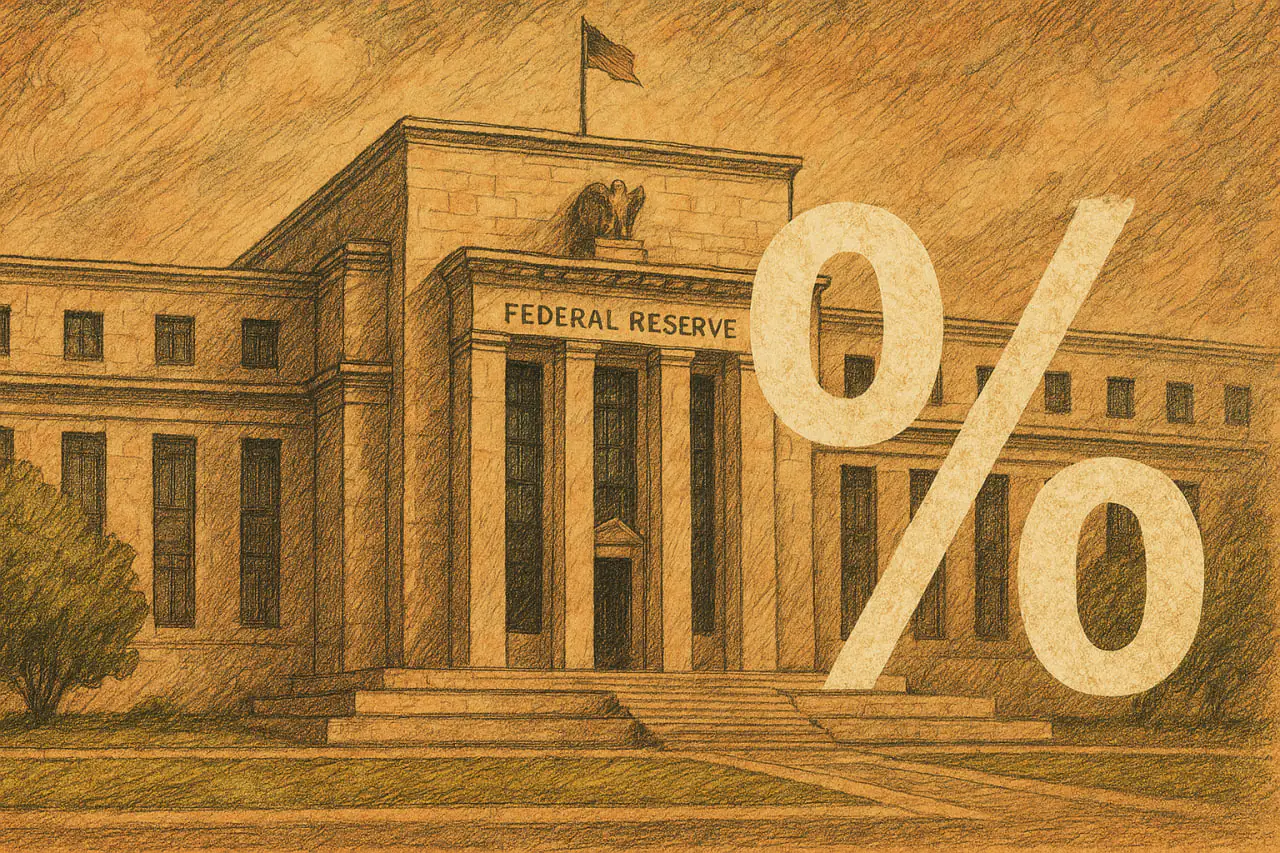
The Federal Reserve has decided to maintain its benchmark interest rate within the 3.5%-3.75% range, indicating a cautious monetary policy as the U.S. economy continues to grapple with persistent inflation. This decision comes as Bitcoin approaches the $72,000 mark, with the broader digital asset market now adjusting to the reality of elevated capital costs for the foreseeable future.
The Federal Open Market Committee (FOMC) voted 11-1 to keep interest rates unchanged. However, the decision was not unanimous, as Federal Reserve Governor Stephen Miran dissented, advocating for an immediate 25-basis-point rate cut. Despite this dovish perspective, the majority of the committee remains focused on ongoing economic pressures. The FOMC also noted the uncertainty surrounding the macroeconomic implications of developments in the Middle East.
Investor focus has been drawn to the Fed's updated projections, which suggest a more hawkish outlook. The committee maintained its forecast for only one rate cut in 2026 and one in 2027. Notably, seven policymakers anticipate zero rate cuts in 2026, and one official foresees rates increasing in 2027. The median projection for the federal funds rate at the end of 2026 remained at 3.4%, with the long-run terminal rate revised upward to 3.1%.
Historically, Bitcoin has benefited from accommodative monetary policy and ample liquidity. The Fed's commitment to a "higher for longer" interest rate stance presents a traditional headwind for risk assets like Bitcoin. With the benchmark rate held steady and rapid rate cuts off the table, traditional yield-bearing assets, such as Treasury bonds, continue to offer competitive returns against non-yielding assets like Bitcoin. Nevertheless, the Fed's acknowledgment of "sticky" inflation could potentially bolster Bitcoin's narrative as a decentralized hedge against fiat currency debasement.
Source, catalyst, and sector overlap from the latest feed.
BNB Chain's RWA sector has experienced significant growth, surpassing $3 billion and increasing by 33.8% in the last 30 days, indicating strong institutional interest in tokenized assets on the platform. The influx of institutional products like BlackRock's BUIDL and Circle's USYC highlights a growing trend of traditional finance integrating with blockchain infrastructure, potentially driving further adoption and value for BNB Chain. With RWA token holders growing by nearly 11% and transaction volume reaching $1.4 billion, the development signals increased utility and engagement within the BNB Chain ecosystem, moving beyond speculative trading.
XRP whales have accumulated 200 million tokens, signaling increased confidence and potentially anticipating further price appreciation towards the $1.50-$1.60 range. The XRP Ledger is experiencing a surge in network activity, reaching a five-week high in active addresses, which, combined with whale accumulation, suggests growing utility and user engagement. A golden cross on XRP's four-hour chart, with the 50 MA crossing above the 200 MA, indicates a bullish technical setup that could support a move towards the $1.50 price target if the $1.449 level is maintained. Recent SEC interpretations suggesting most crypto assets are not securities, coupled with the ongoing Ripple lawsuit, could provide a more favorable regulatory environment for XRP, potentially boosting investor sentiment.
The Ethereum Foundation's continued deployment of significant ETH into Morpho Vaults signals increasing confidence in DeFi yield generation strategies by a major industry player. This move reinforces Morpho's position as a trusted DeFi protocol for institutional-grade treasury management, potentially attracting further capital. The allocation into Morpho Vaults V2 specifically indicates an intent to leverage upgraded infrastructure for enhanced capital efficiency and yield optimization.
The SEC's recent clarification that most crypto assets are not securities, alongside joint guidance with the CFTC, significantly reduces regulatory uncertainty, potentially boosting investor confidence and market participation. While the SEC issued a general investor alert regarding group chat advice, the core development is the regulatory clarity provided on crypto asset classification, shifting focus from enforcement to defined oversight. The improved social sentiment for XRP, SHIB, and DOGE, coupled with the new regulatory framework, suggests a potential near-term positive catalyst for these assets and the broader altcoin market.
Hot US PPI inflation data at 0.7% significantly exceeded expectations, signaling persistent price pressures and diminishing the likelihood of imminent Federal Reserve rate cuts. Bitcoin's price drop below $74,000 indicates a shift to risk-off sentiment, with the $74,000-$76,000 zone now acting as strong resistance. The elevated inflation outlook suggests that the Federal Reserve may need to consider further rate hikes, creating a challenging environment for risk assets like Bitcoin. The narrative of an easy path to $100,000 for Bitcoin is now invalidated by the resurgence of inflation concerns, implying a more complex and potentially volatile market ahead.
Live Feed
Loading the broader stream in the same flow as the homepage feed.
The Federal Reserve's decision to maintain interest rates at current levels, coupled with a hawkish outlook on future cuts, directly pressures risk assets like Bitcoin by increasing the cost of capital and reducing liquidity. Bitcoin's price drop below $71,000 indicates a short-term risk-off sentiment driven by the Fed's 'higher for longer' monetary policy stance, potentially leading to further downside if support levels are breached. The market's reaction highlights Bitcoin's sensitivity to macroeconomic factors, particularly US monetary policy, suggesting that a sustained recovery may depend on a shift in the Fed's inflation and rate cut projections.

The US-Iran conflict drove significant trading volume to Hyperliquid's platform, particularly for oil-linked derivatives, demonstrating crypto's utility for real-time macro hedging when traditional markets are closed. Hyperliquid's HYPE token entered the top 10 by market cap due to a revenue-sharing model where trading fees are used for HYPE buybacks and burns, creating a direct link between platform activity and token value. The surge in Hyperliquid's volume and HYPE's market cap highlights a potential new market segment for 24/7 macro trading on-chain, though sustainability post-geopolitical stress remains a key question. While Bitcoin saw broader gains from geopolitical uncertainty, HYPE's specific rally illustrates how niche derivatives platforms can capitalize on volatility and unique market structure advantages.

Polymarket's acquisition of Brahma signals a strategic move to bolster its blockchain trading infrastructure, potentially enhancing its scalability and execution capabilities. The integration of Brahma's real-time execution and settlement systems could position Polymarket for significant growth in the prediction markets sector, especially as it explores potential fundraising at a higher valuation. Brahma's existing transaction volume and TVL suggest the acquired technology has proven its capability in handling substantial digital asset flows, which could translate to improved performance for Polymarket's platform.

The FTX Recovery Trust's fourth distribution of $2.2 billion on March 31, 2026, brings the total paid to creditors to approximately $10 billion, signaling continued progress in winding down the failed exchange's assets. While significant funds are being returned, creditors are reportedly dissatisfied with the reimbursement percentages, which are based on 2022 asset values, potentially leading to ongoing sentiment challenges for the FTX estate. The potential reinvestment of these recovered funds into digital assets by creditors could introduce short-term buying pressure across the crypto market, though the magnitude remains uncertain.

The Crypto Fear & Greed Index exiting 'extreme fear' after 48 days suggests a significant shift in market sentiment, potentially signaling a bottoming phase and increased investor risk appetite. A substantial increase in stablecoin inflows, particularly a $2.2 billion USDT deposit on Binance, indicates returning liquidity and trader readiness to deploy capital, supporting potential price appreciation. Historical analysis suggests that buying Bitcoin during fear phases has historically yielded stronger returns over medium-term horizons (2-4 years), reinforcing the potential upside from current sentiment levels. The recovery in total crypto market capitalization, adding $174 billion in March, coupled with the Fear & Greed Index rebound, points to a broader market recovery and potential for sustained bullish momentum.

Metaplanet's significant Bitcoin treasury reallocation, moving $368M BTC after three months of dormancy, triggered a sharp 12% drop in its stock price, indicating market sensitivity to such large on-chain movements. Despite the stock's decline, Metaplanet's recent fundraising of approximately $531 million via institutional investors and warrants signals continued strategic intent to accumulate more Bitcoin, potentially supporting future price action. The stock's volatility and increased trading volume suggest active market participation and speculation around Metaplanet's Bitcoin treasury strategy and capital allocation changes.

FTX's bankruptcy trust is distributing $2.2 billion to creditors, marking a significant step in asset recovery for users affected by the exchange's collapse. The fourth distribution will bring certain creditor classes to full or near-full recovery, signaling progress in resolving claims from the 2022 exchange failure. FTX is also preparing to make its first payments to preferred equity holders later this year, indicating a multi-stage resolution process for all stakeholders.
Algorand's workforce reduction of 25% amidst a challenging macro environment signals significant operational restructuring, despite recent positive regulatory clarity for ALGO. The juxtaposition of layoffs with the SEC's classification of ALGO as a digital commodity presents a mixed signal, highlighting internal financial pressures despite external regulatory progress. While the SEC's guidance offers a cleaner regulatory outlook for ALGO, the substantial staff cuts suggest underlying financial strain that may temper short-term market sentiment.
The Federal Reserve's decision to hold interest rates steady, as widely expected, failed to provide market comfort, leading to immediate price drops across major cryptocurrencies like Bitcoin, Ethereum, and XRP. Elevated inflation readings and geopolitical tensions contributed to a broader market downturn, exacerbating the impact of the Fed's non-committal stance on future rate cuts. The crypto market experienced significant liquidations, with over $158 million in leveraged long positions wiped out, indicating heightened volatility and sensitivity to macroeconomic factors.

Arizona's criminal charges against Kalshi represent a significant escalation in the ongoing federal-state jurisdictional dispute over prediction markets, moving beyond civil actions to criminal prosecution. The CFTC's public statement calling the prosecution 'entirely inappropriate' signals potential federal intervention or support for Kalshi, highlighting a direct conflict between state regulatory ambitions and federal oversight of event contracts. This legal battle, involving multiple states, could set a precedent for how prediction markets are regulated, potentially impacting the growth and accessibility of platforms like Kalshi and Polymarket, which dominate the sector.

Bitcoin’s pre-FOMC sell-off eased as the US Federal Reserve's choice to leave interest rates unchanged was followed by a swift bounce in BTC price.
The Federal Reserve's decision to hold interest rates steady, despite a split FOMC vote, signals continued caution regarding inflation and economic stability, which may temper risk-on appetite in crypto markets. Persistent inflation concerns and geopolitical uncertainty from the Middle East are creating a complex macro environment, suggesting that Bitcoin and Ethereum may continue to experience volatility as traders assess the Fed's data-dependent approach. While the Fed's stance is neutral for now, the mention of potential rate cuts by some FOMC members and the ongoing inflation battle present a mixed outlook, implying that significant price action for major cryptocurrencies will likely depend on future economic data releases.
The Federal Reserve's decision to hold rates steady and signal only one potential cut in 2026, coupled with elevated inflation and geopolitical risks, creates a challenging near-term environment for risk assets like cryptocurrencies. Despite a broad market selloff, the licensing of S&P Dow Jones Indices to launch a perpetual futures contract on the Hyperliquid blockchain highlights growing institutional interest in leveraging blockchain for traditional finance products, signaling potential future demand. The substantial $5.8 trillion in sidelined corporate cash represents a significant long-term wildcard; if tokenized finance can demonstrate efficiency and yield benefits, a fraction of this capital could flow into crypto, fundamentally altering demand dynamics. The current macro backdrop of 'higher for longer' interest rates and persistent inflation, exacerbated by oil price volatility and geopolitical tensions, suggests that crypto markets will likely remain under pressure until clearer signals for monetary easing emerge.

Ethereum is outperforming Bitcoin despite geopolitical tensions, driven by strong institutional inflows into spot ETH ETFs and new yield-generating products like BlackRock's ETHB ETF. The ETH/BTC ratio's rise suggests capital is flowing into Ethereum-specific themes and network activity rather than a general flight to crypto as a safe haven from macro risks. Ethereum's monetary policy, with a lower annualized supply growth rate than Bitcoin post-halving, is increasingly being recognized as tighter, supporting its relative strength. Increased network activity, record gas per second, and significant settlement volume in tokenized real-world assets (RWAs) on Ethereum are fundamental drivers of its current outperformance.

The Federal Reserve's decision to hold interest rates steady, coupled with expectations of no cuts this year, signals a persistent 'higher for longer' monetary policy environment. Persistent inflation concerns, exacerbated by geopolitical events like the Iran conflict, suggest that the era of cheap liquidity may be ending, potentially capping returns and increasing volatility across asset classes including crypto. Bitcoin's sharp decline ahead of and following the Fed's announcement indicates a negative market reaction to the unchanged policy and ongoing inflation pressures, suggesting potential near-term downside risk.
Elevated inflation data, specifically a higher-than-expected PPI reading, has led prediction market participants to significantly reduce their expectations for a crypto spring rally. The shift in sentiment on the Myriad prediction market, with 'crypto spring' chances falling below 50%, reflects a growing concern among traders that sustained high energy costs could keep interest rates elevated, negatively impacting risk assets like cryptocurrencies. The decline in major cryptocurrencies like BTC, ETH, SOL, and BNB following the PPI report suggests a near-term bearish bias, as traders price in a lower probability of Fed rate cuts and a less favorable macro environment for risk assets.

S&P Dow Jones Indices licensing its S&P 500 perpetual futures for Hyperliquid signifies a growing trend of traditional financial benchmarks being integrated into decentralized derivatives platforms. The introduction of officially licensed S&P 500 perpetual futures on Hyperliquid expands on-chain derivative offerings beyond cryptocurrencies, potentially attracting new user bases and capital to DeFi. This development, alongside similar initiatives from major exchanges, highlights the increasing maturity of the derivatives market and the convergence of TradFi and crypto.

The launch of an officially licensed on-chain S&P 500 perpetual futures contract on Hyperliquid signifies a major integration of traditional finance benchmarks into crypto infrastructure, enabling 24/7 trading and potentially increasing volatility during off-hours. This development suggests a growing institutional acceptance of blockchain-based settlement and trading systems, blurring the lines between traditional finance and digital assets and positioning crypto infrastructure as an extension of existing markets. The associated rise in Hyperliquid's ecosystem activity and HYPE token price indicates that markets are beginning to price in the potential for the platform to become a key venue for tokenized traditional financial products.

The licensing of the S&P 500 index to Trade[XYZ] for perpetual futures on Hyperliquid signifies a growing trend of traditional finance assets being tokenized and made available on decentralized exchanges. This development, occurring alongside potential US regulatory frameworks for perpetual futures, could attract more institutional interest and capital into the on-chain derivatives market, potentially increasing trading volumes for RWA-linked products. While RWA derivatives currently represent a smaller portion of Hyperliquid's volume compared to crypto and commodities, this official licensing agreement for a major US index suggests a strategic expansion beyond purely crypto-native assets.
Signal context only. Validate with price action, liquidity, and risk limits before taking a position.
