
Navigating Crypto News

CoinFeather
Navigating Crypto News
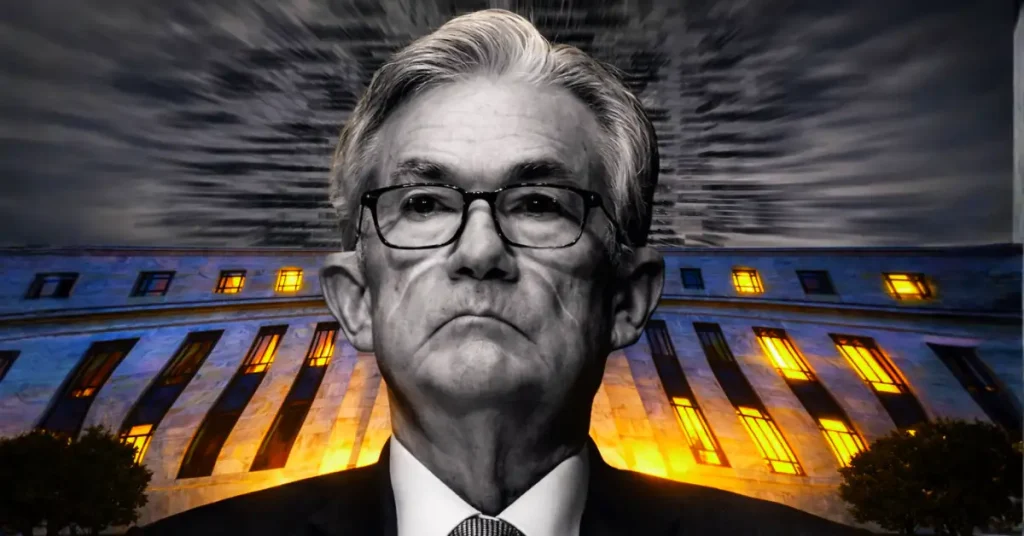
Quick market read from this story
The Federal Reserve's decision to hold interest rates steady, as widely expected, failed to provide market comfort, leading to immediate price drops across major cryptocurrencies like Bitcoin, Ethereum, and XRP.
Elevated inflation readings and geopolitical tensions contributed to a broader market downturn, exacerbating the impact of the Fed's non-committal stance on future rate cuts.
The crypto market experienced significant liquidations, with over $158 million in leveraged long positions wiped out, indicating heightened volatility and sensitivity to macroeconomic factors.
Deep Dive
The Federal Reserve maintained its benchmark interest rate at 3.5% to 3.75%, a decision that met market expectations but failed to provide traders with the anticipated comfort. Following the announcement, major cryptocurrencies experienced significant declines, with Bitcoin falling 4% to $71,417, Ethereum dropping 6.48%, and XRP losing 3.66%. The overall crypto market saw a substantial decrease in value, reflecting a confluence of macro-economic, geopolitical, and exchange-related pressures.
The Federal Open Market Committee (FOMC) statement indicated that economic activity continues to expand robustly, though job gains have been modest and inflation remains somewhat elevated. The committee acknowledged heightened uncertainty regarding the economic outlook and specifically cited the Middle East conflict as a factor with unclear implications for the US economy. Notably, there was a division within the committee, with one voting member preferring a quarter-point rate cut, signaling a divergence on the timing of potential rate reductions.
The FOMC reiterated its commitment to returning inflation to 2% but offered no clear indication of imminent rate cuts, a signal markets had been anticipating. The committee stated it would assess incoming data and adjust policy if necessary, emphasizing a data-dependent approach.
The crypto market was already under significant pressure before the Fed's decision. Earlier in the day, the US February Producer Price Index (PPI) reported a 0.7% monthly increase, exceeding the expected 0.3% and marking the largest monthly gain in a year. This hotter-than-expected inflation data reinforced the narrative of potentially higher-for-longer interest rates, which typically dampens enthusiasm for risk assets like cryptocurrencies.
Adding to the market's unease, reports of Israeli strikes on Iran's South Pars natural gas facility caused oil prices to surge above $97 per barrel, introducing fresh geopolitical uncertainty. This global instability also impacted other markets, with gold and silver prices declining. The crypto market followed suit, experiencing amplified selling pressure as over $158 million in leveraged long positions were liquidated within a four-hour period.
Bitcoin is currently trading near the $71,000 mark, a level identified by analysts as crucial for maintaining near-term market sentiment. The stability of this support level is now closely tied to further commentary from Federal Reserve Chair Jerome Powell.
Source, catalyst, and sector overlap from the latest feed.
Algorand's workforce reduction of 25% amidst a challenging macro environment signals significant operational restructuring, despite recent positive regulatory clarity for ALGO. The juxtaposition of layoffs with the SEC's classification of ALGO as a digital commodity presents a mixed signal, highlighting internal financial pressures despite external regulatory progress. While the SEC's guidance offers a cleaner regulatory outlook for ALGO, the substantial staff cuts suggest underlying financial strain that may temper short-term market sentiment.
A circulating chart claims retail XRP purchases fund Ripple Labs' corporate activities and shareholder value, challenging the token's utility narrative. Disputed data points regarding RLUSD issuance and stablecoin market share suggest the chart's core argument against XRP's relevance may be factually flawed. The underlying debate about Ripple's use of XRP proceeds for corporate benefit versus token holder utility remains a legitimate market concern, irrespective of specific chart inaccuracies.
XBTFX's launch of gold-denominated MT5 accounts, integrating Tether Gold (XAUT) for funding and trading, offers a specialized infrastructure for gold-focused traders seeking to align their capital with their primary asset. The new system streamlines the trading workflow by allowing direct deposit of XAUT, conversion to XAU balances, and funding of MT5 ECN accounts in gold terms, reducing friction for users who prefer not to convert to fiat. This development enhances the trading experience for gold traders by providing a gold-based account structure with specific parameters like spreads, leverage, and lot size, directly within the MT5 ecosystem. The integration of tokenized gold (XAUT) as a direct funding source for gold-denominated trading accounts represents a niche but potentially significant step in bridging digital assets with traditional commodity trading.
While Solana (SOL) and Ethereum (ETH) are experiencing institutional demand and whale accumulation, their large market caps limit potential for explosive, ground-floor returns. The article positions Pepeto's presale as a high-upside opportunity for meme coin holders seeking to replicate past parabolic gains, contrasting its potential with the more modest growth expected from SOL and ETH. Pepeto's presale is highlighted as a potential replacement for faded meme coin positions, driven by its co-founder's track record, upcoming product launches (Swap, Bridge, Exchange), token burns, and high APY staking. The narrative suggests that smaller investors may find greater multiplier potential in early-stage presales like Pepeto, compared to the limited percentage gains from established large-cap cryptocurrencies like SOL and ETH.
Bitcoin Everlight's reward structure, paid in BTC derived from transaction fees, offers a more stable and market-independent income stream compared to DeepSnitch AI's DSNT-denominated rewards, mitigating risks associated with post-token generation event selling pressure. The comparison highlights Bitcoin Everlight's emphasis on pre-launch security and transparency with completed audits and KYC, contrasting with DeepSnitch AI's less documented verification timeline, which could influence investor confidence. Bitcoin Everlight's fixed APY tiers for its shard model provide predictable returns, unlike DeepSnitch AI's uncapped APR which is subject to dilution as more users join, offering clearer yield expectations for participants. The absence of subscription fees or ongoing token holding requirements for core product access in Bitcoin Everlight's model presents a simpler and potentially more cost-effective participation structure than DeepSnitch AI's gated ecosystem.
Live Feed
Loading the broader stream in the same flow as the homepage feed.

The prediction markets co-founder said that the company would “abide by court decisions“ but signaled that the charges were based partly on political bias and media attention.

Algorand Foundation's 25% workforce reduction signals a strategic pivot towards sustainability amidst challenging macroeconomic conditions and a crypto market downturn. Despite significant layoffs, the foundation asserts continued focus on Algorand's core development and ecosystem growth, with recent transaction volume showing modest increases. The layoffs at Algorand Foundation follow a broader trend of industry-wide workforce reductions, indicating a sector-wide consolidation and efficiency drive in response to market pressures. While ALGO trades significantly below its all-time high, the foundation's commitment to long-term development and the reported growth in RWA values on the network suggest potential for future recovery.

Ethereum's price surge past $2,300 has triggered significant short liquidations, indicating a rapid shift in market sentiment and potential short-covering rallies. Despite the price rally, whale activity shows a bearish bias with large net short positions, suggesting potential for a near-term retracement or consolidation. The rising Ethereum Estimated Leverage Ratio (ELR) signals increased derivatives market activity and higher leverage appetite, which could lead to amplified volatility and further liquidations.

The SEC's approval for Nasdaq to test tokenized securities trading signifies a major step towards integrating blockchain technology into traditional equity markets. This development validates the growing trend of tokenizing real-world assets, potentially increasing liquidity and enabling near-instant, 24/7 trading for traditional securities. The integration of tokenized shares on existing order books with identical rights and identifiers suggests a path for seamless adoption, impacting market infrastructure and participant behavior.
The White House's registration of aliens.gov signals a potential upcoming release of UFO/UAP files, a development that could generate significant public interest and speculation. Despite the domain registration and prior presidential directives, officials anticipate no major revelations from the UAP file release, suggesting limited factual impact. The timing of the aliens.gov domain registration, following a viral Obama clip and Trump's directive, indicates a politically charged narrative around UFO disclosure.

Veteran trader Peter Brandt highlights conflicting technical patterns for Bitcoin, presenting both a bullish "horn" formation and a bearish "ugly" flag pattern. Brandt criticizes "cryptocultists" for dogmatic bullishness, emphasizing the need for trader flexibility and preparedness for multiple market outcomes. The presence of both constructive and "ugly" technical setups suggests a period of uncertainty for Bitcoin, requiring traders to manage risk and avoid rigid price targets. Brandt's commentary underscores the importance of adaptable trading strategies in volatile markets, particularly when facing conflicting technical signals.

Fairshake's significant $10 million expenditure in the Illinois Senate primary, aimed at defeating Juliana Stratton, represents a notable setback for the crypto industry's political lobbying efforts. Despite the loss in Illinois, Fairshake's overall strategy of deploying substantial capital to influence elections appears to be a persistent tactic, as evidenced by past large-scale spending and stated intentions to continue such efforts. The failure to unseat Stratton highlights the challenges and potential inefficiencies in crypto's political engagement, as significant funds were spent against a candidate who ultimately won her primary, potentially creating future political headwinds.
The shift in SEC enforcement actions under the Trump administration marks a significant de-escalation of regulatory pressure on numerous crypto firms, potentially fostering a more favorable environment for innovation and investment. The dismissal of multiple high-profile cases, including those against Ripple, Binance, and Coinbase, suggests a potential recalibration of the SEC's approach to crypto, moving away from 'regulation by enforcement' towards clearer guidance. This trend of dropped investigations and dismissals across various crypto sectors, from DeFi to NFTs and exchanges, indicates a broader positive sentiment shift for the industry in the U.S., potentially reducing legal uncertainty and associated costs. The numerous concluded investigations and dropped cases signal a potential reduction in systemic risk for crypto companies operating in the U.S., which could encourage further development and adoption.

SEC Chair Paul Atkins clarified that NFTs are generally considered digital collectibles and not securities, provided they are not structured as investment contracts, signaling a potential shift towards a more favorable regulatory environment for certain digital assets. The SEC's stance on NFTs as collectibles, distinct from investment contracts, could reduce regulatory uncertainty for the NFT market, potentially encouraging broader adoption and development by clarifying their legal standing. This clarification, coupled with the SEC's move away from enforcement-led policy, suggests a broader effort to provide clearer guidance for the digital asset sector, which may reduce risk for market participants and foster innovation.

Federal Reserve Chair Powell's acknowledgment of rising energy prices as an inflation risk, coupled with an increased inflation forecast, suggests a prolonged period of higher interest rates, pressuring risk assets like Bitcoin. The market's negative reaction, with Bitcoin and stocks closing at session lows, indicates that fading hopes for early rate cuts are a significant bearish catalyst for crypto and traditional markets. The commentary from Powell, downplaying stagflation concerns but acknowledging "tension" between growth and inflation goals, implies a cautious approach from the Fed that is likely to dampen speculative appetite in the near term.
The Federal Reserve's decision to maintain interest rates at current levels, coupled with a hawkish outlook on future cuts, directly pressures risk assets like Bitcoin by increasing the cost of capital and reducing liquidity. Bitcoin's price drop below $71,000 indicates a short-term risk-off sentiment driven by the Fed's 'higher for longer' monetary policy stance, potentially leading to further downside if support levels are breached. The market's reaction highlights Bitcoin's sensitivity to macroeconomic factors, particularly US monetary policy, suggesting that a sustained recovery may depend on a shift in the Fed's inflation and rate cut projections.

The US-Iran conflict drove significant trading volume to Hyperliquid's platform, particularly for oil-linked derivatives, demonstrating crypto's utility for real-time macro hedging when traditional markets are closed. Hyperliquid's HYPE token entered the top 10 by market cap due to a revenue-sharing model where trading fees are used for HYPE buybacks and burns, creating a direct link between platform activity and token value. The surge in Hyperliquid's volume and HYPE's market cap highlights a potential new market segment for 24/7 macro trading on-chain, though sustainability post-geopolitical stress remains a key question. While Bitcoin saw broader gains from geopolitical uncertainty, HYPE's specific rally illustrates how niche derivatives platforms can capitalize on volatility and unique market structure advantages.

Polymarket's acquisition of Brahma signals a strategic move to bolster its blockchain trading infrastructure, potentially enhancing its scalability and execution capabilities. The integration of Brahma's real-time execution and settlement systems could position Polymarket for significant growth in the prediction markets sector, especially as it explores potential fundraising at a higher valuation. Brahma's existing transaction volume and TVL suggest the acquired technology has proven its capability in handling substantial digital asset flows, which could translate to improved performance for Polymarket's platform.
The FTX Recovery Trust's fourth distribution of $2.2 billion on March 31, 2026, brings the total paid to creditors to approximately $10 billion, signaling continued progress in winding down the failed exchange's assets. While significant funds are being returned, creditors are reportedly dissatisfied with the reimbursement percentages, which are based on 2022 asset values, potentially leading to ongoing sentiment challenges for the FTX estate. The potential reinvestment of these recovered funds into digital assets by creditors could introduce short-term buying pressure across the crypto market, though the magnitude remains uncertain.

The Crypto Fear & Greed Index exiting 'extreme fear' after 48 days suggests a significant shift in market sentiment, potentially signaling a bottoming phase and increased investor risk appetite. A substantial increase in stablecoin inflows, particularly a $2.2 billion USDT deposit on Binance, indicates returning liquidity and trader readiness to deploy capital, supporting potential price appreciation. Historical analysis suggests that buying Bitcoin during fear phases has historically yielded stronger returns over medium-term horizons (2-4 years), reinforcing the potential upside from current sentiment levels. The recovery in total crypto market capitalization, adding $174 billion in March, coupled with the Fear & Greed Index rebound, points to a broader market recovery and potential for sustained bullish momentum.

Metaplanet's significant Bitcoin treasury reallocation, moving $368M BTC after three months of dormancy, triggered a sharp 12% drop in its stock price, indicating market sensitivity to such large on-chain movements. Despite the stock's decline, Metaplanet's recent fundraising of approximately $531 million via institutional investors and warrants signals continued strategic intent to accumulate more Bitcoin, potentially supporting future price action. The stock's volatility and increased trading volume suggest active market participation and speculation around Metaplanet's Bitcoin treasury strategy and capital allocation changes.

FTX's bankruptcy trust is distributing $2.2 billion to creditors, marking a significant step in asset recovery for users affected by the exchange's collapse. The fourth distribution will bring certain creditor classes to full or near-full recovery, signaling progress in resolving claims from the 2022 exchange failure. FTX is also preparing to make its first payments to preferred equity holders later this year, indicating a multi-stage resolution process for all stakeholders.

Arizona's criminal charges against Kalshi represent a significant escalation in the ongoing federal-state jurisdictional dispute over prediction markets, moving beyond civil actions to criminal prosecution. The CFTC's public statement calling the prosecution 'entirely inappropriate' signals potential federal intervention or support for Kalshi, highlighting a direct conflict between state regulatory ambitions and federal oversight of event contracts. This legal battle, involving multiple states, could set a precedent for how prediction markets are regulated, potentially impacting the growth and accessibility of platforms like Kalshi and Polymarket, which dominate the sector.
Signal context only. Validate with price action, liquidity, and risk limits before taking a position.
