
Navigating Crypto News

CoinFeather
Navigating Crypto News

Source, catalyst, and sector overlap from the latest feed.
The Federal Reserve's decision to hold interest rates steady at 3.5-3.75% amidst geopolitical uncertainty and mixed economic signals suggests a cautious approach, implying continued pressure on risk assets until inflation and labor market concerns are resolved. With 97% of market participants expecting no rate cuts, traders are likely to remain hesitant to increase exposure to risk assets like Bitcoin, awaiting clearer signals of monetary easing. The Fed's acknowledgment of geopolitical uncertainty and its potential impact on energy prices and inflation highlights a significant macro risk factor that could influence future monetary policy decisions and market sentiment.
Live Feed
Loading the broader stream in the same flow as the homepage feed.

US banks have significantly increased lending to non-depository financial institutions (NDFIs) since 2008, shifting credit risk to the shadow banking system and creating potential new stress points outside traditional oversight. While current bank health metrics do not indicate an imminent 2008-style crisis, the growing interconnectedness between banks and private credit vehicles means that stress in the nonbank sector could transmit to traditional finance, impacting liquidity and asset valuations. The article suggests that while Bitcoin may not see immediate inflows from a potential nonbank credit crunch, its appeal as an asset outside the traditional financial system could strengthen over the medium to long term if trust in financial system leverage and private asset valuation erodes.
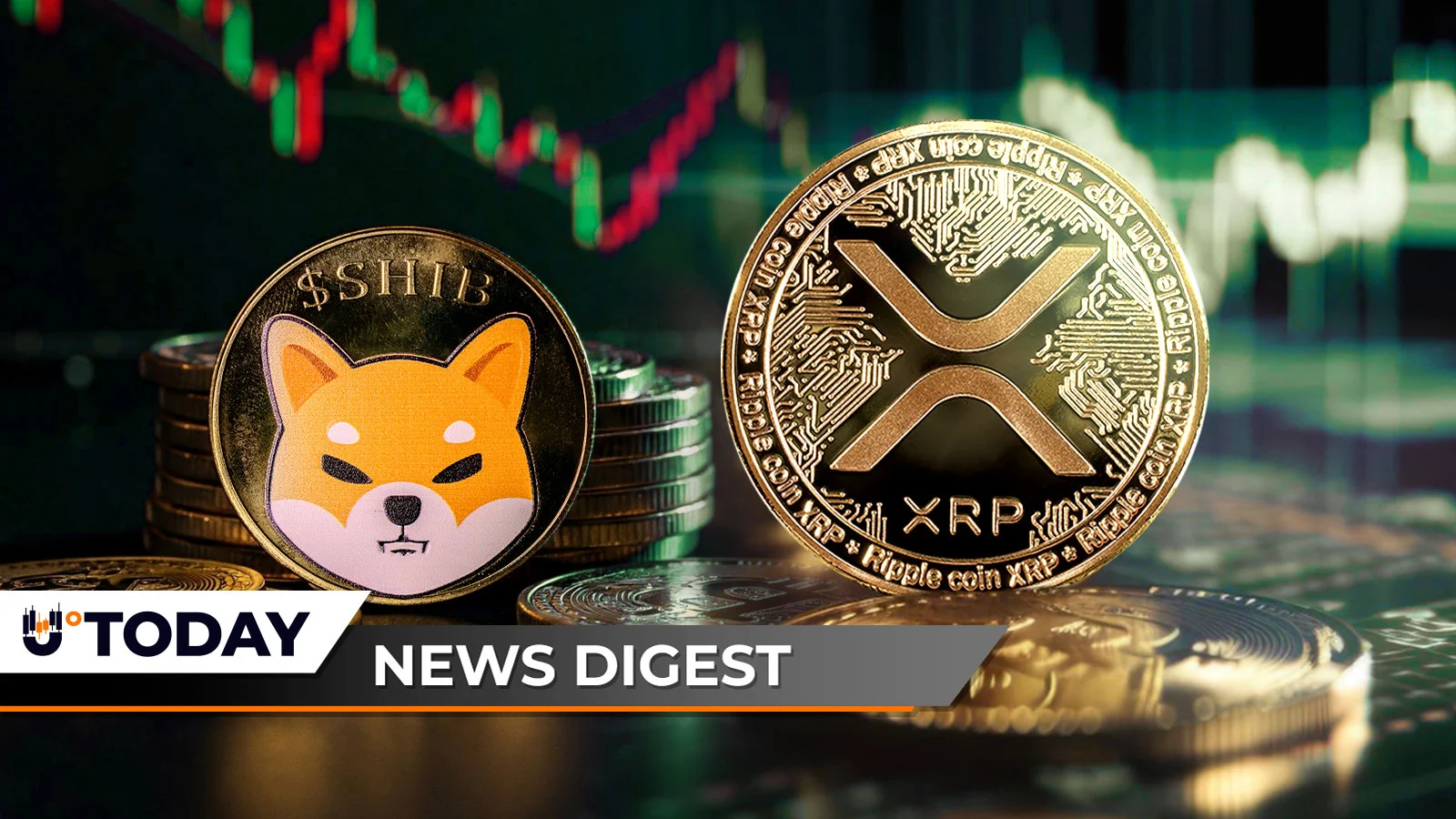
Ripple's expansion into Brazil with a full-stack institutional platform, including custody and prime brokerage, signals a strategic move to capture institutional demand in a key emerging market. The surge in Shiba Inu's open interest by 26% indicates heightened derivatives market activity and trader optimism, potentially foreshadowing a price breakout despite recent dips. XRP is showing signs of a potential recovery, holding above key support levels and testing resistance, suggesting a short-term bullish bias if momentum continues.

The CFTC's no-action relief for Phantom represents a significant regulatory precedent, potentially enabling broader integration of self-custodial wallets with regulated derivatives markets. This development could lower barriers to entry for retail traders seeking access to professional-grade trading tools, democratizing access to hedging and investment opportunities. The conditional nature of the relief underscores the importance of strict compliance and user protection measures, setting a template for future crypto-regulatory interactions.

Algorand Foundation's 25% workforce reduction signals a strategic pivot towards sustainability amidst challenging macroeconomic conditions and a crypto market downturn. Despite significant layoffs, the foundation asserts continued focus on Algorand's core development and ecosystem growth, with recent transaction volume showing modest increases. The layoffs at Algorand Foundation follow a broader trend of industry-wide workforce reductions, indicating a sector-wide consolidation and efficiency drive in response to market pressures. While ALGO trades significantly below its all-time high, the foundation's commitment to long-term development and the reported growth in RWA values on the network suggest potential for future recovery.

Ethereum's price surge past $2,300 has triggered significant short liquidations, indicating a rapid shift in market sentiment and potential short-covering rallies. Despite the price rally, whale activity shows a bearish bias with large net short positions, suggesting potential for a near-term retracement or consolidation. The rising Ethereum Estimated Leverage Ratio (ELR) signals increased derivatives market activity and higher leverage appetite, which could lead to amplified volatility and further liquidations.

The SEC's approval for Nasdaq to test tokenized securities trading signifies a major step towards integrating blockchain technology into traditional equity markets. This development validates the growing trend of tokenizing real-world assets, potentially increasing liquidity and enabling near-instant, 24/7 trading for traditional securities. The integration of tokenized shares on existing order books with identical rights and identifiers suggests a path for seamless adoption, impacting market infrastructure and participant behavior.
The White House's registration of aliens.gov signals a potential upcoming release of UFO/UAP files, a development that could generate significant public interest and speculation. Despite the domain registration and prior presidential directives, officials anticipate no major revelations from the UAP file release, suggesting limited factual impact. The timing of the aliens.gov domain registration, following a viral Obama clip and Trump's directive, indicates a politically charged narrative around UFO disclosure.

Veteran trader Peter Brandt highlights conflicting technical patterns for Bitcoin, presenting both a bullish "horn" formation and a bearish "ugly" flag pattern. Brandt criticizes "cryptocultists" for dogmatic bullishness, emphasizing the need for trader flexibility and preparedness for multiple market outcomes. The presence of both constructive and "ugly" technical setups suggests a period of uncertainty for Bitcoin, requiring traders to manage risk and avoid rigid price targets. Brandt's commentary underscores the importance of adaptable trading strategies in volatile markets, particularly when facing conflicting technical signals.

Fairshake's significant $10 million expenditure in the Illinois Senate primary, aimed at defeating Juliana Stratton, represents a notable setback for the crypto industry's political lobbying efforts. Despite the loss in Illinois, Fairshake's overall strategy of deploying substantial capital to influence elections appears to be a persistent tactic, as evidenced by past large-scale spending and stated intentions to continue such efforts. The failure to unseat Stratton highlights the challenges and potential inefficiencies in crypto's political engagement, as significant funds were spent against a candidate who ultimately won her primary, potentially creating future political headwinds.
The shift in SEC enforcement actions under the Trump administration marks a significant de-escalation of regulatory pressure on numerous crypto firms, potentially fostering a more favorable environment for innovation and investment. The dismissal of multiple high-profile cases, including those against Ripple, Binance, and Coinbase, suggests a potential recalibration of the SEC's approach to crypto, moving away from 'regulation by enforcement' towards clearer guidance. This trend of dropped investigations and dismissals across various crypto sectors, from DeFi to NFTs and exchanges, indicates a broader positive sentiment shift for the industry in the U.S., potentially reducing legal uncertainty and associated costs. The numerous concluded investigations and dropped cases signal a potential reduction in systemic risk for crypto companies operating in the U.S., which could encourage further development and adoption.

Federal Reserve Chair Powell's acknowledgment of rising energy prices as an inflation risk, coupled with an increased inflation forecast, suggests a prolonged period of higher interest rates, pressuring risk assets like Bitcoin. The market's negative reaction, with Bitcoin and stocks closing at session lows, indicates that fading hopes for early rate cuts are a significant bearish catalyst for crypto and traditional markets. The commentary from Powell, downplaying stagflation concerns but acknowledging "tension" between growth and inflation goals, implies a cautious approach from the Fed that is likely to dampen speculative appetite in the near term.
The Federal Reserve's decision to maintain interest rates at current levels, coupled with a hawkish outlook on future cuts, directly pressures risk assets like Bitcoin by increasing the cost of capital and reducing liquidity. Bitcoin's price drop below $71,000 indicates a short-term risk-off sentiment driven by the Fed's 'higher for longer' monetary policy stance, potentially leading to further downside if support levels are breached. The market's reaction highlights Bitcoin's sensitivity to macroeconomic factors, particularly US monetary policy, suggesting that a sustained recovery may depend on a shift in the Fed's inflation and rate cut projections.

The US-Iran conflict drove significant trading volume to Hyperliquid's platform, particularly for oil-linked derivatives, demonstrating crypto's utility for real-time macro hedging when traditional markets are closed. Hyperliquid's HYPE token entered the top 10 by market cap due to a revenue-sharing model where trading fees are used for HYPE buybacks and burns, creating a direct link between platform activity and token value. The surge in Hyperliquid's volume and HYPE's market cap highlights a potential new market segment for 24/7 macro trading on-chain, though sustainability post-geopolitical stress remains a key question. While Bitcoin saw broader gains from geopolitical uncertainty, HYPE's specific rally illustrates how niche derivatives platforms can capitalize on volatility and unique market structure advantages.

Polymarket's acquisition of Brahma signals a strategic move to bolster its blockchain trading infrastructure, potentially enhancing its scalability and execution capabilities. The integration of Brahma's real-time execution and settlement systems could position Polymarket for significant growth in the prediction markets sector, especially as it explores potential fundraising at a higher valuation. Brahma's existing transaction volume and TVL suggest the acquired technology has proven its capability in handling substantial digital asset flows, which could translate to improved performance for Polymarket's platform.
Metaplanet's significant Bitcoin treasury reallocation, moving $368M BTC after three months of dormancy, triggered a sharp 12% drop in its stock price, indicating market sensitivity to such large on-chain movements. Despite the stock's decline, Metaplanet's recent fundraising of approximately $531 million via institutional investors and warrants signals continued strategic intent to accumulate more Bitcoin, potentially supporting future price action. The stock's volatility and increased trading volume suggest active market participation and speculation around Metaplanet's Bitcoin treasury strategy and capital allocation changes.
Signal context only. Validate with price action, liquidity, and risk limits before taking a position.
SEC Chair Paul Atkins clarified that NFTs are generally considered digital collectibles and not securities, provided they are not structured as investment contracts, signaling a potential shift towards a more favorable regulatory environment for certain digital assets. The SEC's stance on NFTs as collectibles, distinct from investment contracts, could reduce regulatory uncertainty for the NFT market, potentially encouraging broader adoption and development by clarifying their legal standing. This clarification, coupled with the SEC's move away from enforcement-led policy, suggests a broader effort to provide clearer guidance for the digital asset sector, which may reduce risk for market participants and foster innovation.
