
Navigating Crypto News

CoinFeather
Navigating Crypto News

Quick market read from this story
Despite Bitcoin's recent price surge towards $74K, its strong correlation with tech stocks and sensitivity to spot ETF flows suggest underlying bear market conditions may persist.
Traders should monitor Bitcoin's reaction to spot ETF inflows and outflows, as these flows appear to be a key determinant of short-term price action and market sentiment.
The current market environment indicates that while short-term rallies are possible, the broader trend may still be bearish until key technical levels are decisively broken or ETF flows show sustained positive momentum.
Deep Dive
Cointelegraph emphasizes its dedication to delivering independent, high-quality journalism across the crypto, blockchain, AI, and fintech sectors. The platform utilizes commercial or partner references to support open access and sustain editorial operations without additional cost to readers.
The publication assures that editorial decisions are never influenced by commercial relationships, maintaining full journalistic independence and integrity in all news, reviews, and analysis. For further details, readers are directed to the Editorial Policy.
All sponsored and commercial content, including press releases, undergoes a clear labeling process and is reviewed for accuracy, disclosure, and compliance. Partners are thoroughly vetted before any paid partnership is established.
Source, catalyst, and sector overlap from the latest feed.
Spot Bitcoin ETFs have achieved their first five-day inflow streak of 2026, totaling $767.32 million, indicating sustained institutional demand and potentially signaling a shift in market sentiment towards accumulation. Spot Ether ETFs also extended their positive inflow streak to four days, accumulating $212.14 million, suggesting growing institutional interest in the second-largest cryptocurrency following a period of outflows. Despite positive ETF flows, Bitcoin remains range-bound due to rising Middle East tensions and macro uncertainty, with key liquidity clusters acting as resistance and support levels, suggesting consolidation until a significant catalyst emerges. The sustained inflows into both Bitcoin and Ether ETFs mark a significant positive development for the digital asset market in 2026, reversing earlier outflows and reinforcing the narrative of increasing institutional adoption.
Live Feed
Loading the broader stream in the same flow as the homepage feed.
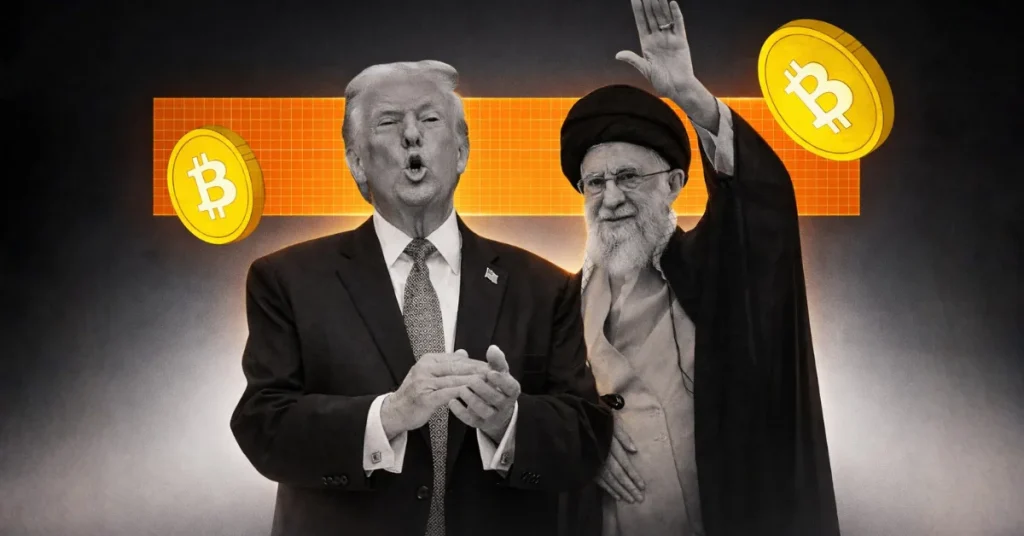
Geopolitical tensions involving Iran and potential oil supply disruptions are creating broader market risk aversion, leading to a near 2% pullback in Bitcoin's price from recent highs. Despite the short-term price drop, sustained inflows into Bitcoin ETFs indicate continued institutional demand, suggesting underlying strength that could buffer against further declines. Technical analysis suggests Bitcoin is testing key support levels around $66,000, with a bearish flag pattern indicating potential for further downside if these levels fail to hold. The interplay between geopolitical risk, oil market volatility, and Bitcoin's price action highlights its increasing correlation with traditional macro assets, making it sensitive to global events.
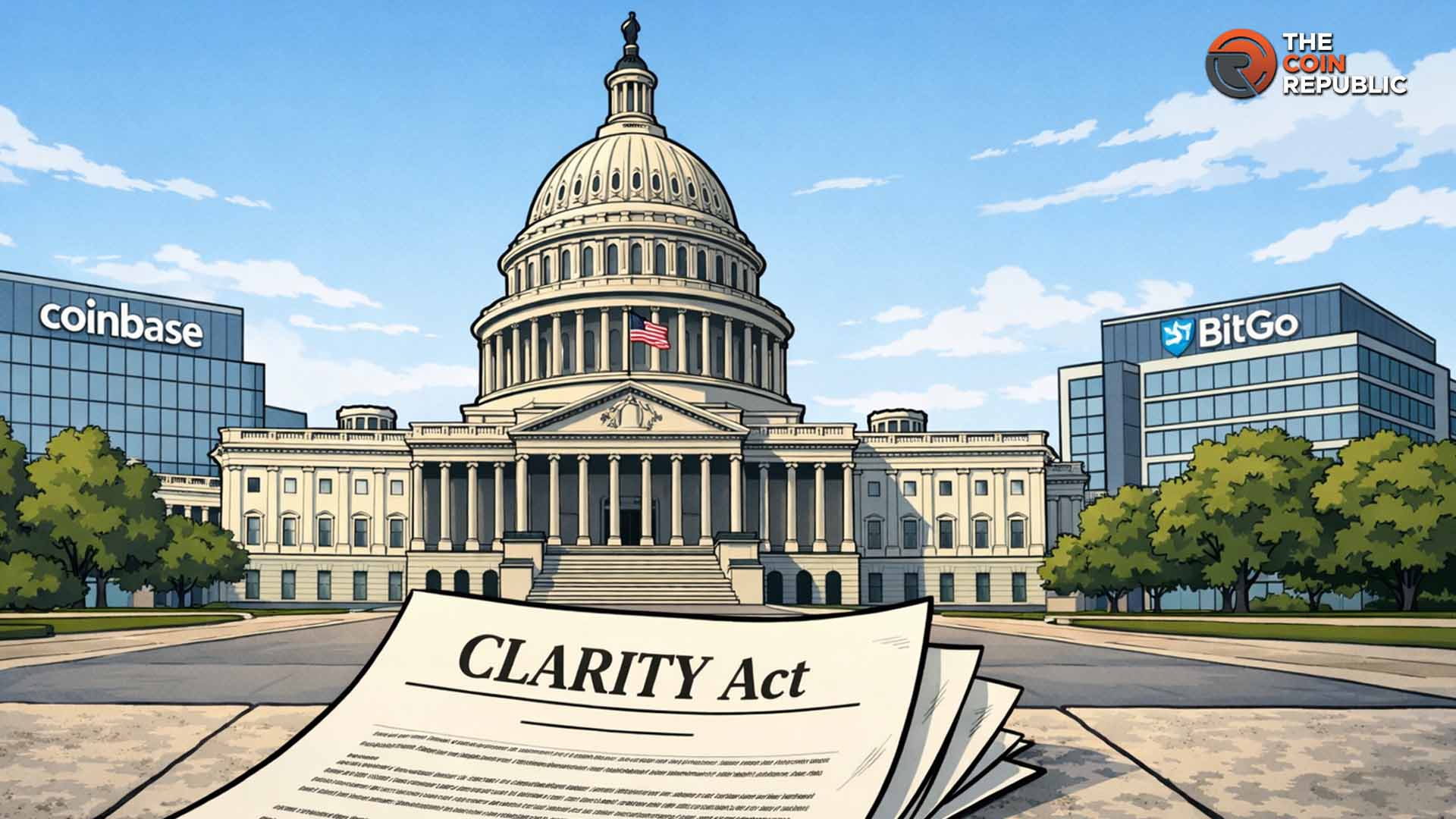
Delays in the CLARITY Act, driven by opposition from banking groups, are causing frustration among crypto industry leaders and lawmakers who fear it will stifle innovation. Industry executives like those from Coinbase and BitGo are pushing back against proposed changes, arguing they benefit large banks at the expense of consumers and hinder fair competition. Despite opposition, there's a stated commitment from industry representatives to negotiate in good faith, with a 73% probability of the CLARITY Act passing in 2026 according to Polymarket. The ongoing regulatory uncertainty surrounding the CLARITY Act creates a watchlist scenario for the crypto sector, as its passage or failure will significantly impact market structure and innovation.

US Treasury sanctions highlight North Korea's sophisticated use of fake IT worker schemes, leveraging stolen identities and AI deepfakes to funnel approximately $800 million to its weapons programs in 2024. The report indicates a significant escalation in global illicit crypto flows, reaching a record $154–$158 billion in 2025, driven by sanctions evasion and industrialized fraud, signaling increased systemic risk. The increasing sophistication of North Korean cyber operations, including AI-driven impersonation and malware deployment, poses an evolving threat to Western companies and the broader financial system. Enforcement actions are intensifying, with secondary sanctions targeting financial institutions processing illicit transactions, suggesting a more aggressive stance against crypto-enabled illicit finance.

PepetoSwap's upcoming launch and update are drawing significant capital ($7.9M raised) and attention, positioning it as a potential high-growth opportunity compared to larger, less dynamic assets like XRP and Cardano. The article contrasts PepetoSwap's zero-fee, cross-chain functionality with high gas fees on Ethereum, highlighting a potential competitive advantage that could drive adoption and volume. Despite positive developments for XRP and Cardano, their large market caps limit potential for exponential growth, making early-stage projects like Pepeto more attractive for investors seeking significant returns. The project's claims of AI-driven risk screening and a former Binance executive's involvement, coupled with a SolidProof audit, aim to build confidence for early investors anticipating a major exchange listing.

Coinbase exploring investment talks with Bybit signals a potential consolidation trend among major exchanges, aiming to navigate regulatory landscapes and expand market reach. A strategic partnership could enhance market standards and reduce loopholes, potentially benefiting institutional adoption and overall market integrity. Bybit's interest in a deal highlights its strategy to penetrate the US market, while Coinbase's move could be a defensive play or an opportunistic expansion into global derivatives.

Wells Fargo's trademark filing for 'WFUSD' signals a strategic move into digital asset services, potentially including stablecoin operations and exchange functionalities. This development aligns with broader industry trends of traditional financial institutions exploring blockchain and digital asset integration, suggesting increased institutional adoption. The filing indicates Wells Fargo's intent to leverage its existing infrastructure and prior investments in crypto analytics and trading platforms for future digital asset offerings. The potential launch of 'WFUSD' could represent a significant step towards institutional-backed stablecoins, impacting the existing stablecoin market and regulatory landscape.
A significant influx of over 112 billion SHIB tokens to exchanges, pushing reserves above 80 trillion, signals increased sell pressure that could counteract recent price recovery attempts. Despite breaking a short-term declining structure, SHIB remains below key resistance levels like the 26-day EMA, indicating that the current bounce may be a relief rally within a larger bearish trend. The surge in exchange reserves suggests that large holders are repositioning, creating potential downward pressure on SHIB's price if demand does not absorb the increased available supply.

AI tokens are experiencing a significant resurgence, led by TAO, RENDER, and FET, indicating a potential rotation of capital into decentralized AI infrastructure as the broader crypto market stabilizes. The rally in AI tokens is driven by growing interest in agentic AI systems and the increasing demand for decentralized AI compute infrastructure, positioning projects like Bittensor and Render at the forefront of this narrative. With TAO, RENDER, and FET showing strong weekly gains and technical indicators turning bullish, the AI sector is re-emerging as a leading narrative that could potentially drive the next altcoin rally.
XRP's reported 1,500 TPS significantly outpaces Bitcoin and Ethereum, highlighting its potential for high-volume payment applications and challenging the scalability narrative of established Layer-1s. The XRP Ledger's efficient consensus mechanism, avoiding energy-intensive mining, positions it as a cost-effective and fast alternative for cross-border payments and real-time settlements. While Bitcoin and Ethereum focus on store of value and smart contracts respectively, XRP's performance metrics suggest a strategic advantage in the growing market for blockchain-based payment infrastructure. Despite the performance claims, the article speculates on a potential 1,500% rally for XRP, driven by evolving utility and institutional interest, though this remains a speculative outlook.
Kraken's affiliated SPAC, KRAK Acquisition Corp., has raised $345 million and is actively seeking crypto-native firms in the $2 billion to $10 billion valuation range, signaling significant institutional interest in acquiring established digital asset businesses. The SPAC's focus on stablecoins, DeFi, and tokenization indicates a strategic move to integrate traditional finance with emerging blockchain sectors, potentially driving capital into these areas. This initiative by Kraken, following its own $800 million funding round, suggests an expansion of its influence and a potential pathway for promising crypto companies to access public markets via reverse mergers.
Dogecoin defended critical $0.088 support, with a potential short squeeze targeting the $0.10-$0.11 liquidation zone, though broader downtrend remains intact. Technical indicators like moving averages and A/D line show bearish sentiment, with CMF signaling capital outflows, suggesting the recent bounce lacks strong fundamental backing. While a short-term rally to $0.11 is possible due to liquidation clusters, a structural trend reversal for DOGE requires breaking above $0.127, indicating a need for caution. The broader market's relief rally, led by Bitcoin's bounce from $67,000, provided a tailwind for speculative assets like DOGE, but its sustainability is questionable given underlying technicals.

Changpeng Zhao's dispute of Forbes' $111B net worth estimate highlights the inherent volatility and speculative nature of valuing crypto-centric fortunes. The discrepancy between Forbes' and Bloomberg's valuations underscores the challenges in accurately assessing private crypto holdings, particularly illiquid assets like large BNB stakes. Zhao's argument that a 50% crypto market downturn should not lead to an increased net worth points to the difficulty in applying traditional valuation metrics to the crypto space. This event serves as a reminder for traders to critically evaluate wealth estimates for crypto leaders, as they are often based on assumptions and market conditions that can rapidly change.

Bitcoin is approaching a critical resistance zone between $76K-$79K, with a sustained break above this level potentially invalidating the February correction and signaling further upside. Institutional capital appears to be rotating from gold ETFs into Bitcoin ETFs, suggesting a growing perception of Bitcoin as a store-of-value asset amidst geopolitical uncertainty. A historically significant 100-week EMA retest signal has fired for Bitcoin above $70K, a level that has preceded major upward moves since 2014, indicating potential for a sustained rally if maintained. The divergence in ETF flows between gold (outflows) and Bitcoin (inflows) highlights a potential structural shift in investor sentiment, favoring Bitcoin as a crisis hedge over traditional safe havens.

Bitcoin demonstrates resilience by holding $71,000 despite geopolitical tensions and potential oil supply disruptions, indicating a maturing market response to macro events. The market's adaptation to Middle Eastern conflict headlines suggests a fading 'sell-the-headline' impulse, though resistance at $73,000-$74,000 remains a key short-term hurdle. Upcoming Fed meeting on March 17-18 becomes a critical focus, as sustained oil prices above $100 could challenge the market's pricing of rate cuts and impact risk assets like crypto.
Signal context only. Validate with price action, liquidity, and risk limits before taking a position.
No explicit catalyst tagged.
BlackRock's strategic focus on core crypto ETFs indicates a preference for established market segments over more speculative or complex products. The firm's approach suggests a cautious expansion into the digital asset space, prioritizing regulatory compliance and broad investor appeal. This stance may influence investor sentiment towards newer or 'exotic' crypto derivatives and products, potentially limiting their immediate market traction.
