
Navigating Crypto News

CoinFeather
Navigating Crypto News

Source, catalyst, and sector overlap from the latest feed.
Despite Bitcoin's resilience around $70,000 amidst geopolitical and macroeconomic headwinds, key on-chain indicators like negative Coinbase Premium and slowing ETF inflows suggest underlying institutional demand may be softening, challenging a purely bullish narrative. The divergence between Bitcoin's price action and weakening demand signals from U.S. investors (via Coinbase Premium) and institutional flows (via ETFs) indicates a potential for price consolidation or a shift in market sentiment if these trends persist. While overall institutional demand is described as 'selective and less linear,' the recent slowdown in ETF inflows, following an initial surge, warrants close monitoring as a potential precursor to price adjustments.
Live Feed
Loading the broader stream in the same flow as the homepage feed.

The UK's ban on crypto donations to political parties, driven by transparency concerns and potential foreign influence, signals a tightening regulatory environment for digital assets in political financing. This regulatory action, while not directly impacting crypto markets in terms of trading volume or asset prices, indicates a growing governmental scrutiny over the use of cryptocurrencies in sensitive financial activities. The move to ban crypto donations and cap overseas funding highlights a broader trend of governments seeking greater control and oversight over financial flows, which could influence future regulatory approaches to digital assets globally.
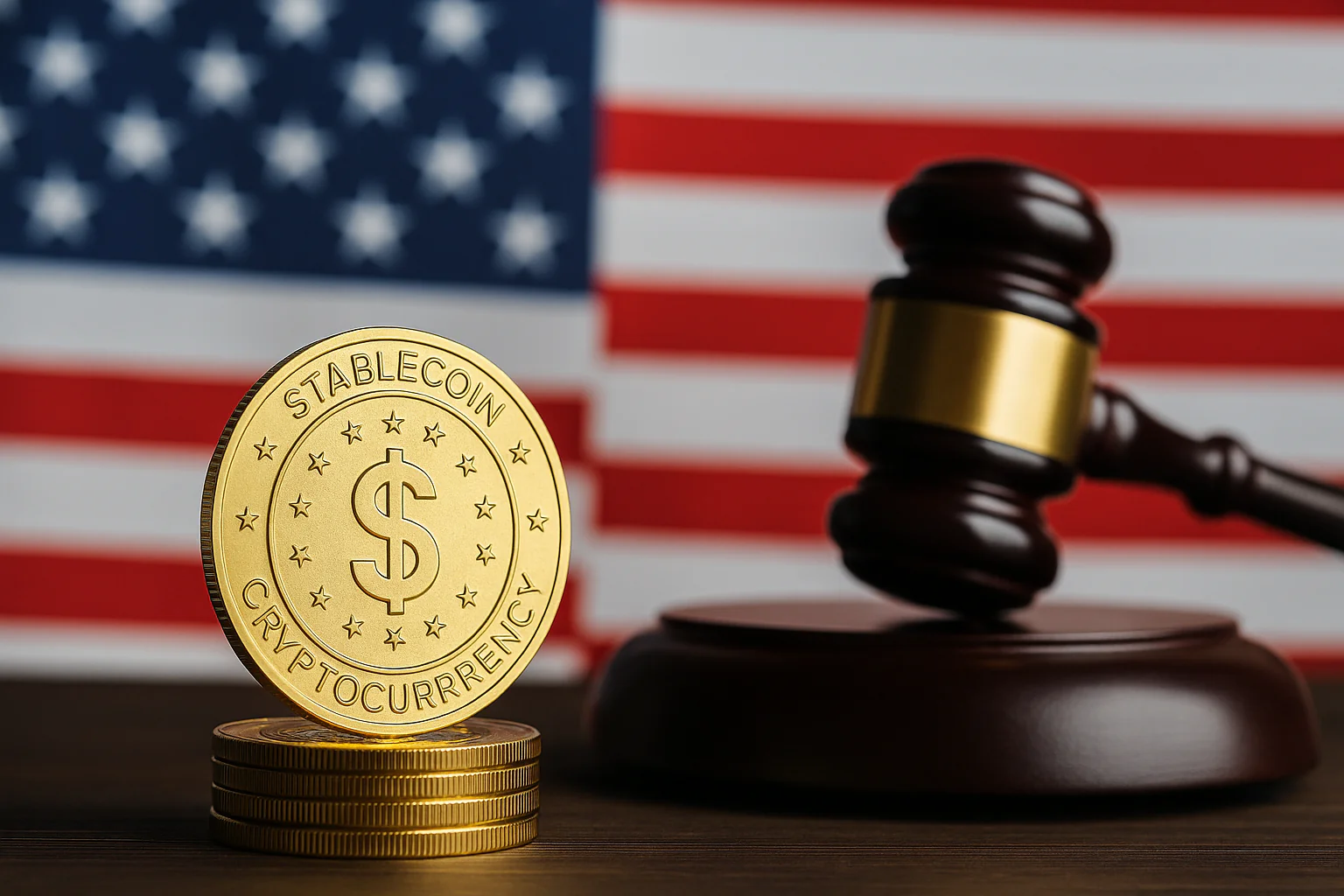
Coinbase's opposition to the CLARITY Act's ban on passive stablecoin yield directly impacts its high-margin revenue stream derived from USDC interest, suggesting a potential financial motive behind its regulatory stance. The contrasting congressional reception to stablecoin regulation versus tokenization highlights a bifurcated regulatory landscape, with tokenization receiving broader support while stablecoin yield provisions face significant industry pushback. The market's overreaction to Circle's stock drop indicates a potential disconnect between immediate price action and the nuanced impact of proposed regulations, suggesting an opportunity for traders to reassess based on fundamental business models.
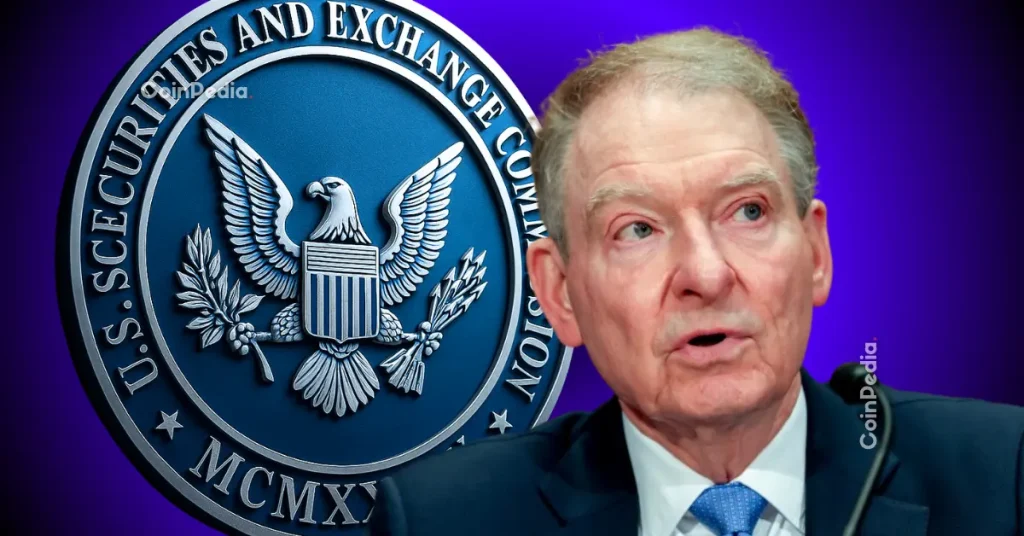
The SEC's potential tokenization innovation exemption signals a move towards regulatory clarity for tokenized assets, potentially unlocking new markets for RWA and tokenized securities. This development could reduce regulatory friction for crypto companies, encouraging experimentation and innovation in the tokenization space. While details are pending, the announcement suggests a near-term catalyst for projects focused on tokenizing real-world assets and securities.
Congressional offices are implementing bans on staff trading in prediction markets, signaling increased regulatory scrutiny on potential insider trading within government circles. The PREDICT Act and similar legislative efforts aim to extend these restrictions to senior officials, indicating a broader trend towards tighter oversight of prediction market activities tied to government information. While platforms like Polymarket and Kalshi are enhancing their anti-insider trading measures, the effectiveness of these changes in completely eliminating illicit activity remains uncertain.

Bithumb's significant system error and AML penalties erode trust in centralized exchanges, potentially driving capital towards more verifiable early-stage projects like Pepeto. Dogecoin's price prediction is bearish short-term due to declining risk appetite and technical indicators, contrasting with the projected 100x gains for Pepeto post-Binance listing. The narrative suggests that missing Pepeto's presale, similar to past opportunities with Pepe and Dogecoin, will lead to chasing the asset at a higher price post-listing.

The certification of a class action lawsuit against Nvidia, alleging concealment of crypto mining revenue impacts, signals potential future scrutiny on tech companies' crypto-related disclosures. Investors who bought Nvidia stock between August 2017 and November 2018 may see this development as a positive step towards potential compensation for alleged misrepresentations regarding crypto mining's influence on GPU sales. While the SEC previously fined Nvidia, this class action moving towards trial suggests a more significant legal and financial risk for the company, potentially impacting investor confidence in its transparency.

Swan Bitcoin's legal action against Cantor Fitzgerald and Howard Lutnick over a disputed mining venture and employee departure signals ongoing internal conflicts within the Bitcoin services sector. The subpoena application, involving Tether's investment banker Cantor Fitzgerald, highlights potential undisclosed dealings and information asymmetry related to Tether's mining operations and Swan's past business relationships. This dispute, involving allegations of stolen documents and the formation of a rival firm, could impact investor confidence in Swan Bitcoin and its associated partners if not resolved transparently.

A federal judge dismissed a lawsuit seeking clarity on whether non-custodial crypto software developers must comply with money transmitter laws, leaving a significant regulatory question for the industry unresolved. The dismissal, based on the developer's failure to demonstrate a credible threat of prosecution, means the core legal debate over developer liability for decentralized tools remains open, potentially impacting future innovation and compliance strategies. While the case was dismissed without prejudice, the lack of a definitive ruling highlights ongoing regulatory uncertainty for crypto developers, which could continue to influence market sentiment and investment in certain infrastructure projects.

The Reserve Bank of Australia's endorsement of RWA tokenization, projecting a potential $16.7 billion annual economic contribution, signals a significant shift towards mainstream adoption and regulatory acceptance. Australia's central bank is moving beyond 'if' to 'how' regarding tokenization, indicating a proactive approach to integrating digital assets into the financial system, potentially driving infrastructure development and investment. The projected $16.7 billion annual upside from RWA tokenization in Australia, coupled with global forecasts of $2 trillion by 2030, highlights a substantial growth runway for the sector, attracting institutional interest and capital. The RBA's plan to explore a new digital financial market infrastructure sandbox suggests a structured pathway for testing and scaling tokenized assets, which could de-risk future implementations and accelerate market readiness.
Robinhood's announcement of a $1.5 billion share buyback program, extending incremental capacity by $1.1 billion, signals strong management confidence in the company's long-term value and potential for shareholder returns. The significant buyback authorization, coupled with an updated $3.25 billion credit facility with JPMorgan Chase, suggests Robinhood is strategically positioning itself for future growth and operational stability. While the stock has seen a recent uptick, the buyback program and credit facility updates provide a fundamental basis for potential sustained investor interest, despite past price volatility.

The appointment of a former MoneyGram CEO signals Bitcoin Depot's strategic pivot towards enhanced regulatory compliance and a potential diversification into a broader fintech platform. Mounting state-level regulatory actions against Bitcoin Depot for alleged excessive fees and facilitation of scams highlight significant operational risks and potential for further legal challenges. Bitcoin Depot's stock performance, down over 70% year-to-date and significantly from its all-time high, reflects market concerns over its regulatory environment and future revenue outlook.

A Texas court dismissed a developer's lawsuit seeking clarity on money transmitter laws, ruling there was no credible threat of prosecution, which limits immediate legal certainty for software creators. The dismissal, while without prejudice, highlights the ongoing legal ambiguity for crypto developers, as evidenced by past prosecutions of Tornado Cash and Samourai Wallet figures. Calls for the Blockchain Regulatory Certainty Act of 2026 underscore the industry's push for legislative solutions to define developer liability and provide durable legal protections.

The partnership between BitGo and ZKsync aims to create regulatory-compliant, institutional-grade tokenization infrastructure for banks, potentially bridging a significant portion of traditional finance assets onto the blockchain without relying on stablecoins. This development could unlock substantial institutional capital by offering 24/7 settlements and enhanced security for tokenized fiat deposits, addressing long-standing needs in bank treasury operations. While not directly resolving stablecoin yield disputes, the initiative's focus on tokenized deposits bypasses stablecoin reliance, potentially attracting significant traditional finance funds to blockchain infrastructure.

Pump.fun's new rule to lock creator fee redirects to a single instance aims to reduce token manipulation and 'griefing' by deployers. This change restricts token deployers to one post-launch adjustment of fee recipients, potentially impacting creator revenue streams and transparency. While the update acknowledges issues with fee distribution, community sentiment suggests it may not fully resolve existing challenges on the memecoin launchpad.
Signal context only. Validate with price action, liquidity, and risk limits before taking a position.
Quick market read from this story
XRP's volatility has reached cycle lows, indicating a potential breakout is imminent as price consolidates around the critical $1.40 support level.
Traders are closely monitoring the $1.40 support and $1.43 resistance; a decisive break with significant volume will likely dictate the next short-term price trend.
Despite muted price action, underlying factors like regulatory clarity and institutional interest are noted as background developments that could influence future XRP price movements.
Deep Dive
The XRP token is consolidating in one of its tightest price ranges in months, with volatility hitting its lowest point since January, signaling an imminent significant price movement. The cryptocurrency is currently trading just above the $1.40 support level, with traders closely monitoring this key area for potential directional cues.
XRP has experienced repeated rejections near the $1.43 resistance level, while buyers have consistently defended the $1.40 area. This price compression, characterized by low volatility and a narrowing trading range, suggests that a breakout is likely approaching. The short-term technical structure shows weakening signs, with failed attempts to reclaim $1.41 and sellers dominating rallies, yet buyers remain active around the $1.40 mark, keeping the range intact for now.
Traders are focused on whether the $1.40 support will hold, which could lead to a rebound towards $1.43 and potentially $1.45. Conversely, a decisive break below $1.40 could open the door for a decline towards $1.35. The direction of the next significant trend is expected to be confirmed by trading volume, with strong participation indicating the prevailing direction.
Despite the muted price action, underlying factors such as increasing institutional interest and the pursuit of regulatory clarity continue to shape the broader market sentiment for XRP. The current consolidation phase is seen as a precursor to a potentially sharp move, driven by the build-up of pressure within the tight trading range.
Bhutan's accelerated BTC outflows, totaling over $150 million in 2026, suggest a strategic shift in its holdings, potentially impacting market liquidity and price discovery. The increasing size of Bhutan's Bitcoin transfers, moving from $5-15 million clips to $35-45 million, indicates a more aggressive liquidation strategy, which could exert downward pressure on BTC price in the short term. The consistent receipt of funds by QCP Capital suggests an OTC desk relationship, implying structured selling rather than panic dumps, which may mitigate immediate market shock but signals ongoing supply pressure. Bhutan's reduced BTC holdings from a peak of 13,000 to 4,453, coupled with the impossibility of fulfilling its 10,000 BTC Gelephu pledge, signals a significant change in its crypto asset strategy and potential future market impact.
