
Navigating Crypto News

CoinFeather
Navigating Crypto News
Quick market read from this story
The SEC's potential tokenization innovation exemption signals a move towards regulatory clarity for tokenized assets, potentially unlocking new markets for RWA and tokenized securities.
This development could reduce regulatory friction for crypto companies, encouraging experimentation and innovation in the tokenization space.
While details are pending, the announcement suggests a near-term catalyst for projects focused on tokenizing real-world assets and securities.
Deep Dive
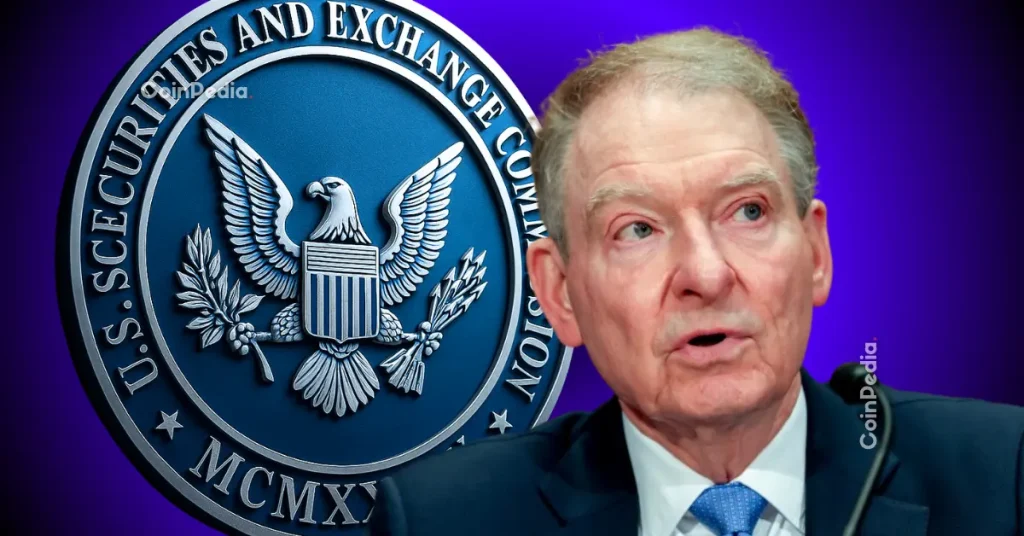
Securities and Exchange Commission (SEC) Chair Paul Atkins has indicated that the agency may introduce a tokenization innovation exemption for crypto companies within the next few weeks. This initiative aims to reduce regulatory obstacles and foster experimentation with blockchain-based tokenized assets.
Industry observers anticipate that this exemption could significantly contribute to the expansion of markets for both tokenized securities and real-world assets (RWA). However, the precise details regarding the exemption and its eligibility criteria are yet to be disclosed by the SEC.
Source, catalyst, and sector overlap from the latest feed.
A significant $23 million token transfer from a team-associated wallet to a new address suggests potential distribution, raising concerns of a near-term sell-off for the $TRUMP memecoin. Despite the large transfer, conflicting whale metrics showing increased accumulation create a high-volatility environment, indicating unpredictable price swings ahead. The $TRUMP coin is trading within a descending structure below critical resistance at $3.80-$4.00, with a breakdown below the $3.00-$3.10 support zone potentially accelerating downside momentum.
Live Feed
Loading the broader stream in the same flow as the homepage feed.

The potential SpaceX IPO, aiming for over $75 billion, introduces a significant liquidity event that could draw capital away from the crypto market, especially given current cautious investor sentiment. While the crypto market shows steady gains, the prevailing 'fear' sentiment (Fear & Greed Index at 34) suggests limited risk appetite, potentially capping upside momentum even as institutional events loom. The progression of SpaceX's IPO, including legal adviser selection and potential filing timelines, signals a significant traditional finance event that market participants should monitor for its broader capital flow implications.

A significant 1,086% surge in SHIB token burns, removing over 23 million tokens from circulation, indicates increased community-driven supply reduction efforts. While the burn rate increase is notable, its direct impact on SHIB's price is likely limited given the massive existing supply and the nature of meme coin volatility. The concurrent report of growing SHIB holder numbers and decreasing exchange holdings suggests potential accumulation by long-term holders, though this is not a direct price catalyst.

Bitmine's aggressive accumulation of 117,111 ETH ($253.3M) in two days signals strong conviction in Ethereum's long-term value proposition from a significant institutional player. This substantial ETH purchase by Bitmine, potentially building one of the largest corporate treasuries, could indicate anticipation of positive price action or a strategic positioning ahead of future market developments. The direct purchase from FalconX and the use of newly created wallets suggest a deliberate and potentially private accumulation strategy, which may not be fully reflected in current market sentiment.

Despite Bitcoin's resilience around $70,000 amidst geopolitical and macroeconomic headwinds, key on-chain indicators like negative Coinbase Premium and slowing ETF inflows suggest underlying institutional demand may be softening, challenging a purely bullish narrative. The divergence between Bitcoin's price action and weakening demand signals from U.S. investors (via Coinbase Premium) and institutional flows (via ETFs) indicates a potential for price consolidation or a shift in market sentiment if these trends persist. While overall institutional demand is described as 'selective and less linear,' the recent slowdown in ETF inflows, following an initial surge, warrants close monitoring as a potential precursor to price adjustments.

Coinbase's opposition to stablecoin yield provisions in the Senate bill poses a significant hurdle, potentially delaying or derailing broader crypto market structure legislation. The conflict highlights the ongoing tension between crypto exchanges seeking to offer yield-generating products and traditional banking interests concerned about deposit flight. While some officials express optimism, Coinbase's lobbying power suggests continued debate and uncertainty around the bill's passage and its implications for stablecoin business models. The push to pass the bill before potential shifts in Congress underscores the urgency for the crypto industry to find common ground on regulatory frameworks.
Congressional offices are implementing bans on staff trading in prediction markets, signaling increased regulatory scrutiny on potential insider trading within government circles. The PREDICT Act and similar legislative efforts aim to extend these restrictions to senior officials, indicating a broader trend towards tighter oversight of prediction market activities tied to government information. While platforms like Polymarket and Kalshi are enhancing their anti-insider trading measures, the effectiveness of these changes in completely eliminating illicit activity remains uncertain.

US lawmakers are proposing the PREDICT Act to ban government officials and their families from trading on prediction markets, citing concerns over insider trading and the use of non-public information. This legislative push, alongside similar state-level actions and other proposed bills like BETS OFF, indicates a significant increase in regulatory scrutiny targeting prediction markets and their potential for market manipulation. The proposed penalties, including fines and profit disgorgement, signal a serious intent to curb perceived abuses, which could impact the operational landscape and user base of platforms like Kalshi and Polymarket.

XRP Ledger experienced a significant fee spike due to network activity nearing 200 transactions per ledger, indicating increased demand that temporarily outstripped capacity. Ripple CTO David Schwartz clarified that the fee surge is an inherent mechanism to maintain network stability by prioritizing transactions when demand exceeds efficient processing limits. The XRP fee structure, managed by validators with an exponential fee curve, automatically adjusts to manage congestion, suggesting such spikes may recur during periods of high network stress.
Signal context only. Validate with price action, liquidity, and risk limits before taking a position.
The CLARITY Act's potential passage in the Senate within six weeks presents a critical juncture for the U.S. crypto industry, aiming to establish clear regulatory distinctions between commodities like BTC and ETH and securities. A Senate vote by May is crucial for the CLARITY Act's advancement; failure to pass before the Memorial Day recess would likely delay its consideration until 2027, creating prolonged regulatory uncertainty. The bill's proposed framework, including the 'mature blockchain' concept and CFTC authority over digital commodities, represents a significant regulatory development that could reshape market dynamics if enacted. Uncertainty surrounding DeFi protocols and stablecoin yield rules, despite a House passage and White House backing, introduces a speculative element for market participants, with potential impacts on specific project valuations.
