
Navigating Crypto News

CoinFeather
Navigating Crypto News

Quick market read from this story
Coinbase's opposition to the CLARITY Act's ban on passive stablecoin yield directly impacts its high-margin revenue stream derived from USDC interest, suggesting a potential financial motive behind its regulatory stance.
The contrasting congressional reception to stablecoin regulation versus tokenization highlights a bifurcated regulatory landscape, with tokenization receiving broader support while stablecoin yield provisions face significant industry pushback.
The market's overreaction to Circle's stock drop indicates a potential disconnect between immediate price action and the nuanced impact of proposed regulations, suggesting an opportunity for traders to reassess based on fundamental business models.
Deep Dive
The path for the stablecoin bill, known as the CLARITY Act, has encountered a significant obstacle, with Coinbase reportedly opposing a key provision that would ban passive stablecoin yield. This development comes as Congress simultaneously shows broad support for tokenization in a separate hearing.
Coinbase has informed Senate offices that it cannot support the latest version of the CLARITY Act due to a provision banning passive yield. The bill aims to allow only activity-based rewards, such as those from trading or payments, while prohibiting yield that resembles interest on deposits. This provision was intended to address concerns from the banking lobby, which feared that yield-bearing stablecoins could divert funds from traditional savings accounts.
The White House had previously brokered an agreement in principle with key Senate leaders, sparking optimism that the long-standing dispute between crypto and banking interests was nearing resolution. However, Coinbase's opposition has reignited the standoff.
Coinbase's resistance is largely financial, stemming from its distribution agreement with Circle, the issuer of the second-largest stablecoin, USDC, which has a market cap of $78.6 billion. Under this agreement, Coinbase receives nearly all the interest income generated from USDC held on its platform. The proposed ban on stablecoin yield would significantly impact one of Coinbase's most profitable revenue streams.
The circulation of the latest CLARITY Act draft led to a sharp decline in Coinbase's stock. Circle also saw its shares drop by approximately 20% on Tuesday following the public release of these provisions. Analysts at Bernstein, however, suggested that this selloff might be overdone, arguing that Circle's core business model is not fundamentally threatened by the legislation.
In contrast to the stablecoin bill's challenges, a separate hearing on Capitol Hill focused on tokenization garnered a more positive reception. The House Financial Services Committee convened to discuss "Tokenization and the Future of Securities: Modernizing Our Capital Markets." Executives from both the crypto industry and traditional finance largely agreed that tokenized securities should adhere to the same regulations as conventional ones.
Summer Mersinger, CEO of the Blockchain Association, highlighted blockchain's potential to improve upon existing manual systems by offering cheaper, faster, and more transparent record-keeping. John Zecca of Nasdaq noted the technical feasibility of collecting KYC data at the protocol level using permissioned blockchains. Even Ranking Member Maxine Waters expressed support for tokenization's efficiency benefits, emphasizing the need for robust investor protection and preventing its use as a regulatory loophole.
Two bills were under review: the Modernizing Markets Through Tokenization Act, which would prompt the SEC and CFTC to study the need for new rules, and the Capital Markets Technology Modernization Act of 2026, aimed at clarifying that broker-dealers can use blockchain-based record-keeping without violating SEC rules. The contrasting reception underscores the current landscape: tokenization has bipartisan backing, while stablecoin yield provisions remain contentious.
Source, catalyst, and sector overlap from the latest feed.
Franklin Templeton's partnership with Ondo Finance to tokenize ETFs signifies a major institutional embrace of RWA, potentially driving significant capital into the crypto ecosystem. The expansion of tokenized assets beyond Treasuries to include equities and debt highlights a maturing market, with increasing integration into DeFi protocols for lending and derivatives. While regulatory clarity, particularly in the U.S., remains a hurdle, the global rollout and increasing adoption by major financial players suggest a strong upward trend for tokenized real-world assets. The growth in tokenized stock AUM and transfer volume, coupled with institutional collateral use on exchanges like Binance, indicates a shift from niche experimentation to mainstream financial integration.
Bhutan's continued Bitcoin outflows, totaling $36.7 million in the latest transaction, signal a strategic rebalancing of sovereign reserves, potentially impacting short-term supply dynamics. Thailand-listed DV8's plan to accumulate 10,000 BTC by 2028, alongside acquiring a licensed custody platform, indicates a growing trend of corporate treasury diversification and demand for regulated digital asset infrastructure. The diverging strategies between Bhutan's reserve deployment and DV8's corporate accumulation highlight Bitcoin's evolving role as both a tool for economic development and a treasury asset, suggesting a maturing market.
Solana's network is demonstrating significant utility as a payment rail for AI agents, processing millions of transactions with sub-cent fees, indicating a potential shift towards machine-to-machine commerce infrastructure. The upcoming SIMD-0266 token standard, promising a 95% reduction in token transfer compute costs, directly addresses the scalability needs for high-frequency AI transactions, positioning Solana for future AI-driven network growth. Despite recent price stagnation, Solana's underlying ecosystem shows strength with $337.5 billion in tokenized assets and stable ETF capital, suggesting underlying investor conviction and a robust foundation for future price appreciation. Solana's price action shows early signs of recovery, crossing the 50-day moving average and exhibiting building momentum, with key technical levels at $95 and $102 indicating potential near-term upside if market conditions permit.
The increasing partnerships between traditional asset managers like Franklin Templeton and crypto firms such as Ondo Finance signal a significant acceleration in the tokenization of real-world assets, potentially unlocking substantial new capital flows into the digital asset space. Bitpanda's development of a MiCA-compliant Ethereum L2 solution, Vision Chain, indicates a strategic move to capture institutional demand for regulated tokenized asset trading in Europe, highlighting the growing importance of regulatory clarity for market infrastructure. The projected $13.5 trillion market for tokenized assets by 2030 underscores a major competitive landscape shift, where control over trading and access platforms will be as crucial as the assets themselves. Startale Group's substantial $63 million funding round, backed by major players like SBI Group and Sony Innovation Fund, demonstrates continued investor confidence in the underlying infrastructure required for the expansion of tokenized finance.
Bitcoin exchange reserves have fallen to an eight-year low, indicating a significant shift of assets into cold storage, which historically precedes substantial price appreciation. The sustained outflow of Bitcoin from exchanges, coupled with prevailing market fear, mirrors accumulation patterns observed before the 2020 and 2024 bull runs, suggesting a potential bullish setup. Strategy's aggressive Bitcoin accumulation, supported by a $42B capital plan and a preferred stock funding mechanism, signals strong conviction from a major institutional player despite current unrealized losses. Bernstein's 'bottom' call and 200%+ upside projection for Strategy shares, combined with the declining exchange supply, suggest a potential shift in market sentiment and a catalyst for price discovery.
The CLARITY Act's potential passage in the Senate within six weeks presents a critical juncture for the U.S. crypto industry, aiming to establish clear regulatory distinctions between commodities like BTC and ETH and securities. A Senate vote by May is crucial for the CLARITY Act's advancement; failure to pass before the Memorial Day recess would likely delay its consideration until 2027, creating prolonged regulatory uncertainty. The bill's proposed framework, including the 'mature blockchain' concept and CFTC authority over digital commodities, represents a significant regulatory development that could reshape market dynamics if enacted. Uncertainty surrounding DeFi protocols and stablecoin yield rules, despite a House passage and White House backing, introduces a speculative element for market participants, with potential impacts on specific project valuations.
A US federal court has allowed a class-action lawsuit against Nvidia to proceed, alleging the company misled investors about significant revenue derived from crypto mining GPU sales between 2017 and 2018. Investors claim Nvidia failed to disclose over $1 billion in crypto mining revenue, potentially inflating its gaming segment's performance and misleading the market about demand drivers. The lawsuit's progression, following a prior SEC fine for similar disclosure issues, suggests continued regulatory and legal scrutiny on how hardware manufacturers report crypto-related revenue impacts. Nvidia's stock experienced a significant drop in 2018 after acknowledging a slowdown in crypto demand, highlighting the market's sensitivity to the company's exposure to the volatile crypto sector.
The traditional banking lobby's influence has successfully blocked stablecoin issuers from paying interest to users, a move that weakens a key adoption driver for stablecoins and potentially impacts demand for assets like USDC. Coinbase's rejection of the Senate's stablecoin compromise and Circle's stock decline highlight the market's sensitivity to regulatory outcomes that restrict yield generation, suggesting a bearish outlook for stablecoins reliant on such features. Despite negative market reactions and lobbying successes by traditional finance, White House officials express confidence in a resolution, indicating ongoing negotiation dynamics that could still influence future stablecoin regulations.
The UK government's move to ban political crypto donations signals increasing regulatory scrutiny on the asset class's integration into traditional financial and political systems. This regulatory action, driven by concerns over foreign interference and untraceable funds, could set a precedent for other jurisdictions considering similar measures. While the ban is temporary and requires legislative passage, it highlights a growing trend of governments seeking to control and legitimize crypto's role in public life.
The UK's ban on crypto donations to political parties, driven by transparency concerns and potential foreign influence, signals a tightening regulatory environment for digital assets in political financing. This regulatory action, while not directly impacting crypto markets in terms of trading volume or asset prices, indicates a growing governmental scrutiny over the use of cryptocurrencies in sensitive financial activities. The move to ban crypto donations and cap overseas funding highlights a broader trend of governments seeking greater control and oversight over financial flows, which could influence future regulatory approaches to digital assets globally.
The article outlines a diversified investment strategy for $100,000 in 2026, emphasizing a blend of equities, bonds, real estate, and alternatives, signaling a shift towards resilience and selective risk-taking in the current market landscape. Digital assets are positioned as a diversification tool within a broader alternative investment allocation, suggesting a growing institutional acceptance of crypto's role in a balanced portfolio, albeit with a caution for higher risk. The recommended portfolio allocation highlights a strategic pivot towards fixed income due to attractive yields and downside protection, while also acknowledging the continued importance of equities, particularly AI leaders and international markets. Investors are advised to prioritize quality and diversification over speculative bets, reflecting a market sentiment that values fundamental strength and resilience amidst volatility and evolving macro factors like AI and geopolitical tensions.
Despite Bitcoin's resilience around $70,000 amidst geopolitical and macroeconomic headwinds, key on-chain indicators like negative Coinbase Premium and slowing ETF inflows suggest underlying institutional demand may be softening, challenging a purely bullish narrative. The divergence between Bitcoin's price action and weakening demand signals from U.S. investors (via Coinbase Premium) and institutional flows (via ETFs) indicates a potential for price consolidation or a shift in market sentiment if these trends persist. While overall institutional demand is described as 'selective and less linear,' the recent slowdown in ETF inflows, following an initial surge, warrants close monitoring as a potential precursor to price adjustments.
Live Feed
Loading the broader stream in the same flow as the homepage feed.

A significant $23 million token transfer from a team-associated wallet to a new address suggests potential distribution, raising concerns of a near-term sell-off for the $TRUMP memecoin. Despite the large transfer, conflicting whale metrics showing increased accumulation create a high-volatility environment, indicating unpredictable price swings ahead. The $TRUMP coin is trading within a descending structure below critical resistance at $3.80-$4.00, with a breakdown below the $3.00-$3.10 support zone potentially accelerating downside momentum.

The potential SpaceX IPO, aiming for over $75 billion, introduces a significant liquidity event that could draw capital away from the crypto market, especially given current cautious investor sentiment. While the crypto market shows steady gains, the prevailing 'fear' sentiment (Fear & Greed Index at 34) suggests limited risk appetite, potentially capping upside momentum even as institutional events loom. The progression of SpaceX's IPO, including legal adviser selection and potential filing timelines, signals a significant traditional finance event that market participants should monitor for its broader capital flow implications.

A significant 1,086% surge in SHIB token burns, removing over 23 million tokens from circulation, indicates increased community-driven supply reduction efforts. While the burn rate increase is notable, its direct impact on SHIB's price is likely limited given the massive existing supply and the nature of meme coin volatility. The concurrent report of growing SHIB holder numbers and decreasing exchange holdings suggests potential accumulation by long-term holders, though this is not a direct price catalyst.

Ethereum Classic (ETC) is currently trading near historical lows, positioning its future price action as highly sensitive to broader market recoveries and proof-of-work narratives. Price predictions for ETC suggest a significant upside potential, with forecasts ranging from $30-$80 by 2026 and potentially reaching $300 by 2030, contingent on market sentiment and cyclical relevance. The asset's reliance on proof-of-work and its status as a legacy smart contract platform imply that its growth will likely remain cyclical and sentiment-driven, rather than ecosystem-led.

Bitcoin is consolidating near $70K, indicating an accumulation phase rather than weakness, with analysts predicting a potential breakout towards $120K-$150K this cycle before the end of 2026. On-chain data shows declining exchange reserves and an increasing number of long-term holders, suggesting tightening supply and strengthening conviction, which historically precedes significant price expansion. Despite range-bound price action between $67K-$75K, the consistent demand on dips and the lack of aggressive selling pressure point to a market building a base for a potential upward move. Long-term forecasts from analysts and industry figures suggest substantial growth for Bitcoin, with targets ranging from $250K+ by 2026 to potentially over $1 million by 2030, driven by adoption and scarcity.

Bitmine's aggressive accumulation of 117,111 ETH ($253.3M) in two days signals strong conviction in Ethereum's long-term value proposition from a significant institutional player. This substantial ETH purchase by Bitmine, potentially building one of the largest corporate treasuries, could indicate anticipation of positive price action or a strategic positioning ahead of future market developments. The direct purchase from FalconX and the use of newly created wallets suggest a deliberate and potentially private accumulation strategy, which may not be fully reflected in current market sentiment.

Coinbase's opposition to stablecoin yield provisions in the Senate bill poses a significant hurdle, potentially delaying or derailing broader crypto market structure legislation. The conflict highlights the ongoing tension between crypto exchanges seeking to offer yield-generating products and traditional banking interests concerned about deposit flight. While some officials express optimism, Coinbase's lobbying power suggests continued debate and uncertainty around the bill's passage and its implications for stablecoin business models. The push to pass the bill before potential shifts in Congress underscores the urgency for the crypto industry to find common ground on regulatory frameworks.
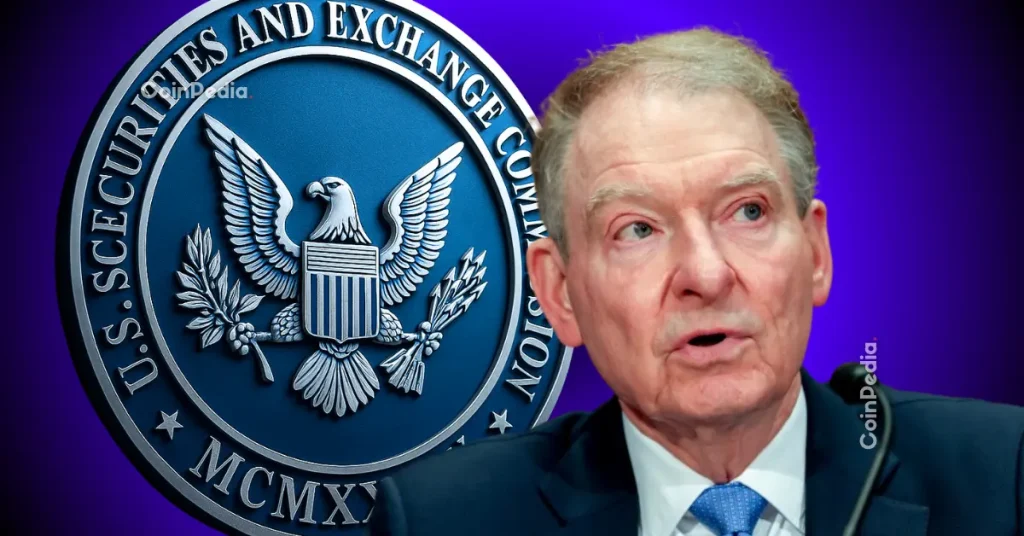
The SEC's potential tokenization innovation exemption signals a move towards regulatory clarity for tokenized assets, potentially unlocking new markets for RWA and tokenized securities. This development could reduce regulatory friction for crypto companies, encouraging experimentation and innovation in the tokenization space. While details are pending, the announcement suggests a near-term catalyst for projects focused on tokenizing real-world assets and securities.
Congressional offices are implementing bans on staff trading in prediction markets, signaling increased regulatory scrutiny on potential insider trading within government circles. The PREDICT Act and similar legislative efforts aim to extend these restrictions to senior officials, indicating a broader trend towards tighter oversight of prediction market activities tied to government information. While platforms like Polymarket and Kalshi are enhancing their anti-insider trading measures, the effectiveness of these changes in completely eliminating illicit activity remains uncertain.

US lawmakers are proposing the PREDICT Act to ban government officials and their families from trading on prediction markets, citing concerns over insider trading and the use of non-public information. This legislative push, alongside similar state-level actions and other proposed bills like BETS OFF, indicates a significant increase in regulatory scrutiny targeting prediction markets and their potential for market manipulation. The proposed penalties, including fines and profit disgorgement, signal a serious intent to curb perceived abuses, which could impact the operational landscape and user base of platforms like Kalshi and Polymarket.

XRP Ledger experienced a significant fee spike due to network activity nearing 200 transactions per ledger, indicating increased demand that temporarily outstripped capacity. Ripple CTO David Schwartz clarified that the fee surge is an inherent mechanism to maintain network stability by prioritizing transactions when demand exceeds efficient processing limits. The XRP fee structure, managed by validators with an exponential fee curve, automatically adjusts to manage congestion, suggesting such spikes may recur during periods of high network stress.
Signal context only. Validate with price action, liquidity, and risk limits before taking a position.
