
Navigating Crypto News

CoinFeather
Navigating Crypto News

Quick market read from this story
XRP faces significant selling pressure as approximately 60% of its supply is underwater, indicating a large pool of holders likely to exit positions near breakeven, which hinders sustained price rallies.
The current macro environment, characterized by rising oil prices and broader risk asset repricing, exacerbates XRP's internal weakness, pushing investors towards more defensive stances and reducing speculative appetite.
Declining derivatives open interest and a negative taker buy-sell ratio suggest reduced speculative activity and a market dominated by sellers, indicating a lack of aggressive demand needed to overcome overhead supply.
Thinning exchange activity and a decrease in active wallet interactions suggest a less liquid market, which could lead to more abrupt price movements on smaller flows, masking underlying fragility.
Deep Dive
XRP is experiencing significant downward pressure, influenced by a recent oil shock and general market unease that is driving investors towards more defensive assets. The digital asset has seen a 26% decline year-to-date, trading around $1.34, and a substantial 54% drop over the past six months. This trend is exacerbated by on-chain data revealing a large number of holders are currently at a loss, impacting market depth and recovery potential.
On-chain analytics from Glassnode indicate that approximately 36.8 billion XRP, representing about 60% of the circulating supply, are held by investors at a loss. This situation creates a scenario where rallies may encounter significant selling pressure as holders attempt to exit near their entry points. The market's ability to sustain an advance is challenged by this large pool of underwater investors, requiring more than just momentum buying to absorb lingering supply.
The broader macroeconomic environment, including rising oil prices and a general repricing of risk assets, is contributing to the pressure on digital tokens like XRP. The token's realized price, a proxy for the aggregate cost basis of holders, is currently around $1.44. With XRP trading below this level, the average holder remains underwater, making rallies opportunities for selling rather than significant accumulation. This cost basis acts as a key resistance zone, where selling pressure is likely to intensify.
Further supporting this outlook, Glassnode's Spent Output Profit Ratio (SOPR) remains below 1, signifying that on-chain transactions are, on average, being conducted at a loss. Similarly, the Net Unrealized Profit and Loss (NUPL) metric is negative, indicating the market is collectively in a loss-making state. These indicators suggest that XRP has not yet exited its loss regime, and a sustained rally will require substantial new demand to overcome the existing supply overhang.
Institutional sentiment towards XRP appears to be cooling, with XRP-focused investment products experiencing outflows. Data from SoSoValue shows weekly outflows for XRP ETFs, and CoinShares reports that XRP investment products are among the worst performers this month, with over $30 million in outflows. While not a complete collapse, these shifts suggest increased selectivity among allocators amid market volatility.
The derivatives market also reflects a reduction in speculative activity. XRP's total open interest has fallen to approximately $2.25 billion, its lowest point since early 2025. This decline indicates traders are reducing leverage and closing positions rather than initiating new ones, signaling a more cautious approach.
Analysis of order flow on platforms like Binance reveals a dominance of aggressive sell orders, with CryptoQuant's taker buy-sell ratio at around 0.912. This suggests that sellers are more actively taking liquidity than buyers, with buyers primarily providing liquidity through limit orders. This imbalance points to a lack of strong, urgent demand needed to drive prices higher.
Trading activity on exchanges has also slowed. XRP's 30-day volume z-score on Binance is approximately -1.16, indicating daily trading volume is below its recent average. Furthermore, the net number of active wallets interacting with XRP on major exchanges has reached its lowest point since early 2025. This reduced activity and thinner order books can make the market more sensitive to price movements, potentially leading to more abrupt shifts when significant flows do occur.
Source, catalyst, and sector overlap from the latest feed.
Bitcoin's recent slide below $70,000 highlights its sensitivity to macro shocks, as a weak jobs report and surging oil prices revived stagflation concerns, pushing investors away from risk assets. The combination of slowing growth and persistent wage pressure creates a challenging environment for Bitcoin, as it signals potential delays in Federal Reserve rate cuts and reduces confidence in near-term monetary easing. While spot Bitcoin ETF inflows have shown recent positive momentum, the asset's price action is increasingly influenced by institutional flows and miner selling, which can amplify weakness during periods of macro uncertainty. Traders should closely monitor upcoming US CPI data and the Federal Open Market Committee meeting for clarity on inflation trends and potential Fed policy shifts, as these will be critical in determining Bitcoin's next directional move.
Fantium CEO Jonathan Ludwig emphasizes that successful sports tokenization hinges on utility and real financial alignment, not just speculation, suggesting a shift towards more grounded applications in the sector. The introduction of the $BANK token for on-chain poker bankroll management signifies Fantium's expansion into formalizing private financial markets within niche sports verticals, aiming to create buyback and utility flywheels. Fantium's strategic choice to build on Solana is driven by its existing liquidity and infrastructure, indicating a preference for established ecosystems that can support practical, non-speculative tokenization models.
Analysis of Riot Platforms' mining economics reveals that while current Bitcoin prices ($67.2k) allow miners to cover electricity costs, they fall short of covering broader operating and accounting expenses, indicating a need for higher BTC prices (potentially $74.4k for operating break-even and $114.2k for accounting break-even) for sustained profitability. The post-halving profitability projections highlight that even with increased hash rates, Bitcoin miners will likely remain unprofitable on an accounting basis until BTC retests all-time highs around $126,000, underscoring the significant price sensitivity of the mining sector post-halving. The multi-layered break-even analysis demonstrates that 'cost to mine' is not a single figure for large US miners, with electricity, operating costs, and depreciation representing distinct profitability thresholds that impact treasury decisions and market expectations for earnings.
A recent study analyzing 11 years of Bitcoin network data and 68 cable fault events reveals that submarine cable failures have a negligible impact on the network's stability and price, contradicting common fears. While physical cable cuts pose minimal risk, the research highlights that targeted disruptions to major hosting providers (like AWS, Google Cloud, Hetzner) could impact a significant portion of Bitcoin nodes with as little as 5% capacity removal. The increasing adoption of Tor by Bitcoin nodes, driven by past censorship events like China's mining ban, has inadvertently strengthened the network's resilience against coordinated infrastructure attacks. Bitcoin's network topology has evolved to become more robust due to regulatory pressures and self-organization, demonstrating graceful degradation rather than catastrophic failure under stress.
Justin Sun's $10M SEC settlement and Binance's lawsuit dismissal signal a broader regulatory thaw, potentially reducing enforcement risk for major crypto players. The article highlights a significant financial overlap between eased regulatory pressure on figures like Justin Sun and CZ, and the growth of Trump-linked crypto ventures, particularly World Liberty Financial's USD1 stablecoin. The increasing market cap and integration of USD1 stablecoin into major transactions, alongside its revenue-sharing model with Trump-linked entities, suggests a direct financial benefit from the perceived regulatory easing. While not direct proof of quid pro quo, the confluence of regulatory leniency and financial gains for Trump-associated projects indicates a potential policy-to-profit feedback loop benefiting specific crypto ecosystems.
A prolonged U.S.-Iran conflict could drive increased government deficit spending, potentially devaluing fiat currencies and creating a favorable macro environment for Bitcoin as a non-sovereign asset. The potential for lower interest rates, driven by the need to finance increased debt and maintain Treasury market stability, combined with rising debt levels, historically supports Bitcoin's performance, suggesting a bullish macro outlook. While a war-driven surge in oil prices could introduce stagflationary risks, the strategist argues that even such an environment may benefit Bitcoin as policymakers prioritize financial stability over inflation control.
Dogecoin's multi-year bullish pennant suggests potential for a 10x rally if resistance is broken, indicating a long-term accumulation play for patient investors. Ethereum faces short-term bearish pressure below key levels despite increased trading volume, suggesting a cautious outlook until selling pressure subsides. BlockDAG's aftersale offers a unique 140x entry potential at $0.001 against a $0.14 listing price, presenting a speculative opportunity for traders seeking high-risk, high-reward plays before its official market debut. The market exhibits a bifurcated sentiment, with established assets like DOGE and ETH showing mixed signals while new projects like BlockDAG aim to capture speculative capital through aggressive pricing strategies.
Bitcoin's resilience above $65,000 amid traditional market volatility suggests potential defensive capital inflow, as traders seek alternatives to oil-sensitive assets. The pullback in crude oil prices from $120 to $95 has eased pressure on risk assets, contributing to the recovery in Bitcoin and Ether prices. Circle's USDC adoption for insurance payments highlights growing utility for stablecoins in traditional finance, potentially boosting confidence in the asset class. While short-term bounces are expected in traditional markets, persistent weakness suggests a cautious outlook for broader risk assets, with Bitcoin's ability to hold above $70,000 being a key indicator.
Digital asset funds saw significant net inflows of $619 million last week, primarily driven by Bitcoin and Ethereum, indicating sustained institutional interest despite macro headwinds. Solana (SOL) is holding a critical $81 support level, with analysts suggesting a reclaim of the $87 zone is necessary for bulls to regain momentum and target a potential move towards $100. Despite overall inflows, XRP experienced $30.3 million in outflows, highlighting divergent investor sentiment within the altcoin market. Geopolitical tensions and rising oil prices contributed to a late-week risk-off sentiment, leading to outflows on Thursday and Friday after substantial early-week inflows.
ZODL's $25 million seed funding, backed by major VCs like Paradigm and a16z crypto, signals strong institutional confidence in the Zcash ecosystem's future development and privacy-focused applications. The formation of ZODL by former ECC core team members, following a governance dispute, indicates a potential shift in Zcash's development structure, with a focus on independent innovation for the ZEC protocol and its Zodl wallet. The substantial funding and continued development of Zodl, which has reportedly driven significant growth in Zcash's shielded pool, suggest a strategic effort to enhance user adoption and utility for privacy-centric transactions.
Live Feed
Loading the broader stream in the same flow as the homepage feed.

Veteran trader Peter Brandt disputes the validity of the 'cup and handle' pattern for Bitcoin, directly challenging the $500,000 price prediction based on this technical analysis. Brandt's rejection of the pattern, drawing parallels to gold's successful rally, suggests that market participants relying on this specific technical setup for Bitcoin may be misinterpreting chart structures. The commentary highlights the importance of rigorous technical analysis and warns against applying patterns across different asset classes without proper validation, potentially tempering speculative optimism.

Hyperliquid's record $720M weekend volume highlights increasing demand for on-chain macro trading, driven by commodity volatility. The surge in oil and silver-linked trades on Hyperliquid indicates a growing intersection between traditional market events and decentralized derivatives platforms. Despite record trading volumes, the HYPE token price remains significantly below its peak, suggesting a decoupling between platform activity and native token valuation. Geopolitical tensions and commodity price shocks are emerging as significant catalysts for on-chain derivatives trading, potentially attracting new capital flows into the DeFi space.
Amina's integration as the first regulated bank participant on the EU's 21X DLT pilot platform signifies a crucial step in bridging traditional finance with tokenized securities markets. This development addresses interoperability concerns, a key barrier to institutional tokenization adoption, by connecting regulated banks with blockchain-based issuance and trading venues. While the EU's DLT pilot regime aims to foster innovation, its current limitations and Amina's participation will be closely watched to determine if it can accelerate scaling and competitiveness against other jurisdictions. The increasing involvement of traditional financial institutions in tokenized real-world assets, exemplified by Amina's move, suggests a growing trend towards integrating digital asset infrastructure with established capital markets.
A significant withdrawal of $28.4 million in DOGE from Kraken to an unknown wallet suggests potential accumulation by large holders at current price levels. The timing of this whale activity ahead of the US CPI report implies a strategic move to position for potential volatility and price action post-announcement. Reduced exchange supply from this large withdrawal could decrease immediate selling pressure, making DOGE more susceptible to upward price movements if macroeconomic data is favorable.
Shiba Inu experienced a significant 658% surge in spot flows, indicating increased trader interest and potential shifts in market supply or demand dynamics. The rise in spot flows coincides with a 9.39% increase in SHIB's open interest, suggesting growing leverage in the market and potentially setting the stage for increased volatility. Technical indicators like contracting Bollinger Bands on the weekly chart suggest SHIB may be consolidating for a significant price move, with key resistance levels identified at $0.00000587 and $0.00000653. Broader market sentiment, particularly influenced by upcoming U.S. inflation data (CPI, Core CPI) and PCE figures, will be a critical factor in SHIB's potential price recovery this week.
Nasdaq's partnership with Kraken to bring tokenized equities on-chain signifies a major step towards bridging traditional finance and blockchain, potentially increasing institutional adoption of digital assets. This development allows traditional stocks to be traded as tokens on crypto exchanges, creating a new avenue for liquidity and accessibility while maintaining regulatory compliance. The collaboration with Payward, Kraken's parent company, aims to build infrastructure for seamless movement of tokenized equities between regulated markets and decentralized networks, impacting the RWA sector.
Dogecoin is exhibiting a strong bearish structure with a descending trendline and lower highs, indicating persistent seller control and a potential for further downside if key support levels fail. The critical $0.088 support level is under repeated testing, suggesting it may weaken and lead to a liquidity sweep and accelerated price decline if broken. Despite recent volatility and a sharp dip below $0.089, buyers are attempting to defend lower zones, indicating potential short-term consolidation or a fight for control at current price levels. The ongoing downtrend, marked by a 36% decline and failure to break resistance, suggests that any rallies are likely to be short-lived unless a decisive breakout above the trendline occurs.

Crypto fundraising has seen a significant downturn, with capital raised down 62% and deal count down 38% in the last three months, indicating a tightening market for new projects. The market is shifting towards larger, strategic rounds and M&A, with DeFi leading in deal volume but facing compressed valuations, while CeFi attracts larger capital injections through acquisitions. Potential catalysts for a fundraising rebound in the latter half of 2026 include regulatory clarity from legislation like the GENIUS Act, a strong IPO pipeline for crypto-native firms, and increased VC interest in AI infrastructure and DePIN. The maturation of the crypto market is evident as 'spray-and-pray' tactics fade, leading to consolidation and a focus on established players, signaling a less accessible but potentially more stable environment for select companies.
Geopolitical tensions and surging oil prices are creating market noise, but the S&P 500's resilience near all-time highs suggests underlying strength despite recent dips. A technical breakdown below the 6,770 support level indicates potential downside, with traders watching the 6,550 zone as the next demand target. Upcoming economic data, including CPI and PCE, could influence market direction, but geopolitical events are currently the primary driver of sentiment. The market's ability to absorb negative news without a sharp sell-off is being interpreted as strength, though recent price action suggests potential cracks are forming.
The mining of the 20 millionth Bitcoin marks a significant supply milestone, confirming 95.2% of the total capped supply is now in circulation, reinforcing Bitcoin's scarcity narrative. With only 1 million BTC remaining and issuance slowing dramatically due to halving events, the diminishing supply rate over the next century until 2140 will continue to be a key factor in Bitcoin's long-term value proposition. The historical context of Satoshi Nakamoto's 'educated guess' for the 21 million cap, potentially linked to global M1 money supply at the time, adds a layer of fundamental reasoning to Bitcoin's fixed supply model.
BlackRock's transfer of $153 million in BTC and ETH to Coinbase suggests potential portfolio rebalancing or strategic positioning ahead of its Staked Ethereum Trust launch. The move to Coinbase, a major custodian for crypto ETFs, could indicate a shift in how BlackRock manages its digital asset holdings for its growing ETF products. Increased institutional activity, even if for rebalancing, signals continued engagement from major asset managers like BlackRock in the digital asset space. The upcoming launch of BlackRock's Staked Ethereum Trust (ETHB) with a revised staking fee structure may influence staking yields and investor interest in ETH staking products.

Global insurance broker Aon's successful test of stablecoin payments for premiums signals growing institutional interest in blockchain for traditional finance settlements. The use of USDC on Ethereum and PYUSD on Solana by Aon demonstrates the increasing maturity and potential integration of stablecoins into corporate treasury functions, facilitated by improved regulatory clarity. This proof-of-concept by a major financial intermediary suggests a potential shift towards faster, more transparent cross-border transactions within the insurance sector, moving beyond traditional banking rails.
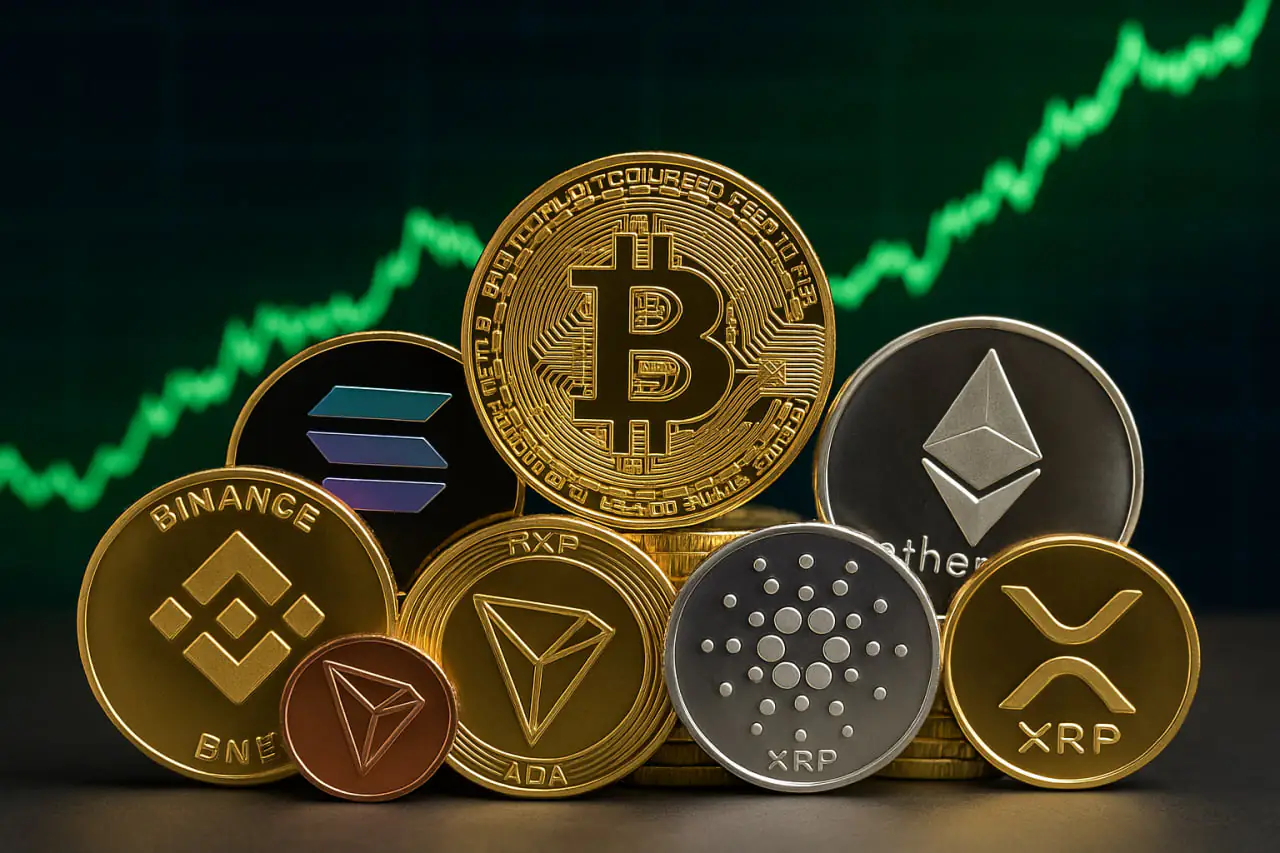
The crypto market's total capitalization nearing $2.36 trillion and Bitcoin approaching $70,000 signals a potential shift in investor sentiment, driven by renewed institutional interest and broad-based gains across major altcoins. Technical indicators for Bitcoin, including RSI and MACD, suggest strengthening bullish momentum, with a decisive break above $70,000 potentially opening further upside towards $72,000-$74,000. Despite the rally, the Crypto Fear & Greed Index at 22 indicates persistent caution, suggesting that while short-term momentum is positive, underlying investor sentiment has not fully recovered from recent volatility. Ethereum's upward movement and consolidation above $2,000, coupled with gains in BNB and Solana, highlight a rotation back into large-cap altcoins, though XRP and TRON show more muted performance.
BitMine's substantial ETH purchase, exceeding $131 million, positions it as the largest corporate holder and signals continued institutional interest in Ethereum despite recent price volatility. The acquisition at an average price of $1,965 per ETH, below its ATH, suggests a strategic accumulation during a perceived market bottom, aligning with a bullish long-term outlook for Ethereum's fundamental development. This significant corporate accumulation of ETH, representing 3.7% of the circulating supply, could provide a degree of price support and indicates a growing trend of institutional capital flowing into major Layer-1 assets.
Cardano's introduction of programmable tokens via CIP-0113 enables enhanced control for asset issuers, including KYC/AML compliance and asset freezing, positioning it for regulated DeFi and RWA tokenization. The new standard allows for modular logic integration into tokens, facilitating specialized use cases for securities, real estate, and stablecoins without core network changes. This development signals Cardano's strategic move into the regulated DeFi space, aiming to attract institutional interest and capture market share in tokenized assets. While a live preview is available, a professional security audit is pending, indicating that full mainnet deployment and broader adoption will require further validation.
Signal context only. Validate with price action, liquidity, and risk limits before taking a position.
