
Navigating Crypto News

CoinFeather
Navigating Crypto News
Quick market read from this story
Amina's integration as the first regulated bank participant on the EU's 21X DLT pilot platform signifies a crucial step in bridging traditional finance with tokenized securities markets.
This development addresses interoperability concerns, a key barrier to institutional tokenization adoption, by connecting regulated banks with blockchain-based issuance and trading venues.
While the EU's DLT pilot regime aims to foster innovation, its current limitations and Amina's participation will be closely watched to determine if it can accelerate scaling and competitiveness against other jurisdictions.
The increasing involvement of traditional financial institutions in tokenized real-world assets, exemplified by Amina's move, suggests a growing trend towards integrating digital asset infrastructure with established capital markets.
Deep Dive
Swiss-regulated crypto bank Amina has become the first fully regulated bank participant on 21X, a European Union-regulated settlement platform for tokenized securities operating under the EU’s DLT pilot regime. This move signifies a significant step towards integrating digital asset infrastructure with traditional capital markets.
Amina announced its participation as a listing sponsor on 21X, a platform that received an infrastructure permit under the EU’s DLT pilot regime in December 2024. This allows 21X to operate a regulated market for blockchain-based securities in a controlled environment. Amina's involvement will enable it to support companies issuing tokenized securities on 21X, facilitated by its partnership with Tokeny, a Luxembourg-based firm specializing in the technology for creating and managing tokenized financial assets. This collaboration aims to bridge a critical gap for institutional adoption by connecting regulated banks with the issuance and trading of tokenized securities.
The EU’s DLT framework, introduced in 2023, permits market operators to experiment with blockchain-based trading and settlement of financial instruments within a regulatory sandbox, allowing regulators to assess the technology's potential integration into existing market infrastructure. However, the regime has faced criticism from industry participants who believe its current limitations could hinder the scaling of European onchain markets and their competitiveness against other jurisdictions. A Baker McKenzie report highlighted the lack of interoperability between tokenized asset platforms as a major obstacle for financial institutions, emphasizing that scale will only be achieved through interconnected platforms.
This development occurs amidst a growing trend of financial institutions investing in blockchain infrastructure for tokenized assets. In the United States, entities like BNY, Nasdaq, and S&P Global have supported the expansion of the Canton Network. Meanwhile, Europe is actively testing regulated blockchain trading venues like 21X. In February, eight EU-regulated digital asset companies called for accelerated digital asset legislation, expressing concerns that the bloc might lag behind the U.S. and other regions in developing tokenized financial markets. The total value of tokenized real-world assets has reached $26.5 billion. Notable recent advancements include Kraken's launch of tokenized securities trading for European users via its xStocks platform and Ondo's regulatory approval in Liechtenstein to offer tokenized equities trading to European investors.
Source, catalyst, and sector overlap from the latest feed.
Increased Ether derivatives inflows and a record leverage ratio suggest heightened speculative activity, potentially leading to amplified volatility as ETH targets short liquidity above $2,000. The concentration of short liquidations near $2,030 presents a potential magnet for price, which could trigger accelerated upside movement if these positions are forced to close. ETH is testing a long-term ascending trendline, and a sustained hold above the $1,900-$2,000 area could signal a continuation of the bullish momentum observed in recent market cycles.
XRP holders are facing substantial unrealized losses exceeding $50 billion, with over 60% of the circulating supply now underwater, indicating significant downside pressure and potential for capitulation if key support levels fail. Outflows from spot XRP ETFs totaling $22.8 million over two days suggest waning investor confidence and a risk-off sentiment impacting XRP's immediate price action. The current price action is retesting critical support around $1.30-$1.27, with a break below this range potentially signaling a move towards the 200-week EMA at $1.13, while reclaiming $1.40 is necessary for bulls to regain control. The aggregate holder cost basis at $1.44 and the 200-week SMA at $1.40 represent key technical levels that will dictate short-term price direction and sentiment for XRP.
South Korean regulators are signaling increased enforcement on AML/KYC failures, potentially impacting exchange operations and user access. Bithumb faces a potential six-month partial suspension, which could restrict new user withdrawals and affect its market position in South Korea. The regulatory action against Bithumb follows similar penalties for other exchanges like Upbit and Korbit, indicating a broader trend of stricter oversight in the region. While the suspension is at a pre-notification stage and may be adjusted, the warning to the CEO suggests a serious regulatory stance that could deter new user onboarding.
The United Nations Development Programme's report highlights blockchain's potential to modernize public systems, signaling growing institutional interest in distributed ledger technology for transparency and efficiency. UNDP's pragmatic approach emphasizes responsible adoption with robust oversight, suggesting that successful blockchain integration in public infrastructure hinges on strong governance and security measures. The report's focus on platform-agnostic solutions and interoperability indicates a trend towards open digital infrastructure, potentially benefiting projects prioritizing decentralization and avoiding vendor lock-in.
The Bitcoin network reaching 20 million coins mined reinforces its core value proposition of scarcity, a key differentiator against fiat currencies, potentially appealing to investors seeking inflation hedges. Despite the symbolic milestone, market analysts suggest the event is already priced in, with short-term price action likely to remain dominated by liquidity and macroeconomic factors rather than this specific supply event. The long-term implication of Bitcoin's finite supply, coupled with predictable issuance policy, is seen as a powerful combination that markets may eventually reward, emphasizing trust in the protocol.
Latin America's crypto market surged to $730 billion in 2025, driven by stablecoin adoption for payments and inflation hedging, indicating a shift from speculative use to functional financial infrastructure. Brazil and Argentina lead regional adoption, with Brazil showing significant institutional growth and Peru exhibiting the fastest per capita user expansion, highlighting diverse market dynamics. Upcoming VASP licensing and AML reporting regulations in 2026 across Brazil, Argentina, and Mexico will test the market's resilience and could impact major exchanges like Binance, which handles over 50% of regional activity.
The crypto market experienced a significant rally driven by institutional buying and a perceived shift in US regulatory stance on privacy tools, suggesting a potential easing of enforcement fears. Bitcoin's breach of $69,000 and Ethereum's move above $2,000, coupled with substantial short liquidations, indicate strong upward momentum and a potential shift in market sentiment from fear to cautious optimism. While the rally shows breadth with assets like SOL, BNB, and ADA showing gains, the Altcoin Season Index at 35 suggests Bitcoin remains the primary driver, with broader altcoin participation yet to materialize. Upcoming US Bitcoin ETF flow data and ongoing geopolitical risks present key variables that could influence the sustainability of this rally, highlighting the market's continued sensitivity to macro factors and institutional flows.
Nasdaq's partnership with Kraken to bring tokenized equities on-chain signifies a major step towards bridging traditional finance and blockchain, potentially increasing institutional adoption of digital assets. This development allows traditional stocks to be traded as tokens on crypto exchanges, creating a new avenue for liquidity and accessibility while maintaining regulatory compliance. The collaboration with Payward, Kraken's parent company, aims to build infrastructure for seamless movement of tokenized equities between regulated markets and decentralized networks, impacting the RWA sector.
Crypto fundraising has seen a significant downturn, with capital raised down 62% and deal count down 38% in the last three months, indicating a tightening market for new projects. The market is shifting towards larger, strategic rounds and M&A, with DeFi leading in deal volume but facing compressed valuations, while CeFi attracts larger capital injections through acquisitions. Potential catalysts for a fundraising rebound in the latter half of 2026 include regulatory clarity from legislation like the GENIUS Act, a strong IPO pipeline for crypto-native firms, and increased VC interest in AI infrastructure and DePIN. The maturation of the crypto market is evident as 'spray-and-pray' tactics fade, leading to consolidation and a focus on established players, signaling a less accessible but potentially more stable environment for select companies.
Bitcoin's price action is showing increased sensitivity to geopolitical events, as evidenced by its rebound following a surge in oil prices linked to Middle East tensions. The significant funding rounds for prediction markets like Polymarket and Kalshi at high valuations suggest growing institutional interest in decentralized prediction platforms. Florida's move to establish a stablecoin legal framework highlights a trend of state-level regulatory progress, potentially creating a more favorable environment for stablecoin adoption and innovation. The strategic investments by Circle and Stripe in stablecoin infrastructure for AI payments signal a significant future growth area for digital assets in machine-to-machine commerce.
Nigel Farage's investment in Stack BTC, alongside Blockchain.com, signals growing political interest in Bitcoin treasury strategies, potentially attracting further institutional attention. The £260,000 funding round for Stack BTC, which plans to initiate its treasury with 21 BTC, represents a direct capital inflow into a Bitcoin-focused firm, underscoring a tangible market commitment. Despite the investment, the association with political figures and ongoing scrutiny of crypto donations for Reform UK introduces regulatory and reputational risks that could impact Stack BTC's broader adoption.
North Korean hackers are increasingly sophisticated, shifting from purely technical exploits to social engineering and embedded IT roles to breach crypto firms. The exploitation of a React front-end vulnerability (CVE-2025-55182) highlights a critical attack vector targeting the operational backbone of exchanges and staking platforms. With North Korean hackers stealing a record $2.02B in crypto in 2025, representing 13% of their GDP, the financial incentive for these high-value, low-frequency attacks remains significant. The trend of fewer but more lucrative crypto heists, exemplified by the Lazarus Group's activities, suggests continued elevated risk for crypto infrastructure providers.
Binance's addition of new trading pairs for BCH, NEAR, and TRX, coupled with zero maker fees and trading bot support, aims to stimulate trading activity and potentially drive short-term price appreciation for these altcoins. The exchange listing event is already showing a positive correlation with increased trading volumes and modest price upticks for BCH, NEAR, and TRX, indicating a market reaction to enhanced accessibility and promotional incentives. While the immediate impact of the Binance listing is positive, sustained price performance for BCH, NEAR, and TRX will likely depend on broader market conditions and evolving investor sentiment beyond the initial trading boost.
BlockDAG's current trading performance on CoinStore, including its top 100 ranking and strong initial staking metrics, demonstrates significant pre-existing demand that could be amplified by future Tier 1 US exchange listings. The anticipated Tier 1 US exchange listings represent a critical catalyst for BlockDAG, expected to unlock access to a larger trader base, attract institutional capital, and significantly increase market visibility and liquidity. The project's price targets of $0.20, $0.40, and $0.50 are explicitly linked to staged exchange listing events, suggesting a structured rollout plan that traders can follow for potential entry and exit points. While current trading on CoinStore shows promise, the core value proposition and potential for a 100x surge are contingent on the successful execution of upcoming Tier 1 US exchange listings, making this the primary event to monitor.
Live Feed
Loading the broader stream in the same flow as the homepage feed.
PEPE is testing a critical demand zone around $0.0000031-$0.0000035, which historically has acted as a launchpad for significant rallies. Analysts suggest a potential 781% upside move if PEPE can sustain this support level and attract renewed buying pressure, indicating a possible short-term recovery scenario. Failure to hold the $0.0000031 support level could lead to further downside, highlighting the importance of this price area for near-term price action.

The analysis highlights that rhodium and iridium are currently the most valuable metals due to extreme scarcity and irreplaceable industrial demand, particularly in catalytic converters and high-tech applications. Gold's value is sustained by its monetary history, central bank accumulation, and jewelry demand, positioning it as a stable safe-haven asset despite lower industrial use. Silver's demand is projected to grow significantly due to its critical role in solar panel manufacturing, suggesting a strong long-term outlook driven by the green energy transition. Platinum and palladium face long-term headwinds from the shift to electric vehicles, which reduces their primary demand driver: catalytic converters.
CZ's prediction of a Bitcoin super cycle, driven by institutional adoption and regulatory clarity, suggests a potential shift away from traditional four-year cycles, favoring utility-focused projects. The article highlights Pepeto's presale as a direct beneficiary of CZ's super cycle thesis, emphasizing its exchange infrastructure development as key to capturing institutional capital flows. With $7.5M raised and a focus on exchange tools, Pepeto is positioned to capitalize on the predicted influx of tokenized assets, aiming for significant returns upon its listing.

BlockDAG's successful multi-exchange launch and validated $0.05 support level suggest immediate upside potential, with market makers targeting $0.20 and a $10B market cap as key near-term objectives. Hyperliquid's resilience and growth in a bear market, coupled with the HyperEVM launch and a proposed $1B token burn, position it for a potential breakout above $35 towards its all-time high. Chainlink's fundamental strength is reinforced by institutional accumulation via the GLNK ETF and its critical role in the growing RWA tokenization trend, setting the stage for a rebound above $10.50. Polkadot's upcoming March 14th tokenomics upgrade, featuring a supply cap and reduced emissions, creates a scarcity-driven catalyst with potential for significant price appreciation above $1.70.

Bitcoin has reclaimed the $68,000 support level after a brief dip, indicating a repair within its current trading range rather than a confirmed breakout. The price action suggests that while a major drop was avoided, Bitcoin faces overhead resistance at $71,500, necessitating acceptance above this level for a sustained upward trend. Macroeconomic factors like inflation and interest rates continue to influence Bitcoin's price, creating a range-bound environment with event risk at the edges. Despite recent outflows ending, cautious sentiment persists among options traders, aligning with the channel analysis that points to consolidation over immediate bullish momentum.

The perpetuals market has seen significant growth, exceeding $7.24 trillion in monthly volume, with Binance maintaining dominant market share but facing increasing competition from decentralized exchanges. Hyperliquid's entry into the top 10 decentralized exchanges for perpetuals volume marks a critical shift, demonstrating the growing viability and competitiveness of DeFi derivatives infrastructure against established centralized players. The increasing market share of DEXs in perpetuals, driven by improved execution speeds and capital efficiency, suggests a potential long-term structural change in derivatives trading, attracting institutional interest and advanced trading strategies. While centralized exchanges retain advantages in liquidity and fiat on-ramps, the closing UX gap and emerging trends like RWAs and AI traders indicate a dynamic market where decentralized platforms are poised for further growth.
Kazakhstan's $350 million allocation to crypto infrastructure signals sovereign validation of the sector, potentially driving demand for related projects like exchange infrastructure providers. The article promotes Pepeto as a significant opportunity, highlighting its $7.8M presale raise during a period of market fear and its focus on exchange infrastructure, drawing parallels to past successful meme coins. Despite a general altcoin downturn, the article suggests a potential crypto market explosion driven by institutional interest and specific project developments, positioning Pepeto as a key beneficiary.

A prolonged U.S.-Iran conflict could drive increased government deficit spending, potentially devaluing fiat currencies and creating a favorable macro environment for Bitcoin as a non-sovereign asset. The potential for lower interest rates, driven by the need to finance increased debt and maintain Treasury market stability, combined with rising debt levels, historically supports Bitcoin's performance, suggesting a bullish macro outlook. While a war-driven surge in oil prices could introduce stagflationary risks, the strategist argues that even such an environment may benefit Bitcoin as policymakers prioritize financial stability over inflation control.
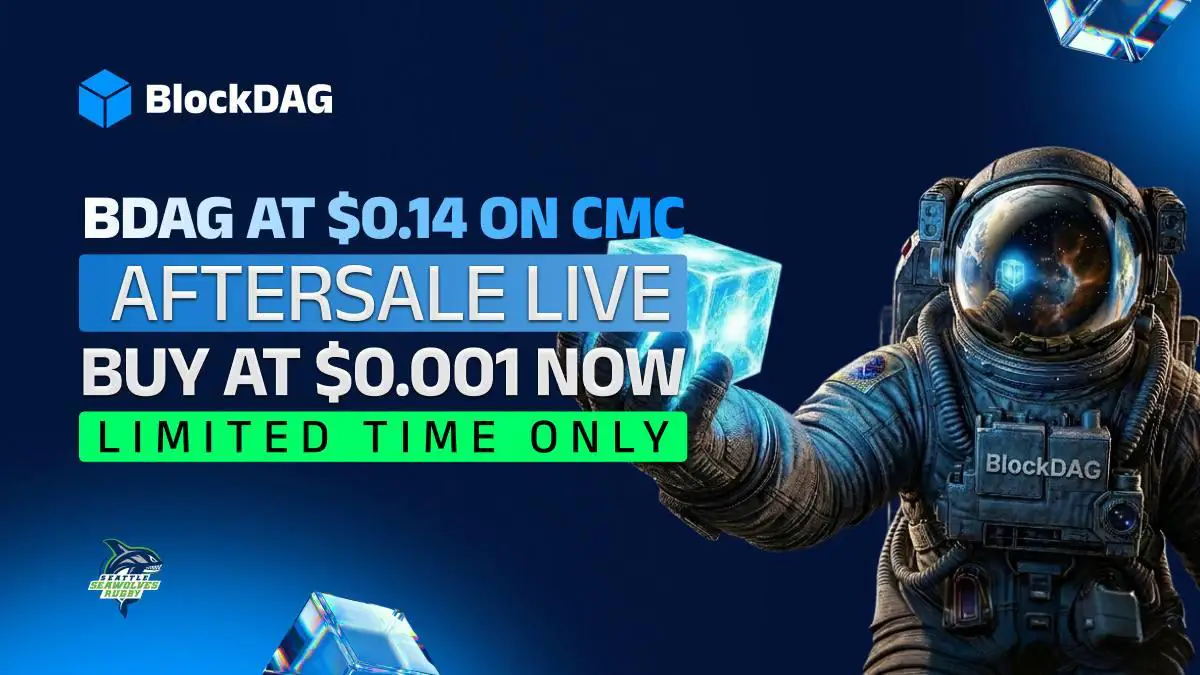
Dogecoin's multi-year bullish pennant suggests potential for a 10x rally if resistance is broken, indicating a long-term accumulation play for patient investors. Ethereum faces short-term bearish pressure below key levels despite increased trading volume, suggesting a cautious outlook until selling pressure subsides. BlockDAG's aftersale offers a unique 140x entry potential at $0.001 against a $0.14 listing price, presenting a speculative opportunity for traders seeking high-risk, high-reward plays before its official market debut. The market exhibits a bifurcated sentiment, with established assets like DOGE and ETH showing mixed signals while new projects like BlockDAG aim to capture speculative capital through aggressive pricing strategies.

Bitcoin's resilience above $65,000 amid traditional market volatility suggests potential defensive capital inflow, as traders seek alternatives to oil-sensitive assets. The pullback in crude oil prices from $120 to $95 has eased pressure on risk assets, contributing to the recovery in Bitcoin and Ether prices. Circle's USDC adoption for insurance payments highlights growing utility for stablecoins in traditional finance, potentially boosting confidence in the asset class. While short-term bounces are expected in traditional markets, persistent weakness suggests a cautious outlook for broader risk assets, with Bitcoin's ability to hold above $70,000 being a key indicator.

Veteran trader Peter Brandt disputes the validity of the 'cup and handle' pattern for Bitcoin, directly challenging the $500,000 price prediction based on this technical analysis. Brandt's rejection of the pattern, drawing parallels to gold's successful rally, suggests that market participants relying on this specific technical setup for Bitcoin may be misinterpreting chart structures. The commentary highlights the importance of rigorous technical analysis and warns against applying patterns across different asset classes without proper validation, potentially tempering speculative optimism.

Hyperliquid's record $720M weekend volume highlights increasing demand for on-chain macro trading, driven by commodity volatility. The surge in oil and silver-linked trades on Hyperliquid indicates a growing intersection between traditional market events and decentralized derivatives platforms. Despite record trading volumes, the HYPE token price remains significantly below its peak, suggesting a decoupling between platform activity and native token valuation. Geopolitical tensions and commodity price shocks are emerging as significant catalysts for on-chain derivatives trading, potentially attracting new capital flows into the DeFi space.
Signal context only. Validate with price action, liquidity, and risk limits before taking a position.
