
Navigating Crypto News

CoinFeather
Navigating Crypto News
Quick market read from this story
Japan's reclassification of crypto as financial assets, particularly impacting XRP, signals a significant regulatory shift that could unlock institutional adoption for cross-border settlements.
Sustained institutional demand for Bitcoin ETFs, with over $343 million in recent inflows and BlackRock leading, reinforces BTC's price stability above $70,000 and suggests continued positive market sentiment.
Binance CEO's strong advocacy for passkeys over traditional passwords and SMS-based 2FA highlights a critical security upgrade needed to combat escalating crypto fraud, impacting user protection strategies.
The upcoming CPI report introduces a key macroeconomic variable that could influence short-term liquidity and risk appetite for Bitcoin and the broader crypto market.
Source, catalyst, and sector overlap from the latest feed.
Adam Back's assertion of Satoshi Nakamoto's British nationality, while speculative, adds a narrative layer to the ongoing mystery surrounding Bitcoin's creator. The discussion around Satoshi's identity and potential motivations for anonymity, referencing historical cryptography figures, highlights the enduring importance of privacy and security in the crypto space. While this news is primarily narrative-driven, it touches upon the foundational aspects of Bitcoin's origin, which could indirectly influence long-term sentiment for BTC holders.
Ethereum's network activity has reached a new all-time high in total transfer count, surpassing 1.3 million transactions on a 7-day SMA, indicating robust user engagement despite current market price stagnation. The surge in Ethereum's network activity, driven by increased usage in DeFi, Layer-2 solutions, and smart contract applications, suggests underlying demand that could precede a price recovery. While Ethereum's price has been trading sideways, the significant increase in transaction volume is a classic indicator of growing demand, which historically can lead to reduced circulating supply and upward price pressure.
Live Feed
Loading the broader stream in the same flow as the homepage feed.

Adam Back, CEO of Blockstream, has publicly denied being Satoshi Nakamoto in response to a New York Times investigation, reinforcing his prior statements. Back's detailed response, including his confirmation of receiving the first email from Satoshi Nakamoto in 2008, adds context to the ongoing mystery but does not provide definitive proof of Satoshi's identity. The market impact of this denial is likely minimal as it reiterates existing information and does not introduce new catalysts for price movement in Bitcoin or related assets.

Ethereum is at a critical pivot point around the $2,150-$2,200 range, with a sustained break above $2,402 needed to signal a potential local bottom and invalidate bearish scenarios. Upcoming ETH options expiry near the $2,050 max-pain level and US CPI data releases are key short-term volatility catalysts that could influence price direction. Despite current resistance, the Binance taker buy-sell ratio above 1 and a macro oscillator in deeply undervalued territory suggest potential for accumulation and a gradual upside if key resistance breaks. Failure to hold the $2,150 support could lead to a rapid decline towards the $1,972-$1,818 band, highlighting the immediate downside risk if bullish momentum falters.

On-chain analysis suggests Bitcoin's bear market may not have reached its final bottom, with a projected 'iron bottom' around $55,000 by late 2026. The MVRV Z-score metric, historically a reliable indicator of bear market bottoms, has not yet entered its typical 'undervalued' zone, implying further downside is possible. Following the projected late 2026 bottom, a two-year accumulation phase is anticipated, leading up to a potential cycle top in the second half of 2029, aligning with historical post-halving cycles. Traders should monitor the MVRV Z-score and other on-chain metrics for confirmation of a trend reversal, as current data suggests a prolonged period of accumulation rather than an immediate recovery.
Concerns over centralized governance within Bittensor, highlighted by Covenant AI's exit, have triggered a significant price drop for TAO, signaling investor apprehension about the project's decentralization claims. The dispute, involving accusations of concentrated power and suspended subnet emissions, has led to an 18.7% decline in TAO's price, indicating a negative market reaction to governance issues. While Bittensor's founder denies direct control over emissions, the market's interpretation of these governance disputes as a fundamental flaw could lead to sustained downward pressure on TAO.
Dogecoin is approaching a critical long-term support level at $0.061, which analysts believe could trigger a 15x surge to $1.41 if maintained. The current price action is interpreted as a potential fifth wave in a long-term Elliott Wave structure, suggesting a significant upward movement is possible if key support holds. Failure to hold the $0.061 support level would invalidate the bullish outlook and signal a structural breakdown, potentially leading to further downside.
Mortgage rates are showing a slight downward trend but remain range-bound, indicating a lack of strong directional conviction in the broader market. Inflationary pressures, particularly from oil prices, are a key factor keeping mortgage rates elevated, suggesting that a sustained move towards 6% is contingent on easing geopolitical and economic concerns. The gradual nature of rate adjustments implies that significant repricing events are unlikely in the short term, requiring traders to monitor inflation reports, employment data, and energy prices for actionable signals. While not a direct crypto event, the dynamics of traditional finance markets like mortgage rates can influence overall liquidity and investor sentiment, indirectly impacting risk assets.

The CoinDesk 20 Index experienced a slight decline of 0.2%, indicating a broad market sentiment shift driven by underperforming assets like HBAR and ADA. Hedera (HBAR) and Cardano (ADA) are identified as key laggards within the CoinDesk 20, suggesting potential localized selling pressure or a lack of positive momentum for these specific assets. With only six out of twenty assets trading higher, the overall market breadth is weak, reinforcing a cautious outlook for the short-term performance of the broader crypto market.

Bitcoin miners are increasingly reliant on the block subsidy as transaction fees contribute less than 1% of revenue, highlighting price and operational efficiency as key survival factors. The upcoming difficulty adjustment is projected to decrease by approximately 5%, offering marginal relief to miners, but the core challenge of low fee revenue remains. Miners with high-cost operations, legacy equipment, or weak balance sheets face significant pressure, while efficient operators with strong treasuries and strategic flexibility are better positioned to navigate the current environment. A notable trend is the strategic pivot towards AI and HPC contracts, with some miners projecting up to 70% of revenue from these sectors, indicating a diversification beyond pure Bitcoin mining.

Bitcoin Everlight's launch of its Shard model aims to democratize Bitcoin rewards by enabling passive income from transaction fees without hardware, potentially attracting retail investors seeking yield. The project's infrastructure play, designed to enhance Bitcoin's speed and cost-effectiveness without altering core rules, positions it as a complementary solution to traditional mining and Layer 2 scaling. With over $2.9M raised in its BTCL presale and plans for CEX/DEX listings, the project signals strong early investor interest and aims for significant liquidity and market accessibility post-launch.

The World Liberty Financial (WLFI) token experienced a significant sell-off, dropping over 12% due to concerns arising from the project using its own token as collateral for a $75 million stablecoin loan, indicating a high-risk financial structure. Derivatives data shows a volume-led sell-off with declining open interest, suggesting aggressive long position unwinding and a loss of bullish conviction among traders. WLFI's price action has broken below a key consolidation range, signaling a bearish continuation and increased downside risk towards the $0.07 support level. The sharp decline is attributed to project-specific risks and a confidence shock stemming from internal financial decisions, rather than broader market conditions, highlighting potential structural instability.
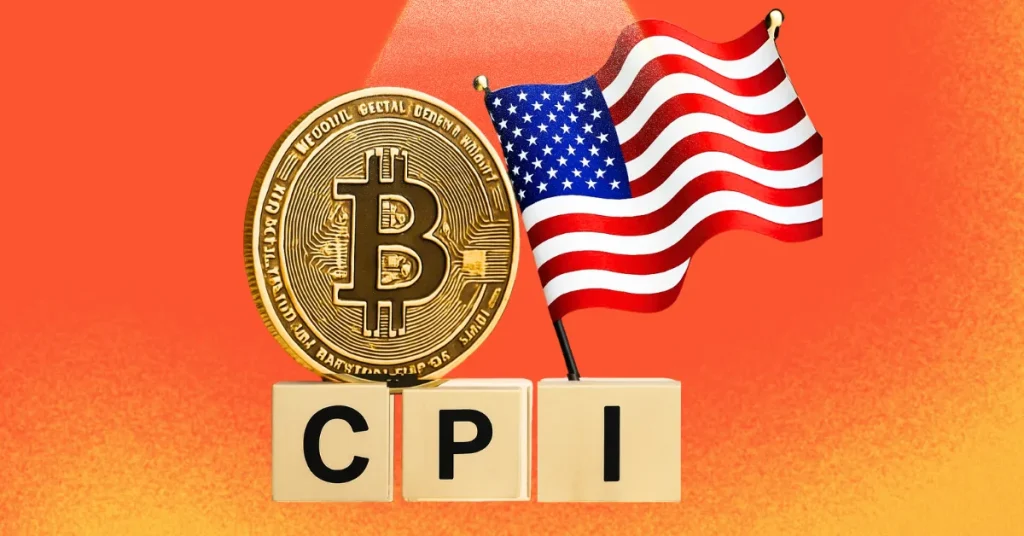
US inflation data for March shows a headline CPI of 3.3%, slightly below expectations and driven primarily by energy costs, suggesting underlying price pressures remain relatively contained. While the headline CPI increase may initially be perceived as a negative for risk assets, the stable core inflation at 2.6% indicates that broader inflationary forces are not accelerating, which could be interpreted as a neutral to slightly bullish signal for markets sensitive to interest rate policy. The market's reaction to this CPI report will be crucial for assessing Bitcoin and other cryptocurrencies' sensitivity to macroeconomic data, particularly in the context of potential future Federal Reserve monetary policy adjustments.
Signal context only. Validate with price action, liquidity, and risk limits before taking a position.
