
Navigating Crypto News

CoinFeather
Navigating Crypto News

Quick market read from this story
Kevin Warsh's nomination to lead the Federal Reserve, coupled with his stated desire for lower interest rates and a positive view on Bitcoin as a store of value, could signal a more favorable environment for risk-on assets like cryptocurrencies.
Despite Warsh's potential influence, his ability to enact significant policy changes, such as rate cuts, is constrained by the FOMC's collective decision-making process and potential economic headwinds like rising oil prices.
Market participants should monitor Warsh's confirmation hearing and the subsequent FOMC meetings for concrete policy shifts, as his actual impact on interest rates and broader economic policy remains uncertain due to internal Fed dynamics and external economic pressures.
Warsh's nuanced view on Bitcoin, acknowledging its store of value properties while questioning its utility as money, suggests a cautious but potentially open-minded regulatory stance towards digital assets if confirmed.
Deep Dive
Financier Kevin Warsh, a former Federal Reserve Governor, is reportedly being considered for the role of Fed chair, with his nomination potentially heading to the US Senate. Warsh has been a vocal critic of current Fed policies under Jerome Powell, advocating for a "regime change" and lower interest rates. He holds a nuanced view on cryptocurrencies, considering Bitcoin a sustainable store of value but not a functional currency. This stance could be perceived as positive for digital asset prices, which are often viewed as risk-on assets.
Warsh, with a background in finance and public service including roles at Morgan Stanley and the White House National Economic Council, previously served on the Fed's Board of Governors from 2006 to 2011. During his tenure, he often expressed hawkish views on inflation and was critical of the Fed's balance sheet expansion, which he believed artificially depressed rates. More recently, in a Wall Street Journal op-ed, Warsh criticized Powell's leadership, stating that the Fed's choices have led to inflation and that credit is too tight. He proposed reducing the Fed's balance sheet to enable lower interest rates, benefiting households and businesses.
Warsh argues that the Fed's current theory of inflation is mistaken, attributing inflation primarily to excessive government spending and money printing rather than rising wages or commodity prices. He suggests a return to monetarism and reducing the Fed's debt holdings to combat inflation. However, his plans for rate cuts face economic headwinds, including rising oil prices due to geopolitical tensions, which directly impact inflation metrics.
Warsh's nomination has garnered support from former Bush administration officials and bankers. Former Secretary of State Condoleezza Rice stated the Fed would benefit from his leadership, while Bank of England Governor Andrew Bailey welcomed the nomination, deeming both Warsh and Powell qualified.
Despite the support, Warsh may face challenges in enacting his preferred policies. Analysts from the Council on Foreign Relations, Roger W. Ferguson Jr. and Maximilian Hippold, noted that the Fed chair does not unilaterally set interest rates; decisions are made by the Federal Open Market Committee (FOMC), a twelve-member body. Deutsche Bank analysis suggests Warsh's recent advocacy for lower rates might be a strategic pivot rather than a core conviction, questioning his structural dovishness and the feasibility of his proposed balance sheet reductions without significant regulatory changes.
Warsh's nomination has also raised questions about Fed independence due to his connections to the Trump administration, including his father-in-law being a major donor to Trump's campaigns. President Trump has publicly expressed a desire for lower interest rates to stimulate economic growth, and has previously clashed with Fed officials, including Jerome Powell, over this issue. A federal judge recently quashed subpoenas in a Department of Justice investigation into Powell, citing evidence that the investigation's purpose was to harass Powell and pressure him to lower rates.
Trump has indicated that Warsh aligns with his economic priorities, suggesting that Warsh's willingness to cut rates was a factor in his selection. However, Warsh's confirmation is not guaranteed. He is expected to face scrutiny from Democrats on the Senate Banking Committee, with Senator Elizabeth Warren expressing concerns that Warsh would prioritize a "Wall Street First agenda" and act as a "rubber stamp" for Trump's policies. Warsh faces a nomination hearing as soon as April 13.
Source, catalyst, and sector overlap from the latest feed.
Ripple's treasury platform now supports digital assets, integrating crypto management into traditional finance workflows. This development signals a growing trend of institutional adoption and integration of digital assets into core financial infrastructure. The move by Ripple, following its GTreasury acquisition, aims to streamline treasury operations and unlock use cases like stablecoin settlement and yield generation.
Franklin Templeton's acquisition of CoinFund's spinoff 250 Digital signals a strategic expansion into institutional crypto investment management, potentially increasing capital flows into the sector. The formation of Franklin Crypto, led by experienced personnel and integrating existing liquid strategies, indicates a structured approach to building out a dedicated crypto investment platform for institutional clients. Despite a market downturn, Franklin Templeton views the current environment as an opportune moment to invest in talent and infrastructure, suggesting a long-term conviction in the crypto market's potential. The integration of BENJI tokens, representing ownership in a tokenized money market fund, highlights Franklin Templeton's ongoing efforts in RWA tokenization and bridging traditional finance with digital assets.
Michael Saylor's Strategy is set to resume significant Bitcoin accumulation, potentially injecting over $76 million this week, which historically correlates with positive BTC price action. The resumption of Strategy's buying, enabled by STRC trading above par, could provide a catalyst for Bitcoin to retest the $80,000 level in April, contingent on sustained buying pressure and broader market sentiment. Bitcoin's price action has shown a strong correlation with Strategy's buying cycles, with periods of accumulation by Strategy coinciding with price rallies and pauses leading to pullbacks.
Hong Kong's delay in issuing stablecoin licenses suggests regulatory caution, potentially impacting the timeline for new market entrants and the broader adoption of regulated stablecoins in the region. The missed March target for stablecoin licenses indicates potential hurdles in the approval process, which could temper near-term expectations for institutional adoption of stablecoins within Hong Kong's financial ecosystem. Despite the delay, Hong Kong's commitment to establishing a regulated stablecoin framework remains a strategic objective, implying ongoing efforts to balance innovation with robust risk management.
Gen Z's increasing adoption of Bitcoin as a portfolio diversifier, despite acknowledging its volatility, signals a maturing perspective on digital assets as a component of modern investment strategies. The article highlights that Gen Z views crypto volatility as an 'entry price' for potentially higher returns, driven by a desire for growth that traditional investments may not offer, and a native understanding of digital environments. Despite Gen Z's confidence, the piece cautions against underestimation of risks like lack of transparency, correlation with equities during stress, and susceptibility to FOMO-driven memecoin speculation, suggesting a need for greater due diligence. The trend indicates a potential shift in how younger generations perceive and integrate riskier assets, moving beyond pure speculation towards strategic diversification, which could influence broader market demand for assets like Bitcoin.
Ripple's new treasury management system integrates traditional finance with digital assets, directly addressing a key friction point for corporate adoption of crypto for payments and payroll. This product launch simplifies accounting and reconciliation for CFOs by providing a unified dashboard for cash and crypto, potentially accelerating enterprise use of stablecoins and other digital assets. By enabling management of XRP and RLUSD within existing corporate finance workflows, Ripple is positioning its platform as a critical infrastructure layer for institutional digital asset utilization.
Solana's substantial $650 billion stablecoin volume in February, significantly outpacing traditional markets like CME gold futures, indicates a strong shift towards blockchain-based settlement systems. Despite recent price consolidation and an 11% weekly decline, Solana's ability to hold the $80 support level suggests potential for a breakout, with analysts watching for a move above $85 to trigger liquidations. The introduction of new stablecoins like Western Union's USDPT and Jupiter's JUPUSD is driving ecosystem growth and user attraction, signaling a maturing DeFi landscape on Solana. While bullish signals are present with consolidation near key support, a breakdown below $80 could invalidate the setup, highlighting the critical nature of upcoming price action for SOL.
Ripple's burn of 9.89 million RLUSD on Ethereum, following a recent large mint, indicates active supply management of its stablecoin. The RLUSD stablecoin's expansion to the South Korean exchange Coinone, trading against KRW, signifies an effort to broaden its market accessibility and adoption. The broader discussion on stablecoin supply drivers, including real yield and payments infrastructure, highlights the evolving role of stablecoins in the crypto economy and their competition with traditional finance.
A former SWIFT CEO's vision for collaboration with Ripple, leveraging XRP for settlement, suggests a potential integration of traditional finance messaging with blockchain efficiency, which could significantly impact cross-border payments. SWIFT's exploration of blockchain and partnerships, including with SG-FORGE (which also uses XRP Ledger), indicates a growing institutional interest in DLT for payments, potentially paving the way for wider adoption if regulatory clarity emerges. The proposed hybrid model, where SWIFT handles instructions and Ripple manages settlement via XRP, offers a clear pathway to faster, cheaper, and more transparent cross-border transactions, provided regulatory hurdles are overcome.
Local governments are increasingly implementing bans and strict removal orders for crypto ATMs, driven by rising concerns over fraud and money laundering, signaling a potential shift in accessibility for retail crypto users. The crackdown on crypto ATMs, exemplified by Haverhill's 60-day removal order and ongoing lawsuits against operators like Bitcoin Depot, indicates a growing regulatory pressure that could impact the infrastructure facilitating on-ramps for new capital into the crypto market. As more municipalities follow suit with bans, the trend suggests a challenging environment for crypto ATM operators and may force a re-evaluation of consumer protection measures versus the perceived risks associated with these access points.
Live Feed
Loading the broader stream in the same flow as the homepage feed.

Bitcoin's historical correlation with global M2 money supply is breaking down due to rapid dollar strengthening, indicating that liquidity expansion alone is no longer a sufficient driver of price action. The dollar's immediate tightening effect on financial conditions, driven by factors like oil shocks and repriced Fed rate expectations, now outpaces the slower transmission of M2 liquidity growth, creating a divergence in market signals. Traders must recalibrate their models as Bitcoin's sensitivity to dollar moves and risk aversion is currently overriding the supportive backdrop of increasing M2, suggesting a shift in short-term market dynamics. The near-term outlook for Bitcoin hinges on whether the dollar's strength proves temporary; a stabilization or reversal could allow M2 to reassert its influence, while sustained dollar dominance would prolong the current divergence.

A significant net inflow of +137 billion SHIB to exchanges indicates a shift towards distribution, suggesting increased sell-side pressure and a bearish outlook for the token. Despite a temporary pause in selling pressure, the overall exchange reserves remain high, posing structural overhead resistance that any upward price movement must overcome. The current price action and downward-sloping moving averages confirm a bearish trend, with any potential recovery likely to be short-lived without sustained exchange outflows and a breakout above key resistance levels.
Google's updated quantum algorithm significantly reduces the estimated qubits needed to break elliptic curve cryptography, compressing the timeline for quantum-resistant migration to 2029 and highlighting potential future risks for digital assets. Ripple's research head confirms Google's 2029 post-quantum migration deadline is based on a validated, but unpublished, improved quantum algorithm, suggesting the threat to current cryptography is more immediate than previously understood. While XRP Ledger is already integrating Dilithium-based cryptography on its testnet, the accelerated quantum threat timeline underscores the need for proactive quantum-proofing across the entire crypto industry. The development signals a medium-term structural risk to blockchain security, prompting a need for industry-wide adaptation to post-quantum cryptography, though immediate wallet breaches are not predicted.
Tether wallets on Ethereum drops 72,841 in 48 hours as adoption records rare drop.

CFTC Chairman Michael Selig's warning about potential FTX-style implosions in prediction markets highlights regulatory uncertainty as a key risk factor for the sector. The CFTC's proactive stance, including the formation of an Innovation Task Force and an Advanced Notice of Proposed Rulemaking, signals an intent to establish clear policy, which could reduce future regulatory arbitrage and potential for collapse. Ongoing scrutiny and legal challenges, such as accusations of insider trading and state-level lawsuits against platforms like Kalshi, indicate significant headwinds for prediction markets, potentially impacting their growth and investor confidence.
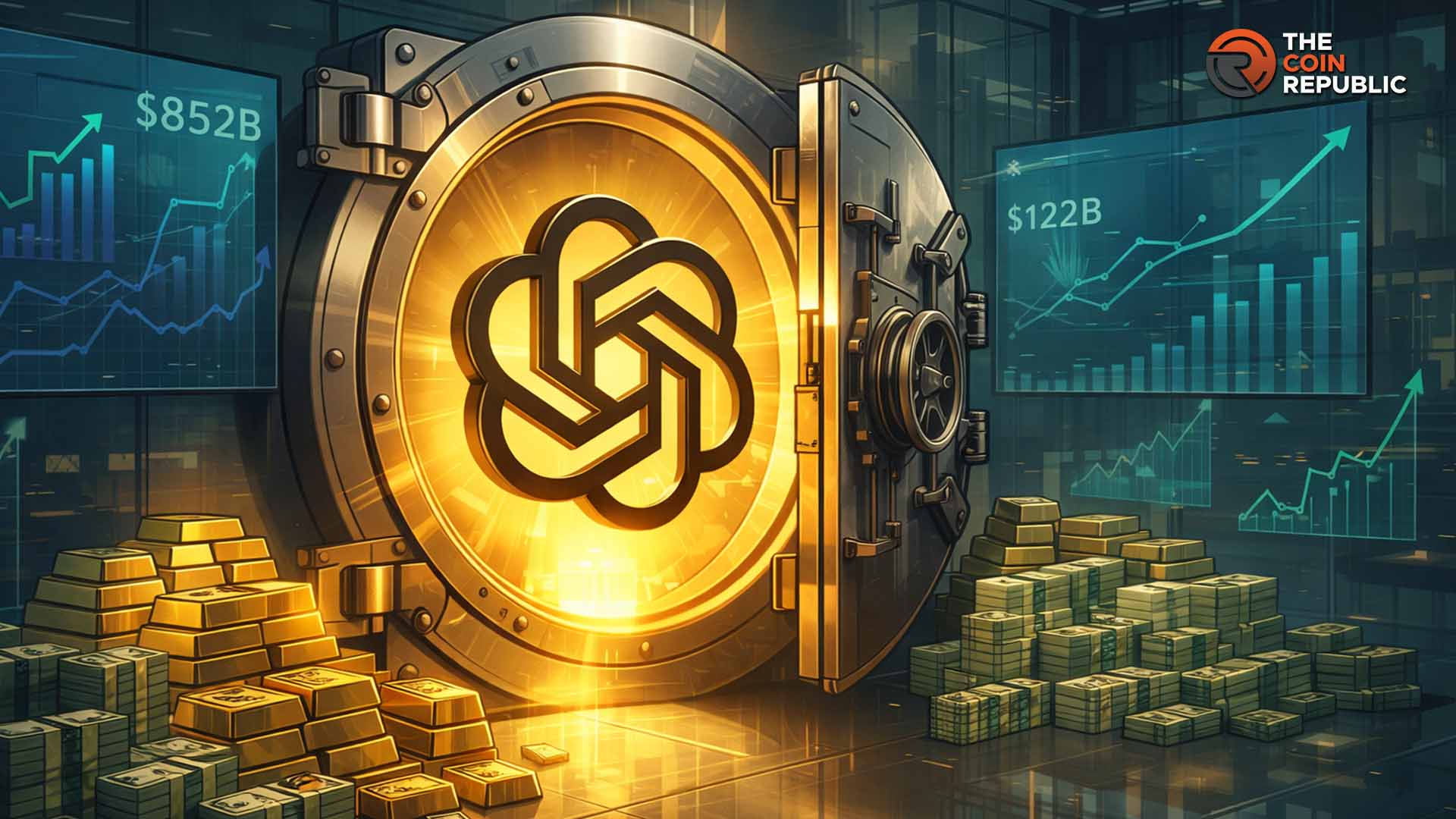
OpenAI's substantial $122 billion funding round at an $852 billion valuation, coupled with $2 billion in monthly revenue, signals robust investor confidence and significant operational scaling potential. The massive capital inflow, including major commitments from Amazon, NVIDIA, and SoftBank, strengthens OpenAI's financial position to expand infrastructure and global deployment despite rising energy costs and regional risks. The news highlights the increasing financial scale of AI development, with significant capital being deployed into compute infrastructure and energy solutions, potentially impacting broader tech and energy markets.
Floyd Mayweather's past involvement with ICO promotions resulted in SEC charges and settlements, highlighting regulatory risks for public figures endorsing digital assets. The article details Mayweather's diverse income streams including fight purses, endorsements, and investments, but his crypto-related ventures faced significant regulatory hurdles and penalties. Despite past regulatory issues with ICOs, Mayweather's continued high-profile activities and business ventures suggest a focus on traditional finance and entertainment rather than direct crypto market participation.
Dogecoin's April Fools' Day rebrand stunt, satirizing corporate crypto language, generated significant community engagement, reinforcing its meme-driven brand identity. The satirical event occurred amidst genuine market momentum for DOGE, with an 8% rally in March and substantial derivatives open interest, indicating underlying trading interest beyond meme culture. Despite the playful nature of the announcement, the underlying market activity and Elon Musk's X Money confirmation suggest potential for continued price action, warranting a neutral stance on immediate repricing.
XRP concluded Q1 2026 with its most significant quarterly loss since 2018, indicating persistent bearish pressure driven by market volatility and weak institutional demand. The 27.1% Q1 decline, closing at $1.33, highlights a substantial year-over-year drop from Q1 2025's $2.08, suggesting a deteriorating market sentiment for the asset. Despite the poor quarterly performance, a recent 3.08% 24-hour gain offers a glimmer of optimism for Q2, though sustained recovery hinges on overcoming previous negative trends.
Increased whale activity and large outflows from exchanges like Binance suggest accumulation or long-term holding by significant players, potentially signaling a bullish sentiment for LINK. The rise in mid-to-large-tier wallets holding LINK, reaching a 2026 high, indicates growing confidence from larger capital allocators anticipating future price appreciation. Chainlink's recent integration with Coinbase for on-chain data publishing and its role in the new Blockchain Leadership Fund highlight expanding utility and institutional adoption, supporting its infrastructure role. Despite recent price volatility, the sustained increase in LINK outflows and wallet accumulation points to a potential shift in market sentiment, warranting a watchlist approach for near-term price action.
ALGO experienced a significant 30% intraday price jump, primarily driven by a short squeeze in the derivatives market, indicating leveraged speculation rather than fundamental demand. Despite the intraday surge, ALGO remains within a long-standing demand zone on higher timeframes, suggesting the recent price action is more of a technical bounce than a confirmed structural shift. The price spike was catalyzed by two key developments: increased accessibility to ALGO staking via a neobank and Algorand's demonstrated post-quantum cryptography capabilities, which could bolster its infrastructure narrative. Near-term price action for ALGO will be determined by its ability to break above the 200-day EMA at $0.132 and flip the $0.116 level into support, with potential upside targets towards $0.340-$0.370 if resistance is overcome.

Ripple's launch of Digital Asset Accounts and Unified Treasury integrates digital assets into enterprise treasury workflows, potentially increasing adoption of XRP and RLUSD by corporate treasurers. The new platform addresses a key barrier to corporate digital asset adoption by offering a single interface for managing both fiat and digital assets, reducing operational complexity. This development leverages Ripple's acquisition of GTreasury, embedding crypto capabilities into established enterprise infrastructure and signaling a strategic push into institutional treasury solutions.
Signal context only. Validate with price action, liquidity, and risk limits before taking a position.
