
Navigating Crypto News

CoinFeather
Navigating Crypto News
Quick market read from this story
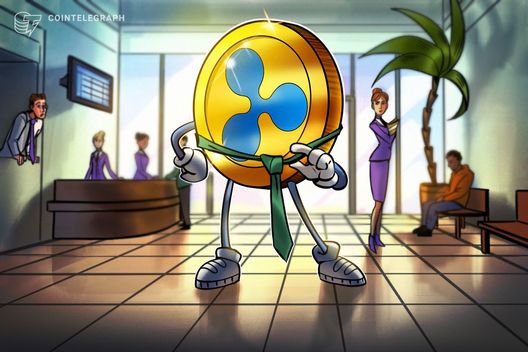
Ripple's treasury platform now supports digital assets, integrating crypto management into traditional finance workflows.
This development signals a growing trend of institutional adoption and integration of digital assets into core financial infrastructure.
The move by Ripple, following its GTreasury acquisition, aims to streamline treasury operations and unlock use cases like stablecoin settlement and yield generation.
Deep Dive
Ripple has integrated digital asset management into its treasury platform, enabling corporate finance teams to manage cryptocurrencies and fiat balances within a unified system. This new feature, called Digital Asset Accounts, provides a single dashboard that aggregates balances from bank accounts, custody providers, and onchain wallets, offering real-time visibility into both traditional and digital assets.
The updated platform supports assets such as XRP and Ripple USD (RLUSD), with balances updated in real time and recorded alongside fiat transactions. APIs are in place to connect external custodians and synchronize activity directly into the Ripple treasury system. This integration aims to reduce reliance on manual reconciliation and fragmented reporting across disparate banking and custody systems.
Mark Johnson, chief product officer at Ripple, stated that the goal is to make digital assets a core component of treasury operations, allowing companies to manage them alongside traditional balances. This facilitates use cases like stablecoin settlement and earning yield on idle cash.
This development follows Ripple's acquisition of GTreasury for $1 billion in October. The new digital asset functionality is currently in beta for select customers, with a broader rollout planned, subject to regulatory requirements and geographic availability.
A recent survey by Ripple indicated that 72% of global finance leaders believe companies must offer digital asset solutions to remain competitive. This highlights a growing institutional focus on the custody, security, and infrastructure surrounding digital assets, signaling a shift from basic adoption to deeper integration into existing financial systems.
The trend towards integrating digital assets into financial infrastructure is evident across the industry. Companies like Visa have expanded their settlement platforms to support more stablecoins and blockchain networks. JPMorgan has increased access to its JPM Coin for institutional clients to facilitate real-time settlement on blockchain networks. Furthermore, firms like Securitize and BNY Mellon are collaborating to bring complex financial instruments, such as collateralized loan obligations, onto the blockchain.
Source, catalyst, and sector overlap from the latest feed.
January saw the largest attack against a DeFi protocol of the quarter, the $40 million private key compromise of portfolio management platform Step Finance.
Bitcoin supply in profit is approaching levels seen in previous bear markets, with 8.2 million BTC currently at a loss, suggesting potential undervaluation according to one analyst. Contrasting views suggest current data indicates market stress rather than undervaluation, with some analysts pointing to deeper capitulation levels in prior bear cycles. External factors like a strengthening US dollar and weakening Chinese yuan are identified as headwinds for Bitcoin recovery, potentially delaying a full market reset until late 2026 or 2027.
The IMF's report highlights that while tokenization offers efficiency gains and potential for financial inclusion, it introduces new risks like faster stress event unfoldment and potential erosion of monetary sovereignty, suggesting a complex risk-reward profile for market participants. The increasing adoption of tokenization by major financial institutions like BlackRock and the NYSE, alongside growing RWA market value, indicates a significant structural shift towards on-chain asset management, despite regulatory and technical hurdles. The IMF's caution regarding the 'uncertain' net effect of tokenization on financial stability implies that regulators will likely maintain a close watch, potentially leading to future regulatory actions that could impact the sector's growth trajectory.
Stablecoin transaction volume surpassing the ACH network signifies a major shift in payment infrastructure, indicating growing adoption and potential disruption of traditional financial systems. The sustained growth in stablecoin volume and market share suggests increasing institutional interest and a potential precursor to broader crypto market integration. This development highlights stablecoins' increasing role as foundational infrastructure for global payments, challenging traditional banking models with their 24/7, borderless capabilities. With stablecoin supply surging and accounting for a significant portion of crypto trading volume, the sector is poised for continued expansion, potentially attracting further regulatory attention and institutional capital.
Circle's entry into the wrapped Bitcoin market with cirBTC intensifies competition with established players like BitGo and Coinbase, potentially impacting market share and driving innovation in DeFi accessibility for institutions. The launch of cirBTC on Ethereum and Circle's own Arc blockchain signals a strategic move to leverage its stablecoin expertise for broader Bitcoin utility, aiming to capture institutional demand for secure and neutral wrapped assets. While Circle's established reputation may attract institutional interest, cirBTC faces significant competition from dominant players WBTC and cbBTC, suggesting a period of market share consolidation and potential price pressure for existing wrapped Bitcoin solutions.
Pi Network's planned cross-chain bridge and KYB integration signal a strategic push towards enhanced utility and business adoption, aiming to move beyond its current ecosystem limitations. Despite significant infrastructure upgrades like the cross-chain bridge and smart contract development, Pi Coin's price action remains weak, indicating a market disconnect between development progress and investor demand. The upcoming token unlocks and current low trading volume suggest potential downward price pressure for Pi Coin, especially if user growth and real-world business activity do not materialize to absorb increased supply.
Naoris Protocol's launch of a post-quantum cryptography-enabled mainnet introduces a new security paradigm, potentially influencing future blockchain development and asset migration strategies. The industry faces a significant challenge in upgrading existing blockchains like Bitcoin and Ethereum to quantum-resistant standards, a complex process requiring major protocol changes and potentially creating a migration window for early adopters of PQC solutions. While Naoris Protocol claims quantum security, users must migrate assets to its network to be protected, highlighting the practical hurdles and risks associated with securing legacy assets against future quantum threats.
Circle's launch of cirBTC, a new wrapped Bitcoin token, aims to address the perceived lack of trust in existing wrappers and unlock Bitcoin's utility within DeFi. The introduction of cirBTC by a reputable stablecoin issuer like Circle could increase institutional adoption of wrapped Bitcoin products, potentially driving demand for DeFi services. cirBTC enters a competitive market with established players like WBTC and cbBTC, and its success will depend on Circle's ability to leverage its credibility and infrastructure to gain market share.
Despite XRP's longest losing streak in a decade, Ripple's aggressive expansion into institutional finance and treasury management via GTreasury and HyperliquidX suggests a strategic build-out that could eventually drive demand. Ripple's integration of XRP and RLUSD into GTreasury's $13 trillion payment system aims to embed digital assets into corporate finance workflows, potentially shifting demand drivers from speculation to utility. The market's current disconnect between Ripple's enterprise progress and XRP's price weakness highlights a lack of immediate repricing catalysts, suggesting a 'wait-and-see' approach for traders. Ripple's expansion into institutional trading via HyperliquidX and partnerships in payments with Convera signal a broader strategy to position XRPL and its stablecoin infrastructure as a regulated layer for global financial operations.
Render's derivatives market shows a significant surge in trading volume and open interest, indicating increased trader participation and positioning ahead of a potential price move. RNDR price is consolidating near key support levels, with a decisive breakout anticipated upon breaching the $2.10 resistance, potentially targeting $2.60 if momentum sustains. The current market setup for RNDR suggests a period of accumulation, with derivatives data pointing towards growing interest and a balanced long/short ratio hinting at a non-overcrowded bullish sentiment.
SBI Ripple Asia and DSRV are initiating a joint research project focused on leveraging the XRP Ledger for cross-border payments between Japan and South Korea, aiming for faster and cheaper transactions. The research is strategically timed with evolving regulatory landscapes in both countries concerning stablecoins and blockchain payments, suggesting a proactive approach to future compliance. This collaboration signals a potential pathway for increased XRP Ledger adoption in institutional payment systems, contingent on the research outcomes and upcoming regulatory clarity in Japan regarding XRP.
SWIFT's former Chief Innovation Officer is leaving to build infrastructure at the intersection of AI, scientific discovery, and institutional finance, signaling a potential new wave of institutional adoption driven by trust layer solutions. The executive's departure, previously a critic of XRP and public blockchains, highlights a perceived "trust gap" in connecting AI and tokenization to real-world assets and trusted data, suggesting a significant market opportunity. This move by a high-profile TradFi executive into a new venture focused on AI and institutional finance infrastructure could attract significant talent and capital, potentially impacting the RWA and AI sectors.
The success of free-to-play social casinos, with a dual-coin model mirroring crypto tokenomics, highlights effective user acquisition and retention strategies applicable to blockchain projects. The social casino market's projected growth to $14.23 billion by 2030, driven by low-friction browser access and reward systems, offers a blueprint for crypto platforms struggling with user adoption. The convergence of sweepstakes gaming and crypto payments, with platforms accepting BTC and ETH, signals a growing demand for flexible, borderless transaction methods and a potential area for market expansion. Regulatory parallels between the evolving sweepstakes casino landscape and crypto markets suggest that compliance and transparency are key differentiators for building durable user trust and long-term business viability.
Live Feed
Loading the broader stream in the same flow as the homepage feed.

Bitcoin is functioning as a continuous price discovery mechanism for geopolitical risk over the Easter holiday weekend, while traditional markets are closed, highlighting its availability as a key market structure component. The current geopolitical tensions and oil price surge are transmitting macro stress through Bitcoin, linking it to inflation, yields, and liquidity conditions, which will be tested by traditional market reopenings and upcoming economic data. While Bitcoin's availability provides an immediate venue for price expression during market closures, its signal requires validation from traditional markets and cross-asset confirmation on Monday to determine durability.

Despite a high long/short ratio on derivatives exchanges suggesting bullish sentiment, Dogecoin's price action remains weak due to larger, more impactful short positions and declining trading volume. The current market structure for DOGE is still bearish, with the price below key moving averages and facing downward-sloping trends, indicating that a sustained rally is unlikely without reclaiming significant resistance levels. The disconnect between derivatives positioning and actual price movement highlights a lack of conviction and spot demand, suggesting that short-term bullish signals are likely to fade without fundamental support.

Cartesi (CTSI) has experienced an 80% price surge on significant volume, breaking a prolonged downtrend and reclaiming the $0.04 zone. The immediate price action indicates a potential short-term momentum shift, but the broader trend remains bearish until CTSI decisively breaks and holds above the critical $0.05 resistance level. A sustained move above $0.05 could trigger further upside towards $0.06 and potentially $0.10, while failure to hold this level may lead to a sharp correction back to $0.035. The weekly RSI showing bullish divergence alongside the price breakout from a falling wedge pattern suggests a possible trend reversal, contingent on overcoming key resistance.

Geopolitical tensions and a global risk-off sentiment are driving significant price drops in Bitcoin and Ethereum, pushing BTC below $69,000 and indicating potential further downside targets at $60,000 and below. The upcoming Good Friday weekend liquidity gap, coupled with paused ETF flows, exacerbates crypto market vulnerability to sharp price movements, suggesting a cautious outlook for the short term. Ethereum and altcoins are showing weakness, with ETH forming a bear flag pattern and many altcoins testing critical support levels, signaling a lack of broad market recovery potential in the immediate future. Rising stablecoin dominance suggests capital is moving to safety amid market uncertainty, reinforcing the bearish sentiment for riskier crypto assets and indicating a potential continuation of the downtrend.
Significant outflows from US spot Bitcoin ETFs signal waning institutional confidence, potentially pressuring BTC price downwards. Technical analysis suggests Bitcoin faces strong resistance around $69,000-$70,000, with a critical support level at $65,000-$66,000 that, if broken, could lead to a drop towards $60,000. Geopolitical tensions and rising oil prices are contributing to a broader risk-off sentiment in financial markets, negatively impacting Bitcoin alongside traditional assets like gold. Prediction market data indicates a prevailing bearish short-term outlook, with traders assigning a higher probability to a price dip to $60,000 before a potential recovery.

Changpeng Zhao's explanation highlights that BNB Chain's conservative approach to memecoins was driven by regulatory pressures and risk management, contrasting with Solana's more speculative surge which benefited from a different market timing post-FTX collapse. The differing memecoin strategies between BNB Chain and Solana underscore how regulatory environments and specific market conditions influence blockchain ecosystem development and asset focus. While BNB Chain prioritized utility and avoided early memecoin risks, it is now seeing increased memecoin activity, indicating a potential shift in ecosystem focus or a response to market trends.
Publicly traded companies, particularly Bitcoin miners, are offloading significant BTC holdings to improve liquidity amidst prolonged price weakness around $66K. While some miners are selling to cover debt or fund operations like AI expansion, others like Metaplanet and Strategy continue aggressive accumulation, creating a divergence in corporate BTC strategies. The collective selling pressure from miners could introduce near-term headwinds for Bitcoin's price, especially if sustained, but the ongoing accumulation by other entities suggests underlying demand remains.

Vitalik Buterin's warning on AI privacy risks highlights a critical intersection with Ethereum's strategic pivot towards becoming a 'Private World Computer'. Ethereum's 2026 roadmap, emphasizing ZK proofs and stealth addresses, directly addresses the privacy concerns raised by centralized AI, positioning the network as a privacy-first platform. The article suggests that while local AI hardware is improving, the gap in complex reasoning with frontier models remains, with hybrid approaches and ZK proofs offering a path to privacy-preserving AI integration. Buterin's emphasis on mathematical trust over institutional trust in AI and blockchain infrastructure implies a long-term structural shift favoring decentralized, privacy-preserving technologies.
The SEC's classification of XRP as a digital commodity and significant ETF inflows totaling $1.39 billion, with Goldman Sachs as a major purchaser, removes legal ambiguity and signals institutional confidence, potentially supporting XRP's price trajectory. While XRP's price prediction targets suggest potential gains, the article highlights a presale project, Pepeto, aiming for 150x returns, positioning it as a potentially higher-reward, albeit higher-risk, alternative for traders seeking exponential growth. The comparison between XRP's projected long-term gains and Pepeto's presale potential suggests a market dynamic where established assets offer stability while new presales promise outsized returns, influencing trader allocation strategies.

The Drift Protocol exploit, initially costing $285 million, has now exposed 20 other Solana-based protocols, highlighting significant interconnectedness and fragility within the Solana DeFi ecosystem. The cascading impact of the Drift exploit underscores the systemic risk inherent in DeFi, where the failure of one deeply integrated protocol can trigger a chain reaction across multiple projects. While teams are acting to limit further losses, the widespread exposure indicates potential for continued negative price action across affected Solana DeFi tokens as the full extent of damage is assessed. The incident serves as a critical reminder of the counterparty and integration risks present in DeFi, prompting traders to re-evaluate the security and diversification of protocols within interconnected ecosystems.
The potential threat of quantum computing to Satoshi Nakamoto's dormant Bitcoin holdings represents a significant long-term risk to network security and market stability. A successful breach of Satoshi's 1.1 million BTC by quantum hackers could trigger a catastrophic supply shock, leading to an unprecedented price collapse due to the sheer volume of tokens potentially entering the market. The Bitcoin network's eventual need for a quantum-proof upgrade highlights a critical infrastructure challenge, with potential forks or other solutions facing significant technical and governance hurdles. Recent advancements in quantum algorithm optimization by Google Quantum AI have accelerated the timeline for this threat, suggesting the industry must prioritize migration to Post-Quantum Cryptography (PQC).
The potential threat of quantum computing to Satoshi Nakamoto's dormant Bitcoin holdings represents a significant long-term risk to Bitcoin's supply dynamics and market stability. A successful exploit of Satoshi's coins could trigger an unprecedented supply shock, leading to a catastrophic price collapse due to the sheer volume of BTC potentially entering the market. The development highlights the urgent need for the Bitcoin network to upgrade to quantum-resistant cryptography to safeguard against future threats to its foundational security.
Coinbase's conditional federal banking charter approval signifies a major step towards regulatory integration for crypto exchanges, potentially reducing operational friction for institutional clients and solidifying its custody business. The charter, while not a full bank license, allows Coinbase to operate a national trust company focused on custody and institutional services, enhancing its competitive position against other regulated entities and traditional finance players. Despite the positive development for Coinbase, traditional banking groups express concerns about regulatory arbitrage, indicating potential ongoing friction and scrutiny that could impact future crypto-banking initiatives. This regulatory milestone, alongside similar approvals for other crypto firms, suggests a maturing regulatory landscape in the US for digital assets, which could encourage further institutional adoption and capital inflows.
Signal context only. Validate with price action, liquidity, and risk limits before taking a position.
