
200+ crypto news providers in one place.

CoinFeather
200+ crypto news providers in one place.
Fast Read
Deep Dive
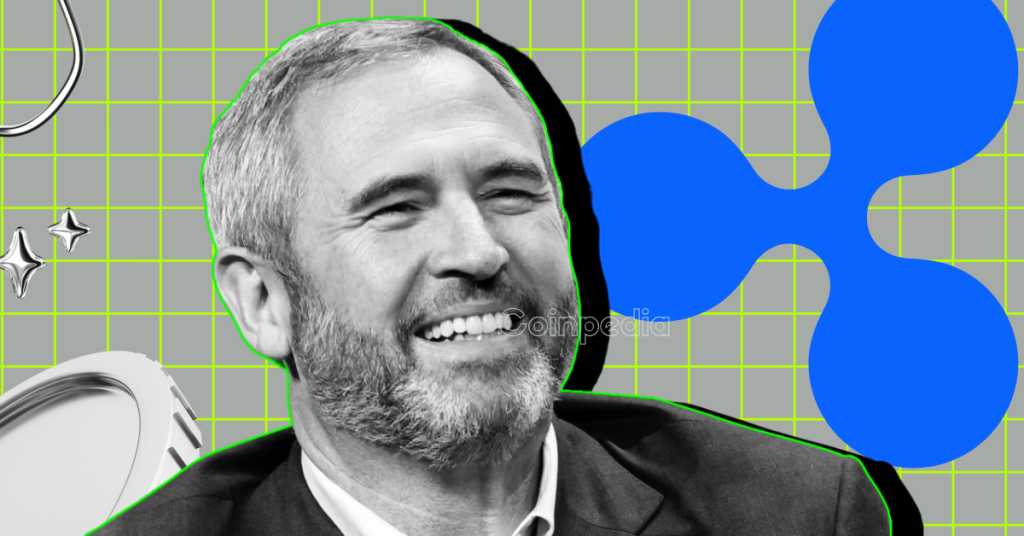
In a surprising turn of events, former SEC Chair Gary Gensler has allegedly offered a personal apology to Ripple CEO Brad Garlinghouse regarding the prolonged lawsuit between the SEC and Ripple. This revelation was shared by Garlinghouse himself during remarks at the XRP Australia Sydney 2026 conference, stating that the private interaction occurred at the White House.
Garlinghouse recounted the alleged exchange: “He comes up to me and says, sorry. He’s like, ‘Oh gosh, wait, no, I’m sorry. I was wrong. And you guys have done an incredible job.’ It was kind of weird that it happened at the White House.”
This alleged statement, if accurate, represents a significant shift in one of the most impactful regulatory disputes in the cryptocurrency industry. The SEC's lawsuit, filed in December 2020, accused Ripple of selling XRP as an unregistered security, leading to considerable market uncertainty, delistings from major exchanges, and a substantial price drop for XRP.
Gensler, who became SEC Chair after the lawsuit's inception, became a prominent figure in the agency's intensified enforcement actions against the crypto sector. The reported apology is noteworthy because current or former regulators seldom admit to missteps in public, particularly in high-profile enforcement cases. Such an admission from Gensler would suggest a potential change in the regulatory approach towards digital assets.
The regulatory climate in Washington has shown signs of evolution since Gensler's tenure began, with increased legislative focus on market structure frameworks and bipartisan discussions on digital asset classification. For Ripple and XRP stakeholders, this reported apology is being viewed as a form of institutional validation, potentially marking the end of a challenging legal chapter.
Garlinghouse presented the moment as evidence that utility and real-world application ultimately triumph. He expressed confidence in Ripple's trajectory, emphasizing the company's focus on cross-border payments and practical use cases.
The potential implications for XRP in 2026 are significant. Historically, legal clarity has been a major driver of XRP's price action, with favorable court rulings often leading to sharp price increases. The persistent regulatory uncertainty has been a key factor limiting sustained upside potential for the token.
If this regulatory overhang is indeed dissipating, the narrative surrounding XRP could fundamentally change. Instead of being defined by its legal battle, XRP might re-emerge as a prominent cryptocurrency that has navigated direct federal scrutiny and continues to operate globally. While broader market conditions, liquidity cycles, and Bitcoin's performance will still influence XRP's price, the lifting of legal clouds and more structured policy discussions could position XRP favorably for future market expansions.
Source, catalyst, and sector overlap from the latest feed.
Bitcoin reclaimed $69K driven by significant institutional buying, with MicroStrategy and ProCap Financial increasing their BTC holdings. Analysts suggest potential upside to $79K if resistance breaks, while a dip to $65K is possible if support fails.
Crypto markets rallied sharply, with BTC and ETH leading gains, driven by positive U.S. economic data (ISM PMI beat expectations) and a significant short squeeze. Traditional safe-haven assets like gold and silver saw notable declines, indicating a capital rotation into risk assets. Institutional buying also contributed to the upward momentum.
Michael Saylor's Strategy acquired 3,015 BTC for $204.1 million at an average of $67,700. The firm now holds 720,737 BTC with a total cost basis of $54.77 billion. This indicates continued institutional confidence in Bitcoin.
Cronos (CRO) price is predicted to reach $0.30-$0.35 by 2026 and potentially exceed $1 by 2029, driven by network upgrades, institutional adoption, and technical indicators suggesting a bullish trend. Long-term forecasts project significant growth through 2035.
XRP price remains in a bearish descending channel, with the $1.00-$1.10 zone acting as critical support. A breakdown below $1 could lead to further downside, while a break above the channel resistance is needed for stabilization. Momentum indicators suggest caution heading into March 2026.
South Korea is overhauling its management of seized cryptocurrencies following security failures, including a 22 BTC loss and a $4.8 million theft due to a data leak. This reform includes a nationwide audit and stricter controls, alongside broader regulatory advancements integrating crypto into the formal financial system.
Turkey's ruling party proposed a 10% income tax on crypto gains and income, with the president able to adjust the rate between 0-20%. This follows significant crypto adoption in Turkey driven by economic conditions, with transaction volumes reaching $200 billion in a recent 12-month period.
JPMorgan forecasts a U.S. crypto market recovery in H2 2026 if the Clarity Act is approved by mid-year. The bill aims to end 'regulation by enforcement' and clarify SEC-CFTC jurisdiction, potentially easing compliance and boosting institutional access.
UK politicians are increasingly calling for a ban on cryptocurrency political donations due to concerns over foreign interference and illicit finance. Advocacy groups and parliamentary committees support stricter regulations or outright bans, citing the opaque nature of crypto assets. Reform UK remains the primary party accepting crypto donations.
Banking lobbyists have stalled the U.S. Senate's Digital Asset Market Clarity Act by arguing stablecoin rewards threaten traditional lending. The OCC's interpretation of the GENIUS Act adds complexity, leaving the crypto industry at a crossroads regarding concessions on rewards versus the potential loss of the Clarity Act.
Vitalik Buterin has proposed new mechanisms like FOCIL and transaction encryption to combat centralization in Ethereum's block building and mitigate "toxic MEV." These efforts aim to prevent censorship and unfair profit extraction by dominant builders as Ethereum scales.
Solana's daily transactions hit 108.8 million, significantly outpacing rivals and reaching a 7-month high, indicating strong network adoption. Despite this, net inflows have halved since September, and SOL faces technical resistance around the 50-day SMA, suggesting a volatile outlook.
Bitcoin rallied to $70K as short-term holder selling pressure decreased to a two-week low amid geopolitical tensions. BTC futures open interest has declined 25%, indicating deleveraging, while spot markets show aggressive bidding. Attention is now on the $71,500 liquidity band.
Bitcoin governance is facing a critical juncture with the mining of a block supporting BIP-110, a proposal to restrict non-monetary data. Critics warn of potential blockchain splits and a violation of neutrality principles, while proponents aim to preserve Bitcoin's monetary infrastructure.
Live Feed
Loading the broader stream in the same flow as the homepage feed.
Binance open interest has dropped 25% as traders deleverage due to macro and geopolitical risks, with leverage ratios falling below 0.15. Bitcoin shows resilience near $69,000 despite a cautious derivatives market, while spot ETFs see significant inflows.
Shibarium, the Shiba Inu layer-2 network, is experiencing wallet and explorer connectivity issues. The team attributes these problems to user-side RPC settings and explorer indexing delays, assuring users that assets remain secure and network operations are stable. Users are advised to clear wallet cache and re-add the network.

Northern Trust Asset Management has launched a tokenized share class for its Treasury Instruments Portfolio, marking its entry into the digital assets market. This move expands the tokenized U.S. Treasurys market, which now holds nearly $11 billion in assets on public blockchains.
Ripple Prime, formerly Hidden Road, is now live on the DTCC's NSCC directory, paving the way to move institutional post-trade volume to the XRP Ledger. This integration follows Ripple's $1.25 billion acquisition of Hidden Road and aims to leverage XRPL's efficiency for traditional finance.
Experts assess Iran's Bitcoin mining share as minimal (below 1%), suggesting geopolitical conflict will not materially impact global hashrate or network security. While Iranian crypto outflows surged 700% post-airstrikes, the market impact is deemed limited due to Iran's small mining footprint.
Bitcoin surged to a two-week high near $70,000, recovering from weekend lows. The price action correlated with a broader market recovery in risk assets, driven by geopolitical developments and a shift in market sentiment regarding regional stability.
Palantir (PLTR) stock surged over 6% driven by increased demand for its AI and defense analytics amid heightened geopolitical tensions. The company's dual role as a defense contractor and AI innovator positions it to benefit from potential increases in government spending and defense contracts.
Bitcoin price has recovered above $70,000, supported by increased derivatives volume and open interest. Short-term holders show reduced selling pressure, and key weekly support at $65,000 is holding, suggesting potential for further upside towards $75,000-$80,000.
Bitcoin initially acted as a risk asset during US-Iran tensions, but historical data and new ETF structures suggest potential for a rebound if oil prices stabilize. BlackRock analysis shows Bitcoin historically outperforms gold and equities 60 days post-shock, with outcomes dependent on oil price trajectory and inflation fears.

HyperLiquid's HYPE token has gained 23.9% YTD, outperforming BTC and ETH, as its derivatives exchange volume exceeds $200B/month. The platform's non-custodial model and 24/7 trading, including synthetic equities, attract retail traders in bear markets. Despite a past governance controversy, the vault TVL has recovered to $380M.
Shiba Inu (SHIB) is testing a critical support level around $0.00000565 amidst a bearish weekly chart structure. A breakdown below this zone could lead to a significant drop towards $0.00000138, indicating potential downside risk.
Transaction speed in crypto is a combination of platform processing and network confirmation, not just block time. Litecoin offers steadier transfers, Bitcoin is widely supported, and Ethereum confirms quickly but faces fee volatility. Users should consider predictability and platform support when choosing a network for payments.
Signal context only. Validate with price action, liquidity, and risk limits before taking a position.
