
200+ crypto news providers in one place.

CoinFeather
200+ crypto news providers in one place.

Quick market read from this story
Geopolitical tensions are causing volatility in traditional markets, with oil prices surging and stock markets falling
Cryptocurrency markets are also reacting to macroeconomic shifts, with Bitcoin and other assets fluctuating
Investors are exploring alternative participation methods in the crypto economy, such as mining
FORT Miner offers a cloud mining platform with no hardware requirements, automated systems, and multiple cryptocurrency options.
Deep Dive
Global financial markets are experiencing increased volatility due to escalating geopolitical tensions, leading to surges in oil prices and declines in major stock markets. This uncertainty has also impacted the cryptocurrency market, with Bitcoin and other digital assets showing fluctuating prices. In response, many investors are seeking alternative methods to engage with the crypto economy beyond speculative trading.
While traditional financial markets react to global events, blockchain networks operate continuously. Cryptocurrency mining remains a crucial element, ensuring network security and transaction verification, which in turn generates rewards. This consistent operation makes mining an attractive long-term strategy for participating in the digital asset space.
FORT Miner presents itself as a simplified cloud mining platform, offering a way to participate in crypto mining without the need for personal hardware. The platform emphasizes its global mining infrastructure, secure cloud technology, and an automated system that allows users to earn cryptocurrency without technical management.
Key features highlighted by FORT Miner include:
To join FORT Miner's cloud mining service, users need to register on their website (fortminer.com), where new users receive a $15 registration bonus. Following registration, users select a cloud mining contract based on their investment and desired timeframe. The system then automatically allocates computing power, and users receive daily earnings that are fully traceable. The platform also offers various contract examples, such as an 'Experience Contract' with a $100 investment for 2 days yielding a daily return of $3.6, and larger plans like the 'Basic Level Mining Plan' ($1200 investment, 10 days, $17.04 daily return).
Earnings are automatically credited daily, and the principal is returned upon contract expiration. Users have the flexibility to withdraw or reinvest their earnings, potentially benefiting from compound interest.
As geopolitical developments continue to influence global markets, investors are increasingly exploring alternative avenues within the digital asset ecosystem. FORT Miner's website (fortminer.com) provides further details on its products and participation options.
Disclaimer: The content provided is for informational purposes only. Coinpedia does not endorse or verify the accuracy of press releases and is not liable for any content, products, or services mentioned. Readers are advised to conduct their own independent verification.
Source, catalyst, and sector overlap from the latest feed.
Pudgy Penguins NFT project faces trademark lawsuit from Original Penguin clothing brand. Lawsuit filed in Florida federal court over alleged unauthorized use of penguin trademarks. PEI Licensing claims consumer confusion and violation of trademark and fair competition laws. Pudgy Penguins has expanded beyond NFTs to include retail toys and a Solana-based culture coin $PENGU.
Bitcoin Cash price is consolidating near the $440-$470 demand zone. BCH could reach $1200 by the end of 2026 if market strength returns and resistance is broken. Long-term projections suggest BCH could reach $3000 by 2030. The article provides price predictions for Bitcoin Cash up to 2050.
Axie Infinity (AXS) price is predicted to reach $2.20 in 2026 and potentially $12.00 by 2032. The project has evolved from 'play-to-earn' to 'risk-to-earn' with economic reforms like bAXS and cessation of SLP emissions. Ronin Network is transitioning to an Ethereum Layer 2, and the new MMO 'Atia's Legacy' is anticipated. AXS is navigating a falling wedge pattern, with potential breakout targets around $4.00 in 2026.
President Trump publicly supports crypto against major banks regarding stablecoin yields. Coinbase stock surged 15% following Trump's statement. Pepeto presale has raised over $7.5M with a current price of $0.000000186. Pepeto offers a cross-chain bridge, zero-tax trading, and risk scoring system.
Ripple Prime now offers XRP, BTC, ETH, and SOL futures through Coinbase Derivatives integration. Institutional clients can access Coinbase derivatives via Ripple's prime brokerage platform. Ripple becomes a clearing member of Nodal Clear, enhancing its institutional infrastructure. The integration allows for 24/7 trading of regulated crypto derivatives.
US banking regulators confirm tokenized securities receive same capital treatment as traditional assets. Guidance from Federal Reserve, FDIC, and OCC states technology used for issuance does not impact capital treatment. Financial institutions will not need to over-collateralize tokenized securities on balance sheets. Tokenized securities can qualify as financial collateral if they meet relevant capital rule requirements.
PsiQuantum begins construction on a 1 million-qubit quantum facility, potentially capable of cracking Bitcoin's cryptography. The facility is being built in collaboration with Nvidia and aims to support next-generation AI supercomputers. While some warn of risks, others like Adam Back believe quantum computers won't pose a threat for at least a decade. Research suggests only a small fraction of Bitcoin (10,230 BTC) is currently at risk from quantum attacks.
Nvidia CEO Jensen Huang indicates the end of major investments in OpenAI and Anthropic. Nvidia's decision avoids taking sides amidst escalating controversies and competition between AI labs. The company previously invested $30 billion in OpenAI and $10 billion in Anthropic. Nvidia aims to maintain neutrality as a GPU supplier to multiple AI companies.
US banking regulators mandate identical capital treatment for tokenized and traditional securities. Capital requirements will not differ based on whether securities are tokenized or not. This policy applies to securities issued on permissioned or permissionless blockchains. Regulators clarified that tokenized assets can be used as collateral with the same haircuts as traditional securities.
SEC proposes interpretative guidance on federal securities laws for crypto assets. Proposal aims to clarify which tokens are considered securities under SEC purview. Interpretative guidance carries more weight than staff-level statements. Move comes as crypto market structure bill progresses in US Senate.
Live Feed
Loading the broader stream in the same flow as the homepage feed.
ETFs trade on exchanges throughout the day at market prices, offering flexibility similar to stocks. Mutual funds are priced once per day after market close based on NAV, often used in retirement accounts. ETFs generally have lower fees and are more tax-efficient due to their structure. The choice between ETFs and mutual funds depends on investor goals, cost sensitivity, and trading preferences.

Bitcoin and global equities stabilized after an early-week sell-off driven by geopolitical tensions. Rising U.S. Treasury yields from 3.93% to 4.15% signal renewed inflation concerns and reduced Fed rate-cut expectations. Traders now see less than a 50% chance of two Fed rate cuts this year, down from 80% prior to the conflict. Oil prices surged due to supply concerns in the Strait of Hormuz, impacting inflation outlook.

Macroeconomist Lyn Alden predicts Bitcoin will outperform gold over the next two to three years. Alden notes gold sentiment is 'somewhat euphoric' while Bitcoin sentiment is 'somewhat unfairly negative'. Bitcoin sentiment index shows 'Extreme Fear' (18/100) while gold sentiment shows 'Greed' (72/100).
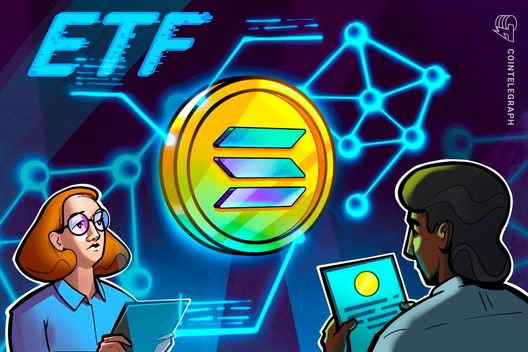
Solana ETFs have attracted $1.5 billion in inflows despite SOL price dropping 57% since launch. 50% of Solana ETF inflows are from institutional investors, indicating strong underlying demand. Solana ETFs have seen inflows equivalent to double Bitcoin's at the same stage post-launch, adjusted for market cap. Despite a recent $6 million outflow, inflows have largely been retained, showing resilience.

Social media mentions of "altseason" have dropped to their lowest level in two years. Periods of low altseason chatter have historically preceded rallies in speculative crypto assets. Altcoins have experienced significant drawdowns, with DOGE down 75%, SOL down 60%, and ADA down 70% from cycle peaks. Large holders (100+ BTC wallets) are accumulating, indicating potential bottoming activity.

XRP dropped 3.3% to $1.4108 after failing to break $1.43-$1.45 resistance. High volume selling confirmed bearish structure with $1.40 support now pivotal. A breakdown below $1.40 could lead to $1.33 or $1.00 support levels. Despite price weakness, spot XRP ETFs and large wallets continue accumulating XRP.
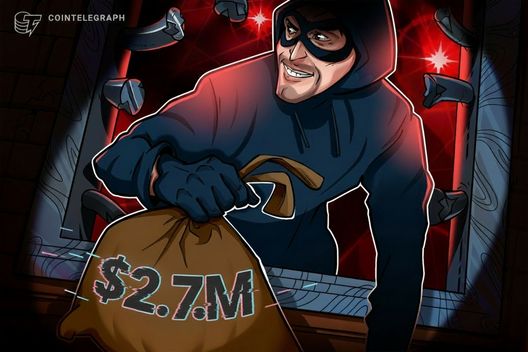
Solv Protocol suffered a $2.7 million exploit due to a smart contract bug. The hacker minted tokens, swapped them for SolvBTC, and stole approximately 38.05 SolvBTC. Solv Protocol is offering a 10% bounty to the hacker for the return of funds. Security firms are investigating the re-entrancy attack, and Solv has implemented preventative measures.

Bitcoin pulled back to $70,987 after reaching a high of $74,000. The rally from Saturday's low near $64,000 to Thursday's peak was approximately 15%. Technical resistance was met at the 61.8% Fibonacci retracement and just below the 50-day moving average. Macroeconomic factors including a strong dollar and rising oil prices are creating headwinds for crypto.
BlockDAG (BDAG) is in its final private sale phase at $0.0005, closing March 5, 2026. Analysts project BDAG could reach a top 50 market cap with potential for 100x gains. Ethena price shows volatility with whale accumulation, trading between $0.10 and $0.14. Dogecoin price prediction for 2026 ranges from $0.09 to $0.22, driven by sentiment.

Vancouver staff recommend closing motion to explore Bitcoin reserves due to legal restrictions. Vancouver Charter prohibits holding Bitcoin as a municipal reserve asset. Provincial rules prevent municipalities from holding crypto in reserves due to risk exposure. Legal and treasury barriers were understood from the outset of the proposal.

US lawmakers are drafting legislation to regulate prediction markets. Concerns raised over potential insider trading on bets related to geopolitical events like US strikes on Iran. Prediction markets like Polymarket and Kalshi are facing increased scrutiny. Legislation aims to prevent financial gain from prior knowledge of military actions.

OKX launches Orbit, a social trading platform integrated within its app. Orbit allows users to link posts to real-time trading performance data and execute trades directly. The platform aims to enhance transparency by verifying influencer trading records. Orbit will not be available in the US, Europe, Singapore, Australia, or UAE initially.

OKX launches integrated social network 'Orbit' within its trading app. Feature allows users to post commentary, livestream, create trading groups, and verify performance metrics. Launch follows a $25 billion valuation for OKX after investment from Intercontinental Exchange (ICE). Orbit aims to combat hype by enabling verified performance data and market-specific discussions.
Signal context only. Validate with price action, liquidity, and risk limits before taking a position.
