
200+ crypto news providers in one place.

CoinFeather
200+ crypto news providers in one place.
Quick market read from this story
PsiQuantum begins construction on a 1 million-qubit quantum facility, potentially capable of cracking Bitcoin's cryptography
The facility is being built in collaboration with Nvidia and aims to support next-generation AI supercomputers
While some warn of risks, others like Adam Back believe quantum computers won't pose a threat for at least a decade
Research suggests only a small fraction of Bitcoin (10,230 BTC) is currently at risk from quantum attacks.
Deep Dive
Quantum computing company PsiQuantum is progressing towards its goal of building a functional quantum computer with the commencement of construction on a 1 million-qubit facility. This scale of computing power is considered by scientists to be sufficient to crack Bitcoin’s cryptography.
PsiQuantum co-founder Peter Shadbolt shared an update on X, formerly Twitter, showcasing the erection of 500 tons of steel at its Chicago site in just six days, which will house the quantum computer. The company announced in September that it had secured $1 billion in funding, in collaboration with chip maker Nvidia, to construct this facility. The design aims to accommodate quantum computers capable of functioning despite errors.
The facility is intended to house quantum computing power equivalent to tens of billions of typical computers, with the objective of making quantum computing commercially viable to support next-generation AI supercomputers. This development has prompted discussions within the Bitcoin community regarding the potential impact on the network's cryptography.
While some in the Bitcoin community have expressed concerns that quantum computing could compromise Bitcoin's security, potentially putting its $1.4 trillion network at risk, others, like Blockstream CEO Adam Back, believe quantum computers will not pose a significant threat for at least another decade. Bitcoin developers are currently debating the necessity and implications of a hard fork to address potential quantum threats.
The Bitcoin UTXO (unspent transaction output) wallets, particularly those associated with addresses that have never been spent since the cryptocurrency's inception, are considered the most vulnerable to quantum attacks. While estimates vary, the number of qubits required to break Bitcoin keys is decreasing as quantum research progresses.
A recent scientific paper suggested that approximately 100,000 qubits would be needed to break 2048-bit keys, whereas Bitcoin's encryption uses 256-bit keys. For context, the largest quantum computer currently available, from the California Institute of Technology, has 6,100 qubits.
PsiQuantum has stated that it has no intention of using its quantum computers to derive private keys from public keys. Co-founder Terry Rudolph clarified that the company's focus is not on attacking Bitcoin's cryptography.
Furthermore, research from crypto asset manager CoinShares indicated in February that only an estimated 10,230 Bitcoin, valued at $728.2 million, are both quantum-vulnerable and stored in wallet addresses with publicly visible cryptographic keys. CoinShares characterized a potential selloff of this amount as comparable to a routine trade.
Source, catalyst, and sector overlap from the latest feed.
SEC ends lawsuit against Justin Sun with $10 million settlement Rainberry, one of Sun's companies, will pay the $10 million fine Claims against Sun, Tron Foundation, and BitTorrent Foundation are dropped
ETH derivatives signal professional desks hedging against downside risks due to global instability. ETH options skew indicates persistent skepticism among professional traders. Ethereum network activity and DEX volumes have declined, impacting ETH burn mechanism. Ethereum ecosystem maintains dominant TVL share despite competition from Solana and BNB Chain.
SEC proposes interpretative guidance on federal securities laws for crypto assets. Proposal aims to clarify which tokens are considered securities under SEC purview. Interpretative guidance carries more weight than staff-level statements. Move comes as crypto market structure bill progresses in US Senate.
IRS proposes mandating electronic delivery of tax forms for crypto users. Exchanges may terminate relationships with clients refusing electronic tax form delivery. Proposal prohibits retroactive revocation of consent for electronic forms. Tax compliance is a cited barrier to crypto adoption for US users.
Public Bitcoin miners have sold over 15,000 BTC since October. Sales are driven by tightening margins and debt pressure. This marks a strategic shift from the previous hold strategy. Companies like Cango, Bitdeer, Riot Platforms, and Core Scientific are among those selling.
BlackRock reportedly acquired significant amounts of BTC and ETH via Coinbase Prime. Purchases occurred ahead of an anticipated FOMC emergency announcement. BTC price rose to $73,337 and ETH to $2,150 following the reported accumulation. Transactions are linked to BlackRock's iShares Bitcoin Trust (IBIT) and Ethereum Trust (ETHA).
BlockDAG (BDAG) network officially launched with trading live on major exchanges. BlockDAG raised over $452 million in early phases and aims for a $1.2 billion market cap. Polkadot (DOT) price increased 41% with a planned 50% supply cut in March 2026. Pippin price prediction shows potential for 300% gains after a 73% increase.
SOL Strategies stock surged 20% following its Nasdaq listing under ticker STKE. The company manages significant SOL holdings, with 3.87M SOL delegated and 1,276 SOL earned in February. Ark Invest selected SOL Strategies for Solana staking operations for its Digital Asset Revolutions Fund. DeFi Dev Corp increased SOL holdings by 11% to over $427 million, indicating strategic asset treatment.
BlockDAG (BDAG) is now live on Coinstore, BitMart, and Pionex USA with market makers targeting $0.2 and projecting 100x upside. Bitcoin Cash (BCH) faces bearish technicals, trading below key MAs and needing to reclaim $504.60 for upside. Ethereum (ETH) shows a cautious bounce around $2,080 but remains in a descending channel, facing resistance at $2,150. BlockDAG's projected market cap could exceed $1.2 billion, aiming for a top 50 ranking with trading volume forecasts surpassing Kaspa and Solana.
XRP consolidating between rising support and declining 26-day EMA, awaiting breakout. Bitcoin faces key resistance around $74,000-$75,000 after a short-lived rally. Shiba Inu shows signs of stabilization near $0.0000056 support after prolonged downtrend.
Live Feed
Loading the broader stream in the same flow as the homepage feed.
OKX launches Orbit, a social trading platform integrated within its app. Orbit allows users to link posts to real-time trading performance data and execute trades directly. The platform aims to enhance transparency by verifying influencer trading records. Orbit will not be available in the US, Europe, Singapore, Australia, or UAE initially.

OKX launches integrated social network 'Orbit' within its trading app. Feature allows users to post commentary, livestream, create trading groups, and verify performance metrics. Launch follows a $25 billion valuation for OKX after investment from Intercontinental Exchange (ICE). Orbit aims to combat hype by enabling verified performance data and market-specific discussions.
John Daghita arrested for allegedly stealing $46 million in seized crypto assets from USMS. The theft occurred in 2024, involving a technology company contracted by the US Department of Justice and Defense. The suspect allegedly used his position to withdraw confiscated cryptocurrencies to personal wallets. The arrest follows an investigation by ZachXBT, who linked the suspect's wallets to scams and a US Government address.
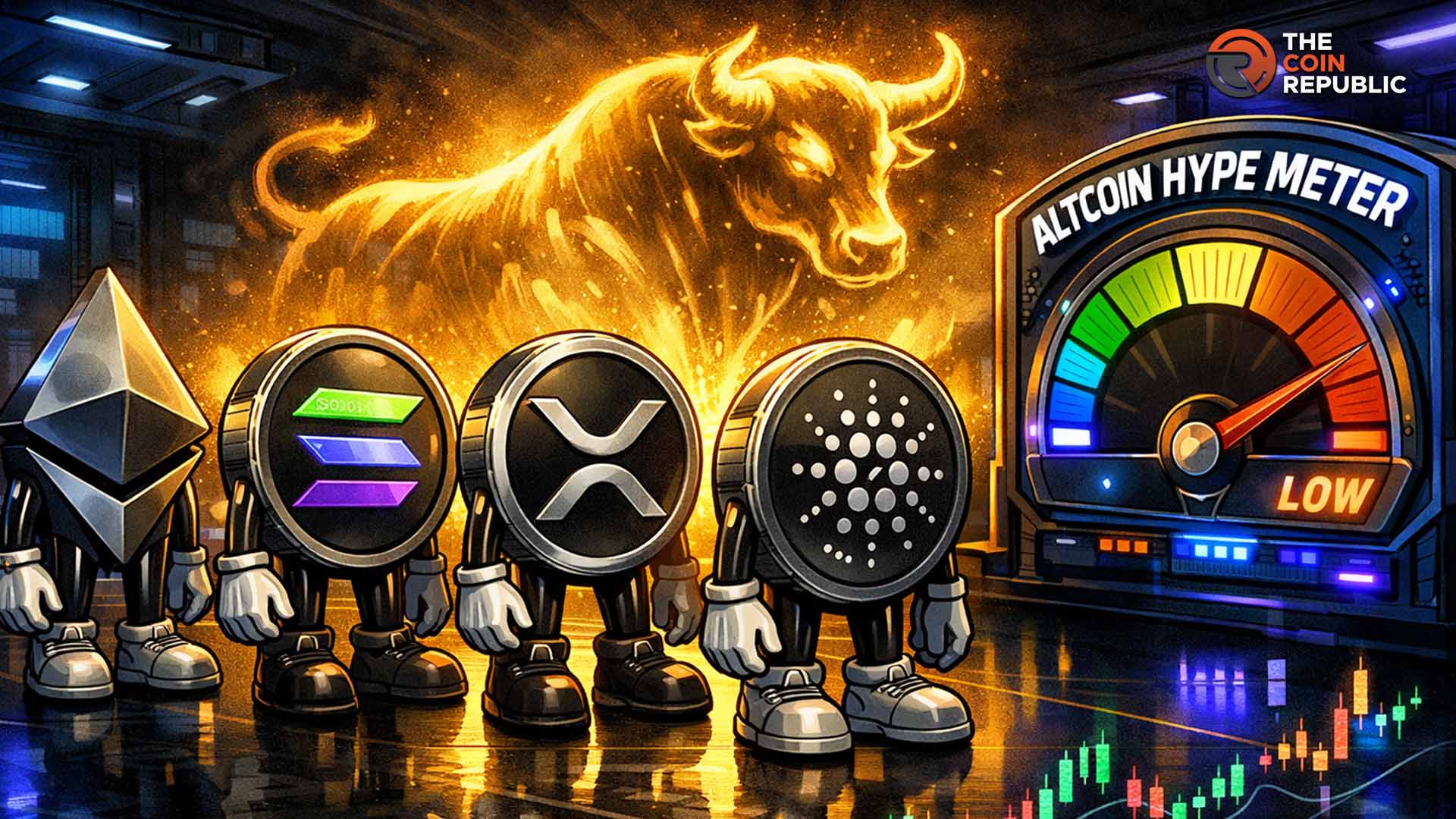
Altcoin mentions and social dominance have fallen to a 2-year low, with focus shifting to Bitcoin. Google Trends data shows a sharp decline in altcoin search interest. Santiment suggests that extreme lows in social volume can precede new rallies. Bitcoin experienced a 7.5% rise in 24 hours, with potential for altcoin rotation when BTC stalls.
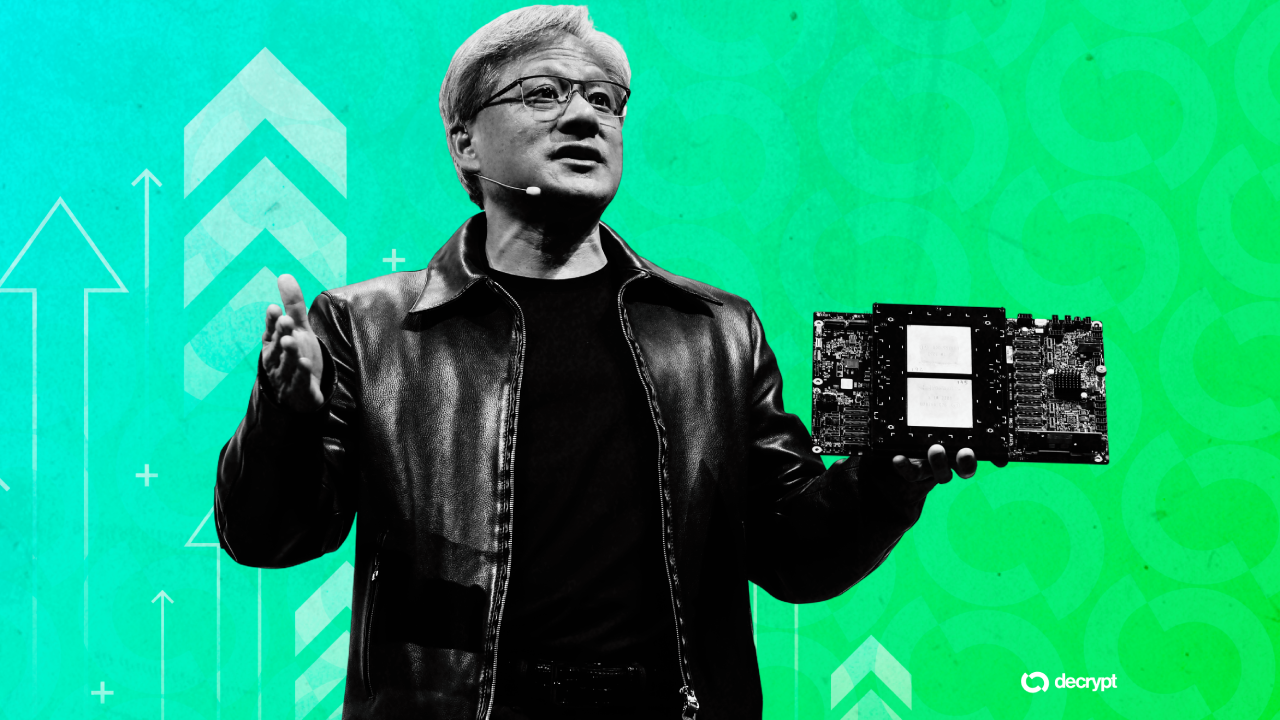
Nvidia CEO Jensen Huang indicates the end of major investments in OpenAI and Anthropic. Nvidia's decision avoids taking sides amidst escalating controversies and competition between AI labs. The company previously invested $30 billion in OpenAI and $10 billion in Anthropic. Nvidia aims to maintain neutrality as a GPU supplier to multiple AI companies.
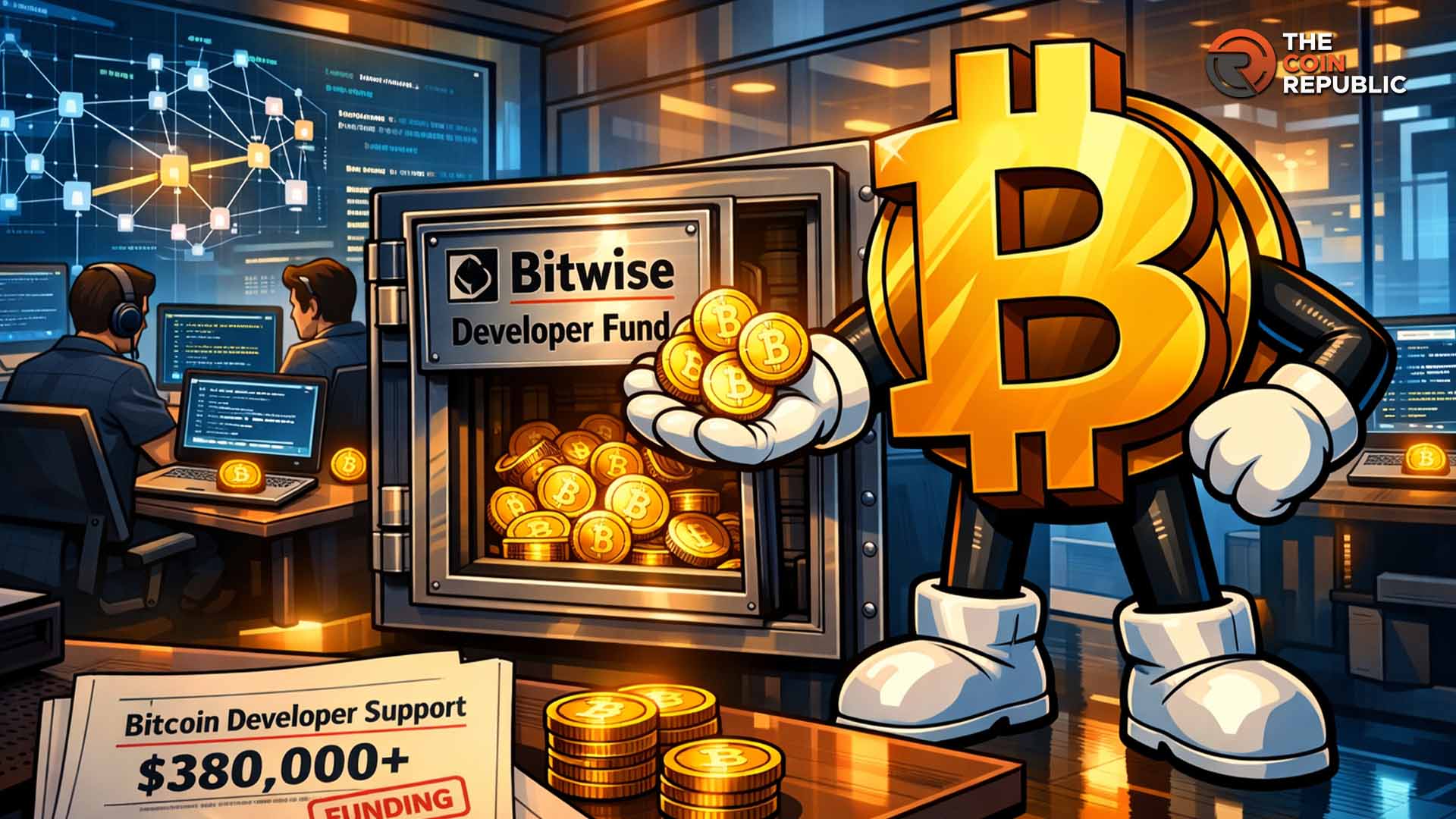
Bitwise donated an additional $233,000 to Bitcoin developers from BITB ETF profits. Total Bitcoin developer donations from Bitwise now exceed $383,000. BITB ETF has attracted approximately $2.2 billion in net inflows since its launch. Traditional finance may adopt on-chain infrastructure faster than previously anticipated.

Rainberry Inc. to pay $10 million civil penalty to settle SEC case SEC dismisses remaining claims against Justin Sun and affiliated entities Settlement resolves unregistered securities and market manipulation allegations Case resolution removes regulatory overhang for Tron founder
BlockDAG (BDAG) trading officially launched on March 5, 2026, on exchanges including Coinstore, BitMart, and Pionex USA. Market makers project BDAG could reach a top 50 market cap rank with potential for 100x growth. Uniswap (UNI) price increased 18% last week, driven by trading volume and a potential fee-burning governance update. Cardano (ADA) shows positive signs with large holders accumulating coins and a strong floor at $0.28, targeting $0.35.

Rainberry Inc. to pay $10 million fine as part of SEC settlement. SEC dismisses all charges against Justin Sun, Tron Foundation, and BitTorrent Foundation. Settlement requires Rainberry to be barred from future securities violations. SEC's case against Sun and Tron, filed in 2023, alleged federal securities law violations.

US banking regulators mandate identical capital treatment for tokenized and traditional securities. Capital requirements will not differ based on whether securities are tokenized or not. This policy applies to securities issued on permissioned or permissionless blockchains. Regulators clarified that tokenized assets can be used as collateral with the same haircuts as traditional securities.

Roblox implements AI to rephrase profanity in real-time chat instead of using hashmarks. The feature aims to maintain conversation readability and enforce community standards. Roblox is also enhancing chat filters to detect evasion tactics like leetspeak. This AI integration follows similar trends in the gaming industry for player behavior moderation.
Signal context only. Validate with price action, liquidity, and risk limits before taking a position.
