
Navigating Crypto News

CoinFeather
Navigating Crypto News

Quick market read from this story
Prosecutors are pushing for an October retrial for Tornado Cash developer Roman Storm on unresolved charges, indicating continued legal pressure despite a hung jury on key counts.
The legal proceedings against Roman Storm, particularly the push for a retrial on money laundering and sanctions violations, highlight the ongoing regulatory scrutiny of crypto mixers and their developers.
Roman Storm's defense views the retrial push as an attempt to criminalize coding, a sentiment amplified by a recent Treasury report acknowledging legitimate privacy uses for mixers, suggesting a potential shift in regulatory narrative.
Deep Dive
U.S. prosecutors have requested a federal judge set an October date for the retrial of Tornado Cash developer Roman Storm on two unresolved criminal counts. A jury previously failed to reach unanimous verdicts on these charges during the initial hearing. Storm, who is currently free on bail, has criticized the planned retrial, stating that the jury's deadlock on money laundering and sanctions violation charges indicates uncertainty in the government's case. He argues that the prosecution is attempting to
Source, catalyst, and sector overlap from the latest feed.
The CoinDesk 20 Index is showing positive momentum, trading up 1.4% with 15 out of 20 assets advancing. Stellar (XLM) and Near Protocol (NEAR) are leading the index's gains, indicating strong short-term performance for these specific assets. The overall market sentiment for the CoinDesk 20 components appears cautiously optimistic, with a majority of assets trading higher.
Anthropic's lawsuit against the U.S. government over alleged blacklisting from federal procurement could set a precedent for AI vendor restrictions. The legal challenge highlights the significant market access and potential revenue at stake for AI companies seeking government contracts. A favorable ruling for Anthropic could reopen federal procurement channels and influence future regulatory approaches to AI vendors.
Live Feed
Loading the broader stream in the same flow as the homepage feed.
Rising long positions and accelerating net buying pressure indicate a significant shift towards bullish sentiment for XRP, suggesting traders are actively positioning for potential upside. Despite increasing investor confidence, a substantial portion of XRP supply remains underwater, highlighting a persistent risk that could exacerbate volatility if the market turns against leveraged traders. The current price consolidation around $1.39, defending the $1.40 level, combined with tightening price compression, suggests XRP may be on the verge of a breakout, making near-term price action critical.

Adam Back suggests that institutional players are creating a "financial flywheel" by issuing debt and equity with high yields, then converting the raised liquidity directly into Bitcoin, potentially leading to a supply squeeze. The article highlights that this accumulation strategy, potentially involving entities like MicroStrategy, is driving Bitcoin's price towards $72,000, indicating strong underlying demand from sophisticated market participants. If Bitcoin consolidates above $72,000, it could signal a continuation of the bullish trend, potentially reaching new all-time highs not seen since early 2026, driven by this institutional buying pressure.

Physical coercion attacks targeting crypto holders continue to escalate in France, with a recent incident involving a $1 million Bitcoin theft by individuals posing as police. The persistent "wrench attack" pattern highlights a significant security risk for crypto owners, suggesting a need for enhanced personal security measures beyond technical safeguards. This event underscores the ongoing challenges in combating crypto-related crime, even as authorities attempt to address a growing wave of similar incidents.
Generative Pre-Trained Transformers (GPT) represent a foundational AI technology enabling content creation, coding assistance, and advanced language understanding, driving significant innovation across various industries. The 'Generative' aspect highlights the AI's ability to create novel content, 'Pre-Trained' signifies learning from vast datasets, and 'Transformer' architecture allows for sophisticated language processing, making GPT models highly adaptable. While GPT technology offers powerful capabilities like human-like conversation and rapid information processing, limitations such as potential inaccuracies and data bias necessitate ongoing research and development for improved reliability.
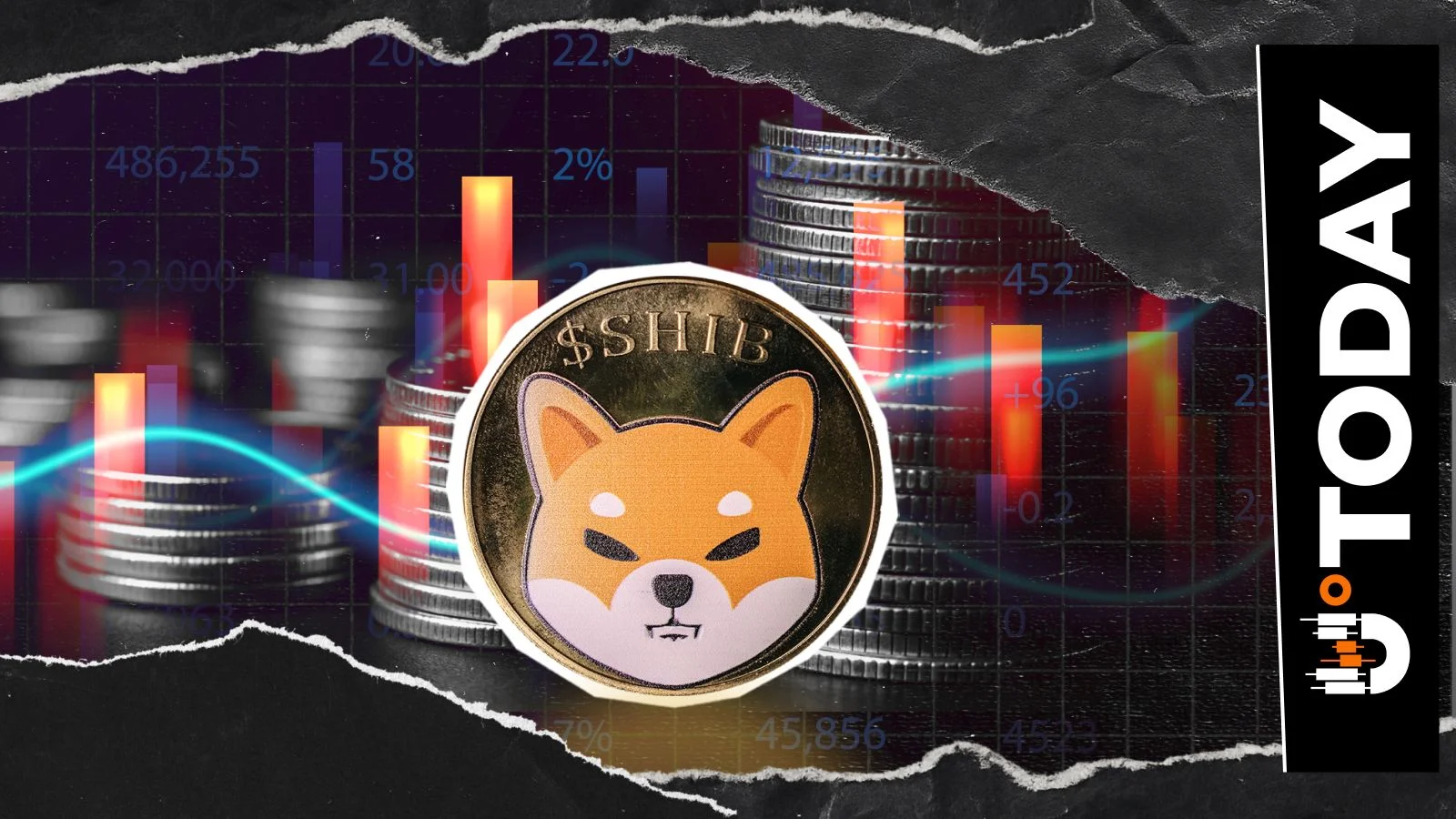
Shiba Inu is approaching a critical 80 trillion token exchange reserve threshold, a level that could signal a shift in supply dynamics and potentially influence its next price movement. Despite a persistent downtrend and weak price structure, on-chain data indicates substantial outflows from exchanges, suggesting a potential move towards accumulation or longer-term holding. A decisive drop below the 80 trillion SHIB exchange reserve mark could tighten liquidity and create conditions for a price rebound, while a failure to hold nearby support levels risks further decline. Network activity, including transfer counts, shows a slight increase, indicating continued ecosystem participation despite current price pressures.
Increased XRP Ledger payment volume to 743 million suggests strengthening network activity, potentially forming a base for a market reversal despite a longer-term downtrend. XRP's price consolidation near $1.40 with a short-term ascending support line indicates gradual buyer accumulation, a common precursor to stabilization phases. The convergence of rising on-chain activity, strengthening support, and tightening price structure around moving averages signals a transitional market phase for XRP, hinting at a potential recovery attempt. Traders should monitor XRP's ability to hold current support levels alongside sustained on-chain activity for confirmation of a broader recovery, suggesting a potential shift in market sentiment.
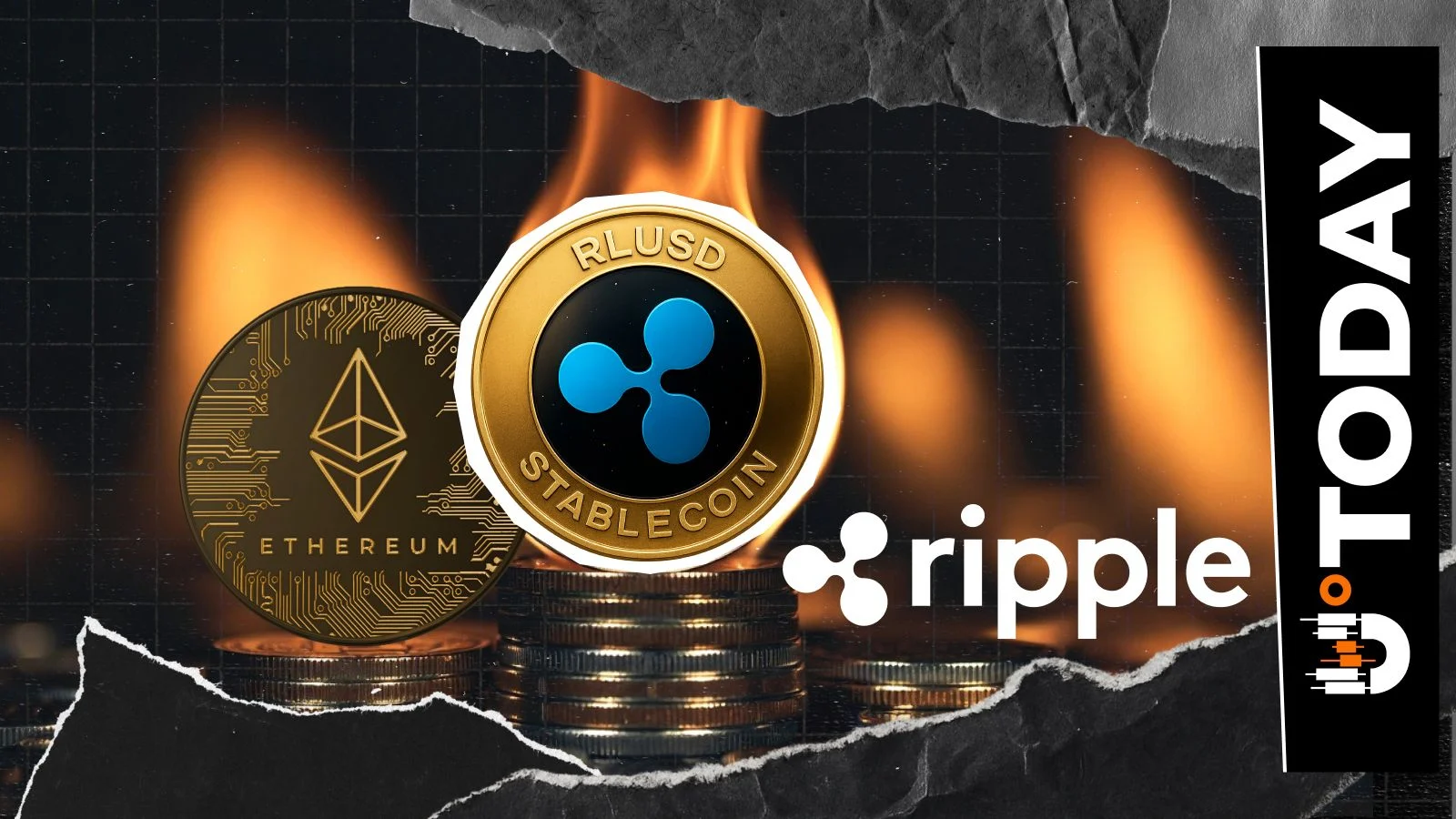
Ripple's decision to burn nearly $1 million in RLUSD demonstrates active supply management to maintain its dollar peg, a crucial function for stablecoin stability. The RLUSD burn, following recent minting of $20 million, highlights Ripple's dynamic approach to balancing supply and demand, supporting its $1.58 billion market cap. Despite the burn, RLUSD's growth trajectory remains intact, with institutional partnerships and a potential $2 billion milestone on the horizon, indicating sustained market confidence. The integration of RLUSD on exchanges like Binance and its adoption for cross-border payments by institutions like Deutsche Bank underscore its increasing utility and market acceptance.
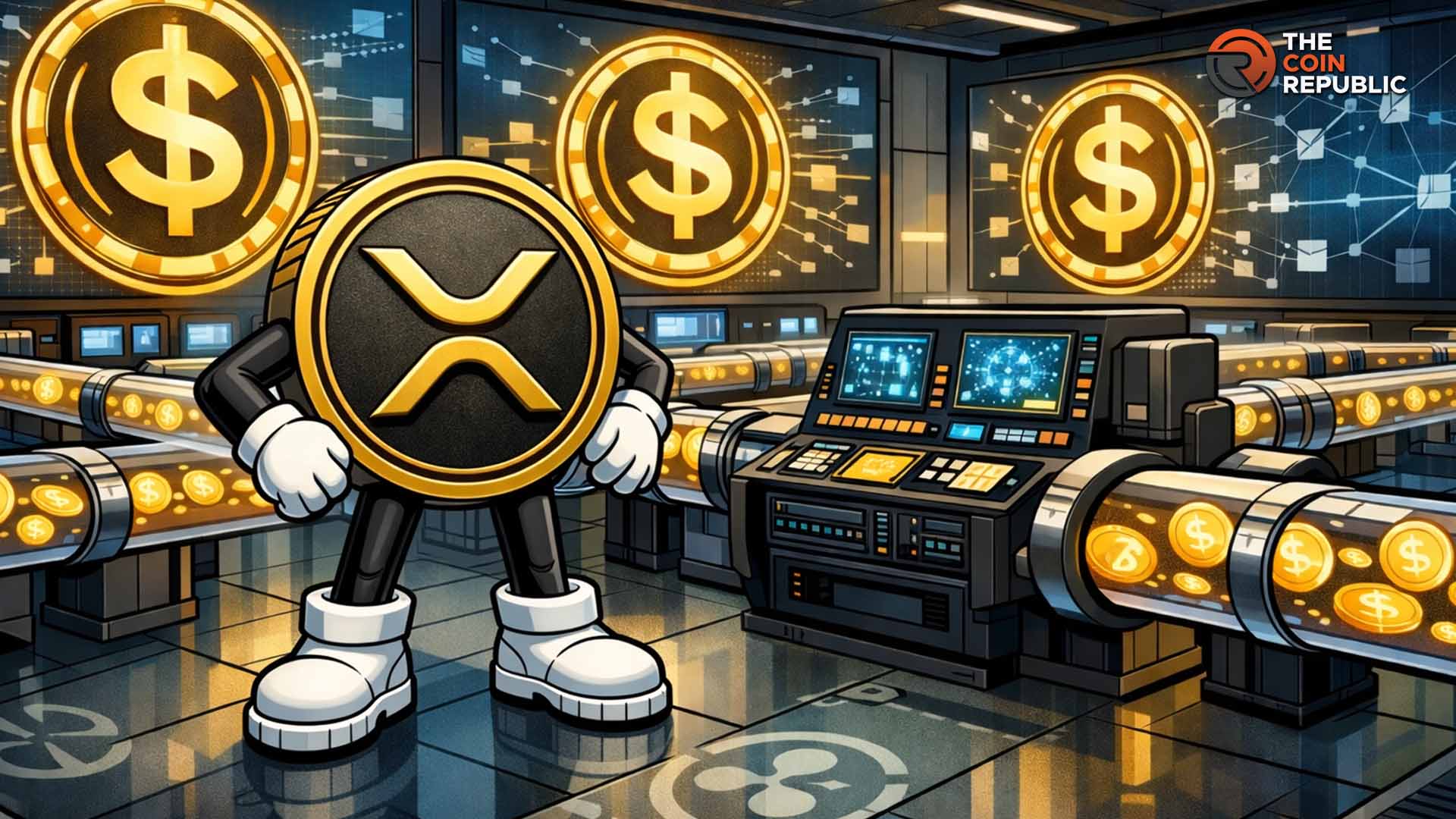
Ripple's payment network processing over $100 billion and its RLUSD stablecoin reaching $1 billion market cap signifies significant adoption and utility growth, potentially increasing demand for XRP as a settlement asset. The article highlights historical XRP price patterns correlating with the 100 EMA, suggesting potential accumulation zones and future upside targets between $6-$9 and $20-$25 if broader market conditions improve. Increased institutional interest in blockchain settlement solutions, coupled with Ripple's expanding payment infrastructure, could drive demand for XRP as a bridge currency for cross-border transactions.

Strategy has amended its STRC sales program to allow for more efficient issuance, directly enabling a record-breaking single-day purchase of approximately 1,420 BTC. The increased STRC issuance, facilitated by relaxed ATM sales restrictions, signals a more aggressive capital deployment strategy by Strategy to accumulate Bitcoin. Despite Bitcoin trading below Strategy's average cost basis, the record STRC issuance and subsequent BTC purchase highlight sustained investor interest in the company's Bitcoin treasury strategy.
Solana is consolidating near $85, with a critical breakout level identified at $100, suggesting potential for a short squeeze-driven rally if this resistance is overcome. Technical analysis on the 4-hour chart indicates SOL is testing rising channel support around $82-$84, with immediate resistance at $90-$91, implying a potential upward move towards $98-$100 if support holds. Recent liquidation of $3.49 million in high-leverage short positions suggests increased buying pressure and could fuel further upward momentum if key resistance levels are breached.
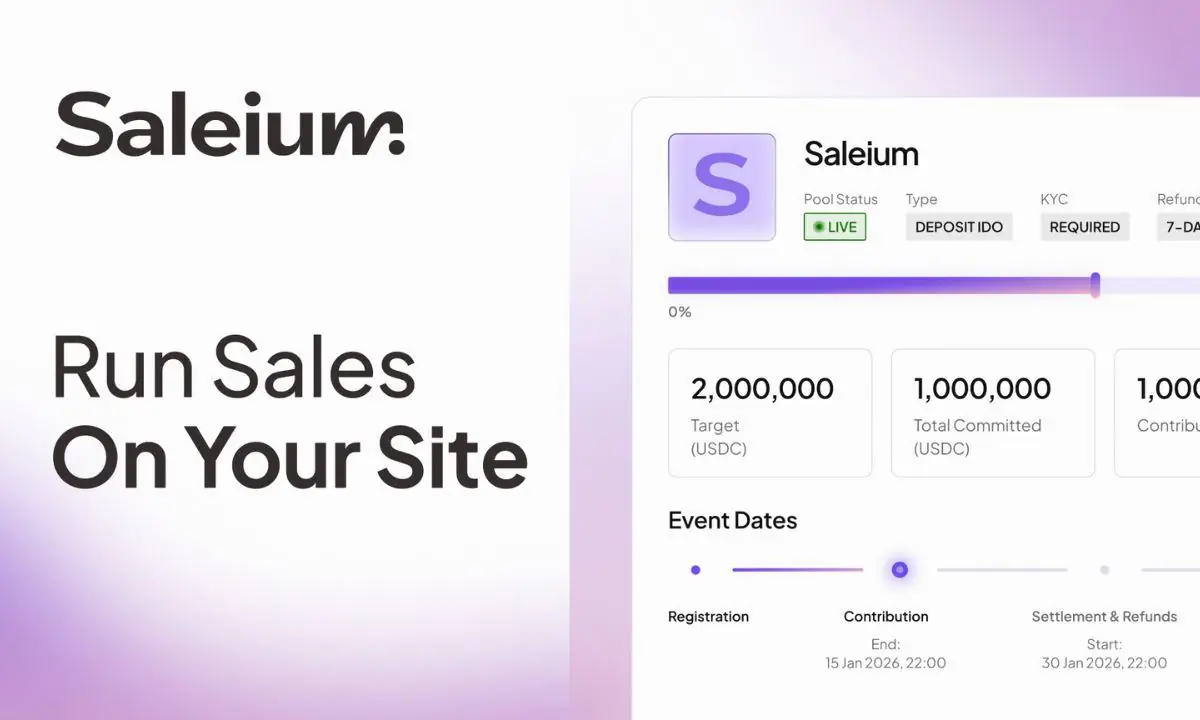
The emergence of self-hosted token sale infrastructure like Saleium signals a maturing Web3 ecosystem moving beyond centralized launchpads towards more integrated project-community engagement. Projects utilizing Saleium can retain greater control over user experience and community connection during token launches, potentially enhancing brand loyalty and operational efficiency. The trend towards embedded token sale infrastructure suggests a shift from one-off fundraising events to a more integrated approach within a project's broader ecosystem development.
Dogecoin is trading near a historically significant support zone identified by analysts, marking the third instance of such a pullback which has preceded substantial upward moves in the past. The current price action shows Dogecoin consolidating between $0.0897 and $0.0923, with declining weekly Average True Range (ATR) suggesting a potential for a sharp directional move. A reclaim of the $0.1300 Fibonacci extension level is crucial for Dogecoin to signal a stronger upward structure, with potential targets at $0.167 and $0.197 if successful. Despite a broken critical structural point at $0.1300, an analyst projects a potential surge to $1.20 if the current support at $0.085 holds, based on historical precedents.

BIP-360 introduces Pay-to-Merkle-Root (P2MR) to Bitcoin, a measured step towards quantum resistance by eliminating Taproot's vulnerable key path spending and forcing all transactions through script paths. While BIP-360 enhances quantum defense by reducing public key exposure, it does not offer immediate full post-quantum security, as existing UTXOs remain vulnerable until migrated. The implementation of P2MR will necessitate ecosystem-wide updates for wallets, exchanges, and custodians, potentially leading to slightly larger transaction sizes and increased fees. This development signals a proactive, long-term approach by Bitcoin developers to address future cryptographic threats, prioritizing gradual migration over immediate, disruptive changes.
Signal context only. Validate with price action, liquidity, and risk limits before taking a position.
