
Navigating Crypto News

CoinFeather
Navigating Crypto News
Quick market read from this story
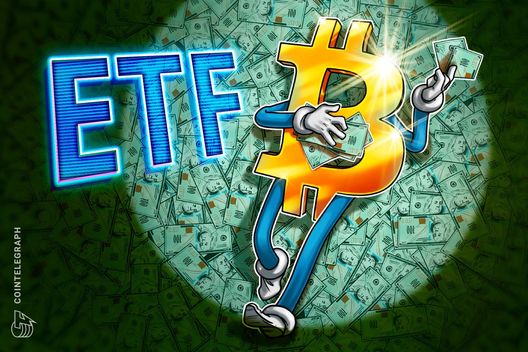
The sustained six-day inflow streak into US spot Bitcoin ETFs, totaling nearly $1 billion, indicates strong institutional demand and a potential shift in market sentiment towards accumulation.
The correlation between ETF inflows and Bitcoin's price surge to $74,250 suggests that ETF activity is a significant driver of current market momentum, potentially fueling further FOMO.
Despite global geopolitical uncertainties, the renewed positive sentiment and increasing FOMO, as highlighted by Santiment and the Fear & Greed Index, suggest traders are viewing crypto as a growth sector.
Deep Dive
US-listed spot Bitcoin ETFs have experienced a significant surge in inflows, accumulating nearly $1 billion since March 9. This influx of capital has coincided with a notable price increase for Bitcoin, which has risen over 12% to approximately $74,250 during the same period.
On Monday, Bitcoin ETFs recorded their sixth consecutive day of inflows, bringing in a net total of $199.4 million. The largest contributions came from BlackRock's iShares Bitcoin Trust (IBIT), which saw $139.4 million, and the Fidelity Wise Origin Bitcoin Fund, with $64.5 million. Other ETFs like the Bitwise Bitcoin ETF and Franklin Bitcoin ETF also reported smaller inflows, while the VanEck Bitcoin ETF and ARK 21Shares Bitcoin ETF experienced minor outflows.
The total net inflows since March 9 have reached $962.8 million. This period of sustained investment has seen Bitcoin's price climb from around $65,960 to $74,250.
This recent streak of inflows follows a more substantial nine-day run in September and October 2025, which attracted nearly $6 billion. During that earlier period, Bitcoin reached an all-time high of $126,080.
The current rise in ETF inflows and Bitcoin's price is occurring amidst global geopolitical uncertainties, including tensions between the US and Iran, and volatility in oil markets. However, blockchain analytics firm Santiment suggests that rumors of diplomatic progress between the US, Iran, and Israel have also played a role in Bitcoin's ascent above $74,400.
Santiment noted that this bullish momentum has driven FOMO (fear of missing out) to its highest level since January 2nd. The Crypto Fear & Greed Index also improved, rising five points to 28 on Tuesday, moving out of the "Extreme Fear" zone for the first time since late January, indicating a shift towards more positive market sentiment.
Source, catalyst, and sector overlap from the latest feed.
The voluntary dismissal of the airdrop lawsuit against the SEC by Beba and the DeFi Education Fund signals a potential shift in regulatory approach, suggesting the SEC may be moving towards clearer guidance on airdrops. This development could reduce regulatory uncertainty for DeFi protocols engaging in airdrops, potentially encouraging more such activities if the SEC provides a favorable 'safe harbor' framework. While the lawsuit is dismissed without prejudice, its withdrawal indicates a temporary de-escalation of legal challenges, allowing the market to focus on other developments until further SEC action or inaction. The cited statements from Commissioner Hester Peirce and the White House executive action suggest a proactive effort to address airdrops, which could lead to a more defined regulatory landscape for token distribution mechanisms.
A former law enforcement officer's sentencing for aiding crypto-related extortion highlights ongoing risks associated with illicit activities in the digital asset space. The conviction and sentencing of Michael Coberg underscore the potential for law enforcement corruption to facilitate criminal enterprises within the crypto ecosystem. This case serves as a reminder for market participants to exercise caution and due diligence, as criminal elements can exploit both traditional and digital financial systems.
Messari's strategic pivot towards an AI-first model, coupled with leadership changes and staff reductions, signals a significant internal restructuring aimed at future growth in the AI sector. The company's initiative to open its data layer to autonomous agents via the x402 protocol indicates a proactive move to integrate blockchain intelligence with emerging AI technologies, potentially creating new revenue streams and market opportunities. While the layoffs are a negative short-term event for employees, the company's stated commitment to AI suggests a long-term strategy to leverage its data expertise in a rapidly growing technological field.
The SEC's proposal to limit Rule 15c2-11 to equity securities could clarify OTC market access for certain crypto assets, potentially reducing regulatory uncertainty. While the SEC is seeking public comment on crypto asset application, the lack of immediate clarity means this development is primarily informational for now. Hester Peirce's support for the proposal suggests a potential shift towards more defined regulatory frameworks for digital assets, though the final scope remains to be determined.
President Trump's repeated calls for immediate interest rate cuts, while politically significant, are unlikely to sway the Federal Reserve's current policy given market expectations of no change at the upcoming meeting. The Federal Reserve is expected to maintain current interest rates, with CME futures indicating a 99% probability of no change, despite external political pressure and geopolitical events impacting oil prices. Lower interest rates, if enacted, could theoretically increase liquidity and push investors towards riskier assets like crypto, but current market pricing suggests this is not an immediate catalyst. Geopolitical events, such as the conflict with Iran, are increasing oil prices and potentially inflation, which could counter arguments for rate cuts and lead the Fed to maintain a cautious stance.
Bitcoin's brief surge above $75,000 was primarily driven by derivatives positioning and short-covering, not fundamental spot demand, indicating a lack of sustained buying conviction at higher levels. Despite the intraday volatility, major cryptocurrencies like ETH, XRP, and SOL posted significant weekly gains, suggesting broader market sentiment is improving, potentially supported by renewed ETF inflows. The narrowing performance gap between Bitcoin and gold, coupled with consistent ETF inflows, is reviving the 'digital gold' narrative, which could attract further institutional interest if sustained. The upcoming Federal Reserve meeting, particularly the dot plot and Powell's commentary, poses a significant risk to current market momentum, with potential to dictate the direction of risk assets through March.
Polkadot's first-ever halving event has significantly reduced annual token emissions and introduced a hard supply cap, creating a new scarcity mechanism that the market is beginning to price in. The combination of reduced supply, increased social dominance, and a climbing AltRank suggests a potential repricing event for DOT, especially given its current distance from its all-time high. The launch of the 21Shares Polkadot ETF (TDOT) provides a crucial institutional on-ramp, which, coupled with strong long positioning from top traders on Binance, indicates growing institutional and sophisticated trader interest. Despite recent price action, Polkadot remains significantly below its all-time high, suggesting that the full market impact of its supply-side changes and improved institutional access may still be unfolding.
Ethereum's SuperTrend indicator has flipped to 'buy' for the first time since September, signaling a potential end to the downtrend and a precursor to significant price rallies based on historical data. Increased whale accumulation and exchange outflows, coupled with substantial ETH purchases by prominent figures like Erik Voorhees and former Ethereum developer billΞ.eth, suggest strong conviction from large investors. The recent surge in ETH price has triggered significant liquidations of short positions, potentially fueling a short squeeze and further upward momentum as traders cover their bets. Institutional inflows into ETH ETFs and direct corporate purchases by entities like BitMine indicate renewed confidence and demand from both traditional and crypto-native institutions.
T. Rowe Price's active crypto ETF filing signals increased institutional interest in a diversified digital asset portfolio beyond just Bitcoin. The ETF's active management strategy and potential for staking indicate a more sophisticated approach to crypto investing compared to passive spot ETFs. Inclusion of altcoins like DOGE and SHIB in the potential holdings suggests a broader acceptance of meme coins within traditional finance, potentially driving speculative interest. The filing represents a significant step towards mainstream adoption, potentially increasing liquidity and price discovery for a wider range of digital assets.
The updated Bitcoin power-law model now incorporates local growth rate vectors, shifting analysis from static price targets to dynamic regime signals influenced by ETF flows and network economics. The model faces a 2026 stress test, with projected floor prices around $52,280 and centerline targets near $124,477, indicating that current market conditions and institutional adoption are challenging its historical predictive power. While the power law provides a framework for understanding Bitcoin's long-term trajectory, its relevance is being tested by external factors like ETF demand, macro conditions, and mining costs, suggesting a shift towards a regime-based interpretation rather than a strict predictive model. The evolving market dynamics, including significant ETF inflows and increased mining difficulty, are forcing a re-evaluation of Bitcoin's power-law model, moving the debate from price targets to how the model adapts to institutional adoption and network growth.
A potential minority stake by Coinbase in Bybit could facilitate Bybit's compliant entry into the US market, leveraging Coinbase's regulatory experience. This strategic move aligns with Coinbase's 'Everything Exchange' strategy, potentially enhancing its global reach and derivatives liquidity through Bybit's established international presence. The partnership signals a trend towards consolidation and regulatory navigation within the crypto exchange sector, potentially raising industry standards as suggested by peer reactions. While not a confirmation, the reported talks suggest a potential shift in market structure, bridging regulated US operations with significant offshore liquidity, though regulatory hurdles remain.
The upcoming Binance listing for Pepeto is positioned as a significant catalyst, potentially driving substantial price appreciation from its presale stage, contrasting with the more modest recovery expected for established meme coins like DOGE and PEPE. Bitwise's increased funding for Bitcoin developers signals continued institutional commitment to core infrastructure, providing a foundational bullish undertone for the broader crypto market, even as attention is drawn to speculative meme coin activity. The article highlights a strategic divergence in meme coin investment, favoring new presale opportunities like Pepeto with imminent exchange listings over established coins like DOGE and PEPE, suggesting a trader focus on high-multipler potential events. The narrative around 'meme season' is building, with DOGE and PEPE showing recovery, but the primary trading focus is on Pepeto due to its presale status and impending Binance listing, which is presented as a direct driver of significant near-term gains.
The Bank of Canada's successful tokenized bond trial highlights the increasing institutional adoption of blockchain for settlement, favoring projects with proven infrastructure over those focused solely on payment settlement. Pepeto's exchange model, featuring AI screening and zero-cost cross-chain trading, is positioned as a potential outperformer against XRP due to its focus on capital protection and utility, especially with an upcoming Binance listing. While XRP and SOL are mentioned with price targets, the article emphasizes Pepeto's presale pricing and imminent Binance listing as a catalyst for potentially higher, albeit riskier, returns compared to established large-cap assets. The comparison suggests a market shift towards utility-driven platforms with robust infrastructure, where Pepeto's exchange functionality and risk mitigation features are presented as key differentiators against XRP's payment settlement focus.
A former law enforcement officer's sentencing for extortion highlights the risks of illicit influence peddling within the crypto space, potentially increasing regulatory scrutiny on associated figures. The case involving the 'Crypto Godfather' and a sheriff's deputy underscores the potential for abuse of power in financial disputes, suggesting a need for enhanced due diligence and risk management for investors interacting with influential personalities. The conviction and sentencing of a deputy for aiding in extortion related to crypto schemes indicates a growing trend of law enforcement action against individuals involved in fraudulent crypto activities, signaling a bearish sentiment for unregulated or illicit operations.
Live Feed
Loading the broader stream in the same flow as the homepage feed.
Bitcoin is approaching a critical resistance zone around $75,000-$76,000, with a sustained breakout potentially signaling the next upward leg of the rally. Altcoins, particularly Ethereum, are outperforming Bitcoin, indicating a broadening market participation and a potential shift towards altcoin season. Despite rising prices, market sentiment remains cautious with the Fear & Greed Index at 28, suggesting that the current rally may be in its early to mid-stages rather than a mature bull run. The total crypto market capitalization has surpassed $2.54 trillion, underscoring the overall market's recovery and growth momentum.

RLUSD volume surge of 143% coincides with XRP breaking $1.40 resistance, indicating increased demand for stablecoins to acquire XRP amidst a broader market recovery. The rising demand for RLUSD, driven by XRP's bullish momentum, suggests a potential positive feedback loop where stablecoin utility directly fuels asset acquisition. Ripple's strategic global expansion for RLUSD, aiming to consolidate institutional access to XRP and the XRP Ledger, could further boost adoption and trading volume.
Ripple's partnership with i-payout enables near-instant cross-border payouts to the U.S. and Canada, directly addressing a key friction point in global commerce and potentially improving liquidity for businesses reliant on frequent international settlements. This integration leverages Ripple's payment infrastructure to significantly reduce settlement times from days to near-real-time, a development that could set a new standard for efficiency in the payments sector. The expansion of Ripple's payment network through this partnership, following recent moves in APAC, signals continued growth in its enterprise solutions and reinforces its position in the cross-border payments market.

XRP's price surge past $1.50 resistance, coupled with a 125% volume spike, signals renewed market interest and a potential shift in momentum. The significant increase in XRP futures open interest on Binance, despite the price being below previous highs, indicates growing leveraged positions and suggests traders are betting on further upside. While the buildup of open interest provides structural support, approaching pre-crash leverage levels at a lower price point introduces increased risk if the current breakout fails, warranting close monitoring of the $1.50-$1.60 zone. XRP reclaiming the fourth-largest cryptocurrency spot by market cap from BNB highlights a notable shift in asset performance within the altcoin market.
Investors seeking direct exposure to WhatsApp's growth must purchase Meta Platforms (META) stock, as WhatsApp operates as a subsidiary and does not have its own independent stock or IPO. While a WhatsApp IPO is not currently planned, potential future spin-offs could be triggered by regulatory pressure, strategic restructuring, or significant independent monetization growth. Meta is actively exploring monetization strategies for WhatsApp, including business tools, payments, commerce, and advertising, which could significantly impact Meta's overall revenue and stock performance.

Robert Kiyosaki predicts a significant financial crash followed by a substantial surge in Bitcoin to $750,000 within a year, positioning it as a hedge against fiat currency devaluation. The commentary highlights Bitcoin's recent price strength above $74,000, suggesting investor interest in digital assets as a safe haven amid global economic uncertainty and geopolitical tensions. Kiyosaki's optimistic outlook extends to Ethereum, forecasting a rise to $95,000 post-crash, reinforcing the narrative of cryptocurrencies as alternatives to traditional financial systems. The article contrasts Bitcoin's performance with gold, noting a potential inverse correlation and suggesting that while gold may see short-term peaks, Bitcoin's momentum is currently favored by some analysts.

Robert Kiyosaki's prediction of Bitcoin reaching $750,000 and Ethereum $95,000 a year after a market crash is an opinion-based forecast, not a direct market catalyst. The author's commentary highlights a contrarian view, suggesting a market collapse as a buying opportunity for hard assets and cryptocurrencies. Despite the bullish long-term price targets, Kiyosaki's past contradictory statements on Bitcoin purchases introduce skepticism regarding the reliability of his current pronouncements for short-term trading decisions. The core development is an opinion piece from a well-known author, which may generate social media buzz but lacks concrete data or actionable events for immediate trading.

Bitcoin's brief rally above $75,000 was driven by derivatives market mechanics, specifically the unwinding of bearish put options and subsequent market maker hedging, rather than organic buying conviction. The rapid retreat below $75,000 suggests that previous resistance levels, such as $74,400 from early April last year, are now acting as psychological and technical ceilings, indicating caution among traders. The failure to sustain the rally highlights the market's sensitivity to technical levels and the potential for short-term price swings based on derivative flows rather than fundamental shifts.

The lawsuit against xAI alleges deliberate design choices in Grok to profit from CSAM, suggesting potential legal liabilities that could impact investor confidence and future AI development. The allegations of knowingly releasing Grok without safeguards and profiting from misuse, coupled with ongoing global regulatory probes, signal significant legal and reputational risks for xAI and potentially the broader AI sector. The legal strategy may treat Grok as a product rather than a platform, implying stricter scrutiny on AI safety measures and potentially setting precedents for AI company accountability in cases of harmful output.
Signal context only. Validate with price action, liquidity, and risk limits before taking a position.
