
Navigating Crypto News

CoinFeather
Navigating Crypto News

Quick market read from this story
The SEC's proposal to limit Rule 15c2-11 to equity securities could clarify OTC market access for certain crypto assets, potentially reducing regulatory uncertainty.
While the SEC is seeking public comment on crypto asset application, the lack of immediate clarity means this development is primarily informational for now.
Hester Peirce's support for the proposal suggests a potential shift towards more defined regulatory frameworks for digital assets, though the final scope remains to be determined.
Deep Dive
The U.S. Securities and Exchange Commission (SEC) has proposed an amendment to its 1971 Rule 15c2-11, aiming to clarify reporting requirements for broker-dealers in the over-the-counter (OTC) market. The proposed change seeks to limit the rule's scope to equity securities, reversing a 2021 interpretation that extended its application to fixed-income securities and raised questions about its relevance to crypto securities.
Originally adopted to combat fraud in the penny stock market, Rule 15c2-11 mandates that broker-dealers maintain updated public information about an issuer before publishing OTC quotes. However, a 2021 reinterpretation broadened its application, leading to market backlash and uncertainty, particularly regarding its impact on bonds and digital assets.
SEC Commissioner Hester Peirce, who leads the agency's crypto task force, welcomed the proposal. She highlighted that the SEC had created years of uncertainty through an amendment that took effect in 2021. Peirce noted that while the rule's text historically applied to "securities," the market understood it to cover only OTC equity securities. She criticized the SEC's approach of granting limited, short-term relief instead of providing long-term relief or amending the rule sooner.
“The Commission should have granted long-term no-action relief while we assessed whether the application of the rule to the fixed income market was appropriate and then amended the rule as necessary. Instead, the Commission... granted several rounds of limited relief, sometimes for as short a period as three months... fostering uncertainty in this market.”
The SEC defines an equity security as representing an ownership interest in a company, such as stock or convertible securities. The proposed amendment specifically targets equity securities, but a decision on whether this definition includes crypto assets has not yet been made. The SEC has initiated a 60-day public comment period to gather feedback on the rule's application to crypto assets and the potential formation of an "expert market."
This initiative is part of a larger effort by both the SEC and the Commodity Futures Trading Commission (CFTC) to establish regulatory clarity for the cryptocurrency sector in the U.S. Last week, the two agencies signed a memorandum of understanding to coordinate oversight of financial markets, including crypto, aiming to resolve long-standing jurisdictional disputes.
Source, catalyst, and sector overlap from the latest feed.
The voluntary dismissal of the airdrop lawsuit against the SEC by Beba and the DeFi Education Fund signals a potential shift in regulatory approach, suggesting the SEC may be moving towards clearer guidance on airdrops. This development could reduce regulatory uncertainty for DeFi protocols engaging in airdrops, potentially encouraging more such activities if the SEC provides a favorable 'safe harbor' framework. While the lawsuit is dismissed without prejudice, its withdrawal indicates a temporary de-escalation of legal challenges, allowing the market to focus on other developments until further SEC action or inaction. The cited statements from Commissioner Hester Peirce and the White House executive action suggest a proactive effort to address airdrops, which could lead to a more defined regulatory landscape for token distribution mechanisms.
A former law enforcement officer's sentencing for aiding crypto-related extortion highlights ongoing risks associated with illicit activities in the digital asset space. The conviction and sentencing of Michael Coberg underscore the potential for law enforcement corruption to facilitate criminal enterprises within the crypto ecosystem. This case serves as a reminder for market participants to exercise caution and due diligence, as criminal elements can exploit both traditional and digital financial systems.
Messari's strategic pivot towards an AI-first model, coupled with leadership changes and staff reductions, signals a significant internal restructuring aimed at future growth in the AI sector. The company's initiative to open its data layer to autonomous agents via the x402 protocol indicates a proactive move to integrate blockchain intelligence with emerging AI technologies, potentially creating new revenue streams and market opportunities. While the layoffs are a negative short-term event for employees, the company's stated commitment to AI suggests a long-term strategy to leverage its data expertise in a rapidly growing technological field.
The sustained six-day inflow streak into US spot Bitcoin ETFs, totaling nearly $1 billion, indicates strong institutional demand and a potential shift in market sentiment towards accumulation. The correlation between ETF inflows and Bitcoin's price surge to $74,250 suggests that ETF activity is a significant driver of current market momentum, potentially fueling further FOMO. Despite global geopolitical uncertainties, the renewed positive sentiment and increasing FOMO, as highlighted by Santiment and the Fear & Greed Index, suggest traders are viewing crypto as a growth sector.
President Trump's repeated calls for immediate interest rate cuts, while politically significant, are unlikely to sway the Federal Reserve's current policy given market expectations of no change at the upcoming meeting. The Federal Reserve is expected to maintain current interest rates, with CME futures indicating a 99% probability of no change, despite external political pressure and geopolitical events impacting oil prices. Lower interest rates, if enacted, could theoretically increase liquidity and push investors towards riskier assets like crypto, but current market pricing suggests this is not an immediate catalyst. Geopolitical events, such as the conflict with Iran, are increasing oil prices and potentially inflation, which could counter arguments for rate cuts and lead the Fed to maintain a cautious stance.
The lawsuit against xAI alleges deliberate design choices in Grok to profit from CSAM, suggesting potential legal liabilities that could impact investor confidence and future AI development. The allegations of knowingly releasing Grok without safeguards and profiting from misuse, coupled with ongoing global regulatory probes, signal significant legal and reputational risks for xAI and potentially the broader AI sector. The legal strategy may treat Grok as a product rather than a platform, implying stricter scrutiny on AI safety measures and potentially setting precedents for AI company accountability in cases of harmful output.
A former law enforcement officer's sentencing for extortion highlights the risks of illicit influence peddling within the crypto space, potentially increasing regulatory scrutiny on associated figures. The case involving the 'Crypto Godfather' and a sheriff's deputy underscores the potential for abuse of power in financial disputes, suggesting a need for enhanced due diligence and risk management for investors interacting with influential personalities. The conviction and sentencing of a deputy for aiding in extortion related to crypto schemes indicates a growing trend of law enforcement action against individuals involved in fraudulent crypto activities, signaling a bearish sentiment for unregulated or illicit operations.
The SEC's decision to drop its case against BitClout founder Nader Al-Naji, following the DOJ's earlier dismissal, removes a significant legal overhang for the project and its past investors. This development, alongside other recent dismissals of SEC cases against crypto entities, may signal a shift in regulatory enforcement priorities, potentially creating a more favorable environment for certain digital asset projects. While the BitClout platform itself is defunct, the resolution of these legal actions could be interpreted positively by the broader market, reducing perceived regulatory risk for similar past or future ventures.
The Bank of Canada's successful tokenized bond trial highlights the increasing institutional adoption of blockchain for settlement, favoring projects with proven infrastructure over those focused solely on payment settlement. Pepeto's exchange model, featuring AI screening and zero-cost cross-chain trading, is positioned as a potential outperformer against XRP due to its focus on capital protection and utility, especially with an upcoming Binance listing. While XRP and SOL are mentioned with price targets, the article emphasizes Pepeto's presale pricing and imminent Binance listing as a catalyst for potentially higher, albeit riskier, returns compared to established large-cap assets. The comparison suggests a market shift towards utility-driven platforms with robust infrastructure, where Pepeto's exchange functionality and risk mitigation features are presented as key differentiators against XRP's payment settlement focus.
OpenSea's decision to postpone the SEA token launch due to challenging market conditions signals a cautious approach to tokenomics amidst broader crypto volatility. The delay suggests that OpenSea prioritizes product readiness and market timing over meeting an arbitrary launch date, potentially preserving long-term token value. The postponement, coupled with the ongoing NFT market slump, indicates a bearish short-term outlook for NFT-related token launches and potentially for OpenSea's broader 'trade everything' strategy. Users who participated in early reward programs may question the fairness of refund options, highlighting potential community relations challenges for OpenSea.
Live Feed
Loading the broader stream in the same flow as the homepage feed.
Investors seeking direct exposure to WhatsApp's growth must purchase Meta Platforms (META) stock, as WhatsApp operates as a subsidiary and does not have its own independent stock or IPO. While a WhatsApp IPO is not currently planned, potential future spin-offs could be triggered by regulatory pressure, strategic restructuring, or significant independent monetization growth. Meta is actively exploring monetization strategies for WhatsApp, including business tools, payments, commerce, and advertising, which could significantly impact Meta's overall revenue and stock performance.

Robert Kiyosaki's prediction of Bitcoin reaching $750,000 and Ethereum $95,000 a year after a market crash is an opinion-based forecast, not a direct market catalyst. The author's commentary highlights a contrarian view, suggesting a market collapse as a buying opportunity for hard assets and cryptocurrencies. Despite the bullish long-term price targets, Kiyosaki's past contradictory statements on Bitcoin purchases introduce skepticism regarding the reliability of his current pronouncements for short-term trading decisions. The core development is an opinion piece from a well-known author, which may generate social media buzz but lacks concrete data or actionable events for immediate trading.

Bitcoin's brief rally above $75,000 was driven by derivatives market mechanics, specifically the unwinding of bearish put options and subsequent market maker hedging, rather than organic buying conviction. The rapid retreat below $75,000 suggests that previous resistance levels, such as $74,400 from early April last year, are now acting as psychological and technical ceilings, indicating caution among traders. The failure to sustain the rally highlights the market's sensitivity to technical levels and the potential for short-term price swings based on derivative flows rather than fundamental shifts.

A UK court has indicated a high probability of success for a husband's claim that his wife stole $176 million in Bitcoin, suggesting potential asset recovery or equivalent fiat compensation. The case highlights significant security risks associated with hardware wallet seed phrases and the potential for sophisticated personal-level theft, underscoring the need for enhanced personal security measures. The judge's recommendation for an early trial due to the volatility of Bitcoin's value signals market participants' awareness of the asset's price sensitivity to such events.
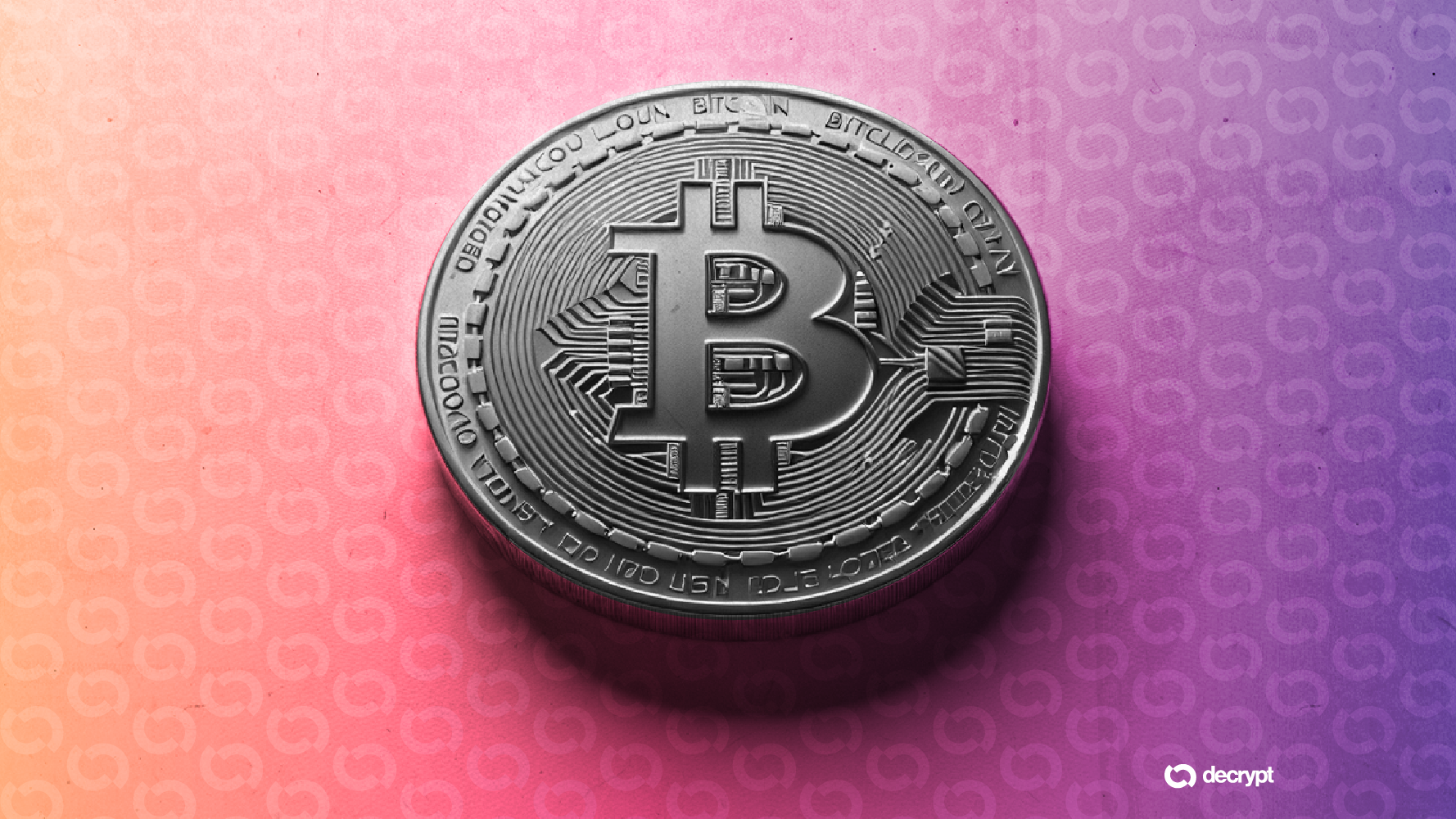
Bitcoin's breach above $75,000, a key resistance zone, suggests a potential shift in market sentiment as it diverges from traditional assets like equities and gold amid geopolitical uncertainty. Upcoming US PPI data and the Federal Reserve's rate decision are critical near-term catalysts that will likely determine whether Bitcoin's rally continues or faces consolidation, with core inflation remaining a key focus. The resurfacing narrative of Bitcoin as a 'digital safe haven' or 'geopolitical hedge' is being tested in real-time, with its ability to hold gains against rising oil prices and macro tightening risks indicating potential stabilization ahead of broader risk assets.

Critics have been warning that prediction markets tied to wars could incentivize insider trading, which lawmakers in the US and abroad have moved to regulate.

Bitcoin's breach of $75,000 is attributed to the unwinding of bearish derivative positions, specifically put options sold at lower strikes, which reduced downside hedging pressure and forced market makers to buy BTC. The rally's primary driver appears to be short covering and options market dynamics rather than aggressive new bullish positioning, suggesting a potential for continued upward momentum if these flows persist. The broader crypto market, including ETH, XRP, and SOL, has benefited from Bitcoin's surge, indicating a strong correlation and potential for altcoins to follow BTC's lead in the short term.

Ethereum's SuperTrend indicator has flipped to 'buy' for the first time since September, signaling a potential end to the downtrend and a precursor to significant price rallies based on historical data. Increased whale accumulation and exchange outflows, coupled with substantial ETH purchases by prominent figures like Erik Voorhees and former Ethereum developer billΞ.eth, suggest strong conviction from large investors. The recent surge in ETH price has triggered significant liquidations of short positions, potentially fueling a short squeeze and further upward momentum as traders cover their bets. Institutional inflows into ETH ETFs and direct corporate purchases by entities like BitMine indicate renewed confidence and demand from both traditional and crypto-native institutions.

XRP shows signs of a potential recovery, with technical indicators suggesting a move towards the $1.70 resistance level if current momentum sustains. Ethereum is exhibiting bullish momentum after surpassing key resistance levels, targeting the $2,516 50-day EMA, though sustained volume is needed to confirm the trend. Shiba Inu is displaying early recovery signs with a rebound from support and improved momentum indicators, but a confirmed bull market remains uncertain pending a break of significant long-term resistance.

Strategy's substantial $1.57 billion Bitcoin acquisition, adding 22,337 BTC, reinforces its position as the largest corporate holder and signals continued conviction in Bitcoin as a long-term store of value. The significant accumulation by Strategy, funded through stock offerings, demonstrates a strategic approach to increasing BTC reserves without impacting operational cash, potentially influencing investor sentiment towards MSTR stock. This large purchase coincides with a Bitcoin price surge above $73,000 and increased trading volume, suggesting that institutional accumulation may be a contributing factor to current market optimism.
Signal context only. Validate with price action, liquidity, and risk limits before taking a position.
