
Navigating Crypto News

CoinFeather
Navigating Crypto News

Quick market read from this story
A former law enforcement officer's sentencing for extortion highlights the risks of illicit influence peddling within the crypto space, potentially increasing regulatory scrutiny on associated figures.
The case involving the 'Crypto Godfather' and a sheriff's deputy underscores the potential for abuse of power in financial disputes, suggesting a need for enhanced due diligence and risk management for investors interacting with influential personalities.
The conviction and sentencing of a deputy for aiding in extortion related to crypto schemes indicates a growing trend of law enforcement action against individuals involved in fraudulent crypto activities, signaling a bearish sentiment for unregulated or illicit operations.
Deep Dive
A former Los Angeles County sheriff’s deputy, Michael David Coberg, has been sentenced to 63 months in federal prison for his involvement in an extortion scheme orchestrated by crypto entrepreneur Adam Iza, who styled himself as the "Godfather." Coberg admitted in September last year to conspiring with Iza to pressure individuals involved in business disputes. Prosecutors stated that Coberg "abused the power of his badge" for personal gain, betraying his oath to uphold the law.
Adam Iza gained notoriety for allegedly running fraudulent marketing and crypto schemes, often surrounded by off-duty deputies who served as bodyguards and advisers. Investigators claim Iza paid law enforcement officers substantial amounts to accompany him, gather intelligence on rivals, and intimidate those involved in financial conflicts. At one point, Iza was accused of impersonating an FBI officer to extort cryptocurrency at gunpoint.
Iza was arrested in September 2024 on charges including conspiracy, wire fraud, and tax evasion, linked to schemes that allegedly generated tens of millions of dollars, including approximately $16 million in crypto. The operation was also connected to other criminal activities, such as a failed home invasion in 2022.
While still a deputy, Coberg was reportedly paid at least $20,000 per month to serve as a security guard, adviser, and enforcer for Iza. In one documented incident in October 2021, Coberg, identifying himself as an active-duty officer, questioned a victim at Iza's residence while Iza displayed firearms. The victim subsequently transferred approximately $127,000 from a Bank of America account to an account controlled by Iza.
Prosecutors also detailed a separate plot to orchestrate a false arrest against another rival. Coberg and Iza worked with an accomplice to lure the victim from Florida to Los Angeles, where a staged traffic stop led to an arrest after drugs were planted in the vehicle. Coberg and Iza reportedly observed and recorded the arrest from their car, later mocking the victim.
Adam Iza has pleaded guilty and is awaiting sentencing in federal court in Los Angeles. He also faces additional kidnapping charges filed in Connecticut last year.
Source, catalyst, and sector overlap from the latest feed.
The lawsuit against xAI alleges deliberate design choices in Grok to profit from CSAM, suggesting potential legal liabilities that could impact investor confidence and future AI development. The allegations of knowingly releasing Grok without safeguards and profiting from misuse, coupled with ongoing global regulatory probes, signal significant legal and reputational risks for xAI and potentially the broader AI sector. The legal strategy may treat Grok as a product rather than a platform, implying stricter scrutiny on AI safety measures and potentially setting precedents for AI company accountability in cases of harmful output.
Bitcoin's breach above $75,000, a key resistance zone, suggests a potential shift in market sentiment as it diverges from traditional assets like equities and gold amid geopolitical uncertainty. Upcoming US PPI data and the Federal Reserve's rate decision are critical near-term catalysts that will likely determine whether Bitcoin's rally continues or faces consolidation, with core inflation remaining a key focus. The resurfacing narrative of Bitcoin as a 'digital safe haven' or 'geopolitical hedge' is being tested in real-time, with its ability to hold gains against rising oil prices and macro tightening risks indicating potential stabilization ahead of broader risk assets.
Viral claims of ChatGPT curing a dog's cancer are overblown, with human researchers and established scientific tools like AlphaFold and Grok performing the critical vaccine design and sequencing work. While AI tools like ChatGPT assisted in navigating research literature and identifying potential collaborators, they did not directly design the experimental cancer therapy, highlighting the distinction between AI assistance and AI-driven discovery. The narrative around AI's role in medical breakthroughs requires careful framing to avoid misattributing complex scientific achievements and to ensure proper credit is given to human expertise and institutional research. This case underscores that current AI capabilities in medicine are primarily supportive, aiding researchers in data analysis and literature review rather than independently developing novel treatments.
Niantic's spatial AI, leveraging data from Pokémon Go players, is now powering navigation for Coco Robotics' delivery robots, highlighting a novel application of user-generated data in autonomous systems. The partnership between Niantic Spatial and Coco Robotics demonstrates a practical use case for advanced visual positioning systems (VPS) in urban environments where GPS is unreliable, potentially improving logistics efficiency. While Niantic emphasizes the voluntary nature of data submission by Pokémon Go players, the development raises ethical considerations regarding the use of user-generated content for commercial AI training, a point of discussion for market participants evaluating data provenance.
A UK court filing alleges a wife stole $172 million in Bitcoin by covertly recording her husband to obtain his hardware wallet seed phrase. The husband's successful recovery of evidence through covert audio recording, coupled with the wife's alleged actions, suggests a high probability of legal success for the claimant. The judge's emphasis on an early trial due to Bitcoin's volatility highlights the potential for rapid asset repricing and the urgency for resolution in this high-value dispute.
The SEC's proposal to limit Rule 15c2-11 to equity securities could clarify OTC market access for certain crypto assets, potentially reducing regulatory uncertainty. While the SEC is seeking public comment on crypto asset application, the lack of immediate clarity means this development is primarily informational for now. Hester Peirce's support for the proposal suggests a potential shift towards more defined regulatory frameworks for digital assets, though the final scope remains to be determined.
The SEC's decision to drop its case against BitClout founder Nader Al-Naji, following the DOJ's earlier dismissal, removes a significant legal overhang for the project and its past investors. This development, alongside other recent dismissals of SEC cases against crypto entities, may signal a shift in regulatory enforcement priorities, potentially creating a more favorable environment for certain digital asset projects. While the BitClout platform itself is defunct, the resolution of these legal actions could be interpreted positively by the broader market, reducing perceived regulatory risk for similar past or future ventures.
An executive from EverNorth Asia presented a strong institutional case for XRP, highlighting its potential to disrupt the $150 trillion cross-border payments market plagued by high fees. Increasing regulatory clarity across major jurisdictions like the US (SEC decision), Europe (MiCA), and Asia is reducing institutional barriers to XRP adoption. Significant institutional capital, including a $150 million XRP ETF holding by Goldman Sachs and $1 billion in ETF inflows since late 2025, underscores growing financial sector interest. Despite positive developments, the executive believes XRP adoption is still in its early stages, suggesting substantial future growth potential.
The CLARITY Act faces a critical political deadline in late April/early May, with its potential passage directly impacting how stablecoins function, specifically regarding yield generation, which could divert significant capital from traditional banking deposits. Banks are lobbying aggressively to prevent stablecoin issuers from offering interest-like rewards, fearing deposit migration that could total $500 billion by 2028, while crypto firms argue such features are necessary for competition and broader adoption. Failure of the CLARITY Act to pass could lead to increased reliance on regulatory rulemaking (e.g., by the OCC) and a more uncertain future for crypto market structure, potentially delaying broader adoption and making the sector more vulnerable to political shifts. The debate over stablecoin yield is a central point of contention, highlighting a fundamental disagreement on whether these digital assets should primarily serve as payment instruments or evolve into more competitive financial products, with significant implications for both TradFi and crypto.
The Bank of Canada's successful tokenized bond trial highlights the increasing institutional adoption of blockchain for settlement, favoring projects with proven infrastructure over those focused solely on payment settlement. Pepeto's exchange model, featuring AI screening and zero-cost cross-chain trading, is positioned as a potential outperformer against XRP due to its focus on capital protection and utility, especially with an upcoming Binance listing. While XRP and SOL are mentioned with price targets, the article emphasizes Pepeto's presale pricing and imminent Binance listing as a catalyst for potentially higher, albeit riskier, returns compared to established large-cap assets. The comparison suggests a market shift towards utility-driven platforms with robust infrastructure, where Pepeto's exchange functionality and risk mitigation features are presented as key differentiators against XRP's payment settlement focus.
OpenSea's decision to postpone the SEA token launch due to challenging market conditions signals a cautious approach to tokenomics amidst broader crypto volatility. The delay suggests that OpenSea prioritizes product readiness and market timing over meeting an arbitrary launch date, potentially preserving long-term token value. The postponement, coupled with the ongoing NFT market slump, indicates a bearish short-term outlook for NFT-related token launches and potentially for OpenSea's broader 'trade everything' strategy. Users who participated in early reward programs may question the fairness of refund options, highlighting potential community relations challenges for OpenSea.
T. Rowe Price's amended SEC filing indicates a significant expansion of potential holdings for its active crypto ETF, including meme coins like DOGE and SHIB, signaling a broader acceptance of diverse digital assets by traditional asset managers. The active management strategy and potential for staking participation suggest the ETF aims to generate alpha beyond simple asset holding, potentially driving demand for underlying assets through yield generation and dynamic rebalancing. The inclusion of a wide range of altcoins alongside Bitcoin and Ethereum in the ETF's potential holdings could lead to increased institutional interest and capital flows into these less established digital assets.
Significant Bitcoin outflows from Binance, totaling nearly 2,000 BTC, indicate a strong accumulation trend by large holders prioritizing self-custody. This reduction in exchange liquidity tightens Bitcoin's available supply, historically a bullish signal that can amplify price movements when demand increases. The whale accumulation coincides with Bitcoin reclaiming the $74,000 level, suggesting increased investor confidence and potential for further upside momentum.
Live Feed
Loading the broader stream in the same flow as the homepage feed.

Bitcoin's brief rally above $75,000 was driven by derivatives market mechanics, specifically the unwinding of bearish put options and subsequent market maker hedging, rather than organic buying conviction. The rapid retreat below $75,000 suggests that previous resistance levels, such as $74,400 from early April last year, are now acting as psychological and technical ceilings, indicating caution among traders. The failure to sustain the rally highlights the market's sensitivity to technical levels and the potential for short-term price swings based on derivative flows rather than fundamental shifts.
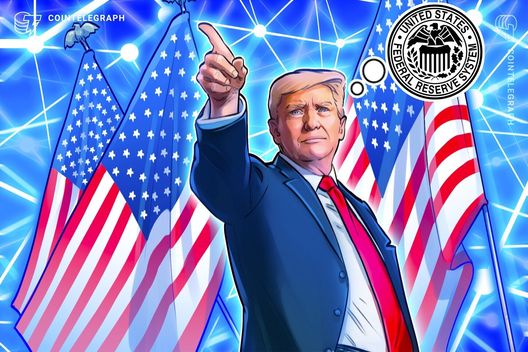
President Trump's repeated calls for immediate interest rate cuts, while politically significant, are unlikely to sway the Federal Reserve's current policy given market expectations of no change at the upcoming meeting. The Federal Reserve is expected to maintain current interest rates, with CME futures indicating a 99% probability of no change, despite external political pressure and geopolitical events impacting oil prices. Lower interest rates, if enacted, could theoretically increase liquidity and push investors towards riskier assets like crypto, but current market pricing suggests this is not an immediate catalyst. Geopolitical events, such as the conflict with Iran, are increasing oil prices and potentially inflation, which could counter arguments for rate cuts and lead the Fed to maintain a cautious stance.

A UK court has indicated a high probability of success for a husband's claim that his wife stole $176 million in Bitcoin, suggesting potential asset recovery or equivalent fiat compensation. The case highlights significant security risks associated with hardware wallet seed phrases and the potential for sophisticated personal-level theft, underscoring the need for enhanced personal security measures. The judge's recommendation for an early trial due to the volatility of Bitcoin's value signals market participants' awareness of the asset's price sensitivity to such events.

Critics have been warning that prediction markets tied to wars could incentivize insider trading, which lawmakers in the US and abroad have moved to regulate.

Bitcoin's breach of $75,000 is attributed to the unwinding of bearish derivative positions, specifically put options sold at lower strikes, which reduced downside hedging pressure and forced market makers to buy BTC. The rally's primary driver appears to be short covering and options market dynamics rather than aggressive new bullish positioning, suggesting a potential for continued upward momentum if these flows persist. The broader crypto market, including ETH, XRP, and SOL, has benefited from Bitcoin's surge, indicating a strong correlation and potential for altcoins to follow BTC's lead in the short term.

Ethereum's SuperTrend indicator has flipped to 'buy' for the first time since September, signaling a potential end to the downtrend and a precursor to significant price rallies based on historical data. Increased whale accumulation and exchange outflows, coupled with substantial ETH purchases by prominent figures like Erik Voorhees and former Ethereum developer billΞ.eth, suggest strong conviction from large investors. The recent surge in ETH price has triggered significant liquidations of short positions, potentially fueling a short squeeze and further upward momentum as traders cover their bets. Institutional inflows into ETH ETFs and direct corporate purchases by entities like BitMine indicate renewed confidence and demand from both traditional and crypto-native institutions.
XRP shows signs of a potential recovery, with technical indicators suggesting a move towards the $1.70 resistance level if current momentum sustains. Ethereum is exhibiting bullish momentum after surpassing key resistance levels, targeting the $2,516 50-day EMA, though sustained volume is needed to confirm the trend. Shiba Inu is displaying early recovery signs with a rebound from support and improved momentum indicators, but a confirmed bull market remains uncertain pending a break of significant long-term resistance.

Strategy's substantial $1.57 billion Bitcoin acquisition, adding 22,337 BTC, reinforces its position as the largest corporate holder and signals continued conviction in Bitcoin as a long-term store of value. The significant accumulation by Strategy, funded through stock offerings, demonstrates a strategic approach to increasing BTC reserves without impacting operational cash, potentially influencing investor sentiment towards MSTR stock. This large purchase coincides with a Bitcoin price surge above $73,000 and increased trading volume, suggesting that institutional accumulation may be a contributing factor to current market optimism.

AI-linked crypto tokens like NEAR and WLD experienced significant price appreciation, driven by Nvidia CEO Jensen Huang's optimistic outlook on AI infrastructure and the emergence of agentic AI systems. The narrative of crypto rails facilitating autonomous AI agents and decentralized AI computing is gaining traction, potentially driving further demand for AI-focused blockchain projects. While Nvidia's stock saw a modest gain, the broader AI narrative, amplified by Huang's keynote, is creating a positive sentiment spillover into related crypto assets, suggesting a short-term trading opportunity.
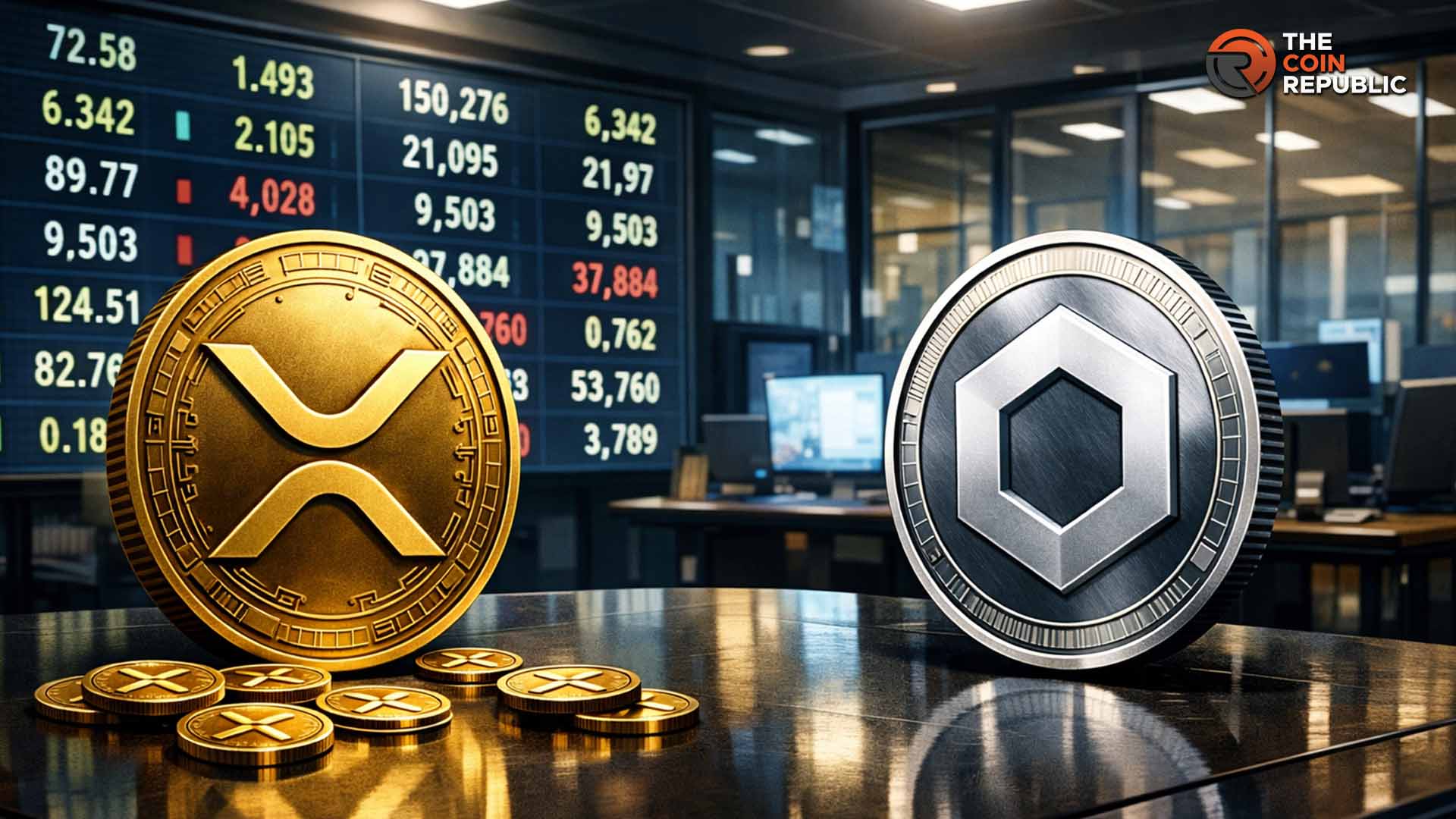
A public debate between Ripple critics and supporters regarding XRP token sales and their benefit to shareholders versus token holders is intensifying. Ripple supporters argue XRP functions as a network asset, distinct from equity, and that its value is derived from utility and demand, not solely Ripple's profits. The discussion coincides with XRP trading above $1.49 on rising volume, indicating market interest despite the ongoing debate about Ripple's sales practices. The core of the debate centers on whether Ripple's use of XRP sale proceeds for corporate activities like stock buybacks unfairly benefits shareholders at the expense of XRP holders.

Bitcoin is testing a critical resistance at $74,508, with potential upside to $84,000 if breached, supported by ETF inflows and whale accumulation. Major altcoins like ETH, BNB, XRP, SOL, DOGE, and ADA are showing signs of breaking resistance levels, indicating potential for further upside if broader market strength continues. The S&P 500 and DXY are showing mixed signals, with the SPX facing resistance and the DXY potentially entering an uptrend, which could influence crypto market sentiment. Despite recent gains, some analysts suggest BTC could retest support near $60,000, highlighting the ongoing volatility and the importance of key support/resistance levels.

A UK High Court ruling allows a lawsuit concerning the alleged theft of 2,323 BTC to proceed, testing the application of traditional property law to digital assets. The case highlights evolving legal frameworks for cryptocurrency recovery, as the court permits alternative claims despite rejecting the primary 'conversion' argument for digital assets. This development could set a precedent for how similar disputes involving stolen digital assets are handled in English courts, potentially impacting future recovery efforts.
Signal context only. Validate with price action, liquidity, and risk limits before taking a position.
