
Navigating Crypto News

CoinFeather
Navigating Crypto News

Quick market read from this story
AI-linked crypto tokens like NEAR and WLD experienced significant price appreciation, driven by Nvidia CEO Jensen Huang's optimistic outlook on AI infrastructure and the emergence of agentic AI systems.
The narrative of crypto rails facilitating autonomous AI agents and decentralized AI computing is gaining traction, potentially driving further demand for AI-focused blockchain projects.
While Nvidia's stock saw a modest gain, the broader AI narrative, amplified by Huang's keynote, is creating a positive sentiment spillover into related crypto assets, suggesting a short-term trading opportunity.
Deep Dive
Artificial intelligence-linked cryptocurrencies experienced a significant surge on Monday, driven by Nvidia CEO Jensen Huang's keynote address at the company's GTC developer conference, where he outlined the future of AI infrastructure and predicted substantial chip demand.
Several AI-focused tokens saw notable gains. NEAR Protocol climbed over 10% in 24 hours, reaching its highest level since late January. The Artificial Superintelligence Alliance's FET token surged as much as 20% intraday before paring some gains. Additionally, Worldcoin (WLD), a project co-founded by OpenAI CEO Sam Altman, rose approximately 10% to trade near $0.40, its strongest point since early March. Grass (GRASS), a decentralized network for AI model training, also jumped 13% to new 2026 highs.
During his keynote, Huang emphasized Nvidia's pivotal role in the AI boom, forecasting approximately $1 trillion in chip demand through 2027, with hyperscale cloud providers representing about 60% of Nvidia's business. He also highlighted the rapid advancement of agentic AI systems, specifically praising the OpenClaw project. Nvidia has adapted this system into an enterprise-ready version called NemoClaw, aimed at enhancing the safety of autonomous AI agents for corporate use.
While Huang did not directly mention cryptocurrency in his speech, a growing number of blockchain projects are positioning themselves to facilitate transactions and autonomous coordination for future AI agents. These projects are developing decentralized networks for computing power, AI training, and agent infrastructure, presenting blockchain as an alternative to centralized AI platforms.
Nvidia's stock (NVDA), considered a bellwether for the AI sector, initially rose about 2% during Huang's keynote before closing the day approximately 1.5% higher.
Source, catalyst, and sector overlap from the latest feed.
A UK High Court ruling allows a lawsuit concerning the alleged theft of 2,323 BTC to proceed, testing the application of traditional property law to digital assets. The case highlights evolving legal frameworks for cryptocurrency recovery, as the court permits alternative claims despite rejecting the primary 'conversion' argument for digital assets. This development could set a precedent for how similar disputes involving stolen digital assets are handled in English courts, potentially impacting future recovery efforts.
OpenSea's decision to delay its SEA token launch due to market conditions signals caution among major NFT platforms regarding tokenomics rollouts. The platform's move to offer fee refunds and 0% trading fees for 60 days indicates a strategy to retain user engagement and attract activity to its revamped marketplace amidst the token launch postponement. Traders should monitor OpenSea's future announcements for a new SEA token launch timeline, as the delay suggests a focus on optimal market entry rather than immediate token distribution.
T. Rowe Price's amended SEC filing indicates a significant expansion of potential holdings for its active crypto ETF, including meme coins like DOGE and SHIB, signaling a broader acceptance of diverse digital assets by traditional asset managers. The active management strategy and potential for staking participation suggest the ETF aims to generate alpha beyond simple asset holding, potentially driving demand for underlying assets through yield generation and dynamic rebalancing. The inclusion of a wide range of altcoins alongside Bitcoin and Ethereum in the ETF's potential holdings could lead to increased institutional interest and capital flows into these less established digital assets.
Ethereum's ETH is outperforming Bitcoin, signaling a potential rotation from BTC into altcoins driven by renewed ETF demand and corporate treasury buying. Strong inflows into US spot Ether ETFs and BlackRock's new staking ETF suggest increasing institutional interest and demand for ETH-related products. Bitmine's significant ETH accumulation, alongside other treasury strategies, provides a fundamental demand-side catalyst that could support price appreciation. The ETH/BTC pair breaking above a key resistance level indicates a potential shift in market sentiment favoring Ethereum over Bitcoin, suggesting broader risk appetite in the crypto market.
The Ethereum Foundation's new mandate clarifies its role as a neutral steward, sparking debate on whether this hands-off approach aligns with increasing institutional interest in blockchain. Critics argue the mandate's focus on core principles over practical business development may hinder Ethereum's adoption by institutions seeking clear product-market fit. Supporters view the mandate as a reaffirmation of Ethereum's decentralized ethos, emphasizing its role as a platform for permissionless innovation rather than a product builder. The debate highlights a fundamental tension in Ethereum's growth: balancing its decentralized identity with the demands of institutional capital and broader market adoption.
The crypto market is showing signs of a potential altcoin season as Bitcoin dominance hovers around 52-53%, indicating capital rotation into higher-beta assets could drive significant short-term altcoin outperformance. Upcoming events like Aave V4 launch, Zcash/THORChain integration, and LayerZero token unlocks present distinct catalysts for specific altcoins, creating potential trading opportunities and volatility. The Federal Reserve's interest rate decision on March 18th serves as a significant macroeconomic catalyst that could influence overall market liquidity and altcoin performance, adding another layer of risk to short-term trades.
Geopolitical tensions are creating significant downward pressure on Bitcoin, with analysts warning of a potential drop below $50,000 if the conflict escalates. The current market sentiment is characterized by extreme fear, leading traders to divest from risk assets like Bitcoin. Despite Bitcoin's volatility, Remittix is advancing its crypto-to-fiat payment network, having raised over $29.7 million and preparing for a platform launch, indicating a focus on fundamental utility over market speculation. Remittix's progress, including CertiK verification, secured exchange listings, and a live mobile wallet, positions it as a project with strong underlying development independent of broader market sentiment.
BlackRock's launch of the Staked Ethereum Trust ETF (ETHB) introduces a novel income-generating mechanism for crypto ETFs by distributing monthly staking rewards, potentially attracting traditional finance investors seeking yield comparable to equities. The ETHB ETF's strategy to stake 70-95% of its ETH holdings and distribute rewards, estimated at 2.5-3% annually, positions it as a competitive income-generating product against traditional assets like the S&P 500 dividend yield. This development signals a potential shift in the crypto ETF market, moving beyond pure price exposure to a yield-focused competition, driven by increasing client demand for integrated crypto and staking products. The introduction of staking rewards in regulated ETFs like ETHB blurs the lines between traditional finance and crypto infrastructure, suggesting that yield generation may become a standard feature in future crypto investment funds.
European banks are shifting from blocking crypto transactions to offering Bitcoin and Ethereum directly in retail apps, signaling a significant shift in institutional adoption driven by regulatory clarity (MiCA) and competitive pressures. The development of a MiCA-compliant, euro-backed stablecoin by a consortium of 12 banks, targeting a 2026 launch, aims to challenge the dollar's dominance in stablecoin markets and reclaim control over payment flows. Banks are actively moving to own the infrastructure beneath crypto, driven by the realization that failing to adopt stablecoins risks exclusion from the digital money layer and associated fee pools. While some banks are live with crypto services, a significant portion are still in announcement or pilot phases, indicating a gradual but clear trend towards integration rather than immediate widespread adoption.
Bittensor's TAO experienced a significant 40% price surge, driven by rapid network expansion and the introduction of a new large decentralized language model, indicating strong market interest in its AI capabilities. The growth in active AI subnets to 128 and the training of a large language model on 1.1 trillion tokens suggest a fundamental expansion of Bittensor's ecosystem, potentially supporting sustained positive sentiment. Despite some profit-taking after the sharp rally, the combination of network growth and supply tightening suggests a constructive outlook for TAO, warranting a 'watchlist' approach for potential further upside.
Strategy's substantial $1.57 billion Bitcoin acquisition, adding 22,337 BTC, reinforces its position as the largest corporate holder and signals continued conviction in Bitcoin as a long-term store of value. The significant accumulation by Strategy, funded through stock offerings, demonstrates a strategic approach to increasing BTC reserves without impacting operational cash, potentially influencing investor sentiment towards MSTR stock. This large purchase coincides with a Bitcoin price surge above $73,000 and increased trading volume, suggesting that institutional accumulation may be a contributing factor to current market optimism.
Viral claims of ChatGPT curing a dog's cancer are overblown, with human researchers and established scientific tools like AlphaFold and Grok performing the critical vaccine design and sequencing work. While AI tools like ChatGPT assisted in navigating research literature and identifying potential collaborators, they did not directly design the experimental cancer therapy, highlighting the distinction between AI assistance and AI-driven discovery. The narrative around AI's role in medical breakthroughs requires careful framing to avoid misattributing complex scientific achievements and to ensure proper credit is given to human expertise and institutional research. This case underscores that current AI capabilities in medicine are primarily supportive, aiding researchers in data analysis and literature review rather than independently developing novel treatments.
Niantic's spatial AI, leveraging data from Pokémon Go players, is now powering navigation for Coco Robotics' delivery robots, highlighting a novel application of user-generated data in autonomous systems. The partnership between Niantic Spatial and Coco Robotics demonstrates a practical use case for advanced visual positioning systems (VPS) in urban environments where GPS is unreliable, potentially improving logistics efficiency. While Niantic emphasizes the voluntary nature of data submission by Pokémon Go players, the development raises ethical considerations regarding the use of user-generated content for commercial AI training, a point of discussion for market participants evaluating data provenance.
A public debate between Ripple critics and supporters regarding XRP token sales and their benefit to shareholders versus token holders is intensifying. Ripple supporters argue XRP functions as a network asset, distinct from equity, and that its value is derived from utility and demand, not solely Ripple's profits. The discussion coincides with XRP trading above $1.49 on rising volume, indicating market interest despite the ongoing debate about Ripple's sales practices. The core of the debate centers on whether Ripple's use of XRP sale proceeds for corporate activities like stock buybacks unfairly benefits shareholders at the expense of XRP holders.
Bitcoin is testing a critical resistance at $74,508, with potential upside to $84,000 if breached, supported by ETF inflows and whale accumulation. Major altcoins like ETH, BNB, XRP, SOL, DOGE, and ADA are showing signs of breaking resistance levels, indicating potential for further upside if broader market strength continues. The S&P 500 and DXY are showing mixed signals, with the SPX facing resistance and the DXY potentially entering an uptrend, which could influence crypto market sentiment. Despite recent gains, some analysts suggest BTC could retest support near $60,000, highlighting the ongoing volatility and the importance of key support/resistance levels.
Live Feed
Loading the broader stream in the same flow as the homepage feed.
A UK court filing alleges a wife stole $172 million in Bitcoin by covertly recording her husband to obtain his hardware wallet seed phrase. The husband's successful recovery of evidence through covert audio recording, coupled with the wife's alleged actions, suggests a high probability of legal success for the claimant. The judge's emphasis on an early trial due to Bitcoin's volatility highlights the potential for rapid asset repricing and the urgency for resolution in this high-value dispute.
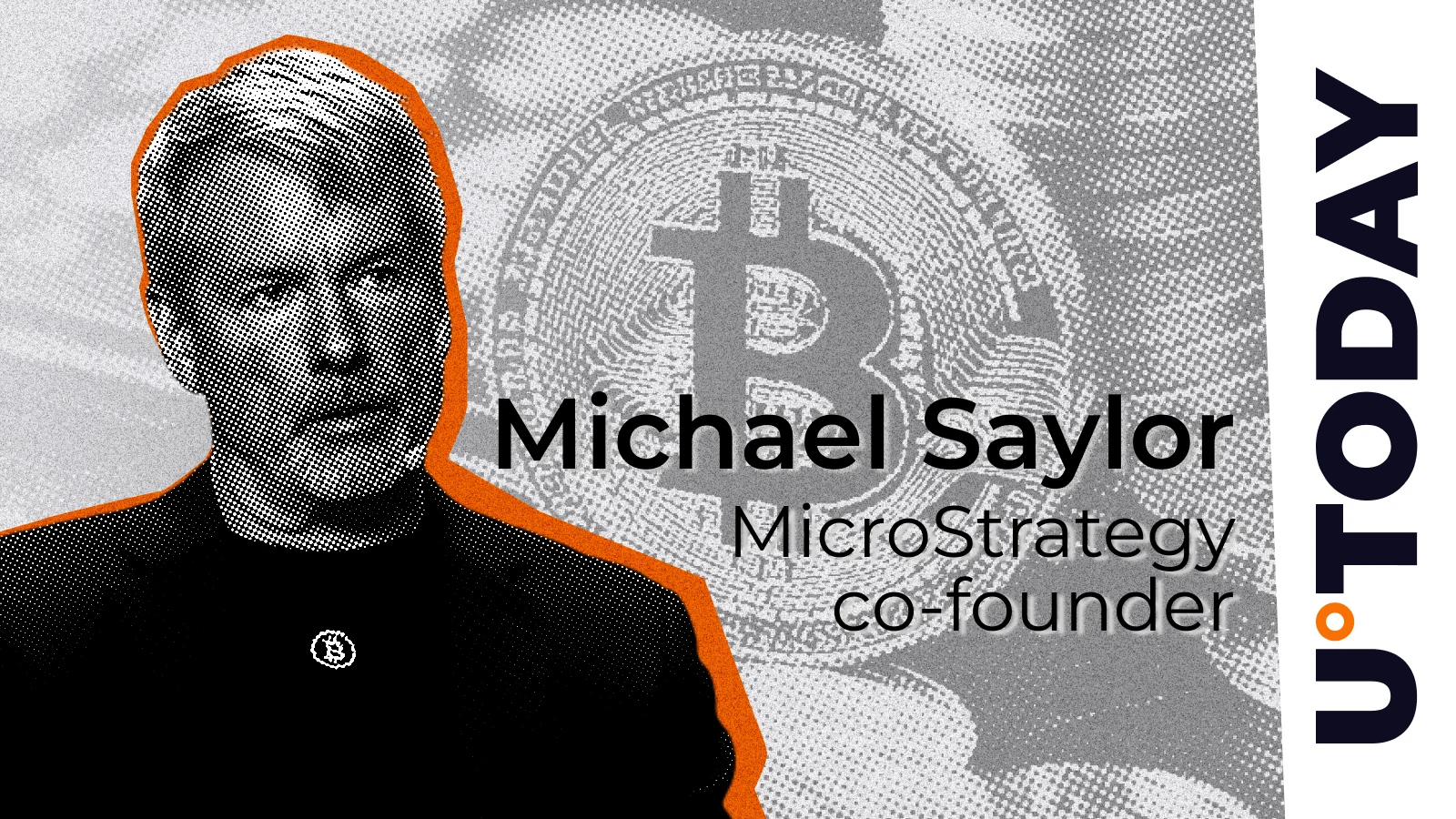
Michael Saylor argues that the quantum computing threat is not isolated to Bitcoin, but rather poses an existential risk to the entire digital infrastructure, including banking and the internet. Saylor posits that a coordinated upgrade to Post-Quantum Cryptography (PQC) would be necessary across all critical systems, implying that Bitcoin's transition would occur in parallel with global financial and technological upgrades. The narrative suggests that Bitcoin's scarcity and decentralized nature make it a potential safe haven against AI-driven obsolescence, with a quantum event potentially leading to a tighter supply if 'dead' coins are lost.
Ripple CTO emeritus David Schwartz dismisses the likelihood of XRP returning to $0.25, suggesting current market dynamics and historical price action make such a drastic drop improbable despite past volatility. The discussion highlights ongoing market sentiment regarding Ripple's business model and its impact on XRP holders, with critics arguing a disconnect exists between corporate growth and token holder benefits. Despite criticisms, XRP has seen a recent price increase, with analysts forecasting significant upside potential towards $15, indicating a divergence between FUD and potential technical breakouts.
Ethereum's decisive break above the $2,350 multi-year pivot, coupled with a SuperTrend Buy signal, suggests a potential end to its multi-month downtrend and a shift in market structure. The confluence of technical breakouts and historical SuperTrend performance, which previously preceded significant rallies, indicates a bullish outlook for ETH, with traders eyeing $2,600-$2,700 as the next resistance zone. Increased institutional demand, evidenced by ETF accumulation of 83,000 ETH in three weeks, provides fundamental support to the technical signals, reinforcing the potential for sustained price appreciation.
T. Rowe Price's active crypto ETF filing signals increased institutional interest in a diversified digital asset portfolio beyond just Bitcoin. The ETF's active management strategy and potential for staking indicate a more sophisticated approach to crypto investing compared to passive spot ETFs. Inclusion of altcoins like DOGE and SHIB in the potential holdings suggests a broader acceptance of meme coins within traditional finance, potentially driving speculative interest. The filing represents a significant step towards mainstream adoption, potentially increasing liquidity and price discovery for a wider range of digital assets.
Significant accumulation of ETH by prominent early participants like an 'Ethereum builder' and ShapeShift founder signals strong conviction in the asset's future value. The Ethereum Foundation resuming its ETH staking strategy, after a three-week pause, reduces potential future sell pressure and indicates a long-term bullish outlook. Aggressive buying by whales and the Ethereum Foundation's staking activity are contributing to positive price momentum and increased trading volume for ETH. The confluence of large-scale accumulation and renewed staking by key entities suggests a potential upward price reset for Ethereum, driven by perceived undervaluation.
New SEC filing names Anchorage Digital Bank as the crypto custodian and adds SUI to the list of eligible tokens in the proposed fund that aims for direct digital asset exposure.

IBM's expansion of free quantum computing access, including to its Heron R2 processor, provides researchers with enhanced capabilities to explore quantum advancements. The increased quantum computing resources coincide with ongoing discussions among Bitcoin developers regarding potential future cryptographic risks posed by quantum technology. While quantum computing poses a long-term risk to Bitcoin's cryptography, current quantum machines are not yet capable of breaking the network's security, suggesting a need for preparedness rather than immediate alarm. IBM's commitment to scaling quantum systems and achieving quantum advantage by 2026 highlights the accelerating pace of quantum development, which necessitates proactive security measures in the blockchain space.

Despite Bitcoin's price recovery above $74,000, professional traders remain cautious, as indicated by low futures premiums and a persistent negative options skew, suggesting a lack of conviction for a sustained rally. Geopolitical tensions and fears of a global energy shock are driving investors towards safe-haven assets like US Treasuries, potentially diverting capital away from riskier assets such as Bitcoin. While institutional inflows into Bitcoin ETFs and strategic buying are present, the bearish sentiment in derivatives markets indicates that the underlying market sentiment has not yet shifted decisively bullish. The article highlights a disconnect between Bitcoin's spot price action and the sentiment reflected in its derivatives market, suggesting that current price gains may be fragile and susceptible to broader macroeconomic and geopolitical headwinds.

The diminished presence of crypto at SXSW, overshadowed by AI, signals a potential shift in industry focus and investor sentiment away from blockchain technology in mainstream tech events. The pivot of major US crypto miners towards AI infrastructure highlights a strategic diversification driven by increasing operational costs and the perceived growth potential in AI computing. While crypto's direct representation at SXSW was limited, the comparison of its current stage to AI's early days suggests a belief in future growth, albeit on a delayed timeline.

Bitmine's accelerated ETH accumulation, increasing its treasury to nearly 4.6 million ETH, signifies a strong conviction in Ethereum's long-term value and staking revenue potential. The company's substantial ETH holdings, representing 3.81% of the total supply and generating significant annualized staking revenue, position it as a major player influencing Ether's market dynamics. Bitmine's strategic OTC purchase from the Ethereum Foundation, structured to avoid open market sales, suggests a coordinated effort to manage supply and potentially support price stability. The parallel announcement of MicroStrategy's significant BTC purchase highlights a broader trend of corporate treasuries increasing their crypto allocations, potentially signaling increased institutional adoption and demand.
XRP price has reached a multi-week high, coinciding with a significant 16.5% surge in futures open interest to $1.62 billion, indicating increased trader participation and conviction. The correlation between falling Bitcoin dominance and XRP's price performance, observed in past cycles, suggests a potential rotation of capital into altcoins like XRP, supporting further upside. XRP's break above a key weekly resistance level, combined with rising futures activity and historical patterns, signals a potential breakout and the start of a new upward phase for the asset.
Signal context only. Validate with price action, liquidity, and risk limits before taking a position.
