
Navigating Crypto News

CoinFeather
Navigating Crypto News
Quick market read from this story
Ripple's partnership with i-payout enables near-instant cross-border payouts to the U.S. and Canada, directly addressing a key friction point in global commerce and potentially improving liquidity for businesses reliant on frequent international settlements.
This integration leverages Ripple's payment infrastructure to significantly reduce settlement times from days to near-real-time, a development that could set a new standard for efficiency in the payments sector.
The expansion of Ripple's payment network through this partnership, following recent moves in APAC, signals continued growth in its enterprise solutions and reinforces its position in the cross-border payments market.
Deep Dive
Ripple has announced a new partnership with i-payout to facilitate near-instant cross-border payouts into the United States and Canada. This collaboration integrates Ripple Payments into i-payout’s API-driven infrastructure, aiming to provide global platforms with a faster and more transparent method for moving money across borders.
The partnership is expected to significantly reduce settlement delays and improve working capital for businesses that depend on frequent international payouts, including payment service providers, digital marketplaces, and fintech platforms. Traditionally, sending funds into North America could take several days, during which money remained locked in transit. By integrating Ripple’s digital-asset-powered payments infrastructure, i-payout can dramatically shorten this timeline, enabling real-time cross-border settlements.
Eddie Gonzalez, President of i-payout, stated, "The digital marketplace is important to the future, and Ripple is the right partner to take us there." i-payout’s platform already allows businesses to send fast, high-volume payouts globally via a single API.
This integration enhances Ripple's enterprise-grade digital asset infrastructure, designed to optimize international payments by accelerating settlement and increasing transparency. The move follows Mastercard's recent addition of Ripple to its Crypto Partner Program, which supports blockchain-powered payments within a $9 trillion global ecosystem. Earlier this month, Ripple also expanded its presence in the Asia-Pacific region by securing an Australian AFSL license.
The collaboration allows marketplaces to settle merchant earnings more quickly, gig platforms to pay freelancers without lengthy delays, and financial institutions to manage treasury disbursements with greater speed and flexibility. For i-payout, this strengthens its position as an API-first payout provider, while for Ripple, it expands its payment network's reach into another high-volume payout ecosystem.
Source, catalyst, and sector overlap from the latest feed.
Large token movements by Coinhako, involving over 441 billion SHIB, indicate significant trading activity and potential institutional interest driving demand. Singapore's role as a key trading hub for SHIB is reinforced by Coinhako's substantial volume, particularly with institutional participation accounting for 60% of its trades. The substantial SHIB transfers by Coinhako coincide with a notable price increase, suggesting that this large-scale exchange activity may be a contributing factor to the token's recent upward momentum. Increased institutional trading volume on Coinhako, a licensed Singaporean exchange, highlights the growing accessibility and appeal of SHIB for sophisticated market participants in the region.
Cargill, a major player in global agriculture and food supply chains, remains a privately held company, meaning its stock is not available for public trading. Speculation about a potential Cargill IPO persists due to its massive revenue and market influence, which could lead to one of the largest listings in the agribusiness sector if it occurs. Investors seeking exposure to the agribusiness sector can consider publicly traded alternatives like Archer-Daniels-Midland and Bunge Global, as direct investment in Cargill is not possible.
XRP Ledger's record holder count surpassing 7.7 million signifies accelerating adoption and growing investor confidence, potentially supporting near-term price appreciation. The integration of XRPL infrastructure for tokenized collateral by the European Central Bank highlights its increasing relevance in traditional finance, positioning it as a bridge asset. XRPL's emergence as the second-largest platform for tokenized commodities, coupled with high transaction volumes and low fees, indicates strong utility and scalability, reinforcing its role in the growing tokenized economy.
Investors seeking direct exposure to WhatsApp's growth must purchase Meta Platforms (META) stock, as WhatsApp operates as a subsidiary and does not have its own independent stock or IPO. While a WhatsApp IPO is not currently planned, potential future spin-offs could be triggered by regulatory pressure, strategic restructuring, or significant independent monetization growth. Meta is actively exploring monetization strategies for WhatsApp, including business tools, payments, commerce, and advertising, which could significantly impact Meta's overall revenue and stock performance.
Ripple CTO emeritus David Schwartz dismisses the likelihood of XRP returning to $0.25, suggesting current market dynamics and historical price action make such a drastic drop improbable despite past volatility. The discussion highlights ongoing market sentiment regarding Ripple's business model and its impact on XRP holders, with critics arguing a disconnect exists between corporate growth and token holder benefits. Despite criticisms, XRP has seen a recent price increase, with analysts forecasting significant upside potential towards $15, indicating a divergence between FUD and potential technical breakouts.
Crypto.com's partnership with KG Inicis expands real-world utility for digital assets by enabling tourist payments in South Korea, potentially driving adoption through increased merchant acceptance. The integration allows merchants to receive funds in either fiat or digital assets, offering flexibility and potentially encouraging broader adoption of crypto payments by businesses. This move aligns with a growing trend of countries exploring crypto payments for tourists, indicating a potential shift towards mainstream integration of digital assets in the travel and retail sectors.
Fetch AI (FET) has experienced a significant 66% price surge driven by technical breakouts and increased market activity, indicating strong bullish momentum. The rally is further bolstered by institutional interest in AI tokens, evidenced by ETF filings, and Fetch AI's integration with Visa, reinforcing its utility narrative. Despite the strong upward trend, elevated sentiment and approaching resistance levels suggest a potential for short-term consolidation or pullback before further price discovery. The broader AI crypto sector is showing synchronized gains, with FET leading in momentum, signaling a potential rotation of capital into AI-focused assets.
A potential minority stake by Coinbase in Bybit could facilitate Bybit's compliant entry into the US market, leveraging Coinbase's regulatory experience. This strategic move aligns with Coinbase's 'Everything Exchange' strategy, potentially enhancing its global reach and derivatives liquidity through Bybit's established international presence. The partnership signals a trend towards consolidation and regulatory navigation within the crypto exchange sector, potentially raising industry standards as suggested by peer reactions. While not a confirmation, the reported talks suggest a potential shift in market structure, bridging regulated US operations with significant offshore liquidity, though regulatory hurdles remain.
Niantic's spatial AI, leveraging data from Pokémon Go players, is now powering navigation for Coco Robotics' delivery robots, highlighting a novel application of user-generated data in autonomous systems. The partnership between Niantic Spatial and Coco Robotics demonstrates a practical use case for advanced visual positioning systems (VPS) in urban environments where GPS is unreliable, potentially improving logistics efficiency. While Niantic emphasizes the voluntary nature of data submission by Pokémon Go players, the development raises ethical considerations regarding the use of user-generated content for commercial AI training, a point of discussion for market participants evaluating data provenance.
RLUSD volume surge of 143% coincides with XRP breaking $1.40 resistance, indicating increased demand for stablecoins to acquire XRP amidst a broader market recovery. The rising demand for RLUSD, driven by XRP's bullish momentum, suggests a potential positive feedback loop where stablecoin utility directly fuels asset acquisition. Ripple's strategic global expansion for RLUSD, aiming to consolidate institutional access to XRP and the XRP Ledger, could further boost adoption and trading volume.
Argentina's nationwide block on Polymarket over alleged unlicensed gambling operations highlights increasing regulatory scrutiny on crypto platforms operating without proper authorization. The court's concerns regarding user safety, lack of identity verification, and the use of crypto and credit cards for betting underscore a growing trend of regulators focusing on consumer protection in the digital asset space. Polymarket's expansion of restrictions to 34 countries, contrasted with the CFTC's more lenient approach to prediction markets in the US, indicates a fragmented global regulatory landscape for novel crypto applications.
Messari's strategic pivot towards an AI-first model, coupled with leadership changes and staff reductions, signals a significant internal restructuring aimed at future growth in the AI sector. The company's initiative to open its data layer to autonomous agents via the x402 protocol indicates a proactive move to integrate blockchain intelligence with emerging AI technologies, potentially creating new revenue streams and market opportunities. While the layoffs are a negative short-term event for employees, the company's stated commitment to AI suggests a long-term strategy to leverage its data expertise in a rapidly growing technological field.
The Bank of Canada's successful tokenized bond trial highlights the increasing institutional adoption of blockchain for settlement, favoring projects with proven infrastructure over those focused solely on payment settlement. Pepeto's exchange model, featuring AI screening and zero-cost cross-chain trading, is positioned as a potential outperformer against XRP due to its focus on capital protection and utility, especially with an upcoming Binance listing. While XRP and SOL are mentioned with price targets, the article emphasizes Pepeto's presale pricing and imminent Binance listing as a catalyst for potentially higher, albeit riskier, returns compared to established large-cap assets. The comparison suggests a market shift towards utility-driven platforms with robust infrastructure, where Pepeto's exchange functionality and risk mitigation features are presented as key differentiators against XRP's payment settlement focus.
Live Feed
Loading the broader stream in the same flow as the homepage feed.

Bitcoin's implied volatility remains stable around 55-60% despite geopolitical tensions, indicating traders are not exhibiting fear-driven hedging behavior seen in traditional markets. Traditional markets like equities (VIX), oil (OVX), and bonds (MOVE) have experienced significant volatility spikes, highlighting a divergence in investor sentiment compared to BTC traders. The relative calm in Bitcoin's volatility metrics may stem from prior price drawdowns, which have already 'shaken out' many speculative bulls and reduced demand for downside protection. Historically, Bitcoin has shown resilience and even positive returns during geopolitical events, suggesting a potential for continued strength or stability in the near term.

Bitcoin's eight-day winning streak presents a historical bullish signal, with past instances showing a median 19% gain in the following 30 days. Despite the current momentum, parallels to the 2022 bear market and the current position within Bitcoin's four-year halving cycle suggest caution is warranted. The comparison to 2022's price action, including MSTR's trajectory, indicates that current rallies might be temporary rebounds within a larger downtrend, increasing downside risk.
Bitcoin has demonstrated sustained bullish momentum with an eight-day streak of daily gains, pushing prices above $74,600. The aggressive buying pressure, indicated by minimal intraday pullbacks and large green candles, suggests strong conviction from market participants. This streak represents the first sustained bullish control observed since the significant drawdown experienced in late 2025, potentially signaling a shift in market sentiment.

Veteran Bitcoin investor Erik Voorhees has re-entered the Ethereum market with a significant $56.5 million purchase, signaling renewed confidence from influential early adopters. The substantial ETH accumulation by Voorhees, following his previous sale at a higher price, suggests a belief in Ethereum's near-term price appreciation and recovery potential. Increased exchange outflows of ETH, coupled with Voorhees' large-scale buying, indicate strong long-term holding sentiment and potential for further price upside.

South Korean police are formalizing crypto seizure protocols, indicating a maturing regulatory environment that could reduce uncertainty for institutional involvement. The establishment of standardized custody procedures, including for privacy coins, suggests a move towards greater accountability and security in handling digital assets seized by law enforcement. Failed attempts to secure a custody provider in 2025 highlight potential challenges in the crypto asset management sector, particularly concerning budget and suitability requirements. The total value of seized crypto assets, estimated at $36.5 million over five years, underscores the growing scale of digital asset involvement in criminal investigations.
Increasing XRP exchange reserves approaching a 3 billion token threshold suggest a potential increase in selling pressure as holders may look to take profits. Despite a recent short-term price recovery, XRP faces significant resistance from moving averages, indicating its upward momentum remains precarious. A breach of key resistance levels is necessary for XRP to sustain its recovery; failure to do so could lead to consolidation or a new correction phase.

Hyperliquid (HYPE) has broken above the $40 resistance level, supported by a significant surge in trading volume, indicating strong market conviction for further upside. The potential for a Golden Cross between the 50-day and 200-day moving averages suggests a strengthening bullish trend, which could propel HYPE towards the $43-$44 range if momentum continues. Despite bullish signals, the RSI approaching overbought territory and hinting at bearish divergence warrants caution, suggesting a possible short-term consolidation or pullback before any sustained rally towards $50.
XRP Ledger network activity has reached a 5-week high with over 7.7 million wallets, indicating increased user engagement and potential for sustained price momentum. A recent increase in XRP exchange reserves suggests a potential profit-taking phase, which could temper short-term price gains despite rising network activity. The combination of growing active wallets and a new all-time high in total holders provides a positive long-term outlook for XRP adoption and network utility. While network activity is up, the shift in exchange reserves from holding to exchange indicates a crucial juncture where selling pressure could emerge if reserves continue to climb.
XRP Ledger's milestone of over 7.7 million non-empty wallets signifies a substantial increase in user adoption and network activity over its 13-year history. The concurrent surge in active addresses to a five-week peak and a 14% price rally suggests growing investor interest and potential for sustained upward momentum. XRPL's significant growth in RWA tokenization, with a 1,282% monthly increase to $139.85 million, indicates a strategic expansion into a key emerging sector. Ripple's initiative to consolidate XRP, XRPL, and its USD stablecoin (RLUSD) on a single platform aims to streamline institutional access and foster further ecosystem integration.
Bitcoin is leading a crypto market rally with renewed buyer activity, suggesting a potential shift in sentiment despite ongoing global uncertainty. The current rally faces a key resistance zone between $75,000 and $76,000, with failure to break through potentially leading to a short-term correction due to low market liquidity. Despite macroeconomic pressures and steady interest rates, Bitcoin's resilience may be positioning it as a potential safe-haven asset, attracting capital from unstable regions. The rally's sustainability is questionable given relatively weak buying participation, indicating that a significant move above resistance is needed to confirm a stronger bullish trend.
Continued net inflows into U.S. spot Bitcoin ETFs, totaling $200 million on March 16, signal persistent institutional demand and reinforce positive sentiment for BTC. The sustained inflow streak, with BlackRock's IBIT leading at $139 million, suggests that institutional investors are actively accumulating Bitcoin, potentially supporting near-term price appreciation. Ethereum ETFs also experienced positive inflows ($35.9 million), indicating broader institutional interest beyond Bitcoin, while XRP saw outflows, highlighting divergent investor sentiment across different digital assets.
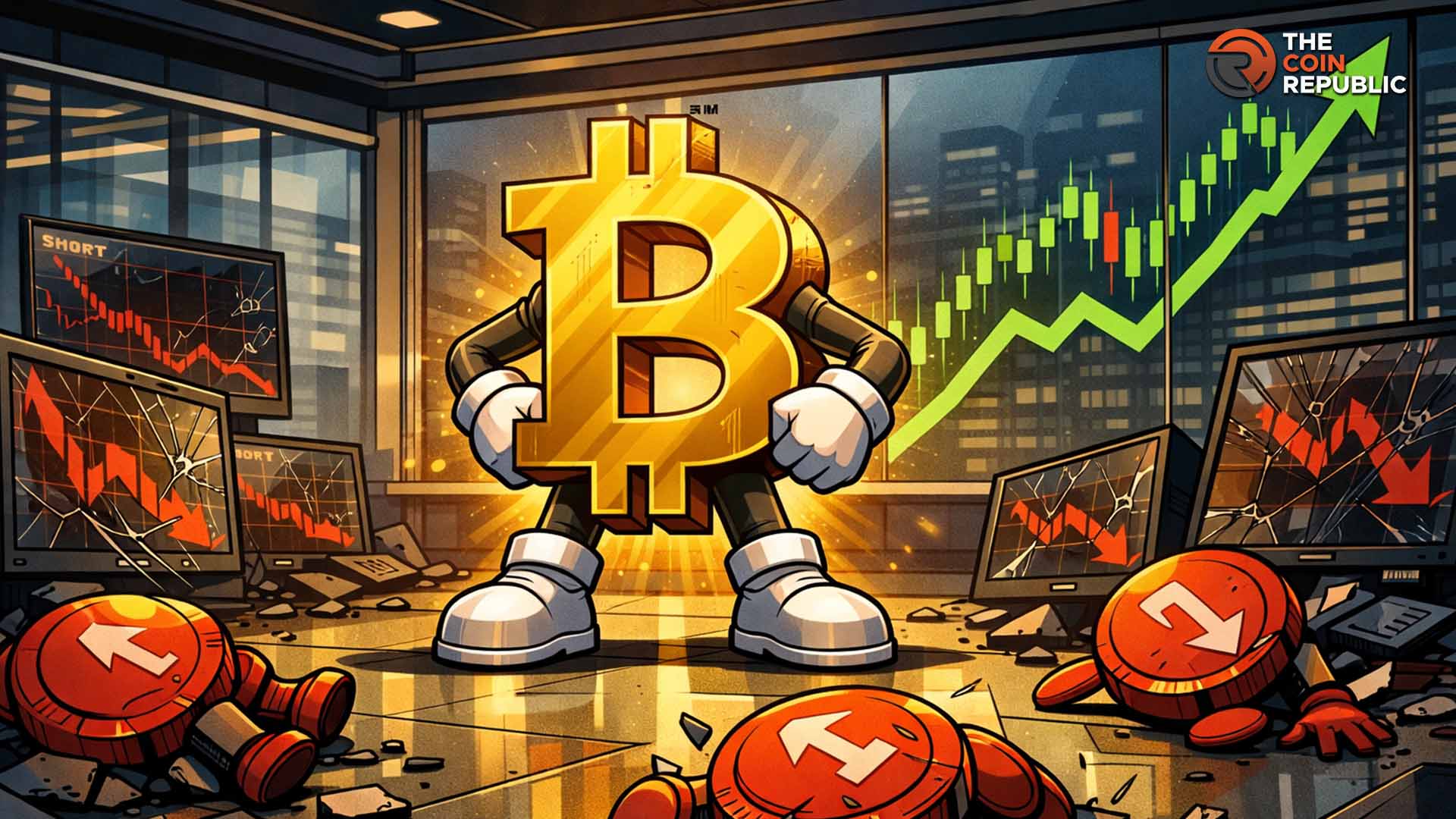
Bitcoin's price resilience above $73K, coupled with over $100M in short liquidations, signals strong bullish momentum and potential for further upside as short sellers are squeezed out. The influx of liquidity from gold and continued accumulation by Bitcoin ETFs suggest underlying institutional demand is supporting the current price action, despite some whale profit-taking. The ambitious plan for Bitcoin mining in space by Starcloud, if realized, could be a long-term structural development for Bitcoin's decentralization and operational capabilities.
Bitcoin is approaching a critical resistance zone around $75,000-$76,000, with a sustained breakout potentially signaling the next upward leg of the rally. Altcoins, particularly Ethereum, are outperforming Bitcoin, indicating a broadening market participation and a potential shift towards altcoin season. Despite rising prices, market sentiment remains cautious with the Fear & Greed Index at 28, suggesting that the current rally may be in its early to mid-stages rather than a mature bull run. The total crypto market capitalization has surpassed $2.54 trillion, underscoring the overall market's recovery and growth momentum.
The market is pricing in a significant regulatory reset following Trump's push for the Clarity Act, potentially signaling a new bull run and boosting crypto stocks like Coinbase and Bitcoin. Pepeto is being positioned as a key player in the anticipated bull run, with its presale highlighting a live exchange and an upcoming Binance listing as primary value propositions. PEPE coin holders are looking for further upside, with Pepeto presented as a potential 50x-100x opportunity upon its Binance listing, aiming to capitalize on the meme season narrative. The confluence of potential regulatory clarity and a new bull run narrative, coupled with specific project launches like Pepeto, suggests a speculative environment favoring early entrants.
Signal context only. Validate with price action, liquidity, and risk limits before taking a position.
