
Navigating Crypto News

CoinFeather
Navigating Crypto News
Quick market read from this story
Cargill, a major player in global agriculture and food supply chains, remains a privately held company, meaning its stock is not available for public trading.
Speculation about a potential Cargill IPO persists due to its massive revenue and market influence, which could lead to one of the largest listings in the agribusiness sector if it occurs.
Investors seeking exposure to the agribusiness sector can consider publicly traded alternatives like Archer-Daniels-Midland and Bunge Global, as direct investment in Cargill is not possible.
Deep Dive
Global agriculture giant Cargill, a major player in the food supply chain, is not publicly traded, meaning there is no official stock symbol or market price for its shares. Despite this, investor interest in a potential Cargill Initial Public Offering (IPO) is significant, given its substantial annual revenues and extensive operations in agriculture, commodities trading, and food production.
Headquartered in Minnetonka, Minnesota, Cargill was founded in 1865 and has grown into one of the world's largest privately held businesses. The company's diverse operations span agricultural commodities trading, livestock and animal nutrition, food ingredients and processing, energy, industrial materials, and logistics services. Employing approximately 160,000 people worldwide across dozens of countries, Cargill holds a critical position in the global food and agriculture ecosystem.
Cargill does not have a stock price or ticker symbol as it remains privately owned. Ownership is concentrated, with about 88% held by members of the Cargill and MacMillan families, and the remainder largely owned by employees through internal programs. This structure prevents individual investors from purchasing Cargill stock through traditional brokerage accounts.
Cargill has maintained its private status for over 150 years, prioritizing long-term strategic control over short-term quarterly earnings pressures. The founding families' preference for private ownership and the availability of alternative liquidity options, such as employee stock programs and strategic spin-offs (like its fertilizer business that helped form The Mosaic Company), have contributed to this decision.
While speculation about a Cargill IPO persists, no concrete timeline has been announced. Potential catalysts for a public listing include the need for capital to fund expansion or acquisitions, shifts in generational ownership priorities, or favorable market conditions for agricultural and food supply chain companies. Analysts suggest that if Cargill were to go public, its massive revenue base and global influence could make it one of the largest IPOs in the agribusiness sector.
For investors seeking exposure to the agricultural commodities industry due to Cargill's private status, publicly traded companies such as Archer-Daniels-Midland and Bunge Global offer comparable opportunities in grain trading, food processing, and global agricultural supply chains.
In summary, Cargill remains a dominant, privately held entity in the global economy with no publicly traded stock. While investor interest in a potential IPO is high, the company continues to operate under family control, making direct investment impossible through public markets.
Source, catalyst, and sector overlap from the latest feed.
The increasing integration of AI in military applications signals a significant technological shift, creating new investment opportunities in defense technology companies. Companies like Palantir, Lockheed Martin, and RTX are positioned to benefit from increased defense spending on AI-driven systems, impacting their market performance. While the article focuses on traditional stocks, the underlying theme of AI in defense could have indirect implications for related blockchain infrastructure or AI-focused crypto projects.
XRP Ledger's transaction costs are approximately 263 times cheaper than Solana's, highlighting a significant cost-efficiency advantage that could attract high-volume applications. The XRP Ledger is experiencing rapid adoption, evidenced by over 7.7 million holders and a surge to 2.7 million daily transactions, indicating growing network utility and user base. XRPL's combination of ultra-low fees, high throughput (1,500 TPS), and increasing adoption positions it as a strong contender for scalable blockchain solutions, potentially drawing market share from less efficient networks.
XRP's six-year consolidation pattern suggests a significant breakout is imminent, with analysts projecting potential targets between $3 and $8. The increasing adoption, evidenced by the XRP Ledger surpassing 7.7 million holders, provides a fundamental tailwind for a potential price surge. Traders should monitor trading volume and key resistance levels as critical indicators for confirming the breakout and trajectory of any rally. The current technical setup combined with adoption growth positions XRP at a key inflection point, potentially marking the end of a prolonged consolidation phase.
Large token movements by Coinhako, involving over 441 billion SHIB, indicate significant trading activity and potential institutional interest driving demand. Singapore's role as a key trading hub for SHIB is reinforced by Coinhako's substantial volume, particularly with institutional participation accounting for 60% of its trades. The substantial SHIB transfers by Coinhako coincide with a notable price increase, suggesting that this large-scale exchange activity may be a contributing factor to the token's recent upward momentum. Increased institutional trading volume on Coinhako, a licensed Singaporean exchange, highlights the growing accessibility and appeal of SHIB for sophisticated market participants in the region.
XRP Ledger's record holder count surpassing 7.7 million signifies accelerating adoption and growing investor confidence, potentially supporting near-term price appreciation. The integration of XRPL infrastructure for tokenized collateral by the European Central Bank highlights its increasing relevance in traditional finance, positioning it as a bridge asset. XRPL's emergence as the second-largest platform for tokenized commodities, coupled with high transaction volumes and low fees, indicates strong utility and scalability, reinforcing its role in the growing tokenized economy.
Live Feed
Loading the broader stream in the same flow as the homepage feed.

Bitcoin's price action is facing resistance around $75,000, potentially indicating a short-term ceiling due to broader market pressures. The surge in on-chain energy markets, particularly for commodities like oil, suggests a potential capital rotation away from crypto assets. Rising inflation concerns due to oil price rallies could lead central banks to maintain cautious interest rate policies, negatively impacting risk assets like Bitcoin. Despite Bitcoin's resilience, the ETH/BTC ratio's bullish breakout suggests potential for Ether to outperform Bitcoin in the near term.

Sustained institutional inflows totaling over $1 billion signal growing confidence in cryptocurrencies, particularly Bitcoin, as a hedge against geopolitical uncertainty, potentially driving further price appreciation. The significant capital allocation towards Bitcoin, including substantial ETF inflows and corporate treasury additions like MicroStrategy's purchase, indicates strong conviction from major players and could support a near-term price target of $75,000. While overall inflows are positive, the outflow from Germany suggests localized caution, highlighting potential regional divergences in market sentiment that traders should monitor.

Argentina's court-ordered nationwide block of Polymarket over unauthorized gambling highlights regulatory risks for decentralized platforms operating without proper licensing. The ruling, which includes app store removals, signals increased scrutiny on prediction markets globally and could deter similar platforms from operating in jurisdictions with strict gambling laws. While the block is specific to Argentina, it adds to a growing list of countries restricting Polymarket, suggesting a potential trend of regulatory pushback against unregulated crypto-based betting services.

Bitcoin's recent price rebound faces a potential 'bull trap' as derivatives-driven gains diverge from weak spot demand, signaling structural vulnerability. Analysis indicates a transfer of ownership from 'OG' investors to new entrants, coupled with a price-open interest divergence, suggesting a precarious market situation. Significant resistance is identified around the $76,000 to $80,000 levels, with substantial ask liquidity expected to challenge any further upward price movement. The current market dynamics, characterized by a lack of strong spot buying support and potential distribution by smart money, suggest a challenging outlook for sustained price appreciation.

Cango's strategic sale of 4,451 BTC in February signals a significant pivot from Bitcoin mining to AI infrastructure, aiming to deleverage its balance sheet and fund new ventures. The company's shift reflects a broader trend among public miners to monetize BTC holdings and repurpose infrastructure for the growing AI market, driven by declining mining margins. Despite reporting a substantial net loss for 2025, Cango's focus on AI inference solutions via its EcoHash platform indicates a forward-looking strategy to capture value in a different high-growth sector.
Polkadot's Layer-0 architecture and interoperability focus position it as a foundational infrastructure play, with potential long-term upside driven by Polkadot 2.0 upgrades and increased parachain adoption. Despite recent price lows and declining active addresses, the network's improved financial trajectory and increasing transaction counts in early 2026 suggest a potential accumulation phase for patient investors. The launch of the first Polkadot U.S. ETF (TDOT) on Nasdaq provides a regulated entry point for institutional capital, potentially increasing demand and validating the asset's long-term potential.

Developer activity in the privacy sector is diversifying beyond traditional privacy coins, with Chainlink leading due to its zero-knowledge integrations for banks, signaling a shift towards institutional adoption of privacy tech. Aztec's CHONK upgrade and Noir language advancement highlight a focus on mobile-friendly privacy proof generation and standardized smart contract development, potentially lowering barriers to entry for privacy-focused applications. Zcash's regulatory relief and development of a Layer-2 solution with Ethereum-style smart contracts, alongside Zebra node software and FROST multi-sig, indicate a strategic push to modernize and expand its ecosystem's capabilities. The emergence of projects like Zama focusing on Fully Homomorphic Encryption (FHE) and infrastructure plays like NYM and HOPR addressing metadata privacy suggests a maturing privacy landscape with multiple technological approaches and use cases.

Vislio is positioning itself as a comprehensive platform for crypto users interested in sports betting, casino games, and price predictions, aiming to consolidate these functionalities into a single application. The platform's integration of live betting odds, crypto price predictions for assets like BTC and ETH, and casino games aims to capture users seeking a unified crypto-native experience. Vislio's strategy focuses on competitive live betting odds, instant crypto transactions, and a rewarding ecosystem via its native VCoin, targeting growth in the expanding crypto gambling market. The company highlights its Curaçao license and a focus on user experience, including mobile optimization and no-KYC options, to attract users in a competitive landscape.
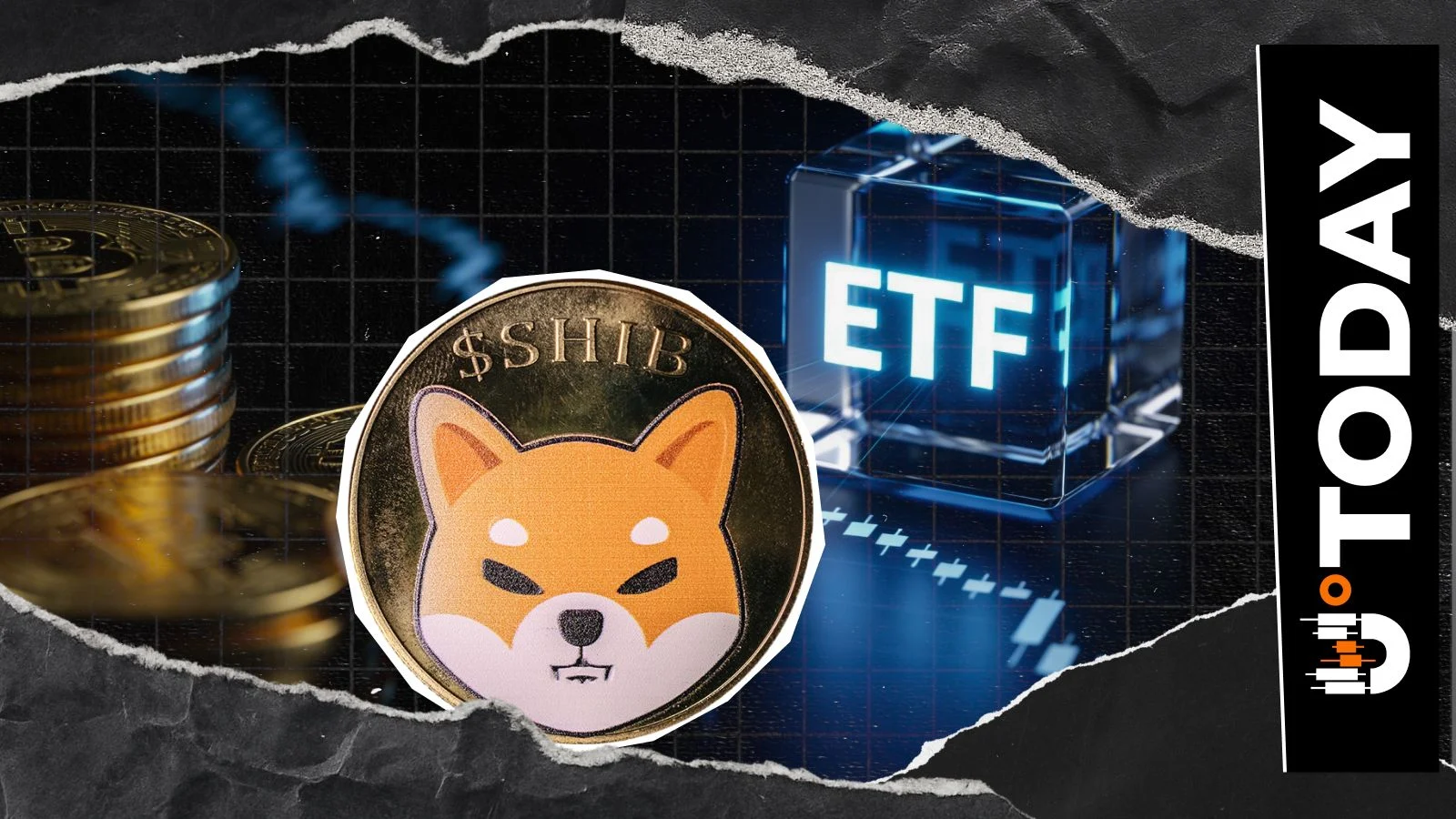
T. Rowe Price's filing of an actively managed crypto ETF, including Shiba Inu (SHIB) as an eligible asset, marks a significant step towards potential institutional adoption and could drive demand for SHIB. The inclusion of SHIB in a major asset manager's ETF filing, alongside Bitcoin and Ethereum, represents a historic milestone for the meme coin, potentially increasing its legitimacy and accessibility to a broader investor base. While the fund is actively managed, allowing T. Rowe Price to trade SHIB based on market conditions, this flexibility also introduces volatility risk, as the asset could be added or removed from the portfolio.

Bitcoin is consolidating after a significant rally, with key support identified between $72,000 and $74,000, suggesting a potential platform for further upside if this level holds. Despite a pullback in altcoins and some profit-taking in memecoins, the overall 'altcoin season' indicator remains high, indicating sustained risk appetite in the broader crypto market. Derivatives markets show a bullish bias for BTC and ETH futures, though options positioning suggests a slightly more bearish sentiment for Bitcoin compared to Ether. The market is experiencing a divergence where traditional assets are showing increased volatility due to geopolitical events, while Bitcoin's implied volatility remains stable, indicating a different risk perception among crypto traders.

Spot Bitcoin ETF inflows have rebounded strongly, with six consecutive days of positive net flows indicating renewed institutional interest and providing significant ballast to Bitcoin's recent price recovery. Renewed buyer activity on-chain, coupled with continued accumulation by major corporate entities like Strategy, suggests a healthier foundation for Bitcoin's rally beyond short-covering dynamics. Bitcoin's performance as an 'oasis of calm' during geopolitical turmoil, decoupling from traditional markets, signals a growing perception of it as a resilient macro asset, potentially attracting broader investor interest. The confluence of positive ETF flows, on-chain accumulation, and macro resilience suggests a multi-faceted recovery for Bitcoin, making the current price action more sustainable than previous short-lived bounces.
Early signs of an altcoin season are emerging as key market indicators like OTHERS, TOTAL3, and the ETH/BTC pair break out of accumulation structures, suggesting a potential shift in capital from Bitcoin to altcoins. The breakout in the OTHERS index indicates growing interest in mid- and low-cap altcoins, potentially signaling a broader market recovery beyond just the top-tier cryptocurrencies. Strengthening ETH/BTC relative performance is a critical leading indicator for altcoin outperformance, suggesting that Ethereum's strength could precede a wider altcoin rally if sustained. Confirmation of a sustained altcoin rally hinges on key levels holding, with OTHERS needing to reclaim $200B, TOTAL3 staying above $800B, and ETH/BTC maintaining its breakout momentum.

Bitcoin Everlight introduces a novel approach to earning BTC by enabling users to participate in network validation through a simplified 'shard activation' system, abstracting away technical complexities. The platform's native token, BTCL, is currently in presale, with users committing funds to activate shards that earn fixed rewards during this phase, transitioning to BTC rewards from transaction fees post-mainnet launch. Unlike many presale projects that reward in their native token, Bitcoin Everlight's post-mainnet model focuses on distributing actual Bitcoin derived from network transaction fees, aiming to provide a more direct value proposition to participants. The project emphasizes security with completed independent audits and KYC verification, while offering tiered participation levels starting from $500, with rewards calculated based on stake, APY, and time active.

Bitcoin Everlight's presale offers a unique approach by allowing participants to earn BTC rewards directly from network fees post-mainnet, differentiating it from projects that typically reward with their native token. The platform simplifies Bitcoin network participation by abstracting technical complexities, potentially attracting a broader audience seeking passive BTC income through validation infrastructure. With dual smart contract audits and KYC verification completed, Bitcoin Everlight aims to build trust, though the success of its shard activation model and reward distribution remains to be seen.

Bitcoin's Bollinger Bands are at their tightest monthly point ever, historically preceding significant volatility and potential upward price movements. A symmetrical triangle breakout pattern suggests a potential target of $84,500, indicating a 14% upside from current levels if confirmed. On-chain data shows significant accumulation between $83,000-$85,000, which could act as resistance and cap further upside near the $84,000 mark. Despite bullish technical signals, the presence of heavy accumulation zones and short positions suggests potential resistance that could limit the extent of any immediate rally.

A Buenos Aires court has ordered Polymarket to be blocked nationwide in Argentina, including app store removals, citing its operation as a 'concealed online betting system' without proper controls. This regulatory action against Polymarket in Argentina adds to a growing list of international challenges faced by prediction markets, highlighting a global trend of increased scrutiny on these platforms. The ruling, driven by local gambling regulators and prosecutors, underscores the ongoing tension between decentralized platforms and traditional regulatory frameworks, potentially impacting similar services operating in or targeting Argentina.
Solana's price action is consolidating below $100, forming a technical setup that suggests a potential breakout is imminent, contingent on broader market liquidity signals. Market sentiment for Solana is shifting from short-term speculation towards fundamentals like network reliability and developer activity, indicating a more sustainable recovery phase. The upcoming Federal Reserve decision is identified as the primary catalyst for SOL's next move, with a dovish tone expected to trigger a rally while a hawkish stance could prolong consolidation. Despite potential macro headwinds, Solana's network activity remains stable, providing a foundational strength that positions it to potentially lead a crypto market rally if external conditions become favorable.

Institutional investors are accumulating significant ZRO positions, signaling strong conviction despite an upcoming token unlock event. The clean on-chain transaction patterns and funding from Coinbase Prime suggest sophisticated, non-retail accumulation of ZRO. LayerZero's recent technological advancements and backing from major firms like Citadel Securities and ARK Invest may be driving this institutional interest in ZRO.
Signal context only. Validate with price action, liquidity, and risk limits before taking a position.
