
Navigating Crypto News

CoinFeather
Navigating Crypto News
Quick market read from this story
The increasing integration of AI in military applications signals a significant technological shift, creating new investment opportunities in defense technology companies.
Companies like Palantir, Lockheed Martin, and RTX are positioned to benefit from increased defense spending on AI-driven systems, impacting their market performance.
While the article focuses on traditional stocks, the underlying theme of AI in defense could have indirect implications for related blockchain infrastructure or AI-focused crypto projects.
Deep Dive
Artificial intelligence is fundamentally reshaping modern warfare, becoming a cornerstone of military modernization worldwide. Governments are significantly increasing defense spending to integrate machine learning, predictive analytics, and autonomous systems into their armed forces. This evolution has created a new investment category: military AI stocks, comprising companies at the nexus of defense, aerospace, cybersecurity, and AI.
Several companies are at the forefront of this technological shift. Palantir Technologies (NYSE: PLTR) is a leading AI software provider for governments and military organizations, offering data analytics platforms like Gotham and Foundry that enable real-time analysis of vast amounts of information for intelligence and defense. Its software aids in identifying patterns, tracking threats, and improving decision-making, extending to military logistics and predictive maintenance.
Lockheed Martin (NYSE: LMT), a major defense contractor, is heavily investing in AI across its aerospace and weapons platforms. The company integrates AI into autonomous drone swarms, missile defense systems, space-based surveillance, and AI-assisted combat systems, leveraging its involvement in programs like the F-35 fighter jet.
Northrop Grumman (NYSE: NOC) also embraces AI as a core strategy, developing AI-enabled systems for autonomous aircraft, cybersecurity, electronic warfare, space-based missile detection, and advanced battlefield communications. Its AI-driven missile defense and space surveillance technologies are crucial amidst rising global tensions.
RTX Corporation (NYSE: RTX), formerly Raytheon Technologies, is a leader in AI-powered missile defense and surveillance. It produces AI-enabled radar systems, autonomous defense sensors, missile guidance systems, and secure military communications, with AI significantly enhancing its threat detection capabilities.
Leidos Holdings (NYSE: LDOS) focuses on AI-driven analytics, cybersecurity, and intelligence solutions, providing digital infrastructure and AI systems that support government agencies and military operations. Its technologies are vital for intelligence analysis, cyber warfare defense, and AI-powered decision support.
AeroVironment (NASDAQ: AVAV) specializes in autonomous drones and AI-powered counter-drone systems. Its Switchblade loitering munitions and laser-based counter-drone systems, which use AI for detection and destruction, position it to benefit from the increasing prevalence of drone warfare.
The integration of AI into military operations is transforming the defense industry, impacting everything from battlefield intelligence and cybersecurity to autonomous systems and missile defense. Companies like Palantir, Lockheed Martin, Northrop Grumman, RTX, Leidos, and AeroVironment are driving this transformation through both software platforms and advanced military technologies.
Source, catalyst, and sector overlap from the latest feed.
Bitcoin's recent surge to $76K has elicited contrasting market outlooks, with Dogecoin creator Billy Markus expressing skepticism and Robert Kiyosaki reiterating a bullish long-term forecast tied to a potential market crash. Kiyosaki's prediction of $750K BTC and $95K ETH post-crash highlights a persistent narrative of Bitcoin as a hedge against systemic financial instability, contrasting with Markus's view of crypto markets resembling gambling. The divergence in commentary from prominent figures underscores the current market sentiment split, with short-term price action met by both cautious observation and extreme long-term bullish speculation.
XRP has surpassed BNB to reclaim the fourth position by market capitalization, driven by a recent surge above the $1.60 psychological level and increased derivatives activity. The prolonged six-year consolidation for XRP suggests a potential for a significant breakout, with analysts targeting prices between $3 and $8, indicating substantial upside if momentum sustains. A 59% jump in XRP's open interest on derivatives markets signals growing trader confidence and could attract further capital inflows, especially if the asset maintains its upward trajectory. The close competition between XRP and BNB for the fourth spot highlights market rotation and sentiment-driven capital flows, suggesting that rankings can remain fluid based on short-term price action.
XRP Ledger's transaction costs are approximately 263 times cheaper than Solana's, highlighting a significant cost-efficiency advantage that could attract high-volume applications. The XRP Ledger is experiencing rapid adoption, evidenced by over 7.7 million holders and a surge to 2.7 million daily transactions, indicating growing network utility and user base. XRPL's combination of ultra-low fees, high throughput (1,500 TPS), and increasing adoption positions it as a strong contender for scalable blockchain solutions, potentially drawing market share from less efficient networks.
XRP's six-year consolidation pattern suggests a significant breakout is imminent, with analysts projecting potential targets between $3 and $8. The increasing adoption, evidenced by the XRP Ledger surpassing 7.7 million holders, provides a fundamental tailwind for a potential price surge. Traders should monitor trading volume and key resistance levels as critical indicators for confirming the breakout and trajectory of any rally. The current technical setup combined with adoption growth positions XRP at a key inflection point, potentially marking the end of a prolonged consolidation phase.
Large token movements by Coinhako, involving over 441 billion SHIB, indicate significant trading activity and potential institutional interest driving demand. Singapore's role as a key trading hub for SHIB is reinforced by Coinhako's substantial volume, particularly with institutional participation accounting for 60% of its trades. The substantial SHIB transfers by Coinhako coincide with a notable price increase, suggesting that this large-scale exchange activity may be a contributing factor to the token's recent upward momentum. Increased institutional trading volume on Coinhako, a licensed Singaporean exchange, highlights the growing accessibility and appeal of SHIB for sophisticated market participants in the region.
Current decentralized compute networks, despite significant investment, fail to provide cryptographic verification, centralizing trust and limiting their TAM to non-sensitive workloads like rendering. The core value proposition of Web3, trustless verification, is undermined by current decentralized compute models that rely on reputation or social enforcement rather than mathematical proofs. A true decentralized compute revolution requires cryptographic proof of correctness for all computational results, enabling trustless execution for sensitive applications like DeFi, healthcare, and AI agents. The path forward for decentralized compute lies in integrating verifiable computation, such as zk-SNARKs or STARKs, which can be cryptographically proven and verified by smart contracts, unlocking broader market potential.
The rotation into AI and privacy tokens, led by Zcash and Monero, suggests a market shift towards utility-driven narratives over speculative meme coins, supported by renewed macro liquidity and genuine infrastructure demand. Bitcoin's push above $75,000, coupled with declining dominance, signals a broader risk-on sentiment, driving capital into altcoins with perceived real-world applications like AI and privacy solutions. While AI and privacy coins show strong near-term performance, analysts caution that sustained gains depend on continued spot buying support and upcoming macro economic signals, with skepticism remaining around a broad altcoin season.
Cango's strategic sale of 4,451 BTC in February signals a significant pivot from Bitcoin mining to AI infrastructure, aiming to deleverage its balance sheet and fund new ventures. The company's shift reflects a broader trend among public miners to monetize BTC holdings and repurpose infrastructure for the growing AI market, driven by declining mining margins. Despite reporting a substantial net loss for 2025, Cango's focus on AI inference solutions via its EcoHash platform indicates a forward-looking strategy to capture value in a different high-growth sector.
Fetch AI (FET) has experienced a significant 66% price surge driven by technical breakouts and increased market activity, indicating strong bullish momentum. The rally is further bolstered by institutional interest in AI tokens, evidenced by ETF filings, and Fetch AI's integration with Visa, reinforcing its utility narrative. Despite the strong upward trend, elevated sentiment and approaching resistance levels suggest a potential for short-term consolidation or pullback before further price discovery. The broader AI crypto sector is showing synchronized gains, with FET leading in momentum, signaling a potential rotation of capital into AI-focused assets.
Messari's strategic pivot towards an AI-first model, coupled with leadership changes and staff reductions, signals a significant internal restructuring aimed at future growth in the AI sector. The company's initiative to open its data layer to autonomous agents via the x402 protocol indicates a proactive move to integrate blockchain intelligence with emerging AI technologies, potentially creating new revenue streams and market opportunities. While the layoffs are a negative short-term event for employees, the company's stated commitment to AI suggests a long-term strategy to leverage its data expertise in a rapidly growing technological field.
Live Feed
Loading the broader stream in the same flow as the homepage feed.

Vietnam's move to license domestic crypto exchanges and potentially ban offshore platforms signals a significant regulatory shift aimed at controlling capital flows and fostering local market development. The stringent licensing requirements, including a high capital threshold, suggest a curated market entry, potentially benefiting established financial entities and limiting competition initially. The introduction of a proposed 0.1% transaction tax on crypto activities, mirroring stock trading, indicates a move towards formalizing and taxing the digital asset sector, impacting trading volumes and profitability for licensed operators. With Vietnam ranking fourth globally in crypto adoption, the regulatory changes and licensing process are crucial for shaping the future of crypto trading within a major emerging market.

Ethereum Spot ETFs have recorded five consecutive days of net positive inflows, marking the first such streak since January and signaling a potential shift in institutional sentiment after a prolonged period of outflows. The current price action appears driven by options flow and gamma hedging rather than fundamental improvements, suggesting a degree of fragility in the recent upward momentum. While technical indicators like RSI and MACD show growing bullish momentum, the 100-day SMA at $2,594 presents a significant resistance level that needs to be convincingly broken to confirm a trend reversal. A sustained continuation of ETF inflows and a break above the $2,594 resistance could lead to a rally towards $2,600-$2,800, potentially ending the bear market structure, but a reversal in ETF flows or macro shocks pose downside risks.

Mastercard's acquisition of BVNK for up to $1.8 billion signals a significant move by a traditional finance giant to integrate stablecoin infrastructure, potentially accelerating mainstream adoption of on-chain payments. The deal highlights a growing trend of established payment processors seeking to bridge fiat and crypto rails, suggesting increased institutional interest and investment in the digital asset space. BVNK's existing processing of billions of dollars annually for major clients like Worldpay and Deel indicates that this acquisition could immediately impact transaction volumes and efficiency in cross-border payments.

Jane Street's recent accumulation of 205 BTC, following prior accusations of manipulation, signals a potential shift in institutional sentiment and activity towards Bitcoin. MicroStrategy's significant BTC purchase of over 22,000 BTC, its largest since November 2024, reinforces the trend of institutional adoption and could indicate confidence in Bitcoin's near-term price trajectory. Positive on-chain indicators, including a rising Inter-Exchange Flow Pulse and a high exchange whale ratio, suggest that Bitcoin may be entering a new uptrend phase, supported by both institutional and large investor accumulation. The confluence of Jane Street's buying, MicroStrategy's substantial acquisition, and positive on-chain metrics suggests a coordinated institutional effort to accumulate Bitcoin, potentially driving further price appreciation.

Growing exchange reserves approaching 81 trillion SHIB suggest increased sell-side liquidity, potentially leading to near-term price pressure. Despite a short-term ascending structure, SHIB remains in a bearish trend, trading below key EMAs, indicating persistent downward momentum. Active repositioning by market participants, as shown by fluctuating exchange netflows, highlights uncertainty and a lack of strong long-term commitment to SHIB.

MicroStrategy's accelerated Bitcoin accumulation, fueled significantly by its STRC preferred stock, positions it to reach 1 million BTC this year, potentially absorbing over 180% of newly mined supply in the interim. The increasing reliance on STRC for funding diversifies MicroStrategy's capital sources beyond common stock, attracting yield-seeking investors and enabling sustained buying pressure on Bitcoin. Despite the aggressive accumulation strategy, underlying financial vulnerabilities persist, including premium compression risk and substantial annual dividend/interest obligations, creating long-term solvency concerns. The evolving funding structure and aggressive buying pace suggest MicroStrategy could soon surpass major Bitcoin holders like BlackRock's iShares Bitcoin Trust, highlighting its growing influence on the Bitcoin market.

Cari Network's adoption of ZKsync's Prividium infrastructure by regional US banks signals a significant move towards tokenized deposits, potentially creating a new on-chain payment rail for traditional finance. This development positions ZKsync to capture institutional demand for regulated blockchain solutions, offering a counter-narrative to its recent struggles with retail transaction volume. The initiative by US regional banks to create a stablecoin-style payment system using tokenized deposits highlights a strategic effort to retain control over payment flows and deposit funding amidst increasing competition from stablecoin issuers.

PayPal's expansion of its PYUSD stablecoin to 70 markets signifies a significant step in mainstream adoption, aiming to leverage stablecoins for cheaper, faster cross-border payments and merchant settlements. The move by a major payment processor like PayPal into broader stablecoin utility, beyond just U.S. users, could increase demand for stablecoins and pressure existing players like USDT and USDC. PYUSD's increased accessibility in new regions may drive adoption by both consumers and merchants, potentially impacting traditional payment rails and highlighting the growing role of stablecoins in global commerce.
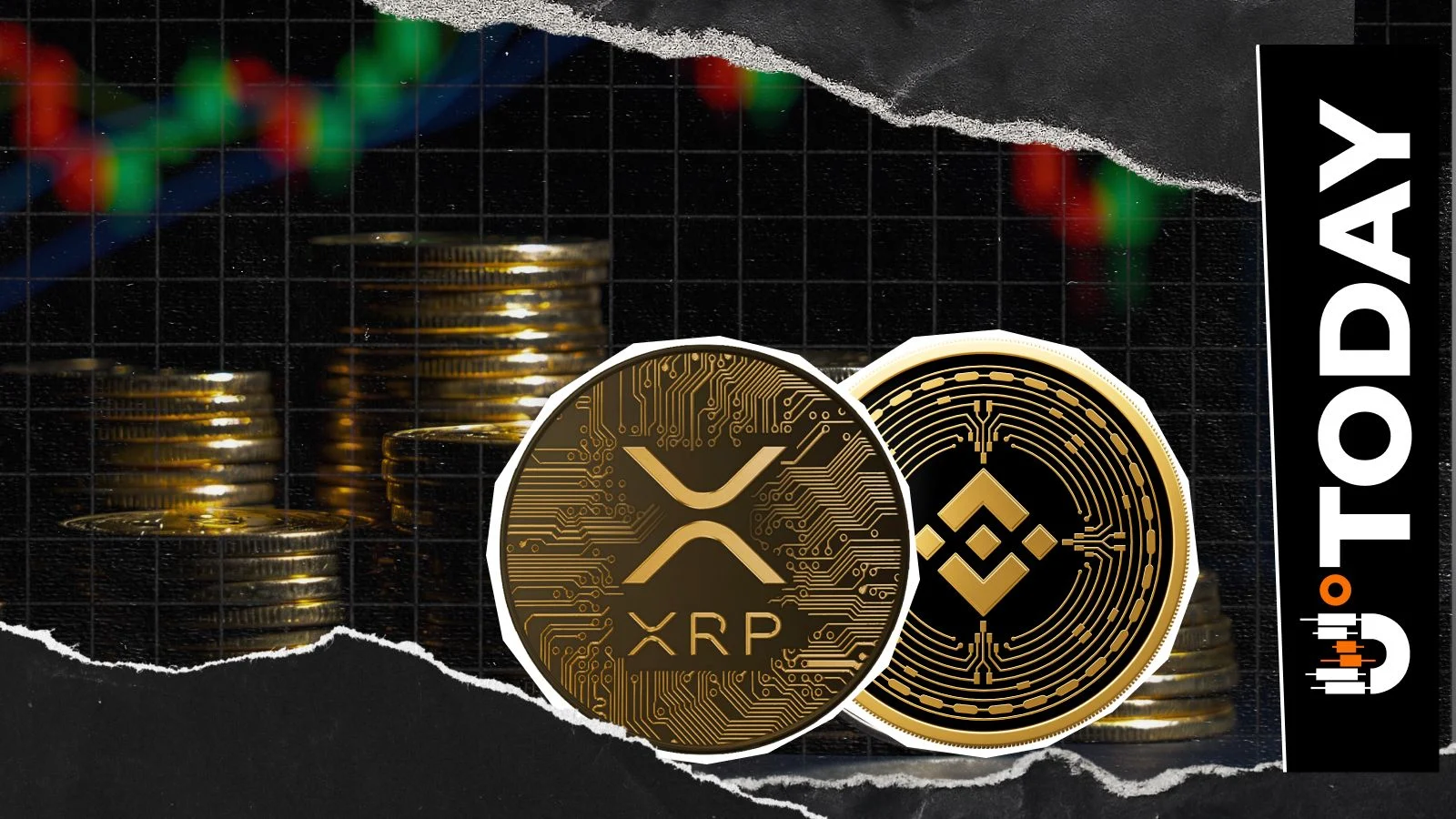
XRP has reclaimed the 4th market cap position from BNB, driven by a growing holder base and perceived regulatory clarity, signaling potential renewed investor interest. Despite a recent price surge and increased retail adoption, significant outflows from XRP ETFs suggest institutional caution, potentially capping near-term upside. The divergence between retail holder growth and institutional ETF outflows highlights a split market sentiment for XRP, warranting close observation of both on-chain activity and institutional flows.

Ethereum's price rebound to $2,330 is being reinforced by a shift in trader sentiment on prediction markets, with a majority now anticipating a move towards $3,000, indicating growing bullish conviction. Significant weekly inflows of $315 million into Ethereum investment products, coupled with a substantial $138 million ETH purchase by BitMine, suggest strong institutional and treasury-side demand supporting the current price action. The confluence of positive price momentum, increased fund inflows, and bullish prediction market activity suggests that Ethereum may be entering a phase of sustained upward price discovery, warranting a bullish outlook for the short-to-medium term.

Bitcoin's price action is facing resistance around $75,000, potentially indicating a short-term ceiling due to broader market pressures. The surge in on-chain energy markets, particularly for commodities like oil, suggests a potential capital rotation away from crypto assets. Rising inflation concerns due to oil price rallies could lead central banks to maintain cautious interest rate policies, negatively impacting risk assets like Bitcoin. Despite Bitcoin's resilience, the ETH/BTC ratio's bullish breakout suggests potential for Ether to outperform Bitcoin in the near term.

Sustained institutional inflows totaling over $1 billion signal growing confidence in cryptocurrencies, particularly Bitcoin, as a hedge against geopolitical uncertainty, potentially driving further price appreciation. The significant capital allocation towards Bitcoin, including substantial ETF inflows and corporate treasury additions like MicroStrategy's purchase, indicates strong conviction from major players and could support a near-term price target of $75,000. While overall inflows are positive, the outflow from Germany suggests localized caution, highlighting potential regional divergences in market sentiment that traders should monitor.

Argentina's court-ordered nationwide block of Polymarket over unauthorized gambling highlights regulatory risks for decentralized platforms operating without proper licensing. The ruling, which includes app store removals, signals increased scrutiny on prediction markets globally and could deter similar platforms from operating in jurisdictions with strict gambling laws. While the block is specific to Argentina, it adds to a growing list of countries restricting Polymarket, suggesting a potential trend of regulatory pushback against unregulated crypto-based betting services.

Bitcoin's recent price rebound faces a potential 'bull trap' as derivatives-driven gains diverge from weak spot demand, signaling structural vulnerability. Analysis indicates a transfer of ownership from 'OG' investors to new entrants, coupled with a price-open interest divergence, suggesting a precarious market situation. Significant resistance is identified around the $76,000 to $80,000 levels, with substantial ask liquidity expected to challenge any further upward price movement. The current market dynamics, characterized by a lack of strong spot buying support and potential distribution by smart money, suggest a challenging outlook for sustained price appreciation.
Signal context only. Validate with price action, liquidity, and risk limits before taking a position.
