
Navigating Crypto News

CoinFeather
Navigating Crypto News
Quick market read from this story
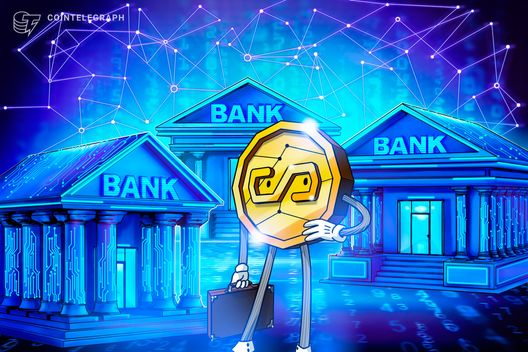
Cari Network's adoption of ZKsync's Prividium infrastructure by regional US banks signals a significant move towards tokenized deposits, potentially creating a new on-chain payment rail for traditional finance.
This development positions ZKsync to capture institutional demand for regulated blockchain solutions, offering a counter-narrative to its recent struggles with retail transaction volume.
The initiative by US regional banks to create a stablecoin-style payment system using tokenized deposits highlights a strategic effort to retain control over payment flows and deposit funding amidst increasing competition from stablecoin issuers.
Deep Dive
Cari Network, a banking consortium led by former U.S. Comptroller of the Currency Gene Ludwig, has selected Matter Labs’ Prividium infrastructure to power a new bank-governed tokenized deposit network. This platform, built on ZKsync and anchored to Ethereum, is designed to enable U.S. regional and mid-sized lenders to issue and transfer tokenized deposits 24/7 while maintaining them as liabilities on their balance sheets.
This initiative emerges amidst ongoing legislative discussions, including the GENIUS Act, and increasing competition from stablecoin issuers in the payments and deposit funding sectors. ZKsync CEO Alex Gluchowski highlighted that the network aims to empower mid-sized banks to adapt to evolving financial infrastructure rather than be displaced.
Five U.S. banks—Huntington Bancshares, First Horizon, M&T Bank, KeyCorp, and Old National Bancorp—have been actively involved in designing and testing the network since February. The Mid-Size Bank Coalition of America supports the model, emphasizing the importance of keeping deposits within regulated institutions for small business lending and local economies. Cari’s tokens represent existing customer deposits and are intended to operate within a permissioned environment governed by bank risk and compliance rules, distinct from decentralized finance (DeFi).
According to ZKsync, Prividium functions as a shared ledger facilitating instant settlement between verified parties. It separates transaction records and balances from personally identifiable information, which remains within each bank’s internal systems. While ZKsync’s public network has experienced fluctuations in usage, its 2026 roadmap prioritizes privacy, deterministic control, and native interoperability—key requirements for institutional adoption. Gluchowski noted that the architecture is designed to meet U.S. banking privacy and supervisory expectations, including data protection and auditability.
Gluchowski views tokenized deposits as complementary to stablecoins. He suggests that tokenized deposits will serve as the primary payment tokens for banks when moving funds into and out of their private infrastructure, positioning them as a distinct but related innovation in the financial landscape.
Source, catalyst, and sector overlap from the latest feed.
PayPal's expansion of PYUSD to 70 countries signifies a major step in mainstream stablecoin adoption, potentially increasing utility and demand. The integration of rewards on PYUSD holdings in new markets could incentivize broader user engagement and capital inflow into the stablecoin. This global rollout by a major payment processor like PayPal could set a precedent for other stablecoins and traditional finance players entering the crypto space.
Saifedean Ammous' alternate history posits that a decentralized gold system, facilitated by early aviation, could have prevented World War I and its subsequent societal upheavals. The core argument suggests that fiat currency systems are inherently linked to societal destruction and war, while a sound money system like gold would foster unprecedented prosperity and technological advancement. While the narrative explores a hypothetical scenario, it serves as a thought experiment to highlight Ammous' critique of central banking and his advocacy for sound money principles, drawing parallels to Bitcoin's potential.
Cango reported a significant $285 million Q4 loss, primarily driven by impairment charges and fair-value adjustments on Bitcoin-collateralized receivables, indicating substantial cost pressures despite growing mining revenue. The company's pivot towards AI infrastructure, alongside its legacy auto financing business sale, highlights a strategic shift, but the substantial losses and declining share price suggest ongoing financial challenges. With all-in mining costs at $106,251 per BTC in Q4, Cango's profitability is highly sensitive to Bitcoin price fluctuations and operational efficiency, making its financial outlook precarious.
Stablecoins offer a structurally cheaper alternative to legacy FX rails, particularly in emerging markets where traditional fees can reach up to 8%. Despite cost advantages, off-ramps to traditional banking systems remain a significant chokepoint for broader stablecoin adoption and seamless on-chain/off-chain value transfer. The increasing stablecoin supply, up 2.5% in the past month to $316 billion, signals growing demand for dollar liquidity and cross-border transfers, especially in regions with high remittance costs. While stablecoins are not replacing major FX corridors overnight, their adoption in emerging markets is driven by infrastructure cost advantages that outweigh currency risk.
Despite stagnant price action, Bitcoin's adoption metrics reveal a significant underlying structural shift, with institutions, corporations, and governments accumulating substantial amounts. The divergence between price and adoption is explained by the absorption of new demand by long-term holders distributing supply, leading to ownership transfer rather than immediate price appreciation. While merchant adoption and Lightning Network growth enhance Bitcoin's utility, the lack of sustained BTC retention by merchants limits immediate price impact, highlighting the need for broader holding behavior. Declining Bitcoin volatility and increasing institutional participation suggest a maturing asset class, aligning with conservative capital allocators and signaling long-term entrenchment despite short-term price consolidation.
Mastercard's acquisition of stablecoin infrastructure firm BVNK for up to $1.8 billion signals a significant move by a traditional finance giant to integrate digital asset settlement capabilities, potentially increasing stablecoin utility and adoption. The deal, one of the largest crypto acquisitions this year, highlights the growing interest from incumbents in leveraging stablecoins for payment rails, suggesting a potential shift in how cross-border transactions are handled. While BVNK operates in 130 countries, Mastercard's global reach of 210 countries implies a substantial expansion opportunity for stablecoin-based payments, impacting the broader payments infrastructure sector.
US regional banks are developing a tokenized deposit network on ZKsync, aiming for a 2026 rollout, which signals a significant move by traditional finance to adopt blockchain for payments and compete with stablecoins within regulated frameworks. The Cari Network's approach of tokenizing existing bank deposits, ensuring FDIC insurance and regulatory compliance, presents a direct challenge to non-bank stablecoin issuers by offering a familiar and secure digital asset alternative. This development highlights the increasing integration of blockchain technology into core banking infrastructure, potentially driving demand for L2 solutions like ZKsync and influencing the future of digital money and payment systems.
Adani Power's securing of a 1,600 MW power supply agreement with MSEDCL, albeit starting in FY2030-31, signals long-term revenue visibility and strengthens its position in India's energy sector. The 25-year power supply agreement, secured at a competitive tariff, indicates Adani Power's cost-efficiency and reliability, which are critical factors for sustained growth in a demand-driven market. With over 95% of its current operating capacity and over 55% of its upcoming capacity already secured under long-term agreements, Adani Power demonstrates a robust business model focused on predictable cash flows.
Chainlink's price is showing signs of strength by bouncing off a long-term ascending trendline, a historically reliable bottoming zone that has previously preceded rallies. Renewed whale accumulation and positive MVRV indicate a potential shift in market sentiment, suggesting that traders are moving back into profit and absorbing selling pressure. The integration with Mastercard for on-chain crypto purchases and the network's $28.6 trillion transaction value highlight strong fundamental adoption, which could support further price appreciation. While technicals and fundamentals are aligning positively, sustained demand is the critical factor for Chainlink to achieve its projected targets, making it a watchlist candidate for follow-through.
Developer activity in the privacy sector is diversifying beyond traditional privacy coins, with Chainlink leading due to its zero-knowledge integrations for banks, signaling a shift towards institutional adoption of privacy tech. Aztec's CHONK upgrade and Noir language advancement highlight a focus on mobile-friendly privacy proof generation and standardized smart contract development, potentially lowering barriers to entry for privacy-focused applications. Zcash's regulatory relief and development of a Layer-2 solution with Ethereum-style smart contracts, alongside Zebra node software and FROST multi-sig, indicate a strategic push to modernize and expand its ecosystem's capabilities. The emergence of projects like Zama focusing on Fully Homomorphic Encryption (FHE) and infrastructure plays like NYM and HOPR addressing metadata privacy suggests a maturing privacy landscape with multiple technological approaches and use cases.
Strategy's substantial Bitcoin purchase, funded significantly by preferred shares, signals strong institutional conviction and potentially supports BTC's price action above $70k. BitMine's continued accumulation of ETH, now holding approximately 4% of the circulating supply, reinforces its position as a major ETH treasury and suggests sustained bullishness on Ethereum's long-term value. Circle's significant stock appreciation highlights the growing market interest in stablecoins as a defensive and yield-generating asset class amidst macro uncertainty, with USDC showing increased transaction volume over USDT. OpenSea's delay of the SEA token airdrop due to 'challenging market conditions' indicates a cautious approach to token launches and may signal broader market sentiment impacting NFT-related token events.
Ondo Finance's RWA volume surge to $3.27B, driven by BNB Chain's 83% share, signals strong adoption of tokenized assets and highlights BNB Chain's growing role in this sector. The ONDO token's breakout above its 50-day SMA, targeting the 200-day SMA at $0.335, suggests positive technical momentum building on the back of increased RWA activity. While BNB Chain leads Ondo Finance's volume, Ethereum still dominates the overall RWA market cap, indicating potential for further growth and competition within the tokenized asset space. The increasing volume in tokenized stocks and treasuries, particularly on BNB Chain, suggests a growing demand for accessible, regulated digital asset exposure, potentially attracting more institutional capital.
Live Feed
Loading the broader stream in the same flow as the homepage feed.
Rising crude prices are expected to boost refinery margins for standalone players like MRPL, potentially leading to significant EBITDA expansion. Despite potential margin gains, MRPL faces policy risks, including potential windfall taxes or interventions if high spreads persist. A reported move by Indian OMCs to freeze refinery transfer prices could force MRPL to absorb a portion of rising crude oil costs, impacting profitability.
Solana is experiencing significant capital inflows, with over $10 million moving from rival networks like Ethereum, indicating a potential rotation driven by demand for faster execution and lower fees. SOL is holding critical support at the $91-$93 range, a level that, if defended, could propel the price towards the $100 mark and potentially higher targets around $184. A confirmed daily close above $92 would signal acceptance beyond the previous consolidation range, suggesting a transition to an expansionary phase for SOL's price action. The narrative of traders seeking alternatives to Ethereum and other chains due to speed and cost considerations positions Solana as a key beneficiary in the current market sentiment.
Transaction IDs (TXIDs) are fundamental to blockchain transparency, acting as unique identifiers for every crypto transfer and enabling public verification. Understanding TXIDs is crucial for users to confirm, track, and troubleshoot cryptocurrency transactions, reinforcing trust in decentralized systems. The cryptographic hashing behind TXIDs ensures data integrity and prevents double-spending, highlighting a core security feature of blockchain technology.
MicroStrategy's continued aggressive Bitcoin acquisition, funded by preferred stock sales, signals strong conviction in BTC as a core business asset. The company's stated goal of reaching 1 million BTC by year-end implies a sustained buying pressure from a major institutional player. The increasing reliance on preferred stock ($STRC) for funding Bitcoin purchases could attract a new investor base interested in yield while holding BTC exposure.
PEPE is exhibiting a classic falling wedge pattern, which historically signals a potential bullish reversal and could lead to a significant price rally if the resistance is broken. Analysts suggest a breakout above $0.00000478 could attract more buyers and potentially reverse the current downtrend, with a projected target near $0.0000198. While the technical setup points to a potential upside, traders should monitor volume and momentum closely, as failure to break the wedge resistance could lead to further consolidation or a drop to support levels around $0.00000350.

The CoinDesk 20 Index experienced a minor decline of 0.9%, with Uniswap (UNI) and Sui (SUI) being notable underperformers, dropping 4.1% and 4.0% respectively. With only one out of twenty assets trading higher, the broad market sentiment within the CoinDesk 20 appears to be leaning negative for the day. The underperformance of UNI and SUI suggests potential short-term selling pressure or a lack of immediate positive catalysts for these specific assets within the broader market context.

Ripple's expansion into Brazil with enhanced custody, payments, and brokerage services signals a strategic move to leverage the country's advanced financial ecosystem. The planned application for a VASP license with the Central Bank of Brazil indicates Ripple's commitment to operating within the new regulatory framework, potentially paving the way for broader institutional adoption. By offering integrated services for cross-border payments, digital asset custody, and tokenization, Ripple aims to capture demand from Brazilian banks and fintechs seeking streamlined financial operations. The expansion is supported by existing partnerships with Brazilian firms like Banco Genial and Braza Bank, demonstrating tangible use cases for Ripple's technology in real-world financial flows and stablecoin issuance.
Bitcoin has broken a short-term downtrend and is testing a major resistance zone between $74,567 and $79,289, creating a critical decision point for near-term price direction. A decisive breakout above the $74,400 level, confirmed by increased volume, could signal the start of an 'uphill run' and validate the bullish 'bump and run' pattern. Failure to break through the identified order block resistance could lead to a rejection, reinforcing the broader bearish structure and potentially targeting lower lows. The market is currently at a structural inflection point, where the outcome of this resistance test will significantly influence whether Bitcoin continues its recovery or faces renewed selling pressure.

Theo's introduction of a gold-backed stablecoin, thUSD, backed by $100 million in funding, signals a new approach to yield generation by leveraging both physical gold reserves and gold futures positions. The strategy of shorting gold futures against a long spot position aims to capture a cash-and-carry spread, potentially offering attractive yields around 10% under favorable conditions, which could attract capital seeking stable returns in a risk-off environment. This development represents a novel attempt to differentiate stablecoins beyond traditional cash and Treasury backing, potentially influencing the RWA and stablecoin sectors by integrating commodity-based yield generation strategies. The requirement for investor registration and whitelisting for thUSD access indicates a controlled rollout, balancing DeFi integration with regulatory compliance considerations.
The XRP Ledger's exceptionally low transaction fees, costing approximately $0.0000152 per transaction, highlight its cost-efficiency advantage compared to other blockchains like Solana. The ongoing increase in XRP Ledger usage, evidenced by a record number of non-empty wallets and active addresses, suggests growing adoption and potential for increased transaction volume. The systematic burning of transaction fees on the XRP Ledger contributes to a gradual reduction in XRP's total supply, a factor that could support long-term value appreciation. Discussions around native XRP staking, requiring a reward source and distribution mechanism, indicate potential future developments in network participation and yield generation.
Argentina's judicial system has ordered a nationwide block on Polymarket, classifying it as unauthorized online betting tied to sensitive economic data, which signals increased regulatory scrutiny on prediction markets within the country. The court's action against Polymarket, driven by concerns over wagers on inflation rates before official release, highlights the legal risks for platforms operating without explicit licenses in jurisdictions with strict financial and gambling regulations. This development adds Argentina to a growing list of countries reviewing or restricting prediction markets, suggesting a potential trend of increased regulatory oversight for such platforms globally.

Citigroup has revised its 12-month price targets for BTC and ETH downwards, reflecting concerns over slower U.S. crypto legislation, reduced ETF inflow expectations, and weaker network activity. The reduced targets, while still indicating potential upside, signal a more cautious near-term outlook for major cryptocurrencies, influenced by stalled regulatory progress and fading post-halving enthusiasm. The market's sensitivity to U.S. regulatory developments is highlighted, as the uncertainty surrounding the CLARITY Act and other legislative efforts directly impacts institutional investor sentiment and capital allocation.
Signal context only. Validate with price action, liquidity, and risk limits before taking a position.
