
Navigating Crypto News

CoinFeather
Navigating Crypto News

Quick market read from this story
Theo's introduction of a gold-backed stablecoin, thUSD, backed by $100 million in funding, signals a new approach to yield generation by leveraging both physical gold reserves and gold futures positions.
The strategy of shorting gold futures against a long spot position aims to capture a cash-and-carry spread, potentially offering attractive yields around 10% under favorable conditions, which could attract capital seeking stable returns in a risk-off environment.
This development represents a novel attempt to differentiate stablecoins beyond traditional cash and Treasury backing, potentially influencing the RWA and stablecoin sectors by integrating commodity-based yield generation strategies.
The requirement for investor registration and whitelisting for thUSD access indicates a controlled rollout, balancing DeFi integration with regulatory compliance considerations.
Deep Dive
Tokenization platform Theo has successfully raised $100 million to launch thUSD, a novel stablecoin designed to be backed by gold prices rather than traditional cash and U.S. Treasuries. This initiative represents a significant experiment in diversifying stablecoin backing mechanisms within the cryptocurrency market.
Unlike most stablecoins, thUSD will maintain its parity with the U.S. dollar through reserves of thGOLD, another token introduced by Theo. The thGOLD token is backed by secured lending agreements with gold retailers, such as Singapore's Mustafa Gold. This approach aims to provide yield generation from the underlying physical asset.
Theo plans for thUSD to generate yield from two primary sources. Firstly, it will leverage the yield from its underlying gold reserves via thGOLD. Secondly, Theo will simultaneously engage in shorting gold futures on trading platforms like the CME, Binance, and decentralized exchange Hyperliquid. This strategy, known as a cash-and-carry trade, aims to profit from the spread between the gold's spot price and its futures price.
Theo Chief Investment Officer Iggy Ioppe estimates that this strategy could yield up to 10% annually under favorable market conditions. The company's broader goal, as stated during a previous $20 million funding round, is to bring sophisticated trading strategies, typically found in traditional finance, to retail crypto investors.
Theo's current focus on gold and money-market funds (through its core product thBIll) aligns with a strategy of investing in risk-off assets during a bear market for cryptocurrencies. Ioppe highlighted that demand for such assets on-chain is currently substantial, as investors seek stability when not feeling bullish on riskier assets.
The use of thGOLD also benefits gold retailers like Mustafa, allowing them to continue production and sales with predictable business operations by hedging against gold price fluctuations.
Gold prices have seen significant appreciation over the past year, soaring around 67% despite recent fluctuations. The market for tokenized gold is currently led by established players like Tether Gold and Paxos, with market capitalizations around $2.75 billion and $2.5 billion, respectively. Theo's thUSD aims to enter this space with a distinct backing model.
In the decentralized finance (DeFi) ecosystem, thUSD is designed to be compatible with lending protocols such as Morpho that support real-world asset tokenization. However, investors in Theo's products are required to register and undergo a whitelist process, providing personal information, before gaining permissionless access to the token on-chain.
Source, catalyst, and sector overlap from the latest feed.
World's new AgentKit integrates World ID with Coinbase's x402 protocol, enabling AI agents to cryptographically prove human backing to combat bots and online abuse. This development addresses the growing problem of AI agents overwhelming services like ticket sales and API access, potentially improving user experience and resource allocation for platforms. While Worldcoin (WLD) is mentioned as a reward for World ID verification, the AgentKit itself does not require WLD tokens, focusing on the 'proof of personhood' aspect for broader utility. The integration with Coinbase's protocol suggests a move towards standardized solutions for AI agent verification, potentially impacting how platforms manage automated interactions and payments.
Strategy's substantial Bitcoin purchase, funded significantly by preferred shares, signals strong institutional conviction and potentially supports BTC's price action above $70k. BitMine's continued accumulation of ETH, now holding approximately 4% of the circulating supply, reinforces its position as a major ETH treasury and suggests sustained bullishness on Ethereum's long-term value. Circle's significant stock appreciation highlights the growing market interest in stablecoins as a defensive and yield-generating asset class amidst macro uncertainty, with USDC showing increased transaction volume over USDT. OpenSea's delay of the SEA token airdrop due to 'challenging market conditions' indicates a cautious approach to token launches and may signal broader market sentiment impacting NFT-related token events.
Mastercard's acquisition of stablecoin infrastructure firm BVNK for up to $1.8 billion signals a significant move by a traditional finance giant to integrate digital asset settlement capabilities, potentially increasing stablecoin utility and adoption. The deal, one of the largest crypto acquisitions this year, highlights the growing interest from incumbents in leveraging stablecoins for payment rails, suggesting a potential shift in how cross-border transactions are handled. While BVNK operates in 130 countries, Mastercard's global reach of 210 countries implies a substantial expansion opportunity for stablecoin-based payments, impacting the broader payments infrastructure sector.
The rotation into AI and privacy tokens, led by Zcash and Monero, suggests a market shift towards utility-driven narratives over speculative meme coins, supported by renewed macro liquidity and genuine infrastructure demand. Bitcoin's push above $75,000, coupled with declining dominance, signals a broader risk-on sentiment, driving capital into altcoins with perceived real-world applications like AI and privacy solutions. While AI and privacy coins show strong near-term performance, analysts caution that sustained gains depend on continued spot buying support and upcoming macro economic signals, with skepticism remaining around a broad altcoin season.
Ethereum's price rebound to $2,330 is being reinforced by a shift in trader sentiment on prediction markets, with a majority now anticipating a move towards $3,000, indicating growing bullish conviction. Significant weekly inflows of $315 million into Ethereum investment products, coupled with a substantial $138 million ETH purchase by BitMine, suggest strong institutional and treasury-side demand supporting the current price action. The confluence of positive price momentum, increased fund inflows, and bullish prediction market activity suggests that Ethereum may be entering a phase of sustained upward price discovery, warranting a bullish outlook for the short-to-medium term.
Sam Altman's World ID is integrating with Coinbase's x402 protocol to provide cryptographic proof of human identity for AI agents, addressing a critical need in the burgeoning agentic commerce market. The partnership aims to bridge the gap between AI agents' transactional capabilities and verifiable human oversight, potentially enabling new economic models and preventing bot abuse in e-commerce. This development positions World ID as a foundational identity layer for an internet increasingly populated by AI agents, leveraging zero-knowledge proofs for privacy-preserving verification. The integration with Coinbase's agentic payment protocol signals a significant step towards enabling legitimate economic participation for AI agents, with potential implications for future digital commerce infrastructure.
Zcash (ZEC) has experienced a significant 108% surge in 24-hour trading volume, indicating renewed market interest and increased participation in the privacy coin sector. The increased volume coincides with a broader resurgence in privacy-focused cryptocurrencies, potentially driven by investor concerns over transaction transparency and a desire for financial privacy. A $25 million funding round for the Zcash Open Development Lab bolsters confidence in the project's long-term technological advancement and infrastructure development. While the current volume spike suggests stabilization, its sustainability as a trend reversal remains uncertain without further confirmation of sustained buying pressure.
Robinhood's venture fund has made its first disclosed investments in private companies Stripe and ElevenLabs, signaling a continued strategy to offer retail investors access to pre-IPO opportunities. The fund's focus on private market exposure, particularly in fintech and AI sectors, aligns with broader market trends and Robinhood's goal to democratize access to alternative investments. While Robinhood shares saw a modest gain, the venture fund's performance is a separate metric to monitor for its long-term success in capturing private market alpha.
Mastercard's acquisition of BVNK for up to $1.8 billion signals a significant institutional push into stablecoin infrastructure and on-chain payments, potentially increasing adoption and integration of digital assets into traditional finance. The deal, expected to close by end of 2026, positions Mastercard to offer integrated fiat and stablecoin payment solutions globally, enhancing its existing digital asset services and potentially impacting competitors in the payment processing space. BVNK's capability to connect fiat and stablecoins across major blockchains, supporting payments in over 130 countries, suggests a strategic move by Mastercard to bridge traditional financial systems with the growing digital asset economy.
Phantom's CFTC no-action relief allows non-custodial wallets to access regulated derivatives markets, potentially expanding DeFi integration with traditional finance. This development sets a precedent for crypto infrastructure providers engaging proactively with regulators, paving the way for similar access for other wallets and protocols. The ruling clarifies regulatory pathways for non-custodial interfaces, reducing broker registration burdens and encouraging compliant innovation in the derivatives space.
THENA clarifies its smart contracts were not compromised in the exploit, attributing the $2.18M bad debt on Venus Protocol to an architectural flaw in the $THE market there. The $THE token price has fallen over 13% following the exploit, with trading volume down significantly, indicating a negative market reaction despite THENA's assurances of its own system's security. THENA plans to increase APRs on its vaults due to generated fees and will propose governance changes to address bad debt and adjust collateral parameters, aiming to restore stability.
Mastercard's acquisition of BVNK for up to $1.8 billion signals a significant strategic pivot towards integrating stablecoin infrastructure into traditional payment rails, potentially accelerating mainstream adoption of digital asset payments. The deal positions Mastercard ahead of competitors like Visa and Coinbase in the race to build bridges between fiat and on-chain transactions, highlighting the growing importance of stablecoins as a core financial infrastructure rather than a niche product. With BVNK's capabilities, Mastercard can leverage its extensive merchant network to facilitate seamless stablecoin transactions, potentially driving substantial growth in crypto payment volumes and impacting the competitive landscape of global finance.
Ethereum's open interest surge and positive funding rates indicate a strong build-up of long positions, suggesting potential vulnerability to a short-term pullback if momentum falters. A newly formed CME gap near $2,117 presents a technical target for a potential retracement, which could serve to liquidate excess leverage before any sustained upward continuation. While momentum indicators are strong, the crowded nature of long positions and the presence of a CME gap suggest a cautious approach is warranted for near-term ETH trading.
The shutdown of Tally, a major DAO governance platform, signals a potential shift away from decentralized structures as regulatory clarity under the current administration reduces the perceived need for them. The decline in demand for DAO tooling, exemplified by Tally's closure, suggests that the anticipated growth of L2s and a broad ecosystem of decentralized applications has not materialized as expected. The narrative shift towards AI is drawing talent and focus away from the crypto space, potentially hindering innovation and the development of new builders and founders in the sector. The CEO's statement implies that a more lenient regulatory environment makes traditional corporate structures more appealing than DAOs, potentially reducing the market for governance infrastructure.
Live Feed
Loading the broader stream in the same flow as the homepage feed.
XRP's trading volume surge in South Korea, surpassing BTC and ETH on Upbit, indicates strong localized demand and potential for broader market attention. Increased spot trading volume and exchange outflows suggest active accumulation by investors, signaling confidence in XRP's near-term price appreciation. Renewed derivatives activity, including rising futures volume and open interest, points to growing speculative interest and strategic positioning by traders. The significant trading activity originating from South Korea highlights the region's increasing influence on global crypto markets and specific asset performance.

Vietnam's government is actively moving to regulate its significant crypto market by restricting offshore trading and promoting domestic exchanges, signaling a shift towards formalization. The push for local exchanges and licensing could reshape Vietnam's crypto landscape, potentially impacting user access to foreign platforms and driving adoption of regulated domestic services. With Vietnam ranking high in global crypto adoption, these regulatory moves are critical for understanding capital flow controls and the future development of digital asset markets within the country.

XRP Ledger's record 7.7 million holders and increased daily active addresses suggest growing network adoption and investor accumulation, potentially signaling a bullish trend. The price action is consolidating around the $1.50-$1.60 resistance, with a decisive break above this level being critical for bulls to target higher price points like $1.95 or $2.55. Whale accumulation and decreasing exchange balances, coupled with rising on-chain activity, indicate strong underlying support and could precede a significant price move if resistance is overcome.

GSR's strategic acquisitions of Autonomous and Architech for $57 million signal a significant expansion into comprehensive token advisory and capital markets services, aiming to offer a unified platform for crypto projects. By integrating token launch, trading, and treasury management, GSR is positioning itself as a one-stop shop, potentially streamlining operations for new crypto ventures and enhancing their market access and financial stability. This move by a prominent crypto market maker indicates a maturing industry where integrated service providers are emerging to address the complex needs of tokenized asset lifecycles, from inception to ongoing management.
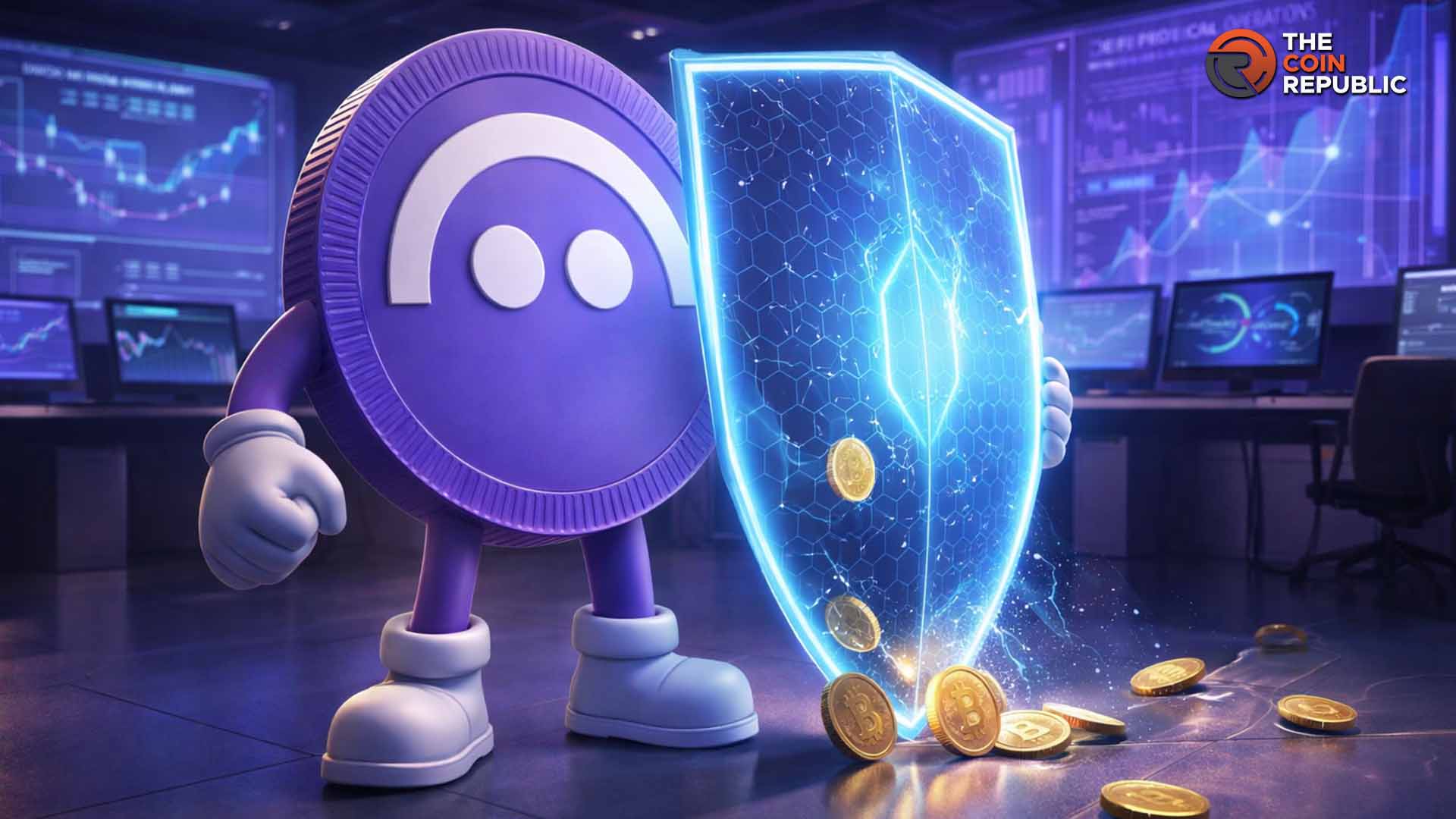
Aave has implemented a new safeguard, AAVE SHIELD, to prevent extreme slippage events following a recent $50 million loss, indicating a proactive response to user protection concerns. The introduction of AAVE SHIELD, which blocks trades exceeding 25% slippage, suggests a move towards enhanced protocol stability and user confidence, potentially mitigating future large-scale losses. Despite a significant slippage incident, AAVE's price has shown resilience, reclaiming $120 and exhibiting bullish momentum, implying that the market may be pricing in the protocol's quick response and ongoing development. The $50 million slippage incident, while substantial, did not impact the Aave protocol's overall health, and the platform is working to restore the affected user's funds, signaling operational integrity.
Mastercard's acquisition of BVNK for up to $1.8 billion signals a significant integration of stablecoin infrastructure into traditional payment networks, potentially accelerating mainstream adoption. The deal highlights a strategic shift by major financial players like Mastercard to bridge fiat and on-chain transactions, indicating a growing recognition of stablecoins' utility beyond speculative assets. BVNK's prior funding rounds and investments from Visa and Citi Ventures underscore a broader trend of traditional finance entities building capabilities in the digital asset space, validating the underlying technology and market potential. The acquisition, which includes contingent payments, suggests a valuation based on future performance and integration success, implying a bullish outlook on the growth of stablecoin-based payment solutions.

Solana is demonstrating its capability to host institutional financial products like tokenized stocks and ETFs, despite its 'memecoin chain' reputation, indicating a potential for broader adoption beyond speculative assets. Major financial players including Ondo, WisdomTree, Visa, PayPal, and Citi are leveraging Solana's infrastructure for tokenized assets and payments, signaling a growing acceptance of the network for high-volume, low-fee transactions. Regulatory clarity, such as the FDIC's stance on capital treatment for tokenized securities, is reducing barriers for traditional institutions to engage with blockchain settlement, potentially accelerating the adoption of networks like Solana for RWA. The 'barbell economy' strategy on Solana, where speculative retail activity coexists with institutional financial infrastructure, suggests that speed and cost efficiency are prioritized by traditional finance over brand association with crypto culture.

Cardano's price surge suggests a potential end to its five-month negative monthly performance, driven by increased market activity and a notable spike in trading volume. The current price action indicates a shift in momentum for ADA, with bulls aiming to break key resistance levels and sustain gains above critical support. While historical data shows a bullish trend for Cardano in March, recent performance deviated, making this month's potential positive close a significant indicator for short-term sentiment.

A rare Heikin Ashi green candle signal on Dogecoin suggests a potential trend reversal, historically preceding significant rallies. The emergence of a bullish technical indicator, coupled with increased whale accumulation and trading volume, supports a near-term price target of $0.15 for DOGE. While historical patterns and current accumulation are bullish, traders should monitor for potential profit-taking if DOGE reaches higher price levels.

US Democrats are proposing new legislation, the BETS OFF Act, to ban government officials from trading on insider information in prediction markets, specifically targeting bets on war and government actions. The proposed legislation aims to curb potential market manipulation and insider trading within prediction markets, reflecting growing regulatory scrutiny on platforms like Polymarket. While the bill faces political hurdles in a Republican-controlled Congress, its introduction signals a potential shift towards stricter regulation of prediction markets, which could impact platforms and their users.
Signal context only. Validate with price action, liquidity, and risk limits before taking a position.
