
Navigating Crypto News

CoinFeather
Navigating Crypto News

Quick market read from this story
XRP Ledger's record 7.7 million holders and increased daily active addresses suggest growing network adoption and investor accumulation, potentially signaling a bullish trend.
The price action is consolidating around the $1.50-$1.60 resistance, with a decisive break above this level being critical for bulls to target higher price points like $1.95 or $2.55.
Whale accumulation and decreasing exchange balances, coupled with rising on-chain activity, indicate strong underlying support and could precede a significant price move if resistance is overcome.
Deep Dive
XRP is trading around $1.50, marking a 3% increase in the last 24 hours, as its recent rally faces resistance at $1.60. Despite this, rising network activity and increased holder accumulation suggest potential for XRP to break through the $1.50-$1.60 resistance levels.
The XRP Ledger (XRPL) has reached a significant milestone with the number of non-empty wallets surpassing 7.7 million for the first time in its 13-year history. This growth in holders coincides with a five-week high in daily active addresses, which reached 46,767. On-chain data indicates that network usage is expanding, even during market downturns, suggesting investors are taking advantage of lower prices to accumulate XRP.
Data from Santiment highlights that the number of daily active addresses on XRPL saw a notable increase, aligning with a price surge to a four-week high of $1.60. This period also saw aggressive accumulation by long-term investors, with a sharp spike in the XRP holder net position change on March 1, exceeding 351 million XRP – the strongest single-day accumulation since February 1.
Furthermore, XRP whales, entities holding substantial amounts of XRP, have increased their buying activity since early March. The 30-day moving average of XRP's Whale Flow turned positive in March, ending a four-month trend of persistent selling. This accumulation, coupled with a declining balance of XRP on exchanges to levels not seen since May 2021, could support XRP's price in the coming weeks.
XRP is currently attempting to overcome the $1.50-$1.60 resistance zone, which has capped its price for over six weeks. Analysts suggest that XRP bulls need to reclaim $1.51 as support to trigger a potential rally towards the $2.0 resistance level. The last time XRP/USD broke above this level in December 2024, it experienced a 90% surge in less than a week.
Technical analysis indicates that the area between $1.50 and $1.52 represents a significant
Source, catalyst, and sector overlap from the latest feed.
Theo's $100M facility for its gold-linked yield stablecoin, thUSD, signals institutional interest in non-Treasury yield alternatives. The thUSD yield generation strategy, combining tokenized gold with shorted futures, aims for 5-12% APY while hedging gold price volatility. The launch navigates the US GENIUS Act by generating yield from underlying assets rather than issuer-paid interest, differentiating it from restricted payment stablecoins. This development highlights a growing trend in tokenized commodities and alternative yield generation within the stablecoin market, despite ongoing regulatory debate.
World's AgentKit integrates World ID with Coinbase's x402 protocol, enabling AI agents to prove human verification for online service access and micropayments. This development signals a growing trend of crypto infrastructure supporting AI agent interactions, potentially expanding utility for decentralized identity solutions. While World ID's biometric approach faces privacy concerns, its integration with payment protocols like x402 could drive adoption for specific use cases requiring verified human-AI collaboration.
Strategy has halted its Bitcoin accumulation via STRC preferred stock as the stock price fell below its $100 par value, indicating a potential reduction in buying pressure. Historical data suggests that STRC trading below $100 has preceded significant Bitcoin price declines of 25%–40%, implying a heightened risk of a near-term BTC pullback. The pause in STRC-backed BTC buys, following two weeks of aggressive accumulation, removes a key demand driver for Bitcoin, potentially exacerbating any downward price movement.
Mastercard's acquisition of BVNK for up to $1.8 billion signals a significant integration of stablecoin infrastructure into traditional payment networks, potentially accelerating mainstream adoption. The deal highlights a strategic shift by major financial players like Mastercard to bridge fiat and on-chain transactions, indicating a growing recognition of stablecoins' utility beyond speculative assets. BVNK's prior funding rounds and investments from Visa and Citi Ventures underscore a broader trend of traditional finance entities building capabilities in the digital asset space, validating the underlying technology and market potential. The acquisition, which includes contingent payments, suggests a valuation based on future performance and integration success, implying a bullish outlook on the growth of stablecoin-based payment solutions.
Maestro's launch of Mezzamine introduces a novel Bitcoin-denominated credit market, directly linking institutional BTC holders with miners seeking capital, potentially creating a new yield-generating avenue outside of traditional staking or DeFi protocols. The platform aims to mitigate miner liquidation risks by offering Bitcoin-backed loans, reducing exposure to dollar-denominated liabilities and call risks, which could stabilize miner operations during market downturns. By deriving yield directly from mining production rather than token incentives, Mezzamine offers a more direct and potentially less volatile income stream for institutional investors, targeting an 8-9% annual yield.
Ethereum's estimated leverage ratio on Binance has recovered to 0.69, signaling renewed trader optimism and a potential shift towards a new liquidity cycle. The recovery in leverage follows a significant liquidation event, suggesting that the market may be absorbing previous sell-offs and positioning for further upside. Technical analysis indicates ETH has broken key resistance at $2,152, with targets at $2,337 and $2,538, reinforcing the bullish sentiment driven by on-chain metrics.
Bitcoin's breach of the $70,000 resistance zone, coupled with significant ETF inflows, suggests a shift from fragile bounces to potential stabilization, but the $75,000 options cluster presents a critical inflection point. The $75,000 strike acts as a 'gamma magnet' with approximately $2 billion in negative gamma expiring March 27th, meaning a decisive break above could trigger accelerated upward price action via dealer hedging, while a rejection could amplify a subsequent pullback. The current setup, influenced by macro factors like inflation and potential Fed rate cut delays, amplifies volatility around the $75,000 level, turning it into a potential regime-break indicator for Bitcoin. Traders should monitor Bitcoin's price action around $75,000 closely, as dealer hedging dynamics and macro events will likely dictate whether the asset breaks out towards $80,000 or experiences a sharper decline.
Adam Back's strong opposition to BIP-110, labeling it a potential 'rug-pull' and threat to Bitcoin's store of value, highlights significant community division over protocol upgrades and spam mitigation. The proposal's low node support and Back's assertion that it is 'dead on arrival' suggest limited immediate impact, but the underlying debate on network neutrality and user risk warrants monitoring for future protocol developments. Concerns over potential fund freezing and chain splits due to BIP-110's activation mechanism, requiring only 50% hash rate support, introduce a speculative risk factor for Bitcoin users and miners involved in the debate.
XRP's trading volume surge in South Korea, surpassing BTC and ETH on Upbit, indicates strong localized demand and potential for broader market attention. Increased spot trading volume and exchange outflows suggest active accumulation by investors, signaling confidence in XRP's near-term price appreciation. Renewed derivatives activity, including rising futures volume and open interest, points to growing speculative interest and strategic positioning by traders. The significant trading activity originating from South Korea highlights the region's increasing influence on global crypto markets and specific asset performance.
Live Feed
Loading the broader stream in the same flow as the homepage feed.

PayPal's aggressive global expansion of PYUSD to 70 markets signals a strategic pivot towards leveraging stablecoins for global commerce, aiming to capture significant market share from traditional payment rails. The integration of PYUSD across Ethereum, Solana, and Arbitrum, coupled with PayPal's ongoing infrastructure development in logistics, AI, and retail, positions the company to challenge established players like Tether and potentially Visa/Mastercard. Despite regulatory advantages from the GENIUS Act, PYUSD faces stiff competition and potential market fragmentation, making its success contingent on effectively converting its 400 million user base into active stablecoin participants.
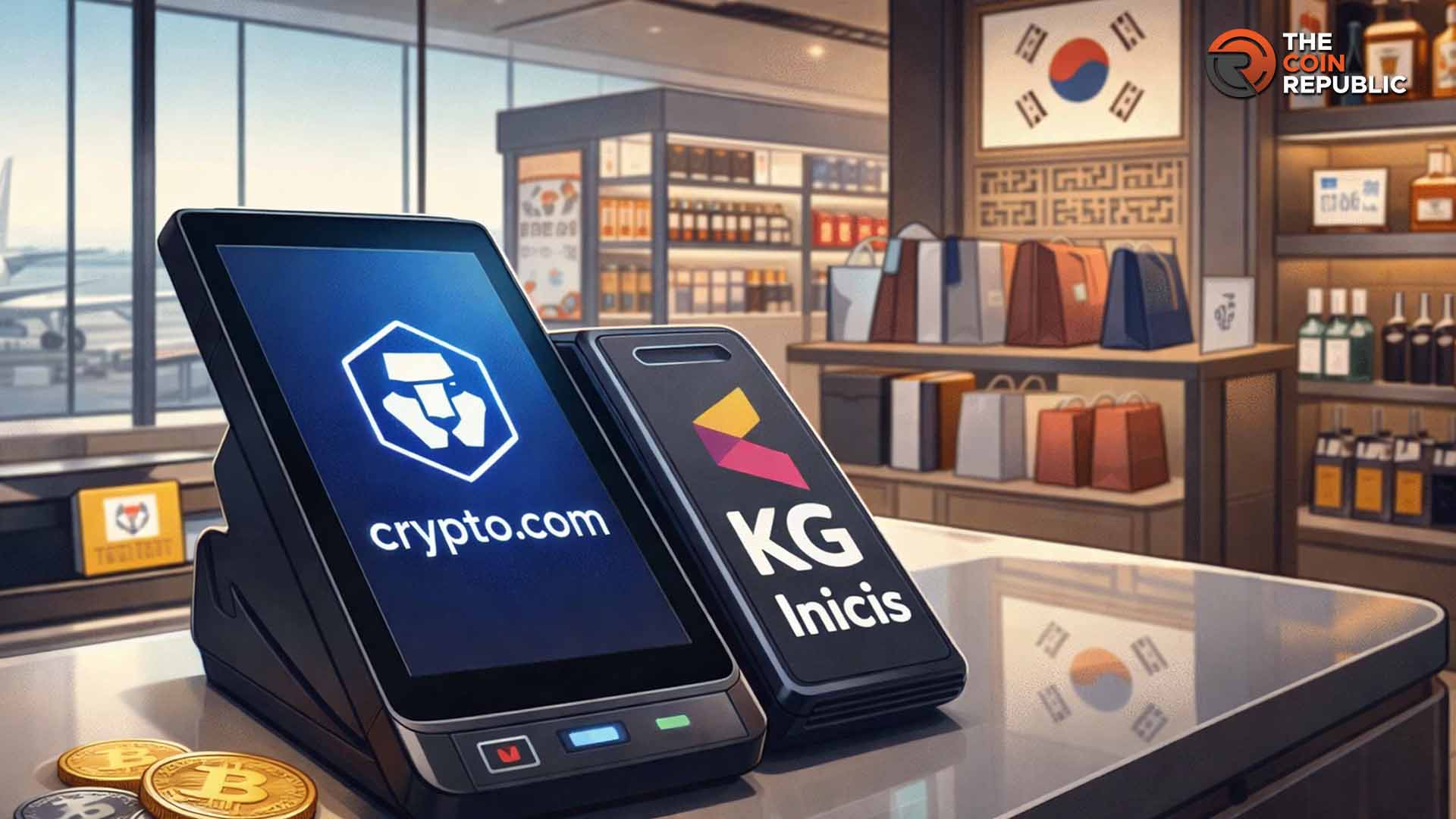
Crypto.com's partnership with KG Inicis in South Korea aims to integrate crypto payments for tourists, signaling a move towards real-world utility beyond trading. This collaboration could serve as a blueprint for broader crypto adoption in other markets if successful, potentially increasing transaction volumes for participating exchanges. The expansion into South Korea, a key crypto market, highlights Crypto.com's strategy to compete in the growing crypto payments sector against major players like Binance and Coinbase. By enabling crypto payments for goods and services, the partnership underscores the increasing practical applications of digital assets, moving them closer to mainstream payment methods.
Shiba Inu (SHIB) is experiencing a 6% correction from its recent peak, which analysts interpret as a potentially healthy pullback rather than a pump-and-dump scenario. The 200-day moving average at $0.00000860 represents a significant upside target, approximately 43% above current levels, suggesting continued bullish potential if support levels hold. The upcoming U.S. Federal Reserve rate decision and accompanying rhetoric are identified as key macroeconomic drivers that could influence SHIB's trajectory and the broader crypto market.

XRP's market cap surge past BNB, reaching a monthly high, is directly linked to Ripple's strategic expansion and VASP license application in Brazil, signaling increased institutional interest and potential for broader adoption in Latin America. The significant rise in XRP's open interest, up 33% in two weeks, suggests growing conviction among derivatives traders, potentially indicating anticipation of further price appreciation or increased market activity. Ripple's proactive approach in Brazil, including expanding custody services and seeking a VASP license, positions the company to leverage the region's advanced financial ecosystem and could drive demand for XRP-related services.
Mastercard's $1.8 billion acquisition of BVNK signals a significant strategic push into stablecoin infrastructure, aiming to enhance cross-border payment capabilities and compete directly with established players like Ripple and PayPal. The integration of BVNK's fiat and digital asset processing infrastructure will enable Mastercard to offer direct stablecoin settlements and crypto payments within its gateway, potentially increasing adoption and utility for digital currencies. This move positions Mastercard to leverage crypto-native settlement infrastructure and stablecoin routing, directly impacting the payments sector by aiming for faster, cheaper international transfers. The acquisition, expected to close by end of 2026, suggests a long-term commitment from a traditional finance giant to the digital asset space, potentially driving further institutional interest and innovation.

Strategy's shift to preferred stock for Bitcoin accumulation signals a move to reduce common stock dilution while managing significant dividend obligations. The company's substantial USD reserves provide a buffer against rising capital costs, suggesting a strategic approach to funding its growing Bitcoin holdings. Potential dividend increases on preferred stock to support its price below par indicate a focus on maintaining capital structure stability amidst market pressures. This funding model evolution implies a more conservative approach to common equity issuance, prioritizing preferred capital for future Bitcoin acquisitions.

Despite a recent price pullback, a 423% drop in Dogecoin's spot flow suggests a potential tightening of supply as holders move assets off-exchange, which could signal underlying demand. The potential inclusion of Dogecoin in T. Rowe Price's new ETF filing introduces a significant long-term demand driver, contingent on SEC approval and ETF performance. While short-term price action shows Dogecoin retreating from a five-day rally, key resistance levels at $0.103 and $0.12 will be critical to watch for a sustained bullish trend.
A 208% surge in Shiba Inu's exchange netflow indicates increased deposits, suggesting traders are preparing for potential sell-offs and could pressure SHIB's price downwards. Despite recent positive price action including a golden cross, the rising exchange netflow signals a potential shift in sentiment, with holders possibly taking profits or exiting due to prolonged underperformance. While SHIB's burn rate increased, the current netflow trend suggests that token burns alone may not be sufficient to counteract selling pressure, potentially hindering further price recovery.

Shibariumscan's indexing progress to 45% indicates ongoing recovery and improved reliability following recent server migration and potential indexing delays. The inclusion of Shiba Inu (SHIB) in T. Rowe Price's actively managed crypto ETF filing suggests growing institutional interest and potential for increased adoption. While network statistics rebound, the broader market sentiment remains cautious due to the upcoming Fed meeting, with SHIB trading down slightly in the last 24 hours.
Shiba Inu's open interest has surged 26% in 24 hours, indicating increased derivatives market activity and potential for a significant price move, despite a recent minor price dip. The divergence between rising open interest and a slight price decrease suggests underlying bullish sentiment among futures traders, who may anticipate a breakout to the upside. While overall market sentiment is positive, a dip in SHIB's open interest on Coinbase hints at mixed signals, warranting a cautious approach to immediate price action.
Pepe price is approaching a critical falling channel resistance, with a breakout potentially signaling a bullish reversal, but technical indicators suggest caution. Hidden bearish divergence on RSI and declining Chaikin Money Flow indicate that recent price gains may be driven by retail sentiment rather than strong institutional accumulation. Whale holders have reduced their Pepe holdings by approximately 3.43 trillion tokens since March 13, suggesting smart money is exiting positions ahead of potential downside. A failure to break the falling channel resistance could lead to a significant price drop, with support breaking at $0.0000033 potentially triggering a 26% decline.
Shiba Inu's exchange reserves approaching 81 trillion tokens signal increasing sell-side pressure, potentially leading to heightened volatility. The token's price action remains bearish, with multiple moving averages acting as resistance, indicating a lack of strong upward momentum. Despite minor short-term bounces, the absence of significant volume and sustained breaks above key EMAs suggest the broader downtrend is likely to persist. The current on-chain data points to holder uncertainty, with fluctuating netflows complicating any potential price recovery efforts.

Phantom's CFTC no-action relief allows non-custodial wallets to access regulated derivatives markets, potentially expanding DeFi integration with traditional finance. This development sets a precedent for crypto infrastructure providers engaging proactively with regulators, paving the way for similar access for other wallets and protocols. The ruling clarifies regulatory pathways for non-custodial interfaces, reducing broker registration burdens and encouraging compliant innovation in the derivatives space.

World's new AgentKit integrates World ID with Coinbase's x402 protocol, enabling AI agents to cryptographically prove human backing to combat bots and online abuse. This development addresses the growing problem of AI agents overwhelming services like ticket sales and API access, potentially improving user experience and resource allocation for platforms. While Worldcoin (WLD) is mentioned as a reward for World ID verification, the AgentKit itself does not require WLD tokens, focusing on the 'proof of personhood' aspect for broader utility. The integration with Coinbase's protocol suggests a move towards standardized solutions for AI agent verification, potentially impacting how platforms manage automated interactions and payments.
Signal context only. Validate with price action, liquidity, and risk limits before taking a position.
