
Navigating Crypto News

CoinFeather
Navigating Crypto News

Quick market read from this story
XRP's market cap surge past BNB, reaching a monthly high, is directly linked to Ripple's strategic expansion and VASP license application in Brazil, signaling increased institutional interest and potential for broader adoption in Latin America.
The significant rise in XRP's open interest, up 33% in two weeks, suggests growing conviction among derivatives traders, potentially indicating anticipation of further price appreciation or increased market activity.
Ripple's proactive approach in Brazil, including expanding custody services and seeking a VASP license, positions the company to leverage the region's advanced financial ecosystem and could drive demand for XRP-related services.
Deep Dive
XRP has overtaken Binance Coin (BNB) to become the fourth-largest cryptocurrency by market capitalization. This surge follows news of Ripple, the financial services firm associated with XRP, expanding its payment offerings in Brazil and its intention to apply for a Virtual Asset Service Provider (VASP) license in the country.
XRP reached a monthly high of $1.60 late Monday. The token has seen a significant increase, trading at $1.51 and showing an 8.5% gain over the past week. In contrast, BNB has experienced a slight decline, down 1.1% in the last 24 hours and up only 2.7% weekly, trading around $668. This divergence allowed XRP to surpass BNB in market cap.
The rise in XRP's price has been accompanied by a 33% jump in open interest over the last two weeks, reaching $2.82 billion. This indicates increased capital flow into derivatives markets and growing trader conviction.
Ripple is strengthening its presence in Brazil by expanding its Ripple Custody services. Ripple President Monica Long highlighted Latin America as a priority market, praising Brazil's advanced financial ecosystem. The expanded platform aims to provide institutions in the region with comprehensive tools for the modern financial system.
Ripple has a long-standing relationship with Brazil, having incrementally increased its service offerings. Its solutions currently support financial services for institutions like Banco Genial and Braza Bank, facilitating same-day USD disbursements, cross-border payments, and stablecoin settlements using its dollar-backed stablecoin, RLUSD.
As part of its strategic push, Ripple plans to apply for a VASP license through the Central Bank of Brazil. The firm has engaged with the Central Bank on institutional matters since at least 2020.
In 2024, Ripple launched its payments service in Brazil via the crypto exchange Mercado Bitcoin. Brazilian institutions will now gain access to Ripple Prime and Ripple Treasury, the firm's prime brokerage and treasury management platforms, offering a complete financial stack for the digital economy.
Ripple CEO Brad Garlinghouse views XRP as the company's "north star." The firm recently initiated a share buyback program, valuing the company at approximately $50 billion. Garlinghouse has expressed optimism about reaching a $1 trillion valuation in the future.
Source, catalyst, and sector overlap from the latest feed.
PayPal's PYUSD stablecoin expansion to 70 global markets signifies a significant step towards mainstream adoption for stablecoins in cross-border payments. The move by PayPal, a major financial player, to broaden PYUSD's accessibility could increase utility and liquidity for stablecoins, potentially impacting existing market leaders. With PYUSD's market cap surpassing $4 billion and its global rollout, this development suggests growing institutional interest and practical application of stablecoins beyond speculative trading.
Democratic lawmakers have introduced the BETS OFF Act, proposing a ban on prediction markets tied to government actions and specific non-financial outcomes, signaling increased regulatory scrutiny on novel betting platforms. The legislation targets alleged insider trading by individuals close to political power, specifically mentioning profits derived from bets on military actions, which could impact platforms facilitating such wagers. This regulatory push, alongside similar bills like the DEATH BETS Act, indicates a growing trend of lawmakers seeking to curb prediction markets, potentially affecting the operational landscape for platforms like Polymarket. Concerns about corruption and the potential for financial incentives to influence government decision-making are driving this legislative effort, suggesting a challenging environment for unregulated prediction markets.
The partnership between Allium and Walrus to integrate 65TB of historical blockchain data signifies a move towards more accessible and verifiable institutional-grade data, potentially enhancing on-chain finance and AI agent capabilities. By making data programmable and verifiable through Walrus's platform, this development could unlock new use cases for quantitative funds and AI agents, treating blockchain data as a tradable asset. The expansion of data availability from major blockchains like Bitcoin, Ethereum, and Sui on Walrus, coupled with Allium's existing client base (Visa, Stripe), suggests a growing demand for robust on-chain data infrastructure.
World's new AgentKit integrates World ID with Coinbase's x402 protocol, enabling AI agents to cryptographically prove human backing to combat bots and online abuse. This development addresses the growing problem of AI agents overwhelming services like ticket sales and API access, potentially improving user experience and resource allocation for platforms. While Worldcoin (WLD) is mentioned as a reward for World ID verification, the AgentKit itself does not require WLD tokens, focusing on the 'proof of personhood' aspect for broader utility. The integration with Coinbase's protocol suggests a move towards standardized solutions for AI agent verification, potentially impacting how platforms manage automated interactions and payments.
Strategy's substantial Bitcoin purchase, funded significantly by preferred shares, signals strong institutional conviction and potentially supports BTC's price action above $70k. BitMine's continued accumulation of ETH, now holding approximately 4% of the circulating supply, reinforces its position as a major ETH treasury and suggests sustained bullishness on Ethereum's long-term value. Circle's significant stock appreciation highlights the growing market interest in stablecoins as a defensive and yield-generating asset class amidst macro uncertainty, with USDC showing increased transaction volume over USDT. OpenSea's delay of the SEA token airdrop due to 'challenging market conditions' indicates a cautious approach to token launches and may signal broader market sentiment impacting NFT-related token events.
Arizona's Attorney General has filed 20 criminal counts against prediction market Kalshi, alleging illegal gambling and election wagering, directly challenging the platform's federal derivatives classification. This legal action escalates a multi-state regulatory conflict, with Kalshi asserting federal jurisdiction while states like Arizona and Nevada argue for state-level oversight of prediction markets. The charges against Kalshi, particularly concerning election bets, represent a significant regulatory hurdle that could impact the broader prediction market sector and its interaction with state gambling laws.
Citigroup's downward revision of Bitcoin and Ethereum price targets, citing stalled U.S. crypto legislation, signals increased institutional caution and potential near-term headwinds for asset prices. The delay of the CLARITY Act in the Senate is identified as a key risk factor, suggesting that regulatory uncertainty is directly impacting institutional investment flows and price outlooks. Despite Citigroup's revised targets, other major banks maintain more bullish outlooks, indicating a divided institutional sentiment and highlighting the importance of upcoming regulatory developments for market direction. The article contrasts institutional price targets with a notable opinion piece from Boris Johnson calling Bitcoin a Ponzi scheme, underscoring the ongoing narrative battle and the increasing maturity of Bitcoin's public perception.
Ripple's expansion into Brazil with a 'full financial stack' offering, including custody, prime brokerage, and stablecoin settlements, signals a strategic move to capture regulated institutional demand in a key Latin American market. The integration of RWA tokenization via local partners on the XRP Ledger highlights a growing trend of bridging traditional assets with blockchain infrastructure, potentially increasing utility for XRP Ledger beyond payments. Ripple's application for a VASP license in Brazil indicates a commitment to operating within the country's regulatory framework, which could pave the way for broader adoption by local financial institutions.
The CFTC's no-action letter for Phantom Technologies signals a more accommodating regulatory stance towards non-custodial interfaces connecting users to regulated markets, potentially reducing friction for similar platforms. This development provides clarity for crypto wallet providers seeking to offer access to regulated derivatives and event contracts without requiring full broker registration, which could encourage further innovation in bridging traditional and digital finance. The CFTC's proactive engagement with Phantom, alongside previous no-action letters for platforms like Polymarket, indicates a strategic effort to foster innovation while maintaining oversight, potentially influencing future regulatory approaches to digital asset services.
GSR's acquisition of Autonomous and Architech for $57 million signals a strategic move to consolidate crypto capital markets services, potentially streamlining token launches and treasury management for projects. The integration aims to address inefficiencies in the current fragmented landscape of token launch services, offering a more cohesive platform for fundraising, liquidity, and treasury operations. This consolidation could set a precedent for other market participants looking to offer end-to-end solutions for crypto projects, impacting the competitive landscape of advisory and capital markets services.
Live Feed
Loading the broader stream in the same flow as the homepage feed.
Shiba Inu has broken a short-term downtrend, signaling a potential shift in momentum, with analysts targeting a 50% rally if it can overcome the $0.0000070 resistance level. The weekly chart shows SHIB holding the lower boundary of a falling wedge pattern, a formation that often precedes a bullish reversal, suggesting potential accumulation by large-scale buyers. A confirmed breakout above the $0.0000070 resistance would be a significant structural event, potentially reversing the broader downtrend and attracting increased market attention.

Bitcoin's surge past $74,000, coinciding with a tech stock rally driven by AI chip advancements, signals a broader risk-on sentiment across markets. The positive market tone is reinforced by cooling oil prices and strong ETF inflows into Bitcoin, suggesting a confluence of macroeconomic relief and crypto-specific demand. Developments in AI hardware from companies like Nvidia and Tesla, coupled with Meta's strategic capital allocation, are fueling optimism in tech equities and potentially spilling over into crypto asset performance. Traders should monitor upcoming Fed policy and earnings from AI giants, as these factors will be crucial in determining the sustainability of the current optimism in both tech and crypto markets.
XRP's reclaim of the 4th largest market cap position, driven by an 11% price surge and a 125% trading volume increase, signals renewed investor interest and potential for further upside if key resistance levels are breached. The significant rise in XRP futures open interest, up 59%, indicates increased leveraged positioning by traders, which could lead to amplified price movements in either direction depending on market momentum. XRPL's milestone of over 7.7 million wallets, coupled with a recent spike in active addresses, suggests growing network adoption and user engagement, providing a fundamental underpinning to the price action. While XRP shows bullish price action and on-chain growth, technical analysis suggests a potential for a final corrective phase before a broader upward move, highlighting the importance of holding key support levels around $1.40 and $1.22.
Dogecoin is holding critical $0.10 support, with its Relative Strength Index (RSI) nearing 12-year oversold extremes, suggesting a potential accumulation phase before a significant rebound. Analysts highlight Dogecoin entering its third major market cycle, drawing parallels to historical consolidation periods that preceded substantial rallies, indicating potential for renewed bullish momentum. Despite short-term price fluctuations, the sustained defense of the $0.09-$0.10 support zone by long-term buyers suggests underlying strength and a foundation for future price appreciation.

Bitcoin faces resistance around $74K-$79K, with analysts identifying $68K as a key support level to watch for potential pullbacks. Despite recent price action, traders maintain a bearish outlook on higher timeframes, citing a lack of traditional bottoming signals and anticipating further sideways consolidation. Analysts suggest Bitcoin may outperform gold, as gold struggles to hold the $5,000 support level, potentially indicating a shift in macro asset allocation. The market is exhibiting skepticism towards Bitcoin's recent rally, with concerns of a potential 'bull trap' and a need for patience before confirming a sustained upward trend.
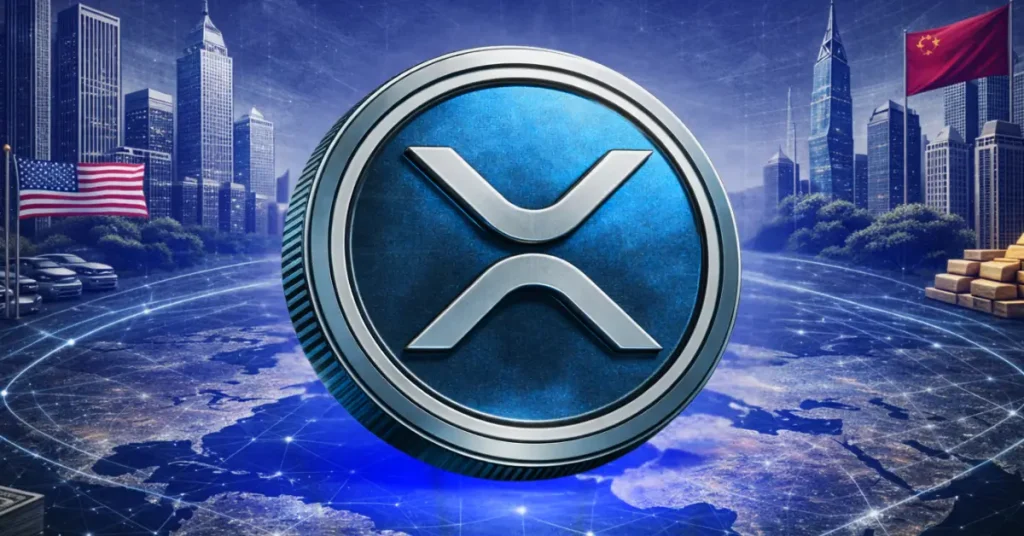
The analysis highlights XRP's extreme sensitivity to capital inflows, with every $1 million invested potentially increasing market cap by $490 million, suggesting significant leverage for even modest institutional participation. Despite current price consolidation near the upper range boundary, the underlying narrative for XRP focuses on its growing utility in cross-border payments and its role as a neutral bridge, supporting a long-term bullish outlook. The article frames XRP's market dynamics against a backdrop of global financial stress and tightening liquidity, positioning it as a potential beneficiary of its established payment infrastructure and growing adoption.

The era of Bitcoin treasury companies relying on 'accretive dilution' via equity issuance to fund Bitcoin accumulation is over, as roughly 40% now trade at a discount to NAV. Companies must pivot from passive 'Promoter' strategies to active 'Asset Manager' approaches, utilizing tools like basis trades and options to generate real yield and operational growth. Investor scrutiny is intensifying, shifting focus from narrative hype to demonstrable risk management, structured exposure, and productive deployment of Bitcoin holdings. The market is signaling a clear preference for disciplined asset management over passive accumulation, forcing treasury firms to adapt or risk irrelevance.

Theo's $100M facility for its gold-linked yield stablecoin, thUSD, signals institutional interest in non-Treasury yield alternatives. The thUSD yield generation strategy, combining tokenized gold with shorted futures, aims for 5-12% APY while hedging gold price volatility. The launch navigates the US GENIUS Act by generating yield from underlying assets rather than issuer-paid interest, differentiating it from restricted payment stablecoins. This development highlights a growing trend in tokenized commodities and alternative yield generation within the stablecoin market, despite ongoing regulatory debate.

PayPal's aggressive global expansion of PYUSD to 70 markets signals a strategic pivot towards leveraging stablecoins for global commerce, aiming to capture significant market share from traditional payment rails. The integration of PYUSD across Ethereum, Solana, and Arbitrum, coupled with PayPal's ongoing infrastructure development in logistics, AI, and retail, positions the company to challenge established players like Tether and potentially Visa/Mastercard. Despite regulatory advantages from the GENIUS Act, PYUSD faces stiff competition and potential market fragmentation, making its success contingent on effectively converting its 400 million user base into active stablecoin participants.

Crypto.com's partnership with KG Inicis in South Korea aims to integrate crypto payments for tourists, signaling a move towards real-world utility beyond trading. This collaboration could serve as a blueprint for broader crypto adoption in other markets if successful, potentially increasing transaction volumes for participating exchanges. The expansion into South Korea, a key crypto market, highlights Crypto.com's strategy to compete in the growing crypto payments sector against major players like Binance and Coinbase. By enabling crypto payments for goods and services, the partnership underscores the increasing practical applications of digital assets, moving them closer to mainstream payment methods.
Shiba Inu (SHIB) is experiencing a 6% correction from its recent peak, which analysts interpret as a potentially healthy pullback rather than a pump-and-dump scenario. The 200-day moving average at $0.00000860 represents a significant upside target, approximately 43% above current levels, suggesting continued bullish potential if support levels hold. The upcoming U.S. Federal Reserve rate decision and accompanying rhetoric are identified as key macroeconomic drivers that could influence SHIB's trajectory and the broader crypto market.
Ethereum's estimated leverage ratio on Binance has recovered to 0.69, signaling renewed trader optimism and a potential shift towards a new liquidity cycle. The recovery in leverage follows a significant liquidation event, suggesting that the market may be absorbing previous sell-offs and positioning for further upside. Technical analysis indicates ETH has broken key resistance at $2,152, with targets at $2,337 and $2,538, reinforcing the bullish sentiment driven by on-chain metrics.
Signal context only. Validate with price action, liquidity, and risk limits before taking a position.
