
Navigating Crypto News

CoinFeather
Navigating Crypto News
Quick market read from this story
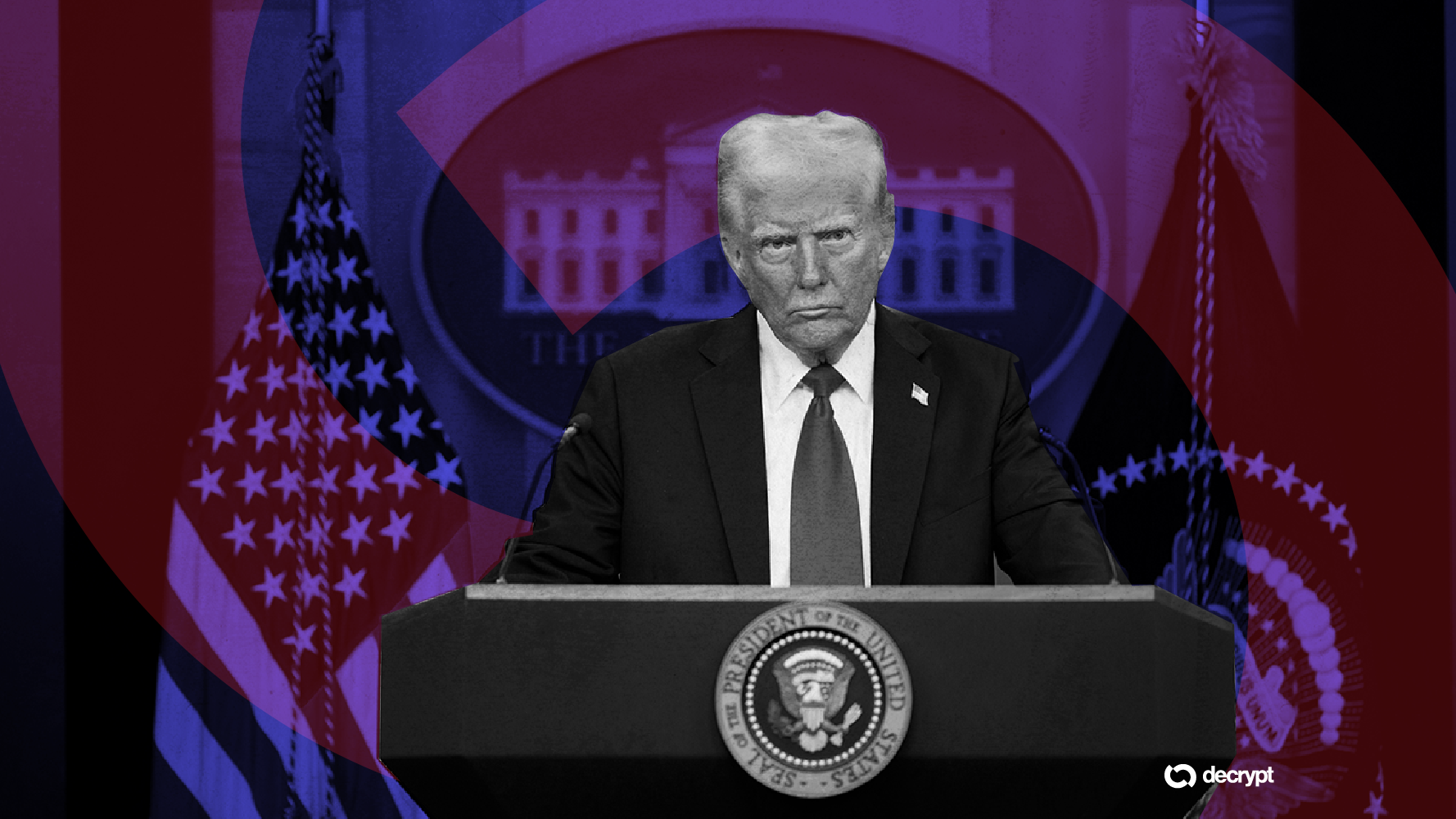
Democratic lawmakers have introduced the BETS OFF Act, proposing a ban on prediction markets tied to government actions and specific non-financial outcomes, signaling increased regulatory scrutiny on novel betting platforms.
The legislation targets alleged insider trading by individuals close to political power, specifically mentioning profits derived from bets on military actions, which could impact platforms facilitating such wagers.
This regulatory push, alongside similar bills like the DEATH BETS Act, indicates a growing trend of lawmakers seeking to curb prediction markets, potentially affecting the operational landscape for platforms like Polymarket.
Concerns about corruption and the potential for financial incentives to influence government decision-making are driving this legislative effort, suggesting a challenging environment for unregulated prediction markets.
Deep Dive
Democratic lawmakers Sen. Chris Murphy (D-CT) and Rep. Greg Casar (D-TX) have introduced the BETS OFF Act, a new bill aimed at outlawing prediction markets focused on government actions, war, assassinations, and other sensitive or predetermined outcomes. The legislation targets both users and facilitators of these markets, with proponents arguing that such platforms are enabling insider trading and turning the U.S. into a casino where the well-connected profit from non-public information.
During a press conference, Murphy and Casar specifically criticized prediction markets tied to military actions. Murphy cited examples of bets on U.S. strikes in the Middle East that appeared to be informed by insider knowledge, suggesting that individuals close to the White House, potentially including those connected to the Trump administration, profited from these wagers. He highlighted that some accounts making these bets were created on the same day the wagers were placed, calling the activity "fundamentally corrupt." The lawmakers noted a pattern of suspicious betting activity, referencing past instances such as bets surrounding the arrest of former Venezuelan leader Nicolas Maduro.
The BETS OFF Act, which stands for Banning Event Trading on Sensitive Operations and Federal Functions Act, would ban prediction markets related to terrorism, assassinations, and war. The bill also extends to prohibit wagers on any event that is not financial, commercial, or economic if its outcome is determined by government action, is known in advance, or is entirely controlled by an individual. Examples provided include prediction markets on events like the Super Bowl halftime show or the Academy Awards.
Casar expressed concerns that the proliferation of prediction markets, particularly under the Trump administration, could incentivize corruption and pervert decision-making within government. He stated, "We shouldn't live in a country where government officials or well-connected people can make money off of secret information that is supposed to be used in the public interest." The introduction of the BETS OFF Act follows similar legislative efforts, such as the DEATH BETS Act introduced by Rep. Mike Levin (D-CA) and Sen. Adam Schiff (D-CA), which also aims to ban war-related prediction markets. Additionally, Casar voiced concerns about Trump Media & Technology Group potentially developing its own prediction market, labeling it "Trump's very own corruption machine."
Source, catalyst, and sector overlap from the latest feed.
OpenAI's release of GPT-5.4 Mini and Nano introduces more cost-effective and faster AI models, which could significantly lower the barrier to entry for developers and businesses needing high-volume AI workloads. The introduction of smaller, specialized AI models allows for hybrid systems where flagship models plan tasks and smaller models execute them, potentially optimizing performance and cost for a wider range of applications. While trading some accuracy for speed and cost, these new models demonstrate competitive performance on specific benchmarks like SWE-Bench Pro and OSWorld-Verified, indicating their practical utility for tasks such as coding assistance and workflow automation.
Geopolitical tensions in the Middle East are driving significant price appreciation in commodities like urea, with a 34% surge in the past month due to supply chain disruptions via the Strait of Hormuz. The volatility in traditional commodity markets, particularly oil, is creating a spillover effect into cryptocurrencies, with Bitcoin showing price swings and analysts re-evaluating its 'digital safe haven' narrative. The correlation between geopolitical stress, commodity price inflation, and Bitcoin's price action suggests a potential resurgence of the 'digital gold' thesis, warranting close observation for near-term trading opportunities.
PayPal's PYUSD stablecoin expansion to 70 global markets signifies a significant step towards mainstream adoption for stablecoins in cross-border payments. The move by PayPal, a major financial player, to broaden PYUSD's accessibility could increase utility and liquidity for stablecoins, potentially impacting existing market leaders. With PYUSD's market cap surpassing $4 billion and its global rollout, this development suggests growing institutional interest and practical application of stablecoins beyond speculative trading.
The partnership between Allium and Walrus to integrate 65TB of historical blockchain data signifies a move towards more accessible and verifiable institutional-grade data, potentially enhancing on-chain finance and AI agent capabilities. By making data programmable and verifiable through Walrus's platform, this development could unlock new use cases for quantitative funds and AI agents, treating blockchain data as a tradable asset. The expansion of data availability from major blockchains like Bitcoin, Ethereum, and Sui on Walrus, coupled with Allium's existing client base (Visa, Stripe), suggests a growing demand for robust on-chain data infrastructure.
XRP's market cap surge past BNB, reaching a monthly high, is directly linked to Ripple's strategic expansion and VASP license application in Brazil, signaling increased institutional interest and potential for broader adoption in Latin America. The significant rise in XRP's open interest, up 33% in two weeks, suggests growing conviction among derivatives traders, potentially indicating anticipation of further price appreciation or increased market activity. Ripple's proactive approach in Brazil, including expanding custody services and seeking a VASP license, positions the company to leverage the region's advanced financial ecosystem and could drive demand for XRP-related services.
Arizona's Attorney General has filed criminal charges against Kalshi for operating an illegal gambling business, directly challenging the platform's legal standing and potentially impacting its operations within the state. The legal action highlights a growing conflict between state regulators and prediction market platforms like Kalshi, with the CFTC chair advocating for federal jurisdiction, creating regulatory uncertainty. Despite this state-level charge, Kalshi maintains it is under federal jurisdiction, citing previous court rulings, suggesting a prolonged legal battle that could set precedents for similar platforms.
Bitcoin's recent eight-day rally to $76,000, despite increased volume, faces significant resistance from 50-day and 200-day moving averages, suggesting a potential 'dead cat bounce' scenario. Upcoming catalysts including the FOMC decision, Quadruple Witching, and a Basel 3 vote introduce considerable volatility risk, with a failure to hold above $75,000 potentially leading to a sharp decline towards $50,000. The market is closely watching for confirmation of a trend shift, as current price action remains below key resistance levels and lacks strong conviction from volume expansion, indicating a weak broader structure.
The increasing integration of tokenized stocks by major exchanges like Bitget, Coinbase, and Kraken signals a significant trend towards 'universal exchanges' that bridge traditional finance and digital assets. The rapid growth of the tokenized stock market, reaching nearly $1 billion in market cap, indicates strong early adoption and potential for further expansion, despite regulatory hurdles. Regulatory clarity and initiatives in the US, EU, and UK are paving the way for tokenized securities, but unresolved issues like voting rights and offshore compliance present ongoing challenges. The competitive landscape among exchanges offering tokenized stocks suggests a strategic shift to capture a broader user base and increase trading volume beyond traditional crypto assets.
Arizona's Attorney General has filed 20 criminal counts against prediction market Kalshi, alleging illegal gambling and election wagering, directly challenging the platform's federal derivatives classification. This legal action escalates a multi-state regulatory conflict, with Kalshi asserting federal jurisdiction while states like Arizona and Nevada argue for state-level oversight of prediction markets. The charges against Kalshi, particularly concerning election bets, represent a significant regulatory hurdle that could impact the broader prediction market sector and its interaction with state gambling laws.
Citigroup's downward revision of Bitcoin and Ethereum price targets, citing stalled U.S. crypto legislation, signals increased institutional caution and potential near-term headwinds for asset prices. The delay of the CLARITY Act in the Senate is identified as a key risk factor, suggesting that regulatory uncertainty is directly impacting institutional investment flows and price outlooks. Despite Citigroup's revised targets, other major banks maintain more bullish outlooks, indicating a divided institutional sentiment and highlighting the importance of upcoming regulatory developments for market direction. The article contrasts institutional price targets with a notable opinion piece from Boris Johnson calling Bitcoin a Ponzi scheme, underscoring the ongoing narrative battle and the increasing maturity of Bitcoin's public perception.
Bitcoin's price action above $70,000 has triggered a shift in derivatives markets, with perpetual futures funding rates turning positive and long positions now dominating, indicating increased trader bullishness ahead of the Fed decision. While short-term holders show moderate gains and potential for profit-taking (30-day MVRV at +7.1%), long-term holders remain in a strong position (365-day MVRV at +22.1%), suggesting the broader market cycle has room for further development. Significant whale accumulation of over 40,000 BTC in the past week, coupled with positive volume trends on major exchanges, provides underlying support for Bitcoin's current recovery, despite some inflows indicating potential selling pressure near resistance. The market is closely watching Bitcoin's reaction to the $75,000-$76,000 resistance zone, as a failure to break through could lead to a pause or pullback, especially if futures conviction does not keep pace with spot demand.
Bitcoin's surge past $74,000, coinciding with a tech stock rally driven by AI chip advancements, signals a broader risk-on sentiment across markets. The positive market tone is reinforced by cooling oil prices and strong ETF inflows into Bitcoin, suggesting a confluence of macroeconomic relief and crypto-specific demand. Developments in AI hardware from companies like Nvidia and Tesla, coupled with Meta's strategic capital allocation, are fueling optimism in tech equities and potentially spilling over into crypto asset performance. Traders should monitor upcoming Fed policy and earnings from AI giants, as these factors will be crucial in determining the sustainability of the current optimism in both tech and crypto markets.
Live Feed
Loading the broader stream in the same flow as the homepage feed.

Mastercard's $1.8 billion acquisition of BVNK signals a strategic pivot towards integrating stablecoins as core global settlement rails, moving them beyond niche use cases. The deal validates the growing institutional view that stablecoins complement, rather than compete with, existing payment networks like Mastercard's, potentially accelerating their adoption for cross-border and B2B transactions. While the near-term financial impact is modest, this acquisition positions Mastercard as a leader in the evolving digital asset payment landscape, anticipating significant future growth in stablecoin transaction volumes.

A recurring weekly chart pattern on SOL, previously preceding significant rallies, has reappeared, suggesting potential for a bullish resurgence. Technical analysis indicates SOL may have completed an accumulation phase with an ascending triangle breakout, targeting $120 as a key reclaimable resistance level. While chart patterns are constructive, current derivatives and spot market data show cautious market activity, suggesting the recovery is still in early stages and not yet aggressively leveraged. The $120 level is identified as a critical threshold for SOL, acting as a pivotal point for trader positioning and overall market sentiment, with $145 as a subsequent target if momentum sustains.

Bitcoin's retest of $75k indicates renewed buyer momentum following a February downturn, suggesting a potential stabilization above the $70,000 range despite lingering macro uncertainties. The introduction of G Coin by Playnance as a utility token highlights ongoing efforts to build ecosystem value, though its traction will likely depend on Bitcoin's broader market performance and macro stability. Citigroup's reduced 12-month Bitcoin target to $112,000 and expectation of range-trading around $70,000 underscore the market's sensitivity to regulatory developments and macro conditions, tempering immediate upside expectations. The article frames G Coin as a utility token for access and rewards, distinct from governance or profit-sharing, positioning it within a market where the line between utility and speculation remains blurred.

VersaBank's expansion of its tokenized deposit platform to include USD-CAD FX functionality represents a practical application of blockchain for cross-border payments, potentially improving efficiency over traditional methods. The development highlights a growing trend of traditional financial institutions exploring tokenized deposits, positioning them as a bridge between legacy banking systems and blockchain technology for institutional use cases. While not a direct crypto asset, the advancement in tokenized deposits by a regulated bank could signal broader acceptance and integration of digital asset concepts within traditional finance.
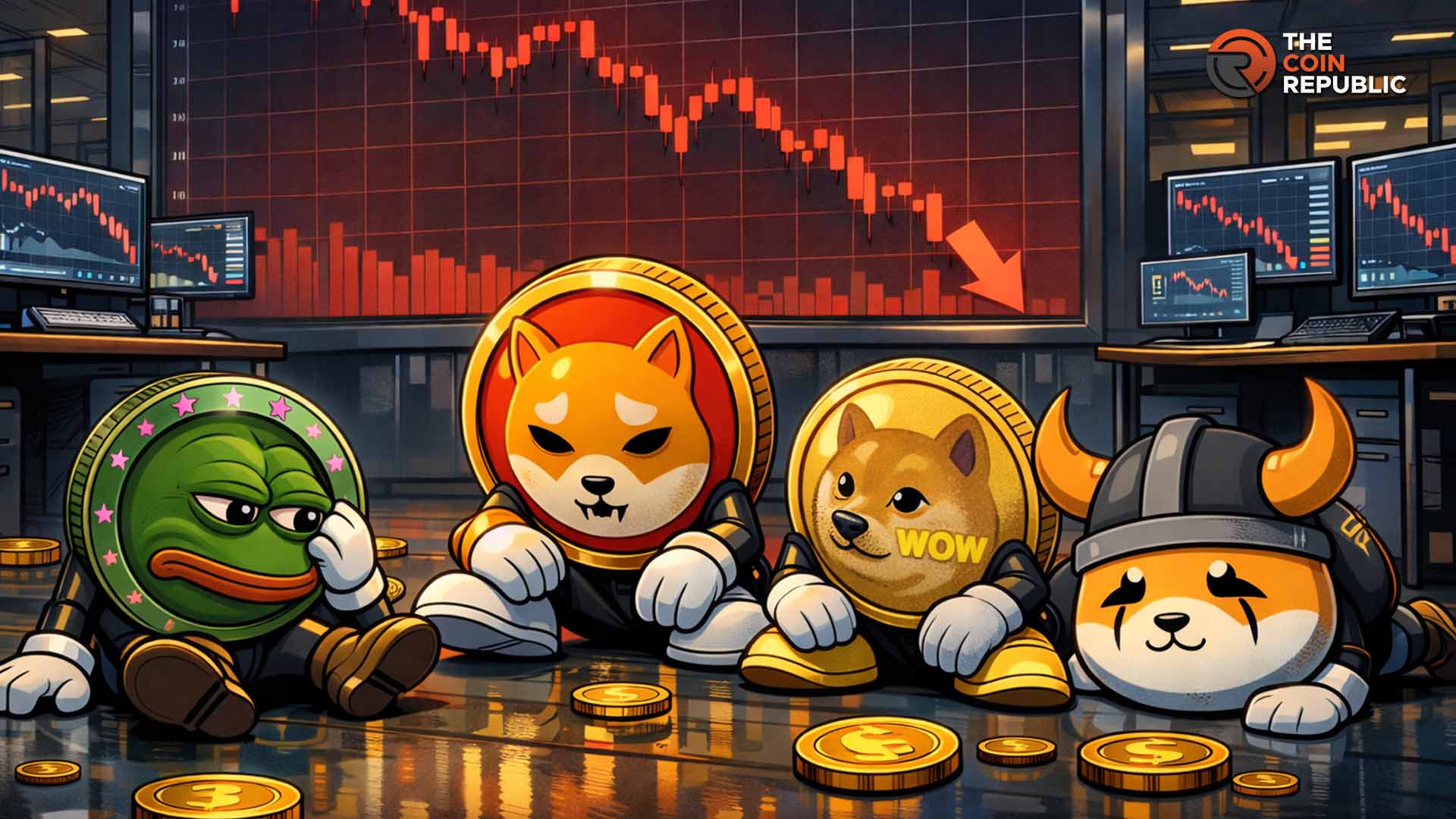
The memecoin market experienced a significant pullback, dropping 4% to $31.61B, driven by increased geopolitical risk aversion and profit-taking from recent rallies. Heightened US-Iran tensions are pushing investors away from speculative assets like memecoins, leading to sell-offs and a decline in market momentum. While the broader crypto market shows resilience, memecoins are failing to sustain gains, indicating a potential shift in risk appetite among traders. Whale activity, including large SHIB token sales, contributed to the downturn, highlighting the impact of large holders on memecoin price action.

XRP's price surge driven by on-chain activity, including new wallet creation and active addresses, contrasts sharply with significant outflows from XRP ETFs, indicating a divergence between network adoption and institutional investment sentiment. Despite a 10% weekly rally, XRP ETFs have experienced their steepest monthly outflows of the year, totaling $58 million, suggesting institutional investors are reducing exposure while retail and on-chain activity signal growing user engagement. The increasing ledger activity and transaction volume on the XRP Ledger, alongside a decrease in speculative leverage as indicated by falling open interest, could set the stage for organic price discovery if institutional outflows subside. While XRP's market structure shows reduced overhead resistance, sustained price appreciation will likely depend on a reversal of institutional ETF outflows and a broader market shift favoring alternative crypto assets.
Shiba Inu has broken a short-term downtrend, signaling a potential shift in momentum, with analysts targeting a 50% rally if it can overcome the $0.0000070 resistance level. The weekly chart shows SHIB holding the lower boundary of a falling wedge pattern, a formation that often precedes a bullish reversal, suggesting potential accumulation by large-scale buyers. A confirmed breakout above the $0.0000070 resistance would be a significant structural event, potentially reversing the broader downtrend and attracting increased market attention.

GSR's acquisition of Autonomous and Architech for $57 million signals a strategic move to consolidate crypto capital markets services, potentially streamlining token launches and treasury management for projects. The integration aims to address inefficiencies in the current fragmented landscape of token launch services, offering a more cohesive platform for fundraising, liquidity, and treasury operations. This consolidation could set a precedent for other market participants looking to offer end-to-end solutions for crypto projects, impacting the competitive landscape of advisory and capital markets services.
XRP's reclaim of the 4th largest market cap position, driven by an 11% price surge and a 125% trading volume increase, signals renewed investor interest and potential for further upside if key resistance levels are breached. The significant rise in XRP futures open interest, up 59%, indicates increased leveraged positioning by traders, which could lead to amplified price movements in either direction depending on market momentum. XRPL's milestone of over 7.7 million wallets, coupled with a recent spike in active addresses, suggests growing network adoption and user engagement, providing a fundamental underpinning to the price action. While XRP shows bullish price action and on-chain growth, technical analysis suggests a potential for a final corrective phase before a broader upward move, highlighting the importance of holding key support levels around $1.40 and $1.22.
Signal context only. Validate with price action, liquidity, and risk limits before taking a position.
