
Navigating Crypto News

CoinFeather
Navigating Crypto News

Quick market read from this story
VersaBank's expansion of its tokenized deposit platform to include USD-CAD FX functionality represents a practical application of blockchain for cross-border payments, potentially improving efficiency over traditional methods.
The development highlights a growing trend of traditional financial institutions exploring tokenized deposits, positioning them as a bridge between legacy banking systems and blockchain technology for institutional use cases.
While not a direct crypto asset, the advancement in tokenized deposits by a regulated bank could signal broader acceptance and integration of digital asset concepts within traditional finance.
Deep Dive
VersaBank, a Canadian digital bank, has introduced foreign exchange (FX) capabilities to its tokenized deposit platform, enabling users to convert between US and Canadian dollars within its blockchain-based system. This upgrade allows for real-time, 24/7 currency conversion using Real Bank Tokenized Deposits (RBTDs), which are digital representations of fiat deposits issued and backed by the bank. The new feature aims to streamline cross-border transactions by reducing reliance on traditional, time-restricted FX systems.
The addition of FX functionality represents an incremental step toward commercialization for VersaBank's tokenized deposit system, which has been in pilot phases since last year. RBTDs are tokenized versions of bank deposits that can be transferred on blockchain infrastructure. They are liabilities of the issuing bank and are backed 1:1 by customer deposits, operating within the traditional banking system unlike nonbank-issued stablecoins.
Financial institutions are increasingly exploring tokenized deposits to leverage blockchain's speed and programmability while maintaining the security of traditional deposits. This technology is being considered for applications such as cross-border payments and financial settlements. Notable industry developments include BNY Mellon's launch of tokenized deposits for institutional clients to support collateral and margin requirements, and Singapore's Project Guardian, which is investigating asset tokenization, including tokenized deposits.
Tokenization is emerging as one of blockchain's fastest-growing use cases. Industry data indicates that over $27 billion in assets have been tokenized across various products, including private credit, US Treasury bonds, and equities. This trend highlights a significant shift towards digital representations of traditional assets within financial markets.
Source, catalyst, and sector overlap from the latest feed.
Tether's launch of an AI training framework for consumer hardware, including smartphones and non-Nvidia GPUs, democratizes AI development by lowering cost and accessibility barriers. The framework's ability to run large language models on limited hardware signals a potential shift in AI infrastructure, reducing reliance on centralized cloud services. This development aligns with a broader trend of crypto companies expanding into AI and high-performance computing, potentially creating new revenue streams and use cases beyond traditional blockchain functions.
Arizona's Attorney General has filed criminal charges against Kalshi for operating an illegal gambling business, directly challenging the platform's legal standing and potentially impacting its operations within the state. The legal action highlights a growing conflict between state regulators and prediction market platforms like Kalshi, with the CFTC chair advocating for federal jurisdiction, creating regulatory uncertainty. Despite this state-level charge, Kalshi maintains it is under federal jurisdiction, citing previous court rulings, suggesting a prolonged legal battle that could set precedents for similar platforms.
A recurring weekly chart pattern on SOL, previously preceding significant rallies, has reappeared, suggesting potential for a bullish resurgence. Technical analysis indicates SOL may have completed an accumulation phase with an ascending triangle breakout, targeting $120 as a key reclaimable resistance level. While chart patterns are constructive, current derivatives and spot market data show cautious market activity, suggesting the recovery is still in early stages and not yet aggressively leveraged. The $120 level is identified as a critical threshold for SOL, acting as a pivotal point for trader positioning and overall market sentiment, with $145 as a subsequent target if momentum sustains.
GSR's acquisition of Autonomous and Architech for $57 million signals a strategic move to consolidate crypto capital markets services, potentially streamlining token launches and treasury management for projects. The integration aims to address inefficiencies in the current fragmented landscape of token launch services, offering a more cohesive platform for fundraising, liquidity, and treasury operations. This consolidation could set a precedent for other market participants looking to offer end-to-end solutions for crypto projects, impacting the competitive landscape of advisory and capital markets services.
Bitcoin faces resistance around $74K-$79K, with analysts identifying $68K as a key support level to watch for potential pullbacks. Despite recent price action, traders maintain a bearish outlook on higher timeframes, citing a lack of traditional bottoming signals and anticipating further sideways consolidation. Analysts suggest Bitcoin may outperform gold, as gold struggles to hold the $5,000 support level, potentially indicating a shift in macro asset allocation. The market is exhibiting skepticism towards Bitcoin's recent rally, with concerns of a potential 'bull trap' and a need for patience before confirming a sustained upward trend.
OpenAI's release of GPT-5.4 Mini and Nano introduces more cost-effective and faster AI models, which could significantly lower the barrier to entry for developers and businesses needing high-volume AI workloads. The introduction of smaller, specialized AI models allows for hybrid systems where flagship models plan tasks and smaller models execute them, potentially optimizing performance and cost for a wider range of applications. While trading some accuracy for speed and cost, these new models demonstrate competitive performance on specific benchmarks like SWE-Bench Pro and OSWorld-Verified, indicating their practical utility for tasks such as coding assistance and workflow automation.
Mastercard's $1.8 billion acquisition of BVNK signals a strategic pivot towards integrating stablecoins as core global settlement rails, moving them beyond niche use cases. The deal validates the growing institutional view that stablecoins complement, rather than compete with, existing payment networks like Mastercard's, potentially accelerating their adoption for cross-border and B2B transactions. While the near-term financial impact is modest, this acquisition positions Mastercard as a leader in the evolving digital asset payment landscape, anticipating significant future growth in stablecoin transaction volumes.
The increasing integration of tokenized stocks by major exchanges like Bitget, Coinbase, and Kraken signals a significant trend towards 'universal exchanges' that bridge traditional finance and digital assets. The rapid growth of the tokenized stock market, reaching nearly $1 billion in market cap, indicates strong early adoption and potential for further expansion, despite regulatory hurdles. Regulatory clarity and initiatives in the US, EU, and UK are paving the way for tokenized securities, but unresolved issues like voting rights and offshore compliance present ongoing challenges. The competitive landscape among exchanges offering tokenized stocks suggests a strategic shift to capture a broader user base and increase trading volume beyond traditional crypto assets.
PayPal's PYUSD stablecoin expansion to 70 global markets signifies a significant step towards mainstream adoption for stablecoins in cross-border payments. The move by PayPal, a major financial player, to broaden PYUSD's accessibility could increase utility and liquidity for stablecoins, potentially impacting existing market leaders. With PYUSD's market cap surpassing $4 billion and its global rollout, this development suggests growing institutional interest and practical application of stablecoins beyond speculative trading.
The SEC's clarification that most crypto assets are not securities, including staking and airdrops, removes a significant regulatory overhang that has plagued the industry. This guidance provides much-needed clarity for market participants, potentially encouraging further development and investment by reducing legal uncertainty around asset classification. While not a definitive legislative solution, this SEC interpretation serves as a bridge, signaling a more pragmatic approach to crypto regulation and potentially paving the way for future bipartisan legislation.
XRP's price surge driven by on-chain activity, including new wallet creation and active addresses, contrasts sharply with significant outflows from XRP ETFs, indicating a divergence between network adoption and institutional investment sentiment. Despite a 10% weekly rally, XRP ETFs have experienced their steepest monthly outflows of the year, totaling $58 million, suggesting institutional investors are reducing exposure while retail and on-chain activity signal growing user engagement. The increasing ledger activity and transaction volume on the XRP Ledger, alongside a decrease in speculative leverage as indicated by falling open interest, could set the stage for organic price discovery if institutional outflows subside. While XRP's market structure shows reduced overhead resistance, sustained price appreciation will likely depend on a reversal of institutional ETF outflows and a broader market shift favoring alternative crypto assets.
Live Feed
Loading the broader stream in the same flow as the homepage feed.
Shibariumscan's indexing progress to 45% indicates ongoing technical recovery, suggesting improved data reliability for the Shiba Inu ecosystem. The inclusion of SHIB in T. Rowe Price's proposed digital asset ETF filing signals growing institutional interest, potentially broadening adoption pathways. While network restoration is underway, the incomplete indexing on Shibariumscan means current on-chain metrics may not be fully representative, requiring continued monitoring. The dual focus on Shibarium's technical recovery and potential ETF inclusion creates a mixed sentiment, with progress on infrastructure potentially offset by broader market factors and the incomplete explorer data.

Top-tier crypto exchanges are demonstrating a significant lead in governance and security, creating a 20-point 'governance gap' over lower-ranked platforms, indicating a potential consolidation trend towards compliant and institutionally-focused venues. The increasing emphasis on regulatory compliance, highlighted by the upcoming MiCA framework deadline, suggests that exchanges with strong governance scores are better positioned for future market conditions and potential regulatory scrutiny. Crypto.com maintains its leading position with high scores in business and security, alongside other AA-rated platforms like Bitstamp, Kraken, Coinbase, OKX, and Gemini, signaling a concentration of market trust among a select group of exchanges.
Bitcoin faces its first significant recession-era test as an institutional asset, with Moody's recession odds at a critical 48.6% 'point of no return' signal. The market will assess whether Bitcoin acts as a risk-off asset correlating with traditional markets or as a resilient alternative during a prolonged economic slowdown. Elevated oil prices combined with slowing growth create a stagflationary risk, potentially pressuring Bitcoin if it behaves as a liquidity-sensitive asset. Continued institutional inflows into Bitcoin despite rising recession odds suggest a potential shift in its market narrative towards a macro hedge or policy hedge.
Senator Warren's inquiry into Pentagon granting classified access to Elon Musk's Grok AI highlights significant security concerns and potential risks to sensitive military information, suggesting a regulatory and oversight challenge for AI integration in defense. The Pentagon's decision to proceed with Grok access despite NSA warnings and a history of problematic AI outputs, including child exploitation material and antisemitic content, indicates a potential shift in risk tolerance for AI deployment in critical national security systems. The lawsuit against xAI for generating child sexual abuse material and the prior DOGE employee data leak raise serious questions about xAI's data handling and safety protocols, potentially impacting investor confidence and future partnerships, especially in sensitive government contracts. The Pentagon's replacement of Anthropic with xAI and OpenAI for classified systems, driven by Anthropic's refusal to comply with 'all lawful purposes' demands, suggests a strategic pivot towards AI providers with fewer ethical boundaries, potentially creating a new dynamic in defense AI procurement.

South Korean regulators have imposed a significant fine and a six-month partial business ban on Bithumb, signaling increased regulatory scrutiny on major exchanges within the country. The penalties stem from millions of AML and KYC violations, highlighting operational compliance risks for exchanges handling substantial user bases and transaction volumes. While existing users can continue trading, the restriction on new accounts and the substantial fine could impact Bithumb's market share and user growth in the short to medium term.
Solana's weekly chart displays a rare macro bottom pattern, historically preceding significant rallies of over 140%, suggesting potential for a substantial upward price movement if confirmed. The price action indicates Solana is holding key support around the mid-$80s and approaching resistance at $125, with a break above this level being crucial for validating the potential bottom pattern and initiating a new uptrend. While technical indicators like RSI show recovery from oversold conditions, they remain below mid-range, signaling that momentum has not fully shifted, thus requiring further confirmation of strength before a decisive bullish outlook. The reappearance of bottom candle clusters, previously seen before major Solana rallies in 2023 and 2025, presents a compelling technical setup that traders will closely monitor for signs of a trend reversal and potential buying opportunities.
Bitcoin's price action above $70,000 has triggered a shift in derivatives markets, with perpetual futures funding rates turning positive and long positions now dominating, indicating increased trader bullishness ahead of the Fed decision. While short-term holders show moderate gains and potential for profit-taking (30-day MVRV at +7.1%), long-term holders remain in a strong position (365-day MVRV at +22.1%), suggesting the broader market cycle has room for further development. Significant whale accumulation of over 40,000 BTC in the past week, coupled with positive volume trends on major exchanges, provides underlying support for Bitcoin's current recovery, despite some inflows indicating potential selling pressure near resistance. The market is closely watching Bitcoin's reaction to the $75,000-$76,000 resistance zone, as a failure to break through could lead to a pause or pullback, especially if futures conviction does not keep pace with spot demand.

Bitcoin's retest of $75k indicates renewed buyer momentum following a February downturn, suggesting a potential stabilization above the $70,000 range despite lingering macro uncertainties. The introduction of G Coin by Playnance as a utility token highlights ongoing efforts to build ecosystem value, though its traction will likely depend on Bitcoin's broader market performance and macro stability. Citigroup's reduced 12-month Bitcoin target to $112,000 and expectation of range-trading around $70,000 underscore the market's sensitivity to regulatory developments and macro conditions, tempering immediate upside expectations. The article frames G Coin as a utility token for access and rewards, distinct from governance or profit-sharing, positioning it within a market where the line between utility and speculation remains blurred.
Geopolitical tensions in the Middle East are driving significant price appreciation in commodities like urea, with a 34% surge in the past month due to supply chain disruptions via the Strait of Hormuz. The volatility in traditional commodity markets, particularly oil, is creating a spillover effect into cryptocurrencies, with Bitcoin showing price swings and analysts re-evaluating its 'digital safe haven' narrative. The correlation between geopolitical stress, commodity price inflation, and Bitcoin's price action suggests a potential resurgence of the 'digital gold' thesis, warranting close observation for near-term trading opportunities.
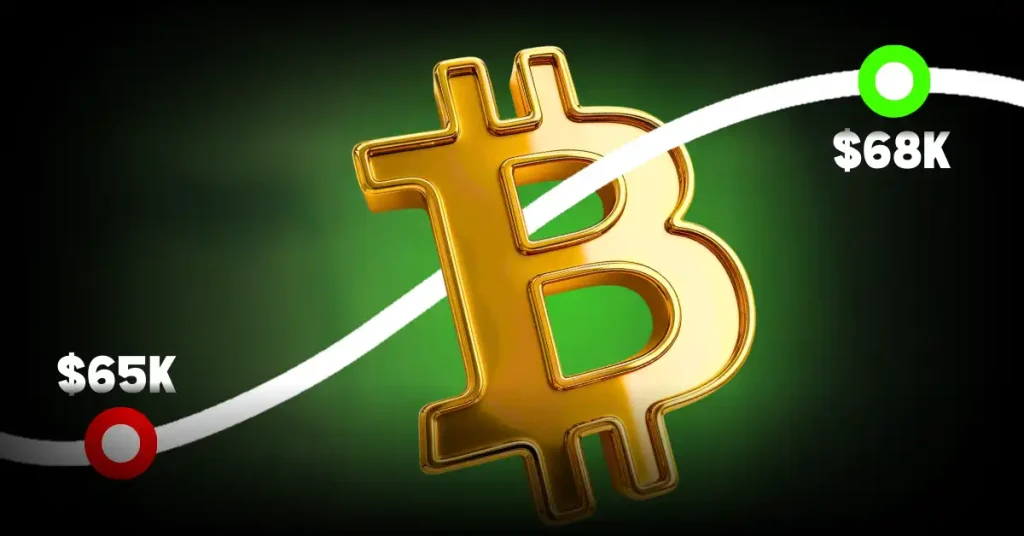
Bitcoin's recent eight-day rally to $76,000, despite increased volume, faces significant resistance from 50-day and 200-day moving averages, suggesting a potential 'dead cat bounce' scenario. Upcoming catalysts including the FOMC decision, Quadruple Witching, and a Basel 3 vote introduce considerable volatility risk, with a failure to hold above $75,000 potentially leading to a sharp decline towards $50,000. The market is closely watching for confirmation of a trend shift, as current price action remains below key resistance levels and lacks strong conviction from volume expansion, indicating a weak broader structure.
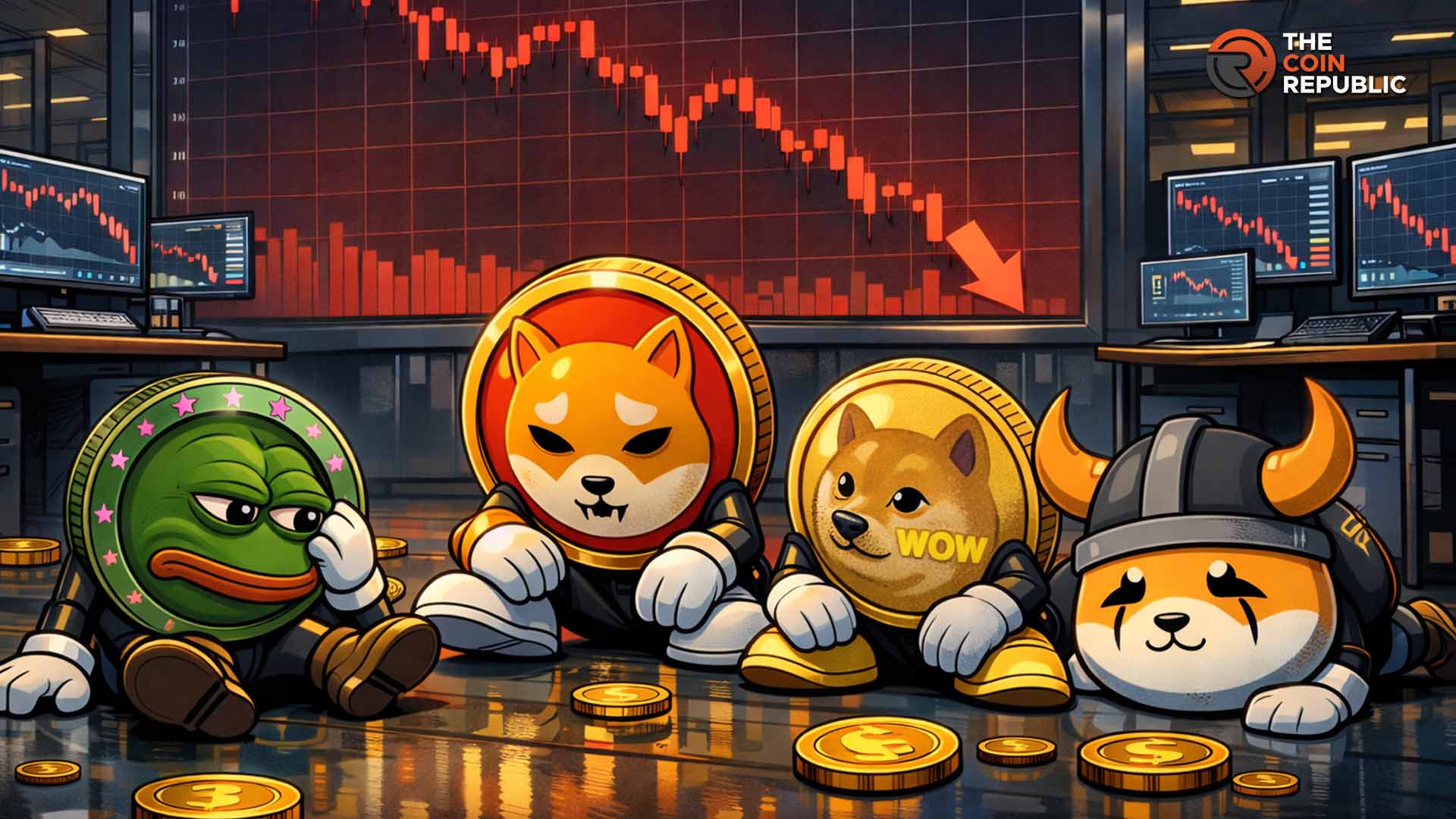
The memecoin market experienced a significant pullback, dropping 4% to $31.61B, driven by increased geopolitical risk aversion and profit-taking from recent rallies. Heightened US-Iran tensions are pushing investors away from speculative assets like memecoins, leading to sell-offs and a decline in market momentum. While the broader crypto market shows resilience, memecoins are failing to sustain gains, indicating a potential shift in risk appetite among traders. Whale activity, including large SHIB token sales, contributed to the downturn, highlighting the impact of large holders on memecoin price action.
Signal context only. Validate with price action, liquidity, and risk limits before taking a position.
