
Navigating Crypto News

CoinFeather
Navigating Crypto News

Quick market read from this story
The upcoming Mar-a-Lago gala for TRUMP token holders is driving whale accumulation, with wallet numbers reaching a five-month high, indicating renewed speculative interest ahead of the event.
Historical price action suggests a pattern of announcement-driven hype followed by a post-event downtrend for TRUMP, implying potential short-term volatility after the April 25th gala.
The presence of Tether CEO Paolo Ardoino at the event could signal potential ecosystem announcements or partnerships, acting as a catalyst for further user interest and narrative development.
Proposed US legislation aimed at limiting politicians' profits from memecoins introduces regulatory risk for TRUMP, potentially impacting its long-term viability and market sentiment.
Deep Dive
The number of whale wallets holding over one million units of the memecoin associated with US President Donald Trump, TRUMP, has reached a five-month peak. This surge follows the announcement of a luncheon for top holders at Trump's Florida residence last week. Currently, there are 83 wallets holding more than 1 million TRUMP tokens, valued at approximately $3.7 million, marking the highest figure since October 8 of the previous year, according to data analytics firm Santiment.
The exclusive luncheon is scheduled for April 25 at Trump's Mar-a-Lago estate. The top 297 token holders are invited, with the top 29 eligible for a private reception with President Trump, contingent upon passing background checks. In the days immediately after the luncheon announcement, the TRUMP token experienced a significant rally, increasing by over 50% to reach a high of $4.35. As of Wednesday, TRUMP is trading at $3.71, representing a 27% increase over the past seven days.
Dominick John, an analyst at Zeus Research, stated that the Mar-a-Lago event, offering access to the US president, is a potent catalyst for token accumulation. Data from CoinCarp indicates that the TRUMP token has 642,882 holders, with a substantial concentration of supply: over 91% is held by the top 10 wallets, and more than 97% by the top 100. Last year, at the first event for TRUMP token holders, Tron founder Justin Sun was identified as the largest tokenholder.
John also highlighted the potential for increased user interest due to the attendance of figures like Tether CEO Paolo Ardoino, who is scheduled to speak at the luncheon. He noted that momentum is driven by narrative-led flows and whale positioning, suggesting that Ardoino's presence could signal potential ecosystem announcements and transform the gala into a showcase for the TRUMP token. Historically, the announcement of Trump's first crypto gala in May 2025 led to a price spike. The token peaked at $15.59 on April 25, 2025, shortly after the announcement, but began a gradual decline, falling to $14.51 on the day of the dinner and further to $8.90 a month later. John anticipates a similar post-event downtrend unless new developments emerge.
The involvement of politicians with memecoins has drawn regulatory attention. Last year's event saw protests from US senators, and Democratic lawmakers have introduced legislation aimed at limiting political influence and profits derived from memecoins. The Modern Emoluments and Malfeasance Enforcement (MEME) Act, introduced in February 2025, seeks to prevent federal officials from profiting from memecoins through their positions. Additionally, the Stop Presidential Profiteering from Digital Assets Act and the Curbing Officials’ Income and Nondisclosure (COIN) Act have been proposed to restrict federal officials from issuing, promoting, or selling digital assets, though these have faced challenges in advancing through Congress.
Source, catalyst, and sector overlap from the latest feed.
Increased adoption of cryptocurrency for goods and services in Australia, doubling to 12%, indicates a growing perception of crypto as a practical payment method. Despite rising adoption, banking friction for Australian crypto users has worsened, with 30% experiencing transaction delays or rejections, highlighting ongoing institutional caution. The report underscores the critical need for clear licensing and regulation in Australia to bridge the gap between crypto exchanges and traditional banks, fostering greater certainty for investors and businesses. The findings suggest that while crypto usage is growing, persistent banking hurdles and a lack of regulatory clarity are significant impediments to broader mainstream adoption in Australia.
Senator Tim Scott anticipates a potential compromise on stablecoin yield payments this week, suggesting progress on the stalled crypto market structure bill. A breakthrough on the stablecoin yield provision could unblock the broader crypto market structure legislation, impacting regulatory clarity for exchanges and stablecoin issuers. Negotiations over stablecoin yield payments highlight a key conflict between banking and crypto lobbyists, with potential implications for DeFi and exchange business models. While the stablecoin yield issue is prominent, other aspects of the bill concerning DeFi and regulatory scope are also being addressed, indicating a multi-faceted legislative effort.
Increased Bitcoin inflows to centralized exchanges, particularly large deposits, historically signal heightened selling pressure, suggesting potential headwinds for BTC's price above $75,000. Bitcoin faces immediate resistance at the $75,000 level, which represents the lower band of traders' on-chain realized price, a historically significant barrier. Despite recent price strength, the potential for the Federal Reserve to signal no rate cuts this year due to inflation and geopolitical concerns could dampen broader market sentiment.
Meta's decision to shutter Horizon Worlds for VR signals a significant retreat from its ambitious metaverse strategy, reflecting substantial financial losses and a pivot towards mobile-first experiences. The substantial $80 billion in losses for Meta's Reality Labs division underscores the financial challenges of building a VR-centric metaverse, potentially impacting investor confidence in similar ventures. The shift away from VR for Horizon Worlds, mirroring trends in successful platforms like Fortnite and Roblox, suggests a pragmatic adjustment to market realities and user adoption patterns. The decline of metaverse tokens like AXS, SAND, and MANA by over 98% from their peaks highlights the waning interest and speculative bubble burst in the blockchain-based metaverse sector.
Coin Center's call for SEC rulemaking over no-action letters highlights a systemic issue of regulatory uncertainty impacting the crypto market's development. The reliance on selective, case-by-case relief by regulators creates an uneven playing field, potentially disadvantaging projects without the resources to pursue individual clarity. The ongoing legislative efforts like the CLARITY Act suggest a broader push towards establishing clearer jurisdictional boundaries and consistent treatment for digital assets.
Cardano's integration with LayerZero marks its largest interoperability rollout, fundamentally shifting its position from a siloed ecosystem to a connected player within the broader crypto landscape. The LayerZero OFT standard enables over 700 existing tokens to deploy on Cardano and grants access to over $90 billion in cross-chain liquidity, addressing historical compatibility challenges with EVM chains. While the infrastructure is now in place, actual growth hinges on adoption by token issuers, developers, and users, as past integrations have shown mixed results despite increased accessibility. This development structurally addresses a key limitation for Cardano, positioning it to compete more effectively in the multi-chain environment, though its success will depend on execution and user migration.
Ripple's strategic expansion into Brazil, including applying for a VASP license, signals a commitment to regulated digital asset services and cross-border payments in a key Latin American market. The integration of custody, payments, and stablecoin settlement solutions, alongside partnerships with local institutions, positions Ripple to capitalize on Brazil's growing financial technology sector. The increasing adoption of Ripple's RLUSD stablecoin by Brazilian exchanges and fintechs, coupled with the firm's existing global licenses, suggests a growing institutional appetite for compliant digital asset infrastructure.
The XRP Ledger's milestone of 7.7 million holders, coupled with a five-week high in active addresses, signals increasing adoption and utility, potentially driving further demand for XRP. Ripple's partnership with i-Payout to enhance cross-border payments into the US and Canada represents a tangible expansion of Ripple's payment infrastructure, reinforcing its position in the remittances sector. The confluence of increased network activity, ecosystem partnerships, and positive market momentum has propelled XRP price above $1.5, indicating strong short-term bullish sentiment with key resistance levels to watch.
Ripple Prime's new service allows institutions to use XRP as collateral for traditional financial market access, bypassing the need to sell and incur tax liabilities. The 24/7 liquidation capability of XRP as collateral offers greater operational flexibility compared to traditional assets like US Treasuries, potentially altering collateral risk profiles. The introduction of XRP-backed depository receipts provides a familiar, regulated pathway for institutional capital to gain exposure to the asset.
Coinbase stock's recent 4.4% surge is directly correlated with the strength of Bitcoin and Ethereum, highlighting its role as a proxy for broader crypto market activity and investor sentiment. The potential $25 billion partnership exploration with Bybit introduces a significant growth angle for Coinbase, potentially offering Bybit a compliant U.S. market entry and altering institutional perceptions of offshore exchanges. Despite positive momentum from crypto rallies and corporate actions like share buybacks, Coinbase stock remains highly sensitive to crypto market volatility and regulatory developments, necessitating close monitoring of on-chain flows and price action. The stock's beta of approximately 2.25 indicates that Coinbase amplifies crypto market swings, suggesting that while current rallies are beneficial, sharp downturns could lead to substantial reversals.
The article positions Ethereum, Bitcoin, and Solana as market leaders for the next cycle, but highlights Pepeto's presale as a potential high-upside opportunity due to its infrastructure products and experienced founder. Pepeto's development of dedicated infrastructure (Swap, Bridge, Exchange) for the $45 billion meme coin economy, coupled with a SolidProof audit and token burns, suggests a focus on utility within a speculative sector. The mention of a PEPE cofounder directing operations and a previous successful venture implies a narrative of experienced leadership aiming to replicate past success, potentially attracting speculative capital. With exchange listings approaching and a presale price of $0.000000186, the scarcity narrative is being emphasized to drive demand, positioning it as a potential early-stage opportunity before broader market access.
The joint classification of 16 crypto assets as digital commodities by the SEC and CFTC provides long-awaited regulatory clarity, potentially reducing institutional hesitancy and paving the way for new financial products. This ruling directly impacts 16 specific digital assets, including major cryptocurrencies and meme tokens, by defining their legal status and potentially simplifying their integration into traditional financial markets. The establishment of a unified regulatory framework by the SEC and CFTC is a significant step towards broader crypto adoption, shifting market focus from regulatory uncertainty to growth and infrastructure development.
The PEPE cofounder's new presale project, Pepeto, is attracting significant capital ($8.1 million raised) by targeting the $45 billion meme coin economy with dedicated trading infrastructure, suggesting strong investor interest in specialized meme coin platforms. While Monero (XMR) is seeing renewed interest for privacy, and USDe represents an experimental stablecoin, Pepeto's presale offers a distinct opportunity for potentially high returns, contrasting with the limited upside of established privacy coins and stablecoins. The rapid fundraising and token burn of Pepeto, coupled with a high APY staking reward, indicate aggressive supply management and early investor conviction, positioning it as a notable development within the meme coin sector. The article frames Pepeto's presale as a time-sensitive opportunity, implying that upcoming listings will lead to a significant price appreciation, urging potential investors to act before the presale window closes.
A 208% surge in Shiba Inu exchange deposits signals potential profit-taking or exhaustion, increasing the probability of near-term selling pressure despite recent technical bullish signals like a golden cross. Despite a recent golden cross and community token burns, the significant increase in SHIB deposits to exchanges suggests that traders are preparing to sell, potentially negating recent gains and indicating a bearish short-term outlook. The shift in investor sentiment, evidenced by increased exchange inflows for SHIB, coupled with Dogecoin's relative resilience, suggests a potential rotation away from SHIB within the meme coin sector.
The memecoin market experienced a significant pullback, dropping 4% to $31.61B, driven by increased geopolitical risk aversion and profit-taking from recent rallies. Heightened US-Iran tensions are pushing investors away from speculative assets like memecoins, leading to sell-offs and a decline in market momentum. While the broader crypto market shows resilience, memecoins are failing to sustain gains, indicating a potential shift in risk appetite among traders. Whale activity, including large SHIB token sales, contributed to the downturn, highlighting the impact of large holders on memecoin price action.
Live Feed
Loading the broader stream in the same flow as the homepage feed.

Robert Kiyosaki reiterates his long-standing call for Bitcoin and Ethereum accumulation, framing it as a hedge against an imminent global economic collapse and fiat currency devaluation. Kiyosaki's 'buy low' philosophy suggests that the optimal time to acquire assets like BTC and ETH is now, anticipating significant price appreciation once traditional markets correct. While predicting a $750,000 BTC price target, Kiyosaki acknowledges personal risk mitigation through real estate and businesses, advising followers to prioritize their own financial safety.
SBI Mutual Fund's significant stake increase in Urban Company, acquiring nearly 4% post-lock-in expiry, signals strong institutional conviction despite other investors exiting. The substantial block deal, valued at ₹632 crore, indicates a potential shift in ownership and investor sentiment following the end of the IPO lock-in period. Urban Company's stock surge of over 15% highlights immediate market reaction to the increased institutional buying, suggesting potential short-term upside momentum.

Short-term holders are selling into rallies above $70K, creating a persistent ceiling that requires significant demand to overcome. Positive net volume delta on major exchanges indicates returning buyer interest, suggesting a potential shift in market participants despite ongoing resistance. Accelerating institutional accumulation by firms like Strategy and Metaplanet at current price levels suggests a belief in Bitcoin's near-term upside, contrasting with short-term holder behavior. A contested 23-bar cycle theory presents a critical decision point for Bitcoin, with key price levels ($77K and $65K) dictating the immediate trend direction.
The U.S. housing market is experiencing a significant 'lock-in effect' where homeowners with low mortgage rates are reluctant to sell, artificially inflating prices by an estimated 7% and reducing sales by 1.7 million units. This 'mortgage lock-in' creates a two-tier market, protecting existing homeowners with low rates while severely limiting affordability and access for first-time buyers, who now represent a record low share of purchases. While a slight thaw is possible if rates fall to the mid-5% range, the structural issues of limited inventory and high prices suggest affordability challenges will persist, keeping many sellers trapped.

Hyperliquid's HIP-3 derivatives market has achieved a new milestone with open interest exceeding $1.43 billion, indicating robust demand for decentralized perpetual futures trading. The significant trading volume in WTI crude oil contracts, surpassing Ethereum and nearing Bitcoin, highlights a growing trend of non-crypto asset trading on decentralized platforms. The shift towards tokenized real-world assets (RWAs) like S&P 500 and precious metals dominating Hyperliquid's active markets suggests a broader diversification of trading interests beyond traditional crypto pairs.
Donald Trump's evolving stance and proposed policies, such as a Strategic Bitcoin Reserve, signal a potentially more favorable regulatory environment that could boost institutional confidence and adoption. The establishment of a US Strategic Bitcoin Reserve, potentially utilizing seized BTC, could position Bitcoin as a recognized reserve asset and encourage global adoption by other nations. While Trump's pro-crypto rhetoric and policies may attract investment, potential risks include macroeconomic volatility, regulatory uncertainty, and the inherent instability of linking crypto markets to political events. Investors should monitor the translation of pro-crypto campaign promises into concrete legislation and the success of initiatives like the Strategic Bitcoin Reserve to gauge their impact on Bitcoin's long-term trajectory.

Algorand's price is consolidating near a key support zone, indicating potential accumulation and a possible shift from its downtrend if a breakout above $0.105 occurs. Long-term price predictions for ALGO suggest significant upside potential, with forecasts reaching $1.35 by 2026 and $5.65 by 2030, contingent on broader market recovery and ecosystem growth. The article presents a speculative price forecast rather than reporting on a specific market event, suggesting a neutral stance on immediate trading action.

UK parliamentary committee proposes an immediate ban on cryptocurrency donations to political parties, citing high risks of foreign interference and illicit funding. An industry expert warns that a ban could create new cybersecurity risks by forcing parties to centralize donor data, potentially becoming a target for adversaries. The proposed ban highlights ongoing regulatory scrutiny of crypto's role in political finance, with concerns over the use of mixers, privacy coins, and AI for micro-donations to evade disclosure rules.
The ASTER mainnet launch is a significant catalyst, shifting focus from speculation to execution and potentially driving demand for its L1 derivatives-focused blockchain. Despite the mainnet launch, ASTER price is consolidating below key resistance at $0.74-$0.76, indicating that the market has not yet fully priced in the development, with a breakout above $0.81 needed to target $1. Technical indicators like RSI and CMF suggest potential for an upside breakout, with buyers accumulating on dips, but confirmation above resistance is crucial for sustained upward momentum.
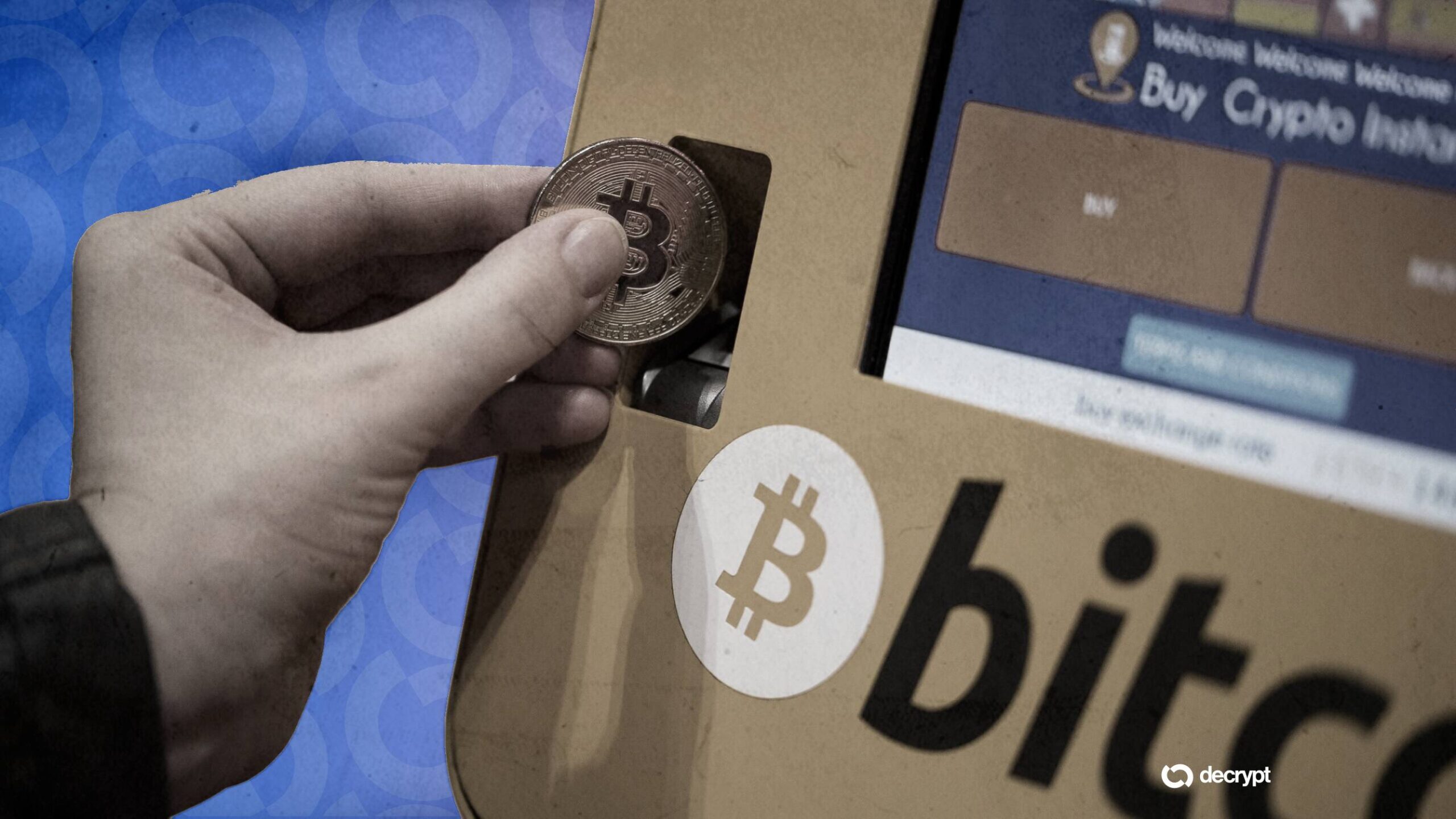
Connecticut regulators have suspended Bitcoin Depot's money transmission license due to alleged fee overcharges and inadequate refunds, forcing the company to cease operations in the state. The suspension, coupled with Bitcoin Depot's disclosure of "material weaknesses" in internal controls, signals increased regulatory scrutiny for the Bitcoin ATM industry, potentially impacting other operators. Bitcoin Depot's stock has seen a significant decline year-to-date, and this regulatory action exacerbates existing financial pressures, suggesting a bearish outlook for the company's immediate future. While the event highlights operational and compliance failures, analysts suggest it may not be catastrophic for the company but serves as a warning for the broader ATM sector to enhance compliance measures.

XRP's price action is currently consolidating above a significant $14.6 million options cluster at the $1.40 strike on Deribit, suggesting this level will act as a key inflection point for short-term trading. The concentration of open interest at the $1.40 strike, particularly for the March 27 expiry, indicates potential 'pinning' behavior from market makers, which could draw XRP towards this price level as expiry approaches. Traders should closely monitor the $1.40 level as a critical support or resistance zone; a break above could invalidate put options, while a drop below may trigger amplified selling pressure due to hedging flows. The unwinding of this substantial options open interest is likely to be a primary driver of XRP's price movement in the immediate days leading up to the March 27 expiry.
Polygon's role as an Ethereum scaling solution is highlighted, with forecasts suggesting significant growth potential driven by increasing demand for faster and cheaper blockchain infrastructure. On-chain analysis indicates a recovery signal with rising Daily Active Addresses and accumulation by 'whale' addresses, suggesting fundamental strength and potential for price appreciation. Long-term price predictions for MATIC range from $0.75 by 2026 to potentially $4.94 by 2030, contingent on sustained adoption and development within the Polygon ecosystem.
The SEC and CFTC joint interpretation officially classifying XRP as a digital commodity, not a security, provides significant regulatory clarity for the asset and potentially other digital assets. This development marks a potential end to the 'regulation by enforcement' era, as regulators establish a clearer taxonomy for digital assets, which could reduce uncertainty for market participants and foster innovation. The guidance clarifies the application of federal securities laws to various blockchain activities like mining, staking, and airdrops, offering a more predictable legal framework for decentralized network operations.
Signal context only. Validate with price action, liquidity, and risk limits before taking a position.
