
Navigating Crypto News

CoinFeather
Navigating Crypto News

Quick market read from this story
Meta's decision to shutter Horizon Worlds for VR signals a significant retreat from its ambitious metaverse strategy, reflecting substantial financial losses and a pivot towards mobile-first experiences.
The substantial $80 billion in losses for Meta's Reality Labs division underscores the financial challenges of building a VR-centric metaverse, potentially impacting investor confidence in similar ventures.
The shift away from VR for Horizon Worlds, mirroring trends in successful platforms like Fortnite and Roblox, suggests a pragmatic adjustment to market realities and user adoption patterns.
The decline of metaverse tokens like AXS, SAND, and MANA by over 98% from their peaks highlights the waning interest and speculative bubble burst in the blockchain-based metaverse sector.
Deep Dive
Meta Platforms is discontinuing its virtual reality metaverse, Horizon Worlds, for VR users on June 15. The company is shifting its focus to a mobile-only experience, marking a significant retreat from its ambitious metaverse push initiated five years ago. Users will no longer be able to build, publish, or update virtual reality worlds on Meta Quest headsets.
Horizon Worlds, launched in late 2021 as a VR-only platform for users to create and interact within virtual environments, began experimenting with a mobile platform in 2025. Samantha Ryan, VP of content at Reality Labs, indicated a February shift towards making Worlds “almost exclusively mobile.” This move contrasts with competitors like Fortnite and Roblox, which operate across PC, console, and mobile platforms, with Roblox offering a VR app since July 2023.
Meta's Reality Labs division has incurred substantial losses, totaling nearly $80 billion since 2020. In the fourth quarter of 2025, the division reported a record $6 billion in losses. This financial strain led to 1,000 job eliminations in Reality Labs in January, alongside the closure of several virtual-reality game and content studios. Andrew Bosworth, Reality Labs' chief technology officer, confirmed a primary focus on mobile experiences over fully immersive VR worlds.
The decision to refocus Horizon Worlds follows Meta CEO Mark Zuckerberg's pivot towards the metaverse, which included renaming the company from Facebook. Despite these efforts, profitability has not materialized. Separately, Meta's stock saw a 3% jump following a speculative report about potential layoffs affecting 20% or more of its workforce to offset spending on AI infrastructure and augmented-reality wearables. A Meta spokesperson described the report as speculative.
The blockchain-based metaverse, once a significant trend in the crypto industry in 2021, has largely faded, overshadowed by the current AI hype. Major metaverse tokens such as Axie Infinity (AXS), The Sandbox (SAND), and Decentraland (MANA) have experienced drastic declines, with their values dropping between 98% and 99% from their all-time highs in November 2021, according to CoinGecko data.
Source, catalyst, and sector overlap from the latest feed.
Increased Bitcoin inflows to centralized exchanges, particularly large deposits, historically signal heightened selling pressure, suggesting potential headwinds for BTC's price above $75,000. Bitcoin faces immediate resistance at the $75,000 level, which represents the lower band of traders' on-chain realized price, a historically significant barrier. Despite recent price strength, the potential for the Federal Reserve to signal no rate cuts this year due to inflation and geopolitical concerns could dampen broader market sentiment.
The upcoming Mar-a-Lago gala for TRUMP token holders is driving whale accumulation, with wallet numbers reaching a five-month high, indicating renewed speculative interest ahead of the event. Historical price action suggests a pattern of announcement-driven hype followed by a post-event downtrend for TRUMP, implying potential short-term volatility after the April 25th gala. The presence of Tether CEO Paolo Ardoino at the event could signal potential ecosystem announcements or partnerships, acting as a catalyst for further user interest and narrative development. Proposed US legislation aimed at limiting politicians' profits from memecoins introduces regulatory risk for TRUMP, potentially impacting its long-term viability and market sentiment.
Coin Center's call for SEC rulemaking over no-action letters highlights a systemic issue of regulatory uncertainty impacting the crypto market's development. The reliance on selective, case-by-case relief by regulators creates an uneven playing field, potentially disadvantaging projects without the resources to pursue individual clarity. The ongoing legislative efforts like the CLARITY Act suggest a broader push towards establishing clearer jurisdictional boundaries and consistent treatment for digital assets.
SEC Chair Paul Atkins' proposal for a 'safe harbor' could create clearer pathways for crypto companies to raise capital, potentially reducing regulatory uncertainty for nascent projects. The suggested exemptions, including a 'startup exemption' and 'fundraising exemption,' aim to provide 'bespoke pathways' for crypto innovation while maintaining investor protections, signaling a potential shift towards more tailored regulatory approaches. While the SEC is exploring internal exemptions, Atkins emphasized that comprehensive market structure legislation from Congress is necessary for future-proofing crypto regulation, indicating that legislative action remains a critical factor for long-term clarity.
Bitrefill's cybersecurity incident, potentially linked to Lazarus Group, highlights ongoing threats to crypto businesses despite enhanced security measures. The company's decision to absorb losses and restore operations quickly suggests resilience, but the breach of customer data access remains a concern for user trust. This event underscores the critical need for continuous vigilance and advanced security protocols within the crypto e-commerce and payments sector.
Democratic senators are raising significant privacy concerns regarding Meta's potential integration of facial recognition into smart glasses, highlighting risks of stalking and harassment. The lawmakers are questioning Meta's data handling practices, specifically how biometric data will be secured and whether captured faces will be linked to user profiles, indicating potential regulatory headwinds. This development underscores the broader scrutiny of AI-driven surveillance technologies and their implications for public privacy, potentially impacting the adoption and development of wearable AI devices.
Nvidia's DLSS 5 introduces 'neural rendering,' a significant shift from performance enhancement to AI-driven image generation, potentially altering artistic intent in games. While developers praise the technical leap, widespread gamer backlash and viral memes highlight concerns about AI overreach and the 'uncanny valley' effect, suggesting a potential disconnect between technological advancement and user perception. The shift to AI making aesthetic decisions rather than solely improving performance could redefine player expectations and the perceived value of graphical fidelity, impacting future game development and player engagement.
Coinbase and World's AgentKit launch establishes a critical trust layer for AI agents by linking them to verified human identities via World ID, addressing the growing need for accountability in agentic commerce. The integration of AgentKit with Coinbase's x402 protocol creates a comprehensive trust stack for AI agents, enabling them to transact while allowing platforms to verify human oversight, a key development for the projected multi-trillion dollar agentic economy. This initiative by Coinbase and World aims to differentiate legitimate AI agent activity from malicious bots, potentially unlocking new use cases in areas like ticketing and reservations by enforcing limits per verified human rather than per wallet.
Senator Warren's inquiry into Pentagon granting classified access to Elon Musk's Grok AI highlights significant security concerns and potential risks to sensitive military information, suggesting a regulatory and oversight challenge for AI integration in defense. The Pentagon's decision to proceed with Grok access despite NSA warnings and a history of problematic AI outputs, including child exploitation material and antisemitic content, indicates a potential shift in risk tolerance for AI deployment in critical national security systems. The lawsuit against xAI for generating child sexual abuse material and the prior DOGE employee data leak raise serious questions about xAI's data handling and safety protocols, potentially impacting investor confidence and future partnerships, especially in sensitive government contracts. The Pentagon's replacement of Anthropic with xAI and OpenAI for classified systems, driven by Anthropic's refusal to comply with 'all lawful purposes' demands, suggests a strategic pivot towards AI providers with fewer ethical boundaries, potentially creating a new dynamic in defense AI procurement.
Tether's launch of an AI training framework for consumer hardware, including smartphones and non-Nvidia GPUs, democratizes AI development by lowering cost and accessibility barriers. The framework's ability to run large language models on limited hardware signals a potential shift in AI infrastructure, reducing reliance on centralized cloud services. This development aligns with a broader trend of crypto companies expanding into AI and high-performance computing, potentially creating new revenue streams and use cases beyond traditional blockchain functions.
Live Feed
Loading the broader stream in the same flow as the homepage feed.
The SEC and CFTC joint interpretation officially classifying XRP as a digital commodity, not a security, provides significant regulatory clarity for the asset and potentially other digital assets. This development marks a potential end to the 'regulation by enforcement' era, as regulators establish a clearer taxonomy for digital assets, which could reduce uncertainty for market participants and foster innovation. The guidance clarifies the application of federal securities laws to various blockchain activities like mining, staking, and airdrops, offering a more predictable legal framework for decentralized network operations.
Ripple's strategic expansion into Brazil, including applying for a VASP license, signals a commitment to regulated digital asset services and cross-border payments in a key Latin American market. The integration of custody, payments, and stablecoin settlement solutions, alongside partnerships with local institutions, positions Ripple to capitalize on Brazil's growing financial technology sector. The increasing adoption of Ripple's RLUSD stablecoin by Brazilian exchanges and fintechs, coupled with the firm's existing global licenses, suggests a growing institutional appetite for compliant digital asset infrastructure.
The public debate between XRP and Chainlink proponents highlights differing tokenomics and utility narratives, with accusations of XRP funding Ripple's corporate actions versus Chainlink's token necessity being central to the conflict. While the communities are engaged in a heated debate, the underlying projects serve distinct market functions, with Chainlink focused on oracle services and XRP on payments and settlement, suggesting they are not direct competitors despite the narrative. The ongoing discourse, fueled by accusations of 'ghost chain' status for XRP and 'vaporware' for LINK, indicates significant community sentiment and potential for narrative-driven price action in the short term.
The PEPE cofounder's new presale project, Pepeto, is attracting significant capital ($8.1 million raised) by targeting the $45 billion meme coin economy with dedicated trading infrastructure, suggesting strong investor interest in specialized meme coin platforms. While Monero (XMR) is seeing renewed interest for privacy, and USDe represents an experimental stablecoin, Pepeto's presale offers a distinct opportunity for potentially high returns, contrasting with the limited upside of established privacy coins and stablecoins. The rapid fundraising and token burn of Pepeto, coupled with a high APY staking reward, indicate aggressive supply management and early investor conviction, positioning it as a notable development within the meme coin sector. The article frames Pepeto's presale as a time-sensitive opportunity, implying that upcoming listings will lead to a significant price appreciation, urging potential investors to act before the presale window closes.
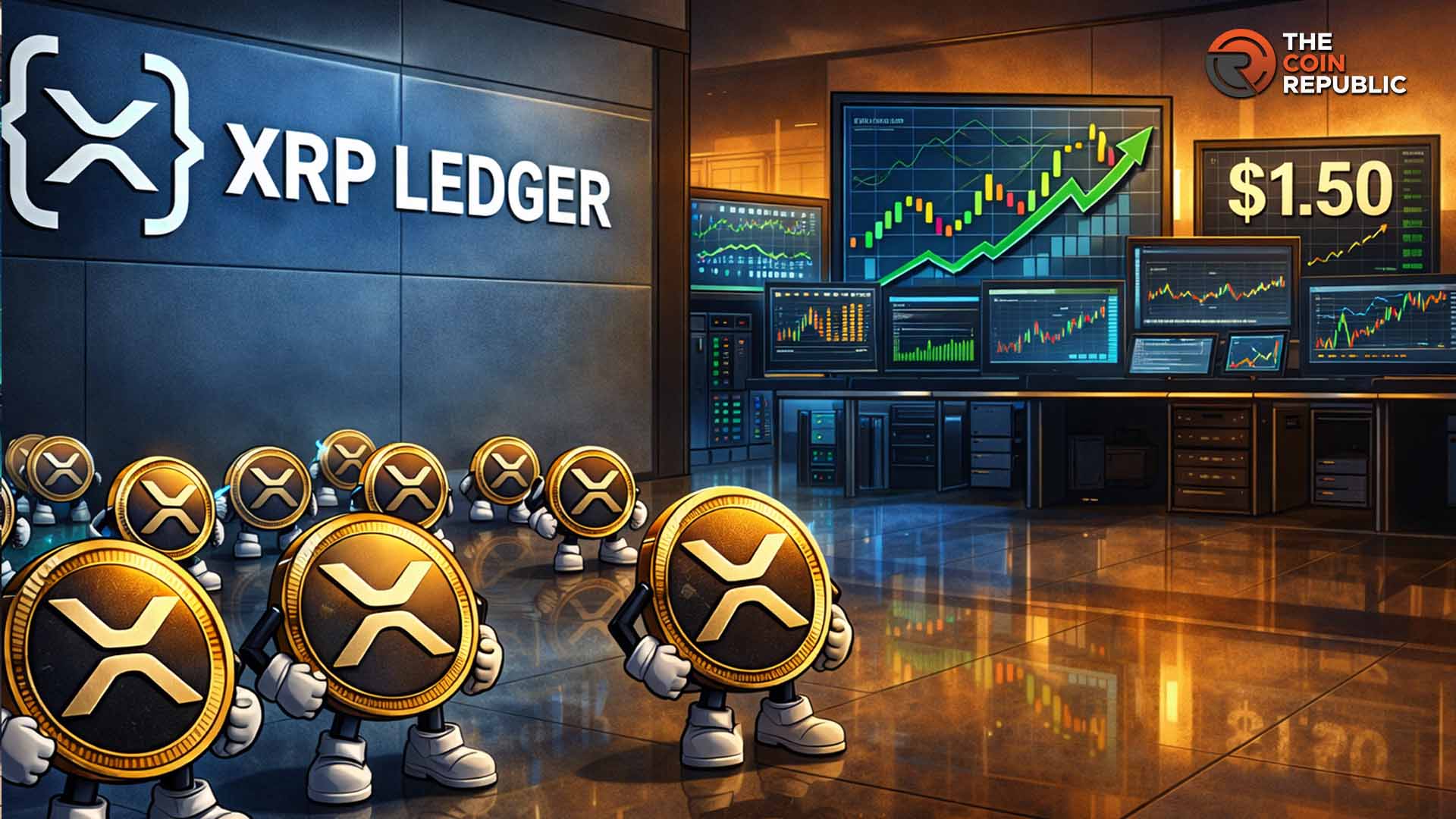
The XRP Ledger's milestone of 7.7 million holders, coupled with a five-week high in active addresses, signals increasing adoption and utility, potentially driving further demand for XRP. Ripple's partnership with i-Payout to enhance cross-border payments into the US and Canada represents a tangible expansion of Ripple's payment infrastructure, reinforcing its position in the remittances sector. The confluence of increased network activity, ecosystem partnerships, and positive market momentum has propelled XRP price above $1.5, indicating strong short-term bullish sentiment with key resistance levels to watch.
Ripple Prime's new service allows institutions to use XRP as collateral for traditional financial market access, bypassing the need to sell and incur tax liabilities. The 24/7 liquidation capability of XRP as collateral offers greater operational flexibility compared to traditional assets like US Treasuries, potentially altering collateral risk profiles. The introduction of XRP-backed depository receipts provides a familiar, regulated pathway for institutional capital to gain exposure to the asset.

The defeat of crypto-backed candidate Raja Krishnamoorthi in the Illinois Senate primary, despite significant PAC funding, signals a potential challenge for crypto industry influence in certain political races. Lieutenant Governor Juliana Stratton's victory, with a low rating from crypto advocacy groups, suggests that direct financial backing from crypto PACs may not guarantee electoral success against established political figures. The outcome highlights the ongoing tension between crypto industry lobbying efforts and broader political landscapes, indicating that regulatory outcomes may not be directly correlated with PAC spending in all cases.
A prominent trader, Machi Big Brother, is significantly increasing leveraged long positions on BTC, ETH, and HYPE, indicating strong conviction despite prior unrealized losses, suggesting a potential short-term bullish sentiment driven by whale activity. Institutional accumulation signals are strengthening with BlackRock showing net Bitcoin inflows and an Ethereum whale acquiring and staking a substantial amount of ETH, reinforcing the bullish outlook for major cryptocurrencies. The convergence of whale accumulation and institutional interest, coupled with increased trading volume, suggests a potential market uptrend, making leveraged positions more attractive but also increasing risk for traders.
Coinbase stock's recent 4.4% surge is directly correlated with the strength of Bitcoin and Ethereum, highlighting its role as a proxy for broader crypto market activity and investor sentiment. The potential $25 billion partnership exploration with Bybit introduces a significant growth angle for Coinbase, potentially offering Bybit a compliant U.S. market entry and altering institutional perceptions of offshore exchanges. Despite positive momentum from crypto rallies and corporate actions like share buybacks, Coinbase stock remains highly sensitive to crypto market volatility and regulatory developments, necessitating close monitoring of on-chain flows and price action. The stock's beta of approximately 2.25 indicates that Coinbase amplifies crypto market swings, suggesting that while current rallies are beneficial, sharp downturns could lead to substantial reversals.
The public dispute between XRP and Chainlink communities highlights differing tokenomics models, with Chainlink using protocol revenue for LINK buybacks versus Ripple's equity buybacks funded by XRP sales. Despite community friction, XRP and Chainlink serve complementary roles in the crypto ecosystem, with XRP focusing on payments and tokenized assets, and Chainlink providing oracle services, suggesting limited direct competition. The debate over funding models and market share, while intense on social media, has had a muted impact on asset prices, indicating that fundamental utility and adoption will likely drive future performance. For traders, the key takeaway is that while community sentiment can be volatile, the underlying utility and market positioning of XRP and Chainlink suggest a coexistence rather than a zero-sum competition.
Bitcoin is testing a critical $75,000 breakout zone, with institutional inflows via ETFs providing support, but macroeconomic uncertainty and strong resistance above $80,000 pose challenges to reaching $100,000. Shiba Inu's attempt at a bull market was denied at the 50-day EMA, reinforcing a bearish structure and suggesting further declines are likely unless it can reclaim this key resistance level. Ethereum is showing signs of recovery towards $2,500 and $2,800, but a sustained bullish trend reversal requires breaking through these significant moving average resistance levels.
OpenSea's decision to delay the SEA token launch signals a cautious approach amid a prolonged NFT market downturn, indicating that market conditions are not yet conducive for new token introductions. The postponement of the SEA token launch, coupled with declining NFT market capitalization and trading volumes, suggests a broader cooling of speculative interest in the NFT sector. OpenSea's strategic pivot towards a 'trade everything' multi-chain application, potentially including derivatives, indicates an effort to diversify revenue streams beyond traditional NFT sales. The delay in the SEA token launch and the ending of the Waves reward program may lead to user dissatisfaction and questions regarding platform strategy and reward structures.
Signal context only. Validate with price action, liquidity, and risk limits before taking a position.
