
Navigating Crypto News

CoinFeather
Navigating Crypto News

Quick market read from this story
Bitrefill's cybersecurity incident, potentially linked to Lazarus Group, highlights ongoing threats to crypto businesses despite enhanced security measures.
The company's decision to absorb losses and restore operations quickly suggests resilience, but the breach of customer data access remains a concern for user trust.
This event underscores the critical need for continuous vigilance and advanced security protocols within the crypto e-commerce and payments sector.
Deep Dive
Crypto e-commerce store Bitrefill announced it was the victim of a cybersecurity attack on March 1. The methods employed closely resemble those of North Korea’s notorious hacking organization, Lazarus Group, and potentially the BlueNoroff Group, which has close ties to Lazarus.
In a statement on X, Bitrefill detailed that hackers compromised an employee's laptop using malware, on-chain tracing, and reused IP and email infrastructure. This breach allowed them to drain funds from the company’s hot wallets and access records for 18,500 purchases, potentially exposing limited customer information. Bitrefill stated there is no evidence that the entire database was extracted, suggesting the attackers were probing for valuable assets like cryptocurrency and gift card inventory. The company will absorb the financial losses from its operational capital.
Bitrefill reported that its systems are largely back to normal, with payments, stock, and accounts restored, and sales volumes returning to pre-incident levels. The company has significantly improved its cybersecurity practices since the incident. These enhancements include cybersecurity reviews with security researchers, implementing their recommendations, tightening internal access controls, and improving monitoring strategies for faster detection and response. Bitrefill collaborated with law enforcement and crypto security firms, including Security Alliance, FearsOff Security, Recoveris.io, and zeroShadow, to manage the incident. Initial containment involved taking systems offline.
The incident highlights the ongoing challenges in securing crypto platforms, despite increased security measures in recent years. Sophisticated hackers continue to find ways to breach defenses. The Lazarus Group is noted as a formidable threat in the crypto industry, previously linked to a $1.4 billion theft from crypto exchange Bybit in February 2025.
Source, catalyst, and sector overlap from the latest feed.
SEC Chair Paul Atkins' proposal for a 'safe harbor' could create clearer pathways for crypto companies to raise capital, potentially reducing regulatory uncertainty for nascent projects. The suggested exemptions, including a 'startup exemption' and 'fundraising exemption,' aim to provide 'bespoke pathways' for crypto innovation while maintaining investor protections, signaling a potential shift towards more tailored regulatory approaches. While the SEC is exploring internal exemptions, Atkins emphasized that comprehensive market structure legislation from Congress is necessary for future-proofing crypto regulation, indicating that legislative action remains a critical factor for long-term clarity.
The SEC's clarification that most crypto assets are not securities under federal law provides a more defined regulatory landscape, potentially reducing enforcement uncertainty for a broad range of digital assets. This interpretative notice serves as a bridge to potential future legislation, signaling a move towards clearer jurisdictional lines between the SEC and CFTC for digital assets. The SEC's acknowledgment that investment contracts can end and its clarification on airdrops, staking, and wrapping could impact how these activities are viewed and conducted within the existing legal framework. While the SEC Chair highlights a shift in recognizing most crypto assets as non-securities, the focus remains on tokenized traditional securities, indicating continued regulatory scrutiny in that specific area.
US lawmakers are proposing new legislation, the BETS OFF Act, to crack down on prediction markets, specifically targeting bets on sensitive geopolitical events like war. The introduction of the BETS OFF Act signals increased regulatory scrutiny on prediction market platforms, potentially impacting their operations and user activity. This regulatory push, alongside similar bills like the DEATHBETS Act, suggests a growing concern among US legislators regarding the use of insider information and the ethical implications of betting on sensitive outcomes.
Moody's integration of credit ratings onto the Canton Network signifies a crucial step in bridging traditional finance with blockchain infrastructure, potentially increasing institutional trust and adoption of tokenized assets. The deployment on Canton Network, a permissioned blockchain for institutional finance, highlights the growing utility of such networks for traditional financial services and RWA tokenization. As Moody's plans to expand to additional blockchains and asset types, this development could set a precedent for other credit rating agencies, impacting the broader financial data and blockchain sectors.
Bitcoin's sustained rally above $70,000 is bringing spot ETF holders closer to their breakeven point, suggesting a potential resumption of the bull market as buying pressure increases. On-chain data indicates a shift towards accumulation, with ETF flows turning positive and exchange volume deltas showing increased buyer activity, reinforcing bullish momentum. The reclaim of the 100-day EMA, a key trend filter, above the ETF breakeven level would signal a sustained uptrend and could lead to further upside gains for Bitcoin. Short-term holder metrics like SOPR moving above 1 suggest that weak hands have been flushed out, potentially clearing the path for continued price appreciation.
Bitrefill's disclosure of a cyberattack attributed to North Korean state-sponsored groups highlights ongoing security risks for crypto-adjacent services, potentially impacting user trust and prompting increased scrutiny of operational security measures. The breach, which exposed partial purchase records for approximately 18,500 users, underscores the persistent threat from sophisticated actors like Lazarus and Bluenoroff, who have a history of targeting the crypto ecosystem. While Bitrefill states most operations are restored and losses will be covered internally, the incident serves as a reminder for users to remain vigilant against phishing attempts and unexpected communications, even from seemingly reputable platforms.
THENA clarifies its smart contracts were not compromised in the exploit, attributing the $2.18M bad debt on Venus Protocol to an architectural flaw in the $THE market there. The $THE token price has fallen over 13% following the exploit, with trading volume down significantly, indicating a negative market reaction despite THENA's assurances of its own system's security. THENA plans to increase APRs on its vaults due to generated fees and will propose governance changes to address bad debt and adjust collateral parameters, aiming to restore stability.
The $3.7 million flash loan attack on Venus Protocol highlights a persistent vulnerability in DeFi lending platforms, underscoring the ongoing arms race between attackers and security measures. While sophisticated defenses like AI circuit breakers and ZK-proof oracles are emerging, the incident suggests that smart contract bugs and oracle manipulation remain significant risks for DeFi protocols. The article also notes a parallel threat from North Korea-linked actors using social engineering and embedded backdoors, indicating that human vulnerabilities are as critical as code exploits in the current threat landscape.
Venus Protocol experienced a supply cap attack resulting in a loss of over $3.7 million, highlighting ongoing security vulnerabilities in DeFi protocols. The exploit involved manipulating the Thena (THE) token to borrow significant amounts of CAKE, USDC, BNB, and BTC, demonstrating complex attack vectors within lending platforms. The incident led to a pause in THE borrows and withdrawals, directly impacting liquidity and user access on the Venus Protocol, with THE token price dropping over 17%.
The $3.7 million flash loan attack on Venus Protocol highlights ongoing security vulnerabilities within DeFi lending platforms, potentially impacting investor confidence in the sector. The exploit, which involved manipulating supply caps using the THE token, demonstrates a sophisticated attack vector that could be replicated, warranting increased scrutiny of oracle price feeds and collateralization mechanisms. Venus Protocol's response of pausing borrowing and withdrawals for THE and other concentrated markets indicates a reactive measure to contain losses, suggesting potential contagion risks for related assets if not managed effectively.
The public dispute between XRP and Chainlink communities highlights differing tokenomics models, with Chainlink using protocol revenue for LINK buybacks versus Ripple's equity buybacks funded by XRP sales. Despite community friction, XRP and Chainlink serve complementary roles in the crypto ecosystem, with XRP focusing on payments and tokenized assets, and Chainlink providing oracle services, suggesting limited direct competition. The debate over funding models and market share, while intense on social media, has had a muted impact on asset prices, indicating that fundamental utility and adoption will likely drive future performance. For traders, the key takeaway is that while community sentiment can be volatile, the underlying utility and market positioning of XRP and Chainlink suggest a coexistence rather than a zero-sum competition.
Solana's price rebound above $90, driven by network anniversary sentiment and broader market recovery, suggests renewed investor interest in high-beta altcoins. Sustained inflows into Solana investment products and ongoing ecosystem development in DeFi, gaming, and payments indicate fundamental strength supporting the current price action. Technical indicators show a constructive pattern with higher lows, positioning SOL to challenge the $100 psychological level, though resistance around $105-$110 remains a key hurdle. Traders are closely monitoring the $92-$94 support band, as a failure to hold this level could signal short-term weakness and a potential retest of lower price points around $88 or $82.
Senator Tim Scott indicates progress on crypto market structure legislation, with a potential draft of stablecoin yield language emerging this week, signaling a move towards regulatory clarity. Negotiations are reportedly addressing key issues including stablecoin yields, ethics, regulatory agency quorum, and AML, suggesting a comprehensive effort to advance the bill. The advancement of market structure negotiations, particularly concerning stablecoins and DeFi, could positively influence investor sentiment and potentially lead to increased institutional interest.
Live Feed
Loading the broader stream in the same flow as the homepage feed.

The defeat of crypto-backed candidate Raja Krishnamoorthi in the Illinois Senate primary, despite significant PAC funding, signals a potential challenge for crypto industry influence in certain political races. Lieutenant Governor Juliana Stratton's victory, with a low rating from crypto advocacy groups, suggests that direct financial backing from crypto PACs may not guarantee electoral success against established political figures. The outcome highlights the ongoing tension between crypto industry lobbying efforts and broader political landscapes, indicating that regulatory outcomes may not be directly correlated with PAC spending in all cases.

A prominent trader, Machi Big Brother, is significantly increasing leveraged long positions on BTC, ETH, and HYPE, indicating strong conviction despite prior unrealized losses, suggesting a potential short-term bullish sentiment driven by whale activity. Institutional accumulation signals are strengthening with BlackRock showing net Bitcoin inflows and an Ethereum whale acquiring and staking a substantial amount of ETH, reinforcing the bullish outlook for major cryptocurrencies. The convergence of whale accumulation and institutional interest, coupled with increased trading volume, suggests a potential market uptrend, making leveraged positions more attractive but also increasing risk for traders.

Coinbase stock's recent 4.4% surge is directly correlated with the strength of Bitcoin and Ethereum, highlighting its role as a proxy for broader crypto market activity and investor sentiment. The potential $25 billion partnership exploration with Bybit introduces a significant growth angle for Coinbase, potentially offering Bybit a compliant U.S. market entry and altering institutional perceptions of offshore exchanges. Despite positive momentum from crypto rallies and corporate actions like share buybacks, Coinbase stock remains highly sensitive to crypto market volatility and regulatory developments, necessitating close monitoring of on-chain flows and price action. The stock's beta of approximately 2.25 indicates that Coinbase amplifies crypto market swings, suggesting that while current rallies are beneficial, sharp downturns could lead to substantial reversals.

Bitcoin is testing a critical $75,000 breakout zone, with institutional inflows via ETFs providing support, but macroeconomic uncertainty and strong resistance above $80,000 pose challenges to reaching $100,000. Shiba Inu's attempt at a bull market was denied at the 50-day EMA, reinforcing a bearish structure and suggesting further declines are likely unless it can reclaim this key resistance level. Ethereum is showing signs of recovery towards $2,500 and $2,800, but a sustained bullish trend reversal requires breaking through these significant moving average resistance levels.

OpenSea's decision to delay the SEA token launch signals a cautious approach amid a prolonged NFT market downturn, indicating that market conditions are not yet conducive for new token introductions. The postponement of the SEA token launch, coupled with declining NFT market capitalization and trading volumes, suggests a broader cooling of speculative interest in the NFT sector. OpenSea's strategic pivot towards a 'trade everything' multi-chain application, potentially including derivatives, indicates an effort to diversify revenue streams beyond traditional NFT sales. The delay in the SEA token launch and the ending of the Waves reward program may lead to user dissatisfaction and questions regarding platform strategy and reward structures.
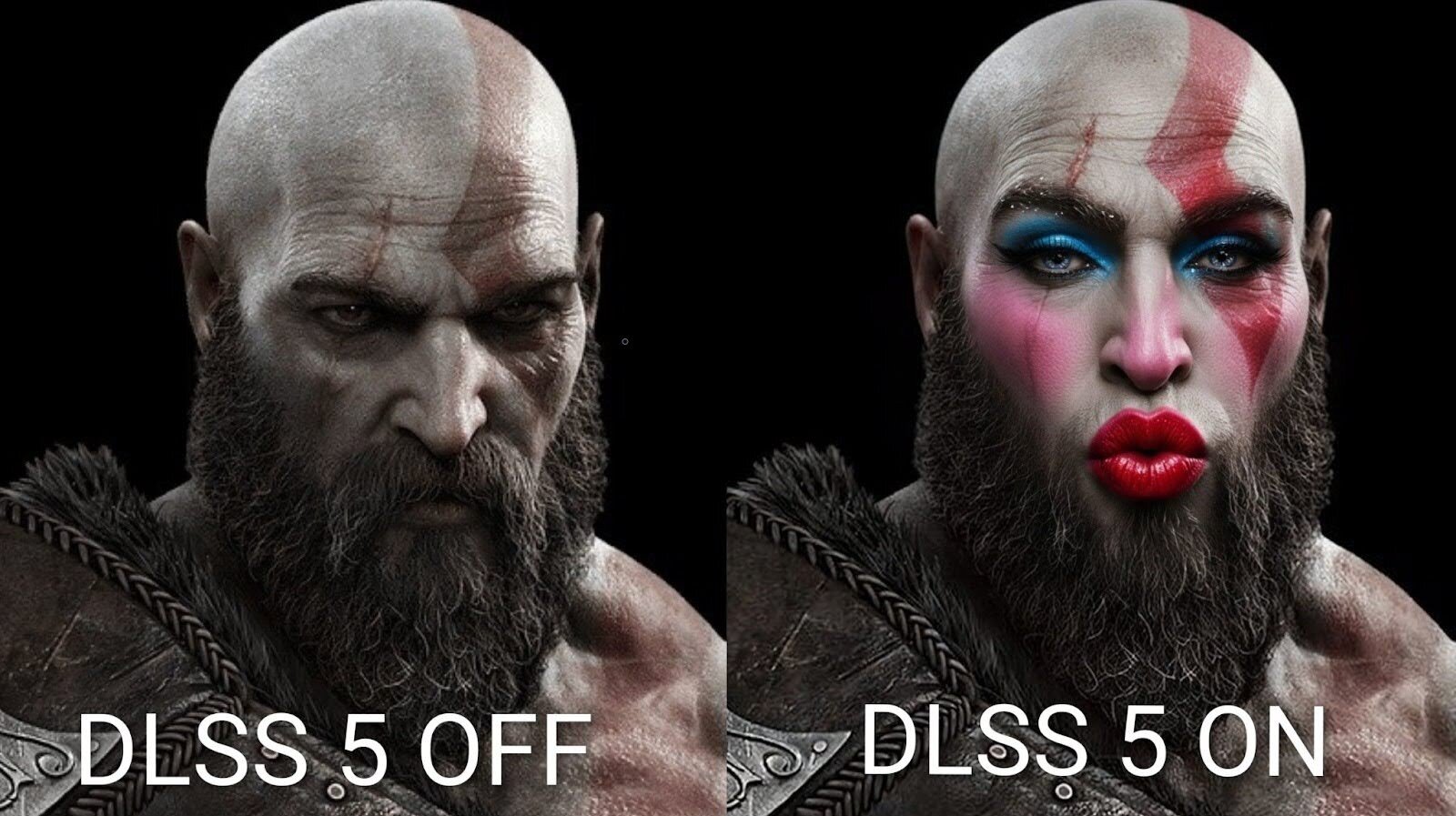
Nvidia's DLSS 5 introduces 'neural rendering,' a significant shift from performance enhancement to AI-driven image generation, potentially altering artistic intent in games. While developers praise the technical leap, widespread gamer backlash and viral memes highlight concerns about AI overreach and the 'uncanny valley' effect, suggesting a potential disconnect between technological advancement and user perception. The shift to AI making aesthetic decisions rather than solely improving performance could redefine player expectations and the perceived value of graphical fidelity, impacting future game development and player engagement.

Citigroup's revised 12-month targets for Bitcoin and Ethereum, lowered by 21.7% and 26.2% respectively, signal a more cautious outlook due to delayed US policy progress impacting expected ETF demand and adoption. Despite target cuts, both Bitcoin and Ethereum's new forecasts remain above current market prices, implying continued upside potential but with a capped trajectory compared to previous expectations. The downgrade suggests that while recent price gains and ETF inflows are positive, they may not be sufficient to fully support the higher price targets previously set, highlighting a disconnect between short-term performance and long-term structural catalysts. The market's next test will be whether ongoing ETF inflows and potential legislative breakthroughs can rebuild the bullish case that Citigroup has recently scaled back.
US regulators have issued joint guidance clarifying the application of federal securities laws to crypto assets, specifically addressing staking, mining, and airdrops, which provides much-needed regulatory clarity for the industry. The guidance acknowledges that most crypto assets are not securities, establishing a framework for how non-security tokens can temporarily become subject to investment contracts and how these can legally end, potentially reducing enforcement risk for network participants. This development offers a clearer 'rules of the road' for US-based crypto builders and investors, potentially fostering innovation and reducing uncertainty around network participation activities like staking and mining.

Argentina's nationwide ban on Polymarket, citing unlicensed betting and minor participation concerns, signals an intensifying global regulatory crackdown on prediction markets. The court-backed decision in Argentina, mirroring actions in Colombia and regulatory scrutiny in Brazil and the US, suggests a growing trend of authorities targeting platforms operating outside established legal frameworks. This regulatory pressure on prediction markets like Polymarket and Kalshi could lead to increased legal challenges and a potential shift in how these platforms are classified and regulated globally.

Potential compromise on stablecoin yield this week could unblock the stalled crypto market structure bill, a critical development for industry legal clarity. The dispute over stablecoin yield programs, a key sticking point between crypto firms and banks, highlights the ongoing regulatory tension and the need for legislative resolution. With time running out before the 2026 midterms, a breakthrough on stablecoin yield could pave the way for broader legislative progress, impacting the future of crypto operations in the US. The White House's involvement suggests a concerted effort to find a resolution, potentially signaling a more favorable regulatory environment if a compromise is reached.
A 208% surge in Shiba Inu exchange deposits signals potential profit-taking or exhaustion, increasing the probability of near-term selling pressure despite recent technical bullish signals like a golden cross. Despite a recent golden cross and community token burns, the significant increase in SHIB deposits to exchanges suggests that traders are preparing to sell, potentially negating recent gains and indicating a bearish short-term outlook. The shift in investor sentiment, evidenced by increased exchange inflows for SHIB, coupled with Dogecoin's relative resilience, suggests a potential rotation away from SHIB within the meme coin sector.

Arizona has filed 20 criminal charges against prediction market platform Kalshi, classifying its operations as an illegal gambling enterprise and alleging violations of election wagering laws. Kalshi's preemptive lawsuits against states, including Arizona, highlight a pattern of challenging regulatory frameworks rather than complying, potentially signaling ongoing legal battles that could impact its operational scope. The legal actions against Kalshi, despite its reported high valuation, introduce significant regulatory risk and could influence investor sentiment towards prediction markets and similar platforms operating in regulatory gray areas.
Signal context only. Validate with price action, liquidity, and risk limits before taking a position.
