
Navigating Crypto News

CoinFeather
Navigating Crypto News

Quick market read from this story
Ripple's CTO rejects artificial incentives for XRP adoption, drawing parallels to unsustainable early startup growth models like Uber, signaling a focus on organic utility over subsidized demand.
The stance against 'fake discounts' suggests Ripple prioritizes long-term, sustainable adoption for XRP, potentially indicating a more cautious approach to immediate institutional uptake but a stronger foundation for future growth.
While Ripple has historically used financial incentives (e.g., MoneyGram), the current emphasis is on removing friction, implying a shift towards letting XRP's inherent value proposition drive adoption rather than relying on direct subsidies.
Deep Dive
Ripple Chief Technology Officer David Schwartz has publicly stated his opposition to artificially subsidizing the cost of XRP to encourage institutional adoption. He explained that offering
Source, catalyst, and sector overlap from the latest feed.
Shiba Inu is showing early signs of a potential reversal from its downtrend, indicated by higher lows and consolidation beneath resistance levels. A confirmed break and hold above the 50 Exponential Moving Average (EMA) would be the first significant structural reversal signal, potentially leading to the removal of a zero from its price. While bullish signs are emerging, the market must demonstrate sustained acceptance above resistance to validate the reversal and avoid a potential failed breakout, characteristic of meme assets.
Changpeng Zhao has warned that any project attempting to use a middleman to secure a spot on the exchange will be permanently blacklisted.
Live Feed
Loading the broader stream in the same flow as the homepage feed.
Hopes of a US-Iran ceasefire are driving down crude oil prices, which could alleviate supply concerns and positively impact energy-related equities like HPCL. Despite recent gains, HPCL's stock has experienced significant losses over the past month due to Middle East tensions, suggesting that a sustained de-escalation is needed for a full recovery. The conflicting reports regarding direct negotiations between the US and Iran introduce uncertainty, making the market's reaction to potential de-escalation events volatile.
Solana is testing key resistance against Bitcoin, with a confirmed breakout potentially signaling short-term outperformance. SOL/USDT is holding critical weekly support, suggesting a potential recovery within its current trading range if the support level holds. The market is at a decision point for Solana, with both SOL/BTC and SOL/USDT charts indicating potential directional moves dependent on key technical levels. Traders should monitor SOL/BTC for a confirmed break above resistance and SOL/USDT for continued support at the wedge floor to gauge near-term price action.
The DTCC's ambitious 50-week timeline for tokenizing markets signals a significant acceleration in institutional adoption of blockchain technology for asset settlement. Ripple's integration into the NSCC via Ripple Prime positions it as a key infrastructure provider bridging traditional finance and digital asset rails, potentially leveraging XRP Ledger. The DTCC's patent referencing XRP and XLM as 'Digital Liquidity Tokens' suggests a strategic exploration of these assets for cross-ledger settlement, though not yet confirmed for deployment. The convergence of DTCC's tokenization drive and Ripple's established presence in clearing networks indicates a tangible shift towards a digitized, interconnected financial system, moving beyond theoretical discussions.
The article outlines a diversified investment strategy for $1,000 in 2026, emphasizing a 20% allocation to crypto as a high-risk, high-reward asset class alongside traditional assets. Institutional adoption of Bitcoin as a macro hedge and Ethereum's role in smart contracts are highlighted as key drivers for crypto's inclusion in balanced portfolios. The piece suggests that tokenization of real-world assets and AI innovation are shaping the 2026 investment landscape, influencing allocation towards alternative and growth-oriented sectors. For retail investors, the article advocates for diversification across stocks/ETFs, crypto, bonds, and alternatives, cautioning against speculative bets and emphasizing long-term planning.

Bitpanda's launch of 'Vision Chain' leverages Optimism's infrastructure to create compliant blockchain rails for tokenized traditional assets in Europe, signaling a significant move towards institutional adoption. The initiative addresses the growing demand for 24/7 trading of tokenized securities and aims to streamline capital markets by integrating with existing EU financial regulations like MiCA and MiFID II. By utilizing euro-denominated stablecoins for transaction fees and building on Optimism's scaling solutions, Bitpanda is positioning its network as a reliable and regulated alternative to volatile public chains for institutional use. This development places Bitpanda in direct competition with other major financial players like Robinhood, Nasdaq, and NYSE who are also developing blockchain solutions for tokenized assets, highlighting a broader industry trend.
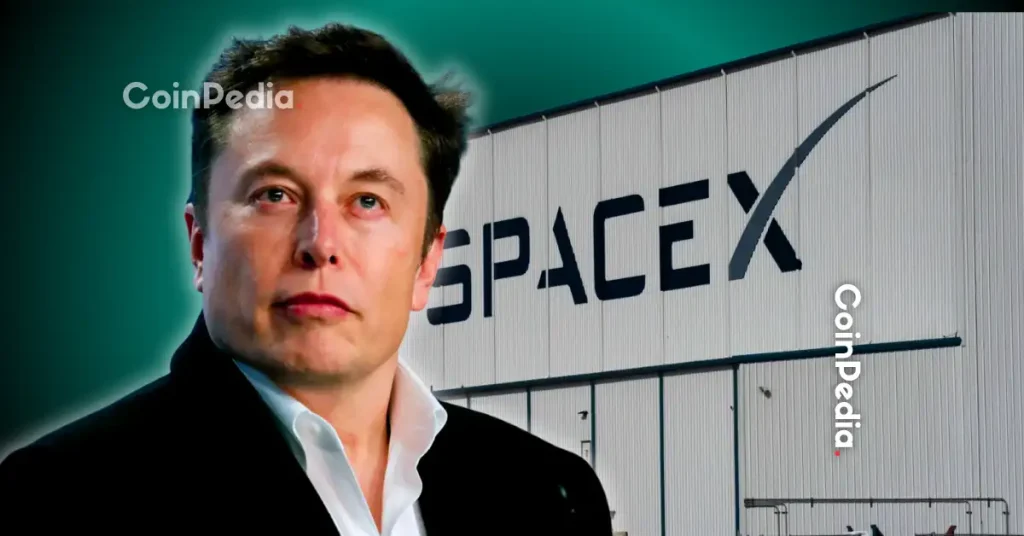
SpaceX's confirmation of an upcoming IPO, potentially raising billions, signals significant growth and future investment in its Starlink and AI initiatives, which could indirectly influence crypto markets through associated ventures. The potential IPO of SpaceX, coupled with Elon Musk's historical promotion of Dogecoin and past plans for DOGE-funded missions, creates speculative interest in DOGE, though direct financial impact remains unconfirmed. While SpaceX's IPO is a major event for traditional finance and space tech, its direct impact on cryptocurrency prices is likely to be sentiment-driven and speculative, particularly for DOGE, rather than based on fundamental integration.

Indian court dismisses fraud charges against CoinDCX founders, ruling no prima facie case was made out. The ruling supports CoinDCX's claim of third-party impersonation and phishing scams targeting users on fake platforms. This development removes a significant legal overhang for CoinDCX leadership, potentially boosting investor confidence in the exchange.

U.S. spot Bitcoin ETFs resumed net inflows of $167 million, breaking a three-day outflow streak, signaling renewed investor interest after a period of caution. The rebound in ETF inflows coincided with a Bitcoin price recovery above $71,000, suggesting that positive geopolitical commentary may be easing risk-off sentiment in the short term. While Bitcoin ETFs show strength, Ethereum ETFs experienced net withdrawals, highlighting a divergence in institutional demand between the two largest cryptocurrencies. Analyst commentary suggests Bitcoin's higher lows are a positive technical signal, but caution remains regarding liquidity triggers, with potential upside targets around $77-80K if current levels hold.

The upcoming $14.16 billion Bitcoin options expiry on Deribit, with a 'max pain' point at $75,000, suggests potential price gravitation towards this level due to market maker hedging activities. Implied volatility compression for both BTC and ETH indicates that traders are anticipating a controlled expiry rather than a sharp volatility surge, despite geopolitical tensions. Institutional call writing at higher strikes suggests a measured bullish sentiment, with traders aiming to collect premiums while awaiting clearer market direction, potentially capping upside near term. The market's resilience around the $71k level, even amidst geopolitical uncertainty, highlights underlying strength in Bitcoin as it approaches a significant options expiry event.

Gold prices experienced a significant 4% surge, driven by easing US-Iran tensions and a weaker dollar, which increased safe-haven demand and rate cut expectations. While the rally is attributed to geopolitical de-escalation and technical retests of support levels, some analysts caution it could be a liquidity trap due to a lack of structural confirmation. The short-term price action hinges on gold holding the $4,600-$4,620 resistance zone; a failure to do so could lead to a pullback, while a sustained breakout targets $4,700-$4,800. The article highlights gold's continued role as a hedge against uncertainty, even amidst high volatility, with a long-term structural shift noted against the S&P 500.

Key Takeaways Bitcoin ETFs recorded net outflows of $66.6 million on March 24, reversing prior inflows. Ethereum ETFs extended their […] The post Crypto ETF Flows Turn Mixed as Bitcoin, Ethereum Slip and Solana Gains appeared first on Coindoo.

Institutional investor Bitmine's significant ETH accumulation during a market pullback signals strong conviction in an impending recovery, suggesting a potential shift from large-cap assets to early-stage presale opportunities. The article highlights Pepeto as a key presale opportunity, leveraging the co-founder's past success with Pepe and aiming for a Binance listing, positioning it as a high-potential alternative to established assets like BNB and ADA for capturing recovery multiples. While Bitmine's ETH purchases indicate a potential end to the 'mini crypto winter,' the focus on presale tokens like Pepeto suggests a market strategy prioritizing asymmetric upside over the more modest gains expected from larger, established cryptocurrencies.

Bittensor's TAO token has seen a significant price surge of nearly 90% in March, driving substantial growth in its subnet ecosystem which now boasts a cumulative valuation close to $1.5 billion. The increasing valuation and trading volume of Bittensor subnets, with many posting substantial gains, indicate strong investor interest and potential for further ecosystem expansion beyond the core TAO token. The introduction of dynamic TAO (dTAO) tokens, backed by TAO reserves and launched in 2025, directly links subnet value to the core asset, creating a more integrated and potentially self-reinforcing ecosystem. Several subnets are demonstrating real-world utility and commercial viability, with examples like Chutes achieving over $100 million valuation and Targon securing significant funding, highlighting the practical applications of decentralized AI.

The post Bitcoin Cash (BCH) Price Signals Next Wave: $500 Breakout Now in Play appeared first on Coinpedia Fintech News Bitcoin Cash (BCH) price is beginning to shift gears, and this time, the structure suggests it’s not just another short-term bounce. As the broader crypto market stabilizes with Bitcoin holding higher levels and Ethereum regaining momentum, BCH is now flashing a clean, technically-driven breakout setup. Trading near the $470–$480 range, Bitcoin Cash price is not …
Signal context only. Validate with price action, liquidity, and risk limits before taking a position.
No explicit catalyst tagged.
