
Navigating Crypto News

CoinFeather
Navigating Crypto News

Quick market read from this story
The Ethereum Foundation's launch of a post-quantum security portal signals a proactive, long-term strategy to secure the network against future cryptographic threats.
This initiative, involving multiple client teams and a phased upgrade approach across executive, consensus, and data layers, highlights the complexity and multi-year timeline required for fundamental blockchain security enhancements.
While not an immediate threat, the focus on quantum-proofing positions Ethereum as a forward-thinking Layer 1, potentially influencing investor confidence in its long-term viability and resilience.
Deep Dive
The Ethereum Foundation has launched a new online hub dedicated to tracking the network's transition to post-quantum (PQ) cryptography. This initiative consolidates over eight years of research and engineering efforts aimed at securing Ethereum against potential future threats from quantum computers.
The post-quantum initiative employs a multi-layered strategy. The executive layer focuses on enabling users to adopt quantum-safe authentication methods without disrupting the network, which includes standardizing post-quantum signature verification. The consensus layer plans to replace the current validator signature scheme (BLS) with hash-based post-quantum alternatives, specifically leanXMSS. Additionally, the data layer will concentrate on securing data availability using PQ cryptography, with a focus on handling "PQ blobs."
Source, catalyst, and sector overlap from the latest feed.
JPMorgan CEO Jamie Dimon reiterates his strong belief in blockchain technology for institutional use, while maintaining deep skepticism towards cryptocurrency speculation, signaling a continued divide in institutional adoption perspectives. Dimon's emphasis on JPMorgan's proprietary blockchain solutions like Kinexys and JPM Coin highlights the bank's focus on practical, enterprise-level applications rather than speculative digital assets. The commentary from a major traditional finance leader reinforces the narrative that while underlying blockchain tech is gaining traction, the speculative crypto market faces ongoing scrutiny from established financial institutions.
Live Feed
Loading the broader stream in the same flow as the homepage feed.

The crypto ETF market is evolving beyond passive strategies, with active management and yield-generating products like staking gaining traction, signaling a maturing investment landscape. 21Shares' strategic integration with FalconX and expansion into actively managed products suggest a focus on sophisticated offerings to meet diverse regional investor demands, particularly in Europe. The increasing interest in yield-generating crypto ETPs, exemplified by 21Shares' STRC product and BlackRock's Ethereum staking ETF, indicates a growing demand for accessible income streams within digital asset investments. The divergence in investor interest between the US (concentrated in large caps) and Europe (broader applications and newer assets) highlights regional maturity and differing risk appetites in crypto ETF adoption.

Robinhood's board has approved a significant $1.5 billion share repurchase program, signaling management's confidence in the company's valuation despite recent stock declines. The expanded $3.25 billion credit facility, with an option to increase to $4.875 billion, provides Robinhood with enhanced financial flexibility and liquidity. While the buyback and credit facility are positive for Robinhood's corporate health, the market's reaction will likely depend on its ability to leverage these resources to drive future growth, particularly in its crypto business.

Circle's stock experienced a significant 20% decline, driven by competitive pressure from Tether's audit announcement and potential regulatory impacts on stablecoin yield from the Clarity Act. Tether's move towards a 'Big Four' audit signals increased regulatory compliance and could enhance its competitive standing against USDC, potentially impacting market share dynamics. Proposed changes to the Clarity Act that could restrict stablecoin yield present a risk to current revenue streams for platforms like Coinbase and Binance, potentially affecting user incentives. Despite recent stock volatility, Circle's strong Q4 2025 earnings and growth in USDC circulation highlight underlying business strength, though future regulatory clarity remains a key factor.
Meme coin prices experienced a brief rally driven by easing geopolitical tensions, but have since pulled back, indicating that the short-term sentiment remains fragile and dependent on broader market strength. Dogecoin is testing key support at $0.092, with a potential inverse head and shoulders pattern suggesting a medium-term trend reversal if confirmed, though price action remains tethered to Bitcoin's movements. Shiba Inu's price action is supported by a recent increase in its token burn rate, which has reduced circulating supply, but it remains critical to hold the $0.000006 support level to avoid further declines. Pepe Coin saw a surge in trading volume during its rally, but like other meme coins, its price is now facing renewed selling pressure, highlighting the speculative and volatile nature of this segment.

Circle's partnership with Sasai Fintech aims to leverage USDC for cross-border payments in Africa, addressing high remittance costs and potentially driving adoption in a region with rapidly growing crypto usage. The integration targets a significant market need for cheaper and faster financial services, positioning USDC to capture a share of the growing remittance and business transaction flows in Sub-Saharan Africa. This strategic move by Circle highlights the increasing focus on emerging markets for stablecoin utility beyond speculative trading, signaling a potential trend for further adoption in regions with currency volatility concerns.
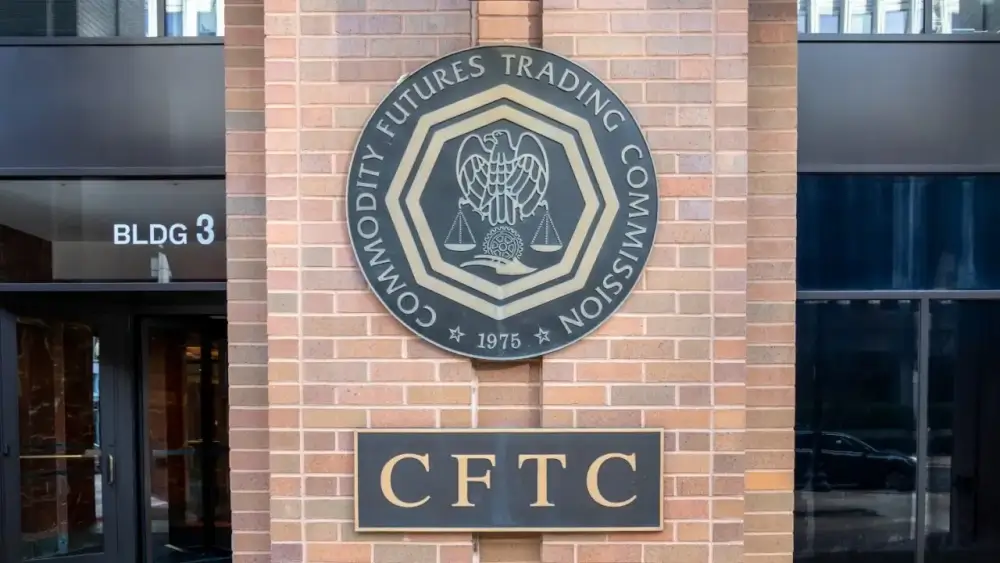
The CFTC's establishment of an Innovation Task Force signals a proactive regulatory stance towards crypto, AI, and prediction markets, aiming to provide clearer rules of the road for emerging financial technologies. Increased coordination between the CFTC and SEC on crypto regulation, with a focus on classifying most digital assets as non-securities, could reduce market uncertainty and foster clearer investment frameworks. The CFTC's specific focus on prediction markets highlights a key regulatory battleground, balancing federal oversight with state-level gambling laws and potentially impacting platforms operating in this niche. The SEC's submission of a new digital asset rule to the White House, potentially including an 'innovation exemption,' suggests a move towards a more structured and supportive regulatory environment for early-stage crypto projects.
The CFTC's establishment of an Innovation Task Force signals a proactive regulatory stance towards crypto, AI, and prediction markets, aiming to provide clearer rules of the road for emerging financial technologies. Increased coordination between the CFTC and SEC on crypto regulation, with a focus on classifying most digital assets as non-securities, could reduce market uncertainty and encourage institutional participation. Circle's warning highlights that Europe risks falling behind the US in digital asset innovation due to regulatory delays, suggesting that jurisdictions offering greater clarity and efficiency will attract more institutional capital. The CFTC's focus on prediction markets indicates a growing regulatory scrutiny of novel financial instruments, potentially creating a complex jurisdictional landscape with state-level authorities.
Missouri's advancement of a bill to include XRP in a state crypto reserve, alongside BTC and ETH, signals growing institutional acceptance and could provide a long-term demand driver. Despite recent price pressure, Elliott Wave analysis suggests XRP may be completing a corrective phase, with potential for a Wave 5 rally targeting new highs if the structure holds. The classification of XRP as a commodity in the US, coupled with potential regulatory refinements in Japan, provides a more defined landscape for its adoption and trading.

Proposed regulatory action to ban stablecoin yields could significantly impact crypto-focused stocks like Circle and Coinbase, as evidenced by their substantial market cap declines. The Clarity Act's proposed ban on passive stablecoin yields, driven by lobbying from traditional banks, highlights ongoing tensions between the crypto industry and established financial institutions regarding competitive interest offerings. While a ban on passive yields may reduce user returns on stablecoins, it could paradoxically increase short-term profitability for exchanges like Coinbase by lowering reward payouts. The debate around stablecoin yields and the Clarity Act underscores the broader trend of traditional finance entities exploring blockchain technology, such as RWA tokenization, to enhance their own services.

Bitcoin is increasingly functioning as a real-time geopolitical risk indicator, reacting swiftly to de-escalation events by rallying, suggesting a shift from a traditional safe-haven asset to a dynamic macro sentiment barometer. The article posits that Bitcoin's rapid price discovery in response to geopolitical shifts, particularly those impacting oil prices and inflation expectations, positions it as a primary venue for expressing macro probabilities before traditional markets. While Bitcoin demonstrates sensitivity to geopolitical events, its recent price action aligns more with high-beta relief behavior than a digital gold narrative, indicating its role is evolving towards a first-response instrument for global shocks. The market's current phase is characterized by development-driven reflexivity, where Bitcoin's speed and continuous trading enable it to register geopolitical shifts faster than equities or gold, though sustained acceptance above key levels remains unproven.

The CFTC's establishment of an Innovation Task Force signals a proactive regulatory stance towards emerging technologies like crypto and AI, potentially creating a clearer framework for market participants. This initiative by the CFTC, alongside the SEC's prior efforts, indicates a growing focus on developing regulatory clarity for digital assets in the US, which could reduce uncertainty for institutional and retail investors. The task force's inclusion of AI and prediction markets suggests a broader regulatory scope beyond just cryptocurrencies, potentially impacting multiple tech sectors and their integration with blockchain.
Shiba Inu exhibits a double bullish divergence on the RSI and has broken above the $0.00000504 resistance, signaling potential easing of sell pressure and a possible trend reversal. The current technical setup suggests a potential 37% rally towards the 200-day moving average at $0.00000842, contingent on breaking immediate resistance at $0.00000662. A sustained weekly close above $0.0000068 by quarter-end could act as a catalyst for momentum-driven buying, attracting institutional and algorithmic interest.

BNY Mellon CEO Robin Vince positions large banks as essential bridges between traditional finance and digital assets, suggesting institutional adoption hinges on their infrastructure and client base. The commentary from BNY Mellon's CEO highlights tokenization of traditional products like money market funds as a near-term focus for driving adoption, indicating a pragmatic approach to integrating digital assets. Vince emphasizes that regulatory clarity and trust are critical prerequisites for broader institutional participation in crypto, suggesting that ongoing legislative efforts are key to unlocking significant growth. The long-term outlook for crypto adoption is framed as a 5-15 year journey, implying that while progress is expected, it will be gradual and dependent on technological, regulatory, and market evolution.

Epic Games' significant layoffs, impacting over 1,000 employees, signal a challenging market environment for gaming companies, driven by declining engagement in flagship titles like Fortnite and broader industry slowdowns. Despite the layoffs, CEO Tim Sweeney explicitly stated that AI is not the cause, indicating that the company views AI as a productivity enhancer rather than a direct threat to its workforce, aligning with its embrace of AI in game development. The news highlights the financial pressures within the gaming sector, where even successful titles can face profitability issues due to high operational costs and shifting player engagement, potentially impacting investment in related technologies.
Signal context only. Validate with price action, liquidity, and risk limits before taking a position.
XRP's Q2 performance historically shows significant volatility, with an average April return of +24.8% and a notable +1,109% in Q2 2017, suggesting potential for a strong rebound after its -23% start to 2026. Despite historical bullish tendencies in Q2, the possibility of a 'bull trap' or further decline exists, as evidenced by a -59.4% Q2 in 2022 and a potential repeat of 2024's April weakness. The current oversold market condition for XRP, following a weak Q1 2026 and a bearish Q4 2025, sets the stage for a critical Q2 'moment of truth' with divergent outcomes.
