
Navigating Crypto News

CoinFeather
Navigating Crypto News

Quick market read from this story
Bitcoin's resistance at $74,500 suggests a potential consolidation phase, which could precede a significant upward breakout if current support levels hold.
The shallow pullback in BTC price, as indicated, may signal underlying strength and could lead to a broader altcoin rally if Bitcoin breaks through its resistance.
Traders should monitor Bitcoin's price action around the $74,500 level for confirmation of a breakout, as this could dictate near-term directional moves for the broader market.
Deep Dive
Cointelegraph emphasizes its dedication to delivering independent, high-quality journalism across the crypto, blockchain, AI, and fintech sectors. The platform utilizes commercial or partner references to support open access and sustain editorial operations without additional cost to readers.
The publication assures that editorial decisions are never influenced by commercial relationships, maintaining full journalistic independence and integrity in all news, reviews, and analysis. For further details, readers are directed to the Editorial Policy.
All sponsored and commercial content, including press releases, undergoes a clear labeling process and is reviewed for accuracy, disclosure, and compliance. Partners are thoroughly vetted before any paid partnership is established.
Source, catalyst, and sector overlap from the latest feed.
The Bitcoin Policy Institute is targeting a March-August 2026 window for a de minimis tax exemption for Bitcoin transactions, but warns that legislative bandwidth is shrinking, potentially delaying opportunities for years. Current US tax policy treats Bitcoin spending as a taxable event, hindering its adoption as a medium of exchange, with a de minimis exemption aiming to resolve this by excluding small transactions from capital gains reporting. The urgency for Bitcoin tax legislation is heightened by Senator Lummis's departure in January 2027, suggesting that failure to pass a bill in the upcoming months could significantly postpone any favorable tax treatment.
Live Feed
Loading the broader stream in the same flow as the homepage feed.

Former UK PM Boris Johnson's strong criticism of Bitcoin as a 'giant Ponzi scheme' highlights ongoing regulatory and public perception challenges for the crypto industry. Johnson's remarks contrast sharply with his own administration's past efforts to position the UK as a crypto hub, suggesting a potential shift in political sentiment or a strategic rhetorical stance. The comparison of Bitcoin unfavorably to Pokémon cards and gold underscores a fundamental disconnect in perceived value and intrinsic backing, which could influence investor sentiment towards assets lacking tangible collateral.

Custodia's legal defeat against the Federal Reserve regarding master accounts signals a continued regulatory hurdle for crypto banks seeking direct access to central bank infrastructure. Despite Custodia's loss, the Fed's recent limited master account grant to Kraken and ongoing policy work indicate a potential shift towards regulated crypto firms gaining indirect access to payment rails. The court's decision, while negative for Custodia, highlights the evolving regulatory landscape where direct challenges to the Fed's authority are unlikely to succeed, pushing firms to adapt to new, albeit limited, access pathways. The divergence between Custodia's failed direct approach and Kraken's successful limited account acquisition suggests a bifurcated regulatory strategy by the Fed, favoring established entities or specific operational models.
Dogecoin is at a critical technical juncture, with its Exponential Moving Average (EMA) acting as a key resistance level around the $0.10 mark. A decisive break above the EMA could trigger a significant rally, while failure to hold current levels risks a decline towards $0.084, indicating a high-volatility setup. The price action of Dogecoin is heavily influenced by Bitcoin's performance, suggesting that BTC's trajectory will be a primary driver for DOGE's near-term movement. Analysts are presenting both bullish and bearish scenarios, highlighting the uncertainty and the need for traders to monitor the $0.10 level and BTC's trend for directional cues.
Shiba Inu's price has surged 11% this week, with technical indicators like Bollinger Bands suggesting a potential further 22% upside to $0.00000760. The current price action for SHIB mirrors a strong bullish period observed in December 2025, indicating potential for continued upward momentum if market conditions remain favorable. Historical data shows the lower Bollinger Band acting as strong support for SHIB, reinforcing the bullish outlook following recent tests of this level.

A significant $50 million loss occurred on Aave due to a user overriding a slippage warning, highlighting critical UX flaws in DeFi interfaces for large transactions. The incident resulted in substantial profits for MEV bots and block builders on Ethereum, demonstrating the ongoing extraction of value from user errors within the ecosystem. While Aave and CoW Protocol refunded fees, the event underscores the need for improved safeguards and clearer warnings to prevent catastrophic user errors in high-value DeFi trades. The potential identification of the trader as a known figure like Garrett Jin adds a layer of scrutiny to large-scale DeFi operations and risk management practices.

Circle's USYC token has surpassed BlackRock's BUIDL, becoming the largest tokenized U.S. Treasury fund at $2.2 billion, indicating strong investor demand for on-chain yield and collateral options. The rapid growth of tokenized Treasuries, now exceeding $11 billion, highlights a significant shift towards utilizing these assets for capital efficiency and as a safe haven during market downturns. Binance's integration of USYC as collateral for institutional derivatives on BNB Chain appears to be a key driver of its recent surge, demonstrating a practical, high-volume use case for tokenized RWA. The increasing competition and market share shifts between Circle and BlackRock in the tokenized Treasury space signal a maturing RWA sector with significant growth potential.

The FBI's investigation into malware distributed via Steam games highlights a persistent threat vector targeting gamers, potentially impacting user funds and data security. While the direct impact on specific crypto assets is not detailed, the recurring nature of these attacks on gaming platforms suggests a need for increased vigilance among users holding digital assets linked to gaming ecosystems. The FBI's active pursuit of victims indicates a serious regulatory and law enforcement focus on illicit activities within the gaming and crypto intersection, which could lead to future crackdowns or stricter platform oversight.

Vitalik Buterin's introduction of the EF Mandate signals a renewed focus on Ethereum's core principles of decentralization, censorship resistance, and security, potentially reinforcing its long-term value proposition against more specialized blockchains. The 'CROPS' framework (censorship resistance, open source, privacy, security) outlined in the mandate provides a clear strategic direction for the Ethereum Foundation, emphasizing foundational strengths over chasing transient trends. By articulating a 'walkaway test' and critiquing blockchains that chase immediate use cases, Buterin positions Ethereum as a defensive, foundational technology, implying a strategic divergence from competitors focused on rapid adaptation.

Bitcoin's price is approaching monthly highs, driven by renewed buying pressure indicated by a positive Coinbase premium gap after ten weeks and strong ETF inflows. Analysts are closely watching key price levels around $74,000 and $75,000, where significant liquidity clusters and potential liquidation targets exist, which could fuel further upward momentum. Corporate accumulation, exemplified by Strategy's recent BTC acquisition, alongside improving institutional demand via ETFs, suggests a strengthening fundamental bid for Bitcoin. A sustained break above $74,000 and subsequent retest of the $85,000 region is crucial for rebuilding a higher-time frame bullish trend, with potential spillover effects into altcoin markets.
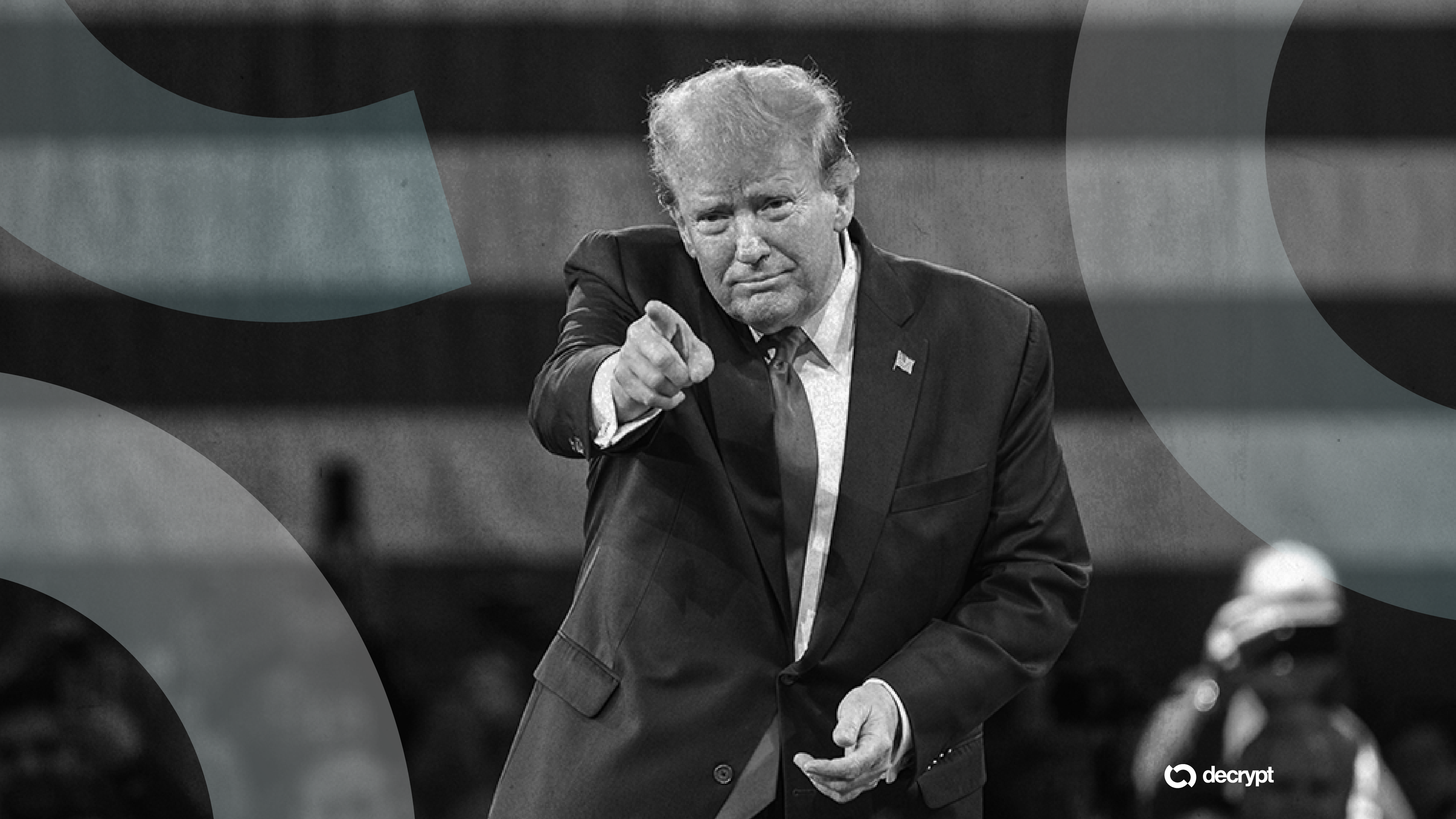
The TRUMP meme coin experienced a significant 35% price surge and a substantial increase in trading volume, driven by the announcement of an exclusive event offering access to President Trump for top holders. The event's structure, requiring substantial token holdings for VIP access, creates a demand-side pressure on the TRUMP token, potentially incentivizing accumulation among holders aiming for exclusive perks. The surge in trading volume, exceeding $1.78 billion in 24 hours, indicates strong speculative interest and liquidity, though the long-term fundamental value remains tied to the meme coin's narrative and event utility. The association with political figures and exclusive events raises regulatory scrutiny concerns, as highlighted by past criticisms, which could pose a risk to the token's perception and future accessibility.
XRP ownership remains highly concentrated, with the top 50 wallets controlling 40-45% of circulating supply, indicating potential for significant price impact from a small group of holders. The 'XRP billionaire club' includes exchanges, Ripple-linked wallets, and unidentified whales, highlighting a structural centralization that influences market dynamics and potential price appreciation capture. While retail participation is growing, the significant holdings by whales and Ripple suggest that large-scale price movements may be heavily influenced by these entities in the next market cycle. The accessibility of XRP upside for smaller holders is defined by thresholds like 2,200 XRP for the top 10% and 46,000 XRP for the top 1%, framing the distribution of potential gains.

Kraken-linked SPAC, KRAKacquisition, is actively seeking a crypto-native target valued up to $10 billion, signaling potential consolidation and increased institutional interest in the sector. The SPAC's broad search across stablecoins, DeFi, and payments indicates a strategic move to align with areas showing strong Wall Street appeal, potentially bringing new capital and public market access to these segments. With Kraken itself considering an IPO, the SPAC's activity suggests a broader strategy to leverage public markets and potentially integrate acquired entities with the exchange's ecosystem. The mention of Bitcoin as a 'hard asset hedge' in the SPAC's filing highlights a narrative that could influence investor sentiment towards digital assets during periods of economic uncertainty.

Multiple governance and development team departures signal potential weakening of Aave's core infrastructure, raising concerns about future protocol stability and innovation. An oracle misconfiguration leading to $27 million in liquidations highlights operational risks within Aave, despite assurances of full reimbursement. A catastrophic $50 million trade resulting in a 99.9% loss due to extreme slippage on the Aave interface underscores critical user experience and risk management flaws. The confluence of governance exits, technical failures, and severe trading issues within a short period suggests a potential systemic breakdown in Aave's operational integrity, warranting close market observation.
Bitcoin faces strong resistance near $74,500, with key support at $60,000, suggesting a potential breakout to $84,000 if resistance is cleared, but a breakdown could lead to significant downside. Several major altcoins including ETH, BNB, XRP, SOL, DOGE, ADA, BCH, and XMR are showing signs of breaking through immediate resistance levels, indicating potential short-term upside if broader market sentiment remains positive. Despite short-term price predictions, historical data suggests significant drawdowns in Bitcoin during US midterm election years, followed by substantial gains in the subsequent two years, implying a longer-term bullish outlook post-election cycles. Bitcoin's resilience as the best-performing macro asset amidst geopolitical stress suggests investor confidence, potentially forming a bottom and supporting a broader market recovery.
Signal context only. Validate with price action, liquidity, and risk limits before taking a position.
Mizuho's report indicates a significant shift in stablecoin usage, with USDC surpassing USDT in adjusted year-to-date transaction volume, suggesting a potential change in preferred transactional stablecoin. Despite USDC's volume lead, Tether's USDT maintains a dominant market capitalization, highlighting a divergence between transactional utility and overall market value that traders should monitor. The ongoing regulatory debate in the US regarding stablecoin yield and market structure could impact the future growth and adoption of stablecoins like USDC and USDT.
