
Navigating Crypto News

CoinFeather
Navigating Crypto News
Quick market read from this story
A Nvidia-backed startup plans to test Bitcoin mining in orbit, leveraging the cost-efficiency of ASICs over GPUs for space-based computing to potentially reshape mining economics.
The initiative highlights a broader trend of exploring space-based data centers for AI and high-performance computing, with Bitcoin mining as a potential early specialized workload.
While technically ambitious, orbital mining faces significant legal and technical hurdles, including satellite jurisdiction under the Outer Space Treaty and communication latency issues, suggesting a long development path.
Deep Dive
Starcloud, a startup backed by Nvidia and founded in 2024, plans to launch Bitcoin mining hardware into orbit later this year, aiming to become the first company to mine the cryptocurrency outside of Earth. CEO Philip Johnston believes that orbital computing, particularly for specialized tasks like Bitcoin mining, could evolve into a significant industry.
Johnston's strategy hinges on the cost-effectiveness of ASIC chips, the specialized processors used for Bitcoin mining. He argues that these chips offer substantially more computing power per unit of electricity compared to general-purpose AI hardware. For instance, he noted that an ASIC chip costs approximately $1,000 for the same power draw that would cost $30,000 for a high-end GPU like Nvidia's B200. This lower cost per kilowatt is seen as crucial for making orbital computing economically viable, given the high expense of launching equipment into space.
Furthermore, Johnston points to the increasing energy constraints on Earth, where Bitcoin mining currently consumes around 20 gigawatts of electricity globally. He suggests that the industry might eventually turn to solar-powered infrastructure in orbit as terrestrial energy sources become more limited.
Starcloud's ambition extends beyond Bitcoin mining to establishing space-based data centers to meet the growing demand for artificial intelligence and high-performance computing. In November 2025, the company successfully launched a satellite carrying an Nvidia H100 GPU, marking the first operation of such a powerful AI chip in space. The company's long-term vision includes a network of approximately 88,000 satellites powered by solar energy, capable of supporting both AI workloads and specialized tasks like crypto mining.
The concept of space-based crypto infrastructure has also spurred discussions about interplanetary transactions. Researchers have proposed systems using optical communication links that could theoretically transmit Bitcoin transactions to Mars in under three minutes. However, direct Bitcoin mining on Mars is considered impractical due to significant communication delays.
Despite the potential, significant legal and technical hurdles remain. The 1967 Outer Space Treaty governs satellites, but it does not clearly address the taxation or regulation of cryptocurrencies mined in space. Technically, low Earth orbit satellites face communication limitations, with ground station access only available during brief overhead passes, which could interrupt the transmission of newly mined blocks to the Bitcoin network.
Meanwhile, traditional Bitcoin miners on Earth are navigating challenging market conditions. The price of Bitcoin has dropped nearly 48% from its all-time high, although mining difficulty has recently decreased by about 7%, providing some relief. While space-based mining remains experimental, its success could redefine the future frontier for Bitcoin operations.
Source, catalyst, and sector overlap from the latest feed.
Coinbase's expansion of regulated crypto futures trading to 26 European countries signifies a strategic move to capture a previously underserved market, potentially increasing derivatives volume and revenue for the exchange. The launch offers European traders a compliant alternative to offshore platforms, potentially drawing capital into regulated venues and increasing demand for underlying assets like BTC and SOL through futures contracts. By offering both perpetual-style and dated futures with leverage, Coinbase is positioning itself as a comprehensive trading venue, aiming to attract sophisticated traders and broaden its appeal beyond spot markets.
China's expanded restrictions on BHP's iron ore shipments signal a strategic move to assert greater control over commodity pricing, potentially impacting global supply chains and commodity markets. The escalating pricing dispute between China and BHP, a major global mining entity, has led to a significant drop in BHP's share price, highlighting the market's sensitivity to geopolitical trade tensions and resource control. This development underscores China's increasing leverage as a dominant consumer, suggesting a shift in power dynamics with major resource suppliers and potentially influencing future trade negotiations.
The metaverse sector continues to evolve, with projects like Decentraland and The Sandbox focusing on virtual worlds while others like Enjin and Render provide underlying infrastructure. As VR technology and Web3 development advance, metaverse cryptocurrencies are positioned to play a significant role in the future internet economy, driven by digital ownership and decentralized economies. The article highlights key metaverse coins for 2026, including MANA, SAND, AXS, ENJ, ILV, APE, and RENDER, detailing their features, pros, and cons, which can inform investment strategies.
Cardano's Foundation approval of a 300M ADA governance plan signals a move towards tighter fiscal discipline and a clearer budget path, potentially influencing investor sentiment. Increased derivatives activity and spot volume, alongside a rise in open interest, suggest growing trader interest in ADA, possibly driven by the governance news and Archax integration. Despite positive governance developments, ADA's price action shows a fragile technical structure with a break below an ascending trendline, indicating potential downside pressure if key support levels are not maintained. The debate around treasury limits and constitutional committee approval highlights ongoing governance complexities within Cardano, which could introduce uncertainty despite the approved plan.
Despite a surge in whale accumulation, Ethereum is facing significant resistance at key trading levels, suggesting potential short-term consolidation or a pullback before any sustained upward movement. The divergence between increasing long-term holder accumulation and current price action indicates strong conviction from large investors, even as short-term technicals point to overhead supply. Traders should monitor the identified resistance band for a decisive breakout, while also considering the potential for a retest of lower support levels if selling pressure persists.
ZODL's $25 million seed funding, backed by major VCs like Paradigm and a16z crypto, signals strong institutional confidence in the Zcash ecosystem's future development and privacy-focused applications. The formation of ZODL by former ECC core team members, following a governance dispute, indicates a potential shift in Zcash's development structure, with a focus on independent innovation for the ZEC protocol and its Zodl wallet. The substantial funding and continued development of Zodl, which has reportedly driven significant growth in Zcash's shielded pool, suggest a strategic effort to enhance user adoption and utility for privacy-centric transactions.
Bitcoin's price action is showing increased sensitivity to geopolitical events, as evidenced by its rebound following a surge in oil prices linked to Middle East tensions. The significant funding rounds for prediction markets like Polymarket and Kalshi at high valuations suggest growing institutional interest in decentralized prediction platforms. Florida's move to establish a stablecoin legal framework highlights a trend of state-level regulatory progress, potentially creating a more favorable environment for stablecoin adoption and innovation. The strategic investments by Circle and Stripe in stablecoin infrastructure for AI payments signal a significant future growth area for digital assets in machine-to-machine commerce.
The United Nations Development Programme's report highlights blockchain's potential to modernize public systems, signaling growing institutional interest in distributed ledger technology for transparency and efficiency. UNDP's pragmatic approach emphasizes responsible adoption with robust oversight, suggesting that successful blockchain integration in public infrastructure hinges on strong governance and security measures. The report's focus on platform-agnostic solutions and interoperability indicates a trend towards open digital infrastructure, potentially benefiting projects prioritizing decentralization and avoiding vendor lock-in.
AI-focused cryptocurrencies TAO and NEAR are showing signs of a potential recovery, testing key resistance levels that could signal a broader trend reversal if broken. TAO's price action indicates a potential move towards $240-$250 if it overcomes the $220 resistance, supported by bullish divergence on RSI and OBV. NEAR Protocol is approaching a critical $1.41 resistance; a successful breach could lead to a test of $1.66, while failure might prolong its bearish structure. The current price action for both TAO and NEAR suggests a cautious optimism, with their ability to break key resistance levels being the primary determinant of near-term price direction.
Live Feed
Loading the broader stream in the same flow as the homepage feed.

Global insurance broker Aon's successful test of stablecoin payments for premiums signals growing institutional interest in blockchain for traditional finance settlements. The use of USDC on Ethereum and PYUSD on Solana by Aon demonstrates the increasing maturity and potential integration of stablecoins into corporate treasury functions, facilitated by improved regulatory clarity. This proof-of-concept by a major financial intermediary suggests a potential shift towards faster, more transparent cross-border transactions within the insurance sector, moving beyond traditional banking rails.
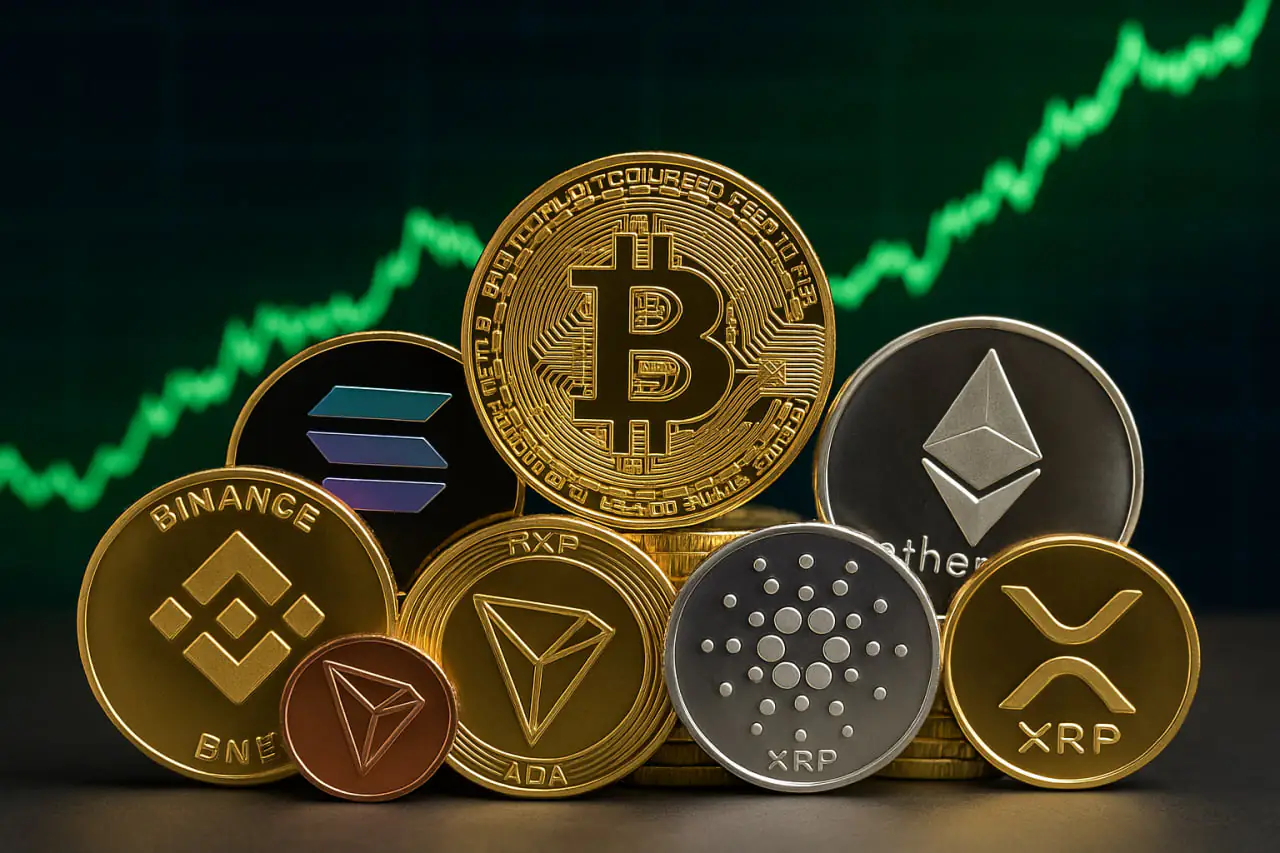
The crypto market's total capitalization nearing $2.36 trillion and Bitcoin approaching $70,000 signals a potential shift in investor sentiment, driven by renewed institutional interest and broad-based gains across major altcoins. Technical indicators for Bitcoin, including RSI and MACD, suggest strengthening bullish momentum, with a decisive break above $70,000 potentially opening further upside towards $72,000-$74,000. Despite the rally, the Crypto Fear & Greed Index at 22 indicates persistent caution, suggesting that while short-term momentum is positive, underlying investor sentiment has not fully recovered from recent volatility. Ethereum's upward movement and consolidation above $2,000, coupled with gains in BNB and Solana, highlight a rotation back into large-cap altcoins, though XRP and TRON show more muted performance.
BitMine's substantial ETH purchase, exceeding $131 million, positions it as the largest corporate holder and signals continued institutional interest in Ethereum despite recent price volatility. The acquisition at an average price of $1,965 per ETH, below its ATH, suggests a strategic accumulation during a perceived market bottom, aligning with a bullish long-term outlook for Ethereum's fundamental development. This significant corporate accumulation of ETH, representing 3.7% of the circulating supply, could provide a degree of price support and indicates a growing trend of institutional capital flowing into major Layer-1 assets.
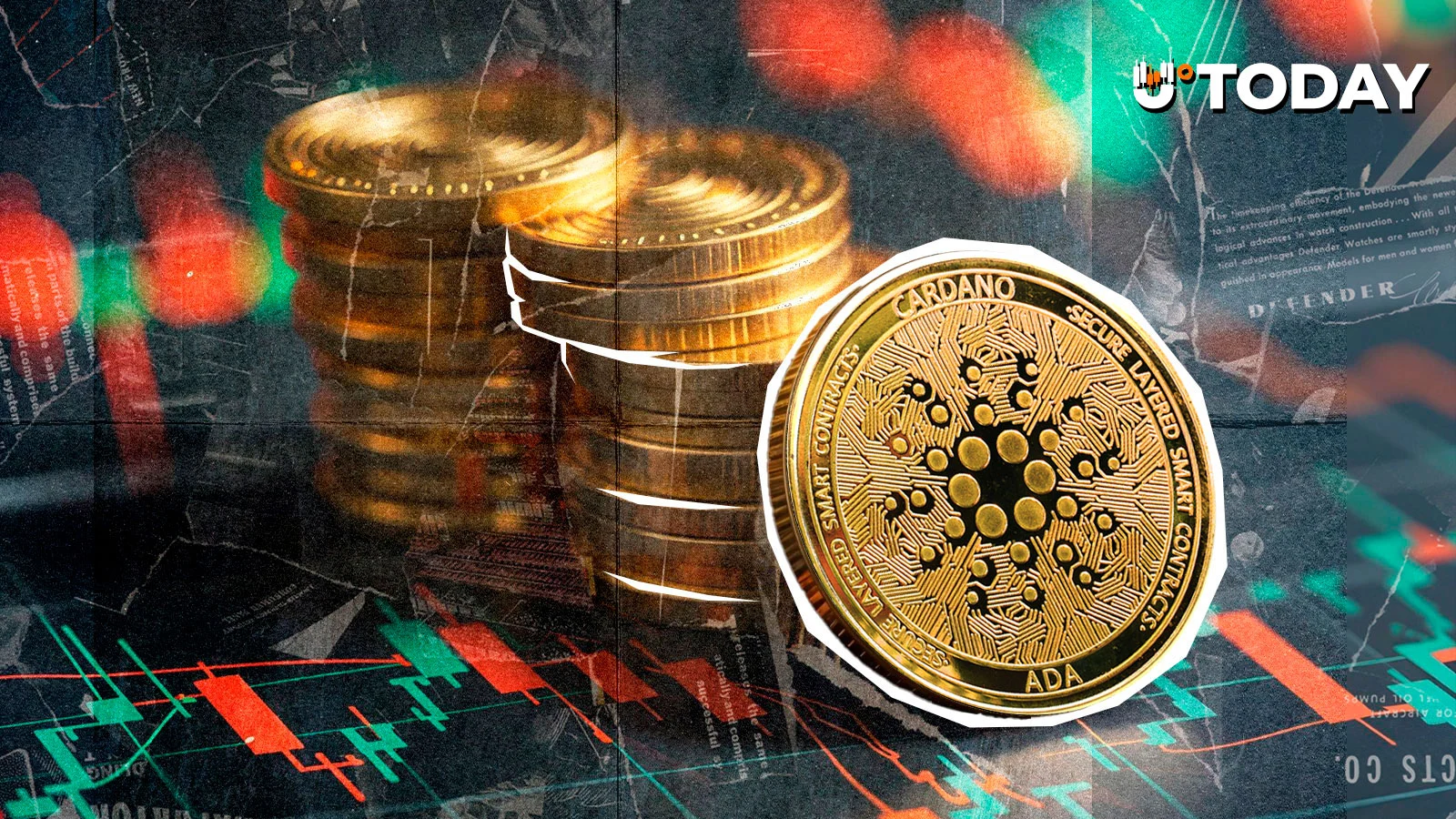
Cardano's introduction of programmable tokens via CIP-0113 enables enhanced control for asset issuers, including KYC/AML compliance and asset freezing, positioning it for regulated DeFi and RWA tokenization. The new standard allows for modular logic integration into tokens, facilitating specialized use cases for securities, real estate, and stablecoins without core network changes. This development signals Cardano's strategic move into the regulated DeFi space, aiming to attract institutional interest and capture market share in tokenized assets. While a live preview is available, a professional security audit is pending, indicating that full mainnet deployment and broader adoption will require further validation.

XRP holders are facing substantial unrealized losses exceeding $50 billion, with over 60% of the circulating supply now underwater, indicating significant downside pressure and potential for capitulation if key support levels fail. Outflows from spot XRP ETFs totaling $22.8 million over two days suggest waning investor confidence and a risk-off sentiment impacting XRP's immediate price action. The current price action is retesting critical support around $1.30-$1.27, with a break below this range potentially signaling a move towards the 200-week EMA at $1.13, while reclaiming $1.40 is necessary for bulls to regain control. The aggregate holder cost basis at $1.44 and the 200-week SMA at $1.40 represent key technical levels that will dictate short-term price direction and sentiment for XRP.
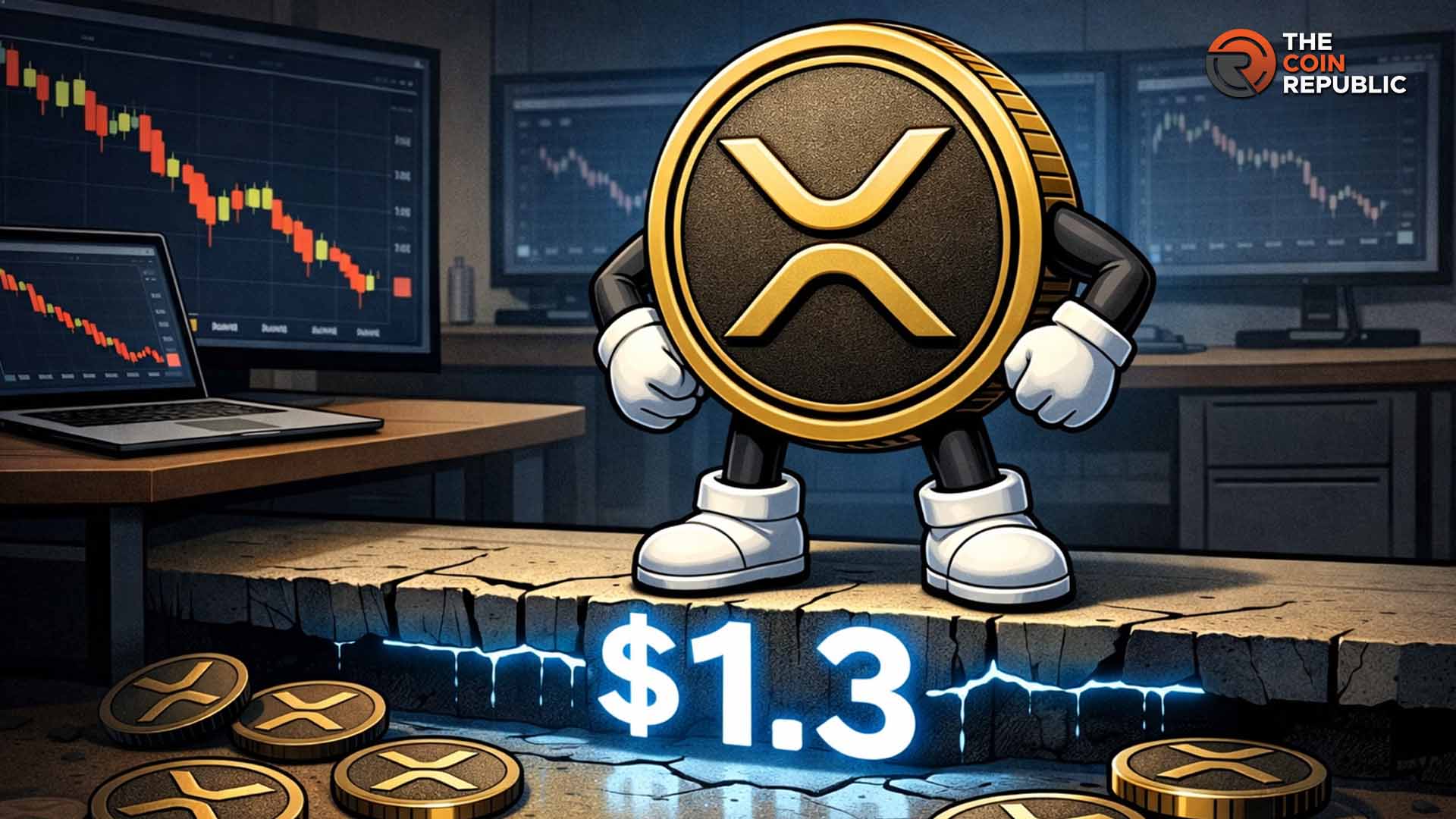
A bearish 21 EMA crossing below the 50 EMA on XRP's chart signals potential further downside, mirroring past cycles that preceded market bottoms. Despite short-term bearish signals and over 50% of circulating supply being underwater, the long-term symmetrical triangle pattern suggests a significant upside target of $8.5 is still in play. Traders should monitor the $0.91–$0.85 support zone for a potential final liquidity sweep before any sustained recovery, with a weekly close above $1.80 or $2.00 indicating a potential bottom. The current price action, characterized by a bearish EMA cross and a large portion of holders being in loss, suggests a potential capitulation phase, which historically precedes a market recovery.

The VIX reaching a one-year high above 35, driven by oil price spikes and geopolitical fears, suggests traditional markets are experiencing significant panic, a condition historically correlated with Bitcoin bottoms. Bitcoin's divergence from traditional markets, showing resilience and even gains while stocks and gold fall, indicates crypto may have already priced in its own 'panic phase' as suggested by the BVIV spike in early February. While the VIX surge signals ongoing traditional market volatility, Bitcoin's current strength and historical correlation with VIX spikes suggest a potential near-term bottoming or consolidation phase for BTC, despite broader macro uncertainty.

MicroStrategy's substantial $1.28 billion Bitcoin purchase, funded partly by preferred share issuance, signals continued conviction in BTC despite unrealized losses, potentially influencing market sentiment for Bitcoin holders. The firm's reliance on STRC, a high-yield preferred share, for Bitcoin acquisition highlights an evolving corporate treasury strategy, though it also introduces ongoing costs and scrutiny. Despite a significant paper loss on its Bitcoin holdings, MicroStrategy's aggressive accumulation suggests a long-term bullish outlook on Bitcoin's price appreciation, which could encourage similar corporate adoption narratives. The market's pricing of a 14% chance for MicroStrategy to sell Bitcoin this year indicates trader sentiment is divided, creating potential volatility around future treasury management decisions.
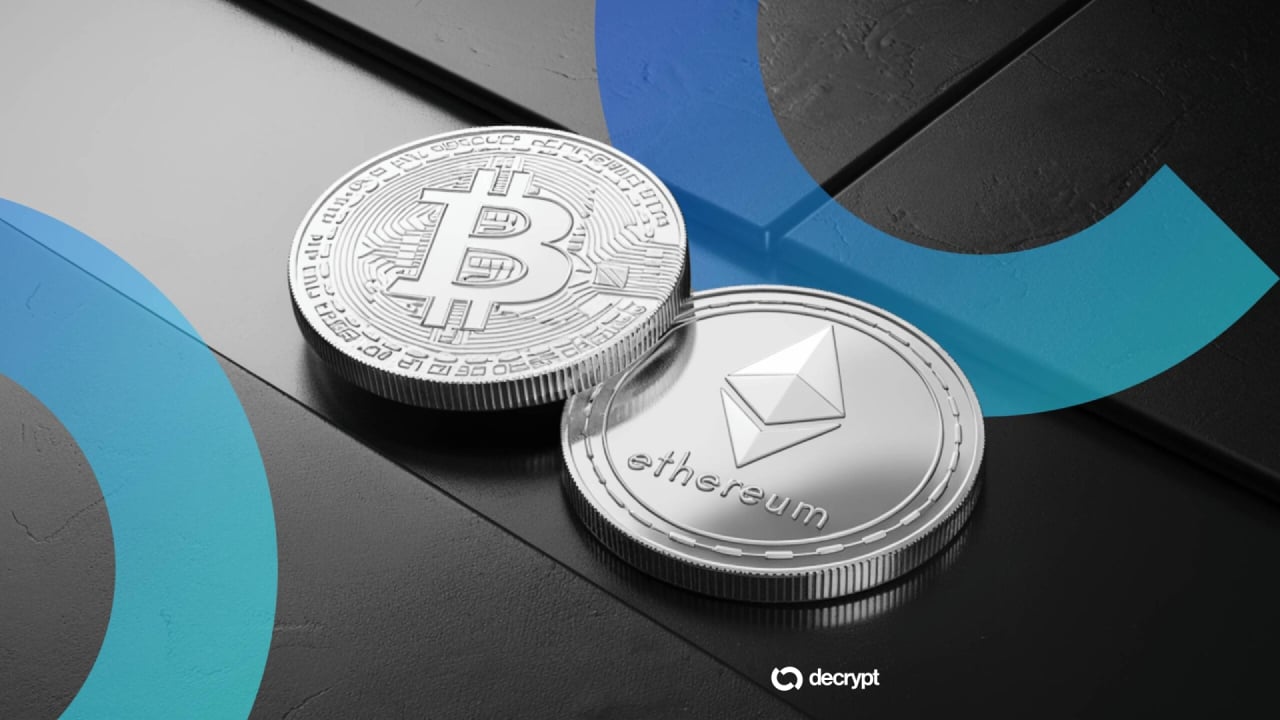
Bitcoin's price action is increasingly correlated with traditional risk assets, as evidenced by its pullback following a surge in oil prices and geopolitical tensions, suggesting a continued sensitivity to macro-economic factors. While early-week inflows into crypto funds were strong, late-week outflows indicate a cautious approach by investors managing risk amid escalating geopolitical uncertainty, impacting Bitcoin's short-term price trajectory. Experts highlight that sustained high oil prices could pressure equities, which in turn feeds into Bitcoin as a risk asset, potentially leading to further downside if the broader market sell-off intensifies. Despite short-term outflows driven by macro concerns, some analysts argue Bitcoin's fundamental value proposition remains independent of traditional financial market pressures, suggesting a potential divergence in the long term.
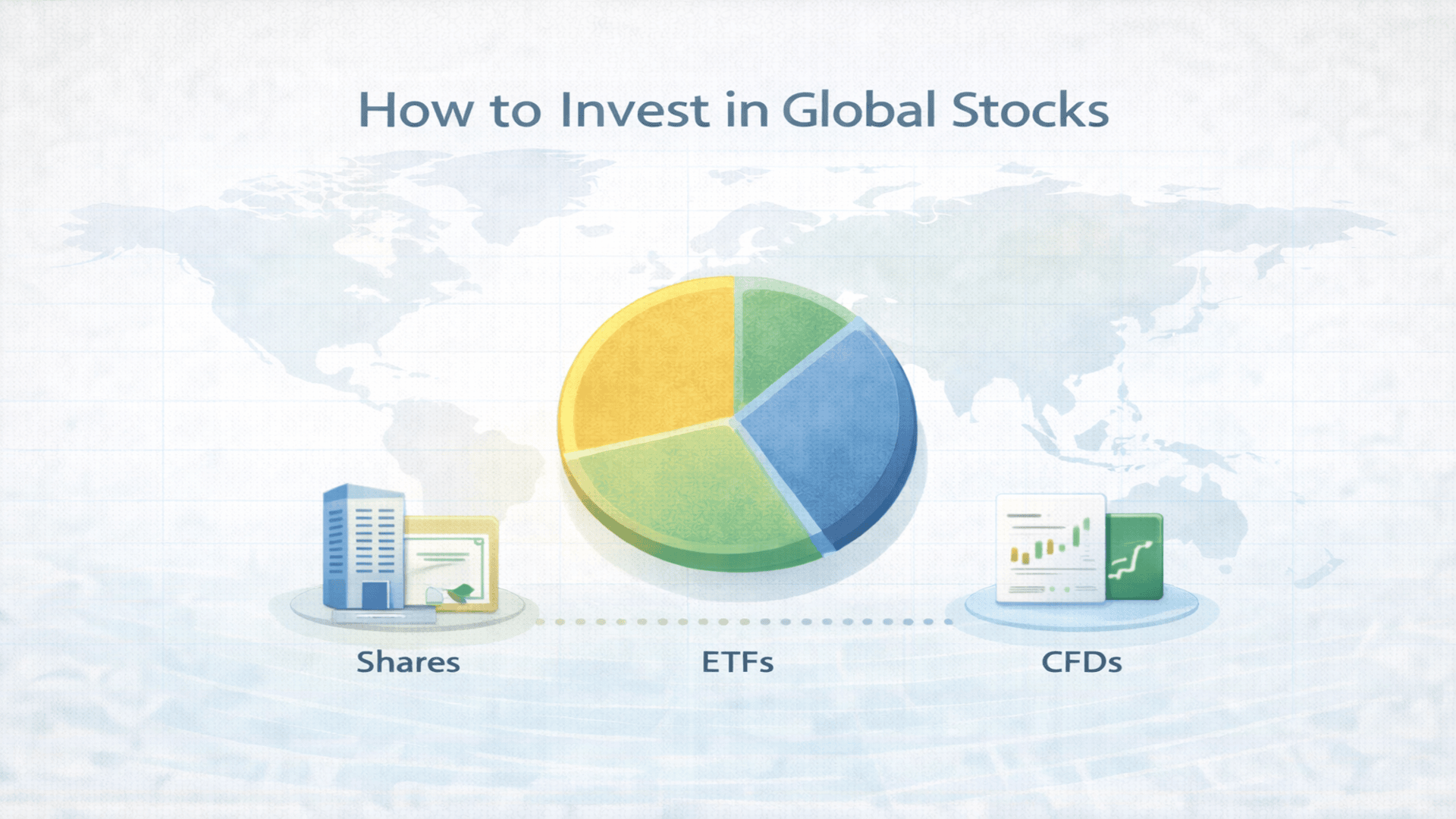
The article discusses investing in global stocks, highlighting traditional methods like ETFs and individual shares alongside modern approaches such as CFDs, which offer leverage and short-selling capabilities. For active traders, CFDs provide leveraged exposure to global stock price movements, enabling quicker entries and exits with potentially amplified gains or losses. Risk management strategies including diversification across regions, position sizing, and stop-losses are crucial for navigating currency, political, and volatility risks associated with international stock investments.
Ripple's RLUSD stablecoin supply management demonstrates a 'liquidity-on-demand' model, akin to traditional central banking, by burning excess tokens before minting new ones. The recent burn of 9.1 million RLUSD followed by a mint of 1,965 RLUSD highlights Ripple's precise reserve rebalancing, crucial for regulatory compliance under the US Genius Act. RLUSD's market capitalization of $1.58 billion places it as the eighth-largest stablecoin, indicating significant adoption despite its relatively recent launch.
XRP futures market shows a significant net outflow of over $738 million, indicating a potential shift in trader sentiment away from short-term selling pressure. Despite a substantial futures outflow, XRP's price has seen a minor uptick, suggesting underlying buying interest that could support short-term price stability. Ripple's recent minting of RLUSD stablecoins on Ethereum, while not directly XRP, contributes to DeFi liquidity and ecosystem health, potentially benefiting XRP indirectly.
XRP trading volume surge of 70% on spot and 67% on derivatives markets indicates heightened trader interest, potentially driven by anticipation of key U.S. economic data releases this week. The broader crypto market experienced significant liquidations totaling $360 million, highlighting recent price volatility and the potential for sharp market movements ahead of inflation data. Despite increased volume, XRP's price remains relatively stable, suggesting that current trading activity may be speculative or driven by short-term sentiment rather than a fundamental shift.

XRP faces significant selling pressure as approximately 60% of its supply is underwater, indicating a large pool of holders likely to exit positions near breakeven, which hinders sustained price rallies. The current macro environment, characterized by rising oil prices and broader risk asset repricing, exacerbates XRP's internal weakness, pushing investors towards more defensive stances and reducing speculative appetite. Declining derivatives open interest and a negative taker buy-sell ratio suggest reduced speculative activity and a market dominated by sellers, indicating a lack of aggressive demand needed to overcome overhead supply. Thinning exchange activity and a decrease in active wallet interactions suggest a less liquid market, which could lead to more abrupt price movements on smaller flows, masking underlying fragility.

BlockDAG's limited-time $0.001 after-sale presents a unique, albeit potentially short-lived, opportunity for early entry at a significantly discounted price compared to its current market value of $0.14. While Chainlink and Cardano are presented as established market players with defined price ranges and development roadmaps, BlockDAG's aggressive post-presale pricing strategy aims to capture market attention and drive rapid adoption. The article highlights BlockDAG's DAG-based architecture as a key differentiator for high transaction throughput, positioning it as a potential high-growth alternative to conventional Layer-1 solutions. Traders should note the 'sponsored' nature of this content, suggesting a promotional angle that may amplify the perceived urgency and potential of BlockDAG's offering.

South Korean regulators are signaling increased enforcement on AML/KYC failures, potentially impacting exchange operations and user access. Bithumb faces a potential six-month partial suspension, which could restrict new user withdrawals and affect its market position in South Korea. The regulatory action against Bithumb follows similar penalties for other exchanges like Upbit and Korbit, indicating a broader trend of stricter oversight in the region. While the suspension is at a pre-notification stage and may be adjusted, the warning to the CEO suggests a serious regulatory stance that could deter new user onboarding.
Signal context only. Validate with price action, liquidity, and risk limits before taking a position.
