
Navigating Crypto News

CoinFeather
Navigating Crypto News

Quick market read from this story
The emergence of AI-powered deepfake and voice manipulation tools poses a significant threat to the integrity of KYC verification processes on crypto and financial platforms.
This development highlights potential vulnerabilities in existing identity verification systems, suggesting a need for enhanced, multi-layered security approaches beyond current biometric and document checks.
The "scam-as-a-service" model for these advanced fraud kits lowers the barrier to entry for malicious actors, potentially increasing the frequency and sophistication of attacks targeting crypto users.
Source, catalyst, and sector overlap from the latest feed.
Strategy has resumed significant Bitcoin accumulation, acquiring 4,871 BTC for $329.9 million, indicating continued conviction in the asset despite Q1 unrealized losses. The company's Q1 report reveals a substantial $14.46 billion unrealized loss, primarily due to Bitcoin trading below its cost basis, which necessitates a $1.73 billion valuation allowance against deferred tax assets. Strategy is actively managing its balance sheet by updating its at-the-market (ATM) program, including new stock offerings totaling $42 billion, to potentially fund future Bitcoin acquisitions or operational needs. Despite reporting paper losses, Strategy's consistent buying behavior, especially in March and early April, suggests a strategic long-term accumulation plan rather than a reaction to short-term market fluctuations.
Live Feed
Loading the broader stream in the same flow as the homepage feed.

JPMorgan CEO Jamie Dimon acknowledges blockchain-based competitors and tokenization as a fundamental challenge to traditional banking, signaling a strategic imperative for the bank to accelerate its own blockchain initiatives. The increasing adoption of tokenization by both traditional finance players like BlackRock and crypto-native firms highlights a structural shift in financial services, pressuring incumbents to innovate or risk losing market share. Dimon's focus on underlying blockchain infrastructure and tokenization, rather than specific cryptocurrencies like Bitcoin, indicates a strategic prioritization of the technology's application in core banking functions over speculative assets. JPMorgan's continued investment in its Onyx/Kinexys unit and JPM Coin demonstrates a commitment to leveraging blockchain for institutional clients, positioning the bank to benefit from the efficiency gains and new product offerings enabled by tokenization.
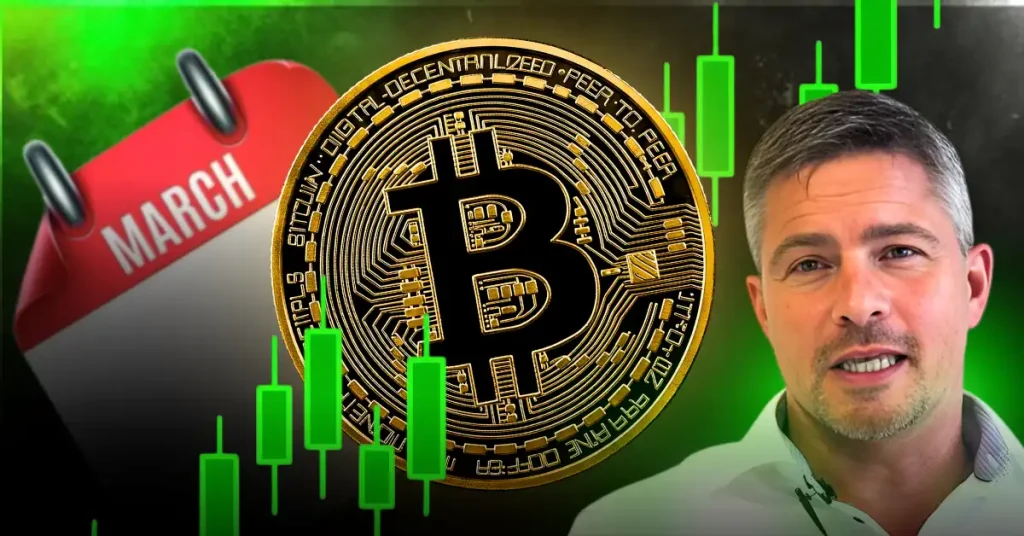
Bitcoin is currently in a prolonged basing phase with support identified between $58,000 and $59,000, suggesting that a sustained upward move will require multiple retests of this level. The absence of typical bottoming signals such as oversold upturns, breadth extremes, or extreme sentiment readings indicates that a durable low has not yet been confirmed. A continued equity market correction and widening credit spreads create an unfavorable macro backdrop for risk assets like Bitcoin, implying that even geopolitical de-escalation may not be sufficient to reverse current market damage. Traders are advised to exercise patience, avoid chasing short-term relief rallies, and wait for a stronger weight of evidence before aggressively increasing exposure to Bitcoin.
XRP's price is testing resistance at $1.34, with a significant 1,237% liquidation imbalance favoring shorts, indicating strong market disbelief in a sustained rally. The upcoming Tokyo summit, featuring Ripple representatives and major Japanese financial figures, could be a catalyst for XRP, though short-term price action hinges on holding support at $1.28. While bears are positioned with a lower max pain level, the current liquidation trend suggests a potential shift favoring bulls if XRP can break above $1.35 towards $1.50.
Ripple's upcoming XRP-focused event in Japan, co-organized with XRPL Japan, signals a strategic push to highlight XRP's role in institutional adoption and RWA tokenization. The event's focus on DeFi, RWA tokenization, and blockchain payments, alongside participation from major firms like SBI Holdings and a16z Crypto, suggests a concerted effort to expand XRP Ledger's utility and integration within the Asian market. Given Japan's established market for Ripple and the event's emphasis on institutional use cases, this development could bolster confidence and potentially drive demand for XRP as adoption narratives gain traction.
Polygon's on-chain activity, particularly the 30-day moving average of Daily Active Addresses (DAA), shows a sustained upward trend, indicating a strengthening network effect and growing demand for blockspace, which is a fundamental precursor to price appreciation. Significant accumulation by 'whale' and institutional investors, specifically in the 100,000 to 10 million POL holding range, suggests high-conviction accumulation and a potential fundamental floor for the asset, aligning with rising active addresses for a bullish outlook. Price predictions for Polygon (MATIC/POL) indicate potential highs of $0.7548 by 2026 and $4.94 by 2030, contingent on continued ecosystem growth, adoption of scaling solutions like zkEVM, and successful reclamation of key resistance levels.

The classification of XRP as a digital commodity by regulators signals a shift towards institutional adoption and integration into traditional finance's settlement infrastructure. Macro analyst Dr. Jim Willie posits that XRP, gold, and blockchain are foundational to a new financial system, driven by global distrust in the US dollar and increasing debt levels. The DTCC's potential use of XRP for settlement, processing quadrillions in transactions, suggests a profound price implication if even a small fraction of this volume is captured, with a hypothetical price target of over $500 cited. Regulatory clarity on digital assets is interpreted as governments actively shaping the transition from legacy financial rails to a new architecture, with XRP positioned as a key settlement bridge.
Japan Exchange Group's proposed exclusion of crypto-heavy firms from indices poses a direct threat to Metaplanet's market positioning and potential institutional demand. Despite regulatory headwinds, Metaplanet's CEO reaffirms a strong commitment to its Bitcoin strategy and ecosystem expansion, signaling resilience and a focus on long-term value creation. The potential exclusion from TOPIX could trigger significant selling pressure on Metaplanet's stock as index-tracking funds are forced to divest, mirroring past volatility seen with MicroStrategy. Market participants should monitor JPX's final decision and Metaplanet's engagement with regulators, as policy discussions alone can influence stock prices ahead of official rule changes.

The IMF's warning highlights that tokenization's machine-speed settlement outpaces current regulatory frameworks, potentially amplifying liquidity crises due to instant materialization of issues. Governments are advised by the IMF to anchor tokenized settlement in safe assets and adapt central bank liquidity tools, suggesting a need for regulatory evolution to manage risks in faster financial systems. While the IMF raises valid concerns about speed-versus-intervention tradeoffs, industry observers argue that tokenized systems offer different, not weaker, safeguards like cryptographic verification, and that the status quo also carries systemic risks.
MicroStrategy has resumed its Bitcoin accumulation strategy by purchasing 4,871 BTC for $329.9 million, signaling continued conviction in Bitcoin as a primary reserve asset despite recent unrealized losses. The company funded its latest acquisition through equity offerings, highlighting its ongoing reliance on capital markets to expand its Bitcoin holdings, which now total 766,970 BTC. MSTR stock saw a premarket uptick following the announcement, indicating that corporate Bitcoin buying remains a key driver for investor sentiment and stock performance in the near term. Despite criticism regarding Bitcoin's long-term store of value compared to traditional assets, MicroStrategy's consistent buying demonstrates a commitment to its strategy, potentially influencing market perception of corporate Bitcoin adoption.
Bitcoin's retest of $70,000 has triggered significant short liquidations, indicating a potential short-term bullish price acceleration due to forced buying. The substantial $300 million in short liquidations suggests strong upward momentum is currently overwhelming bearish sentiment, potentially leading to further price discovery. While short liquidations provide a temporary boost, the market's ability to sustain price levels above $70,000 will be crucial for continued positive sentiment.
Intel's stock is showing short-term bullish momentum, reclaiming key support levels and showing positive technical indicators ahead of its Q1 earnings report. The recent $14.2 billion repurchase of Apollo's stake in the Irish joint venture signals management confidence in manufacturing expansion and strategic flexibility, potentially supporting future growth. While technicals and recent news are positive, traders should monitor the $52 resistance level and upcoming Q1 earnings for confirmation of a sustained uptrend, as valuation concerns and analyst forecasts remain mixed. The market is closely watching Intel's ability to hold the $50 support level and break above $52 resistance before its April 23rd earnings, with potential upside targets at $53.50 if momentum continues.

BitMine's significant accumulation of ETH, now holding nearly 4% of the circulating supply, signals strong conviction from a major institutional player, potentially influencing market sentiment and demand. The firm's chairman, Tom Lee, highlights ETH's resilience and potential to attract capital, suggesting a bullish outlook driven by Wall Street tokenization and AI integration, which could support further price appreciation. With 69% of its ETH holdings staked, BitMine is positioned to generate substantial annual revenue from staking rewards, indicating a strategic focus on yield generation that could be emulated by other large holders.

Cardano's trading volume has surged by 78%, indicating renewed interest, but the underlying price action remains within a tight range, suggesting a potential relief bounce rather than a confirmed trend reversal. Despite increased volume, ADA is trading below key moving averages, and derivatives data shows mixed liquidation signals, implying that the current activity may not translate into sustained price appreciation. While the long/short ratio shows a slight bullish bias among traders, crowded long positions could pose a risk if upward momentum falters, making the immediate resistance level critical for potential recovery. The significant volume increase, coupled with a lack of clear directional bias in futures flow and the asset's position below major EMAs, suggests a neutral outlook with caution advised on potential short-term volatility.
Shiba Inu's open interest surge to 8.7 trillion SHIB, coupled with a 38% jump in trading volume, indicates increasing speculative interest and potential for near-term price volatility. The rise in both futures and spot trading volume, with a slight bullish bias in taker buy orders, suggests growing market confidence and demand for SHIB. Shiba Inu's price increase of 4% following a break above a descending trendline, supported by elevated derivatives and spot activity, signals a potential continuation of upward momentum.

Charles Hoskinson is actively refuting community concerns that Cardano's Midnight bridge is designed as a permanent one-way bridge, aiming to reassure investors about its long-term integration with the Cardano ecosystem. The debate centers on the interpretation of Midnight's tokenomics paper regarding bridge functionality, with critics fearing liquidity traps while Hoskinson emphasizes phased development towards a two-way bridge. Despite the controversy, the Midnight token has seen recent listing activity on CoinSpot in Australia, potentially increasing accessibility and trading volume for the privacy-focused chain.

Significant net outflow of over 111 billion SHIB from exchanges indicates renewed investor accumulation, suggesting a potential shift in market sentiment towards bullishness. The substantial reduction in selling pressure, evidenced by the large SHIB withdrawal from exchanges, coupled with a 4.25% price increase, suggests that demand is outpacing supply, potentially signaling an upcoming price breakout. The data points to a bullish divergence where exchange netflow is strongly negative while price is appreciating, a pattern that traders may interpret as a signal for short-term upside potential.
Signal context only. Validate with price action, liquidity, and risk limits before taking a position.
The acquisition of Hidden Road by Ripple for $1.25 billion signifies a major infrastructure shift towards prime brokerages handling institutional crypto flows, mirroring traditional finance standards. The separation of custody from exchange execution, driven by counterparty risk concerns highlighted by past failures like FTX, is becoming a baseline institutional requirement, altering market structure. The integration of traditional financial instruments like US Treasurys as collateral for crypto trading, facilitated by regulated custodians, creates yield-generating opportunities and incentivizes de-risking. Crypto's infrastructure is adapting to institutional demands rather than the other way around, with prime brokerages and off-exchange custody solutions maturing to meet risk management and collateral efficiency needs.
