
200+ crypto news providers in one place.

CoinFeather
200+ crypto news providers in one place.

Quick market read from this story
IPO Genie ($IPO) aims to democratize private market investing by tokenizing access with a $10 minimum entry
The platform utilizes AI to identify early-stage investment opportunities, similar to traditional VC firms
The $IPO token offers tiered access, revenue sharing, staking rewards, and voting rights to holders
The project has undergone security audits by CertiK and SolidProof and uses Fireblocks for asset protection.
Deep Dive
IPO Genie ($IPO) is emerging as a significant crypto presale for 2026, aiming to bridge the gap between retail investors and the lucrative private markets. Historically, access to early-stage startup investments, which generate trillions in value annually before an IPO, has been limited to venture capital firms, hedge funds, and wealthy insiders, often requiring substantial capital and long lock-up periods.
Traditional venture capital and angel investing demand significant capital, often starting at $250,000 for VC funds and $25,000 for angel investing, with investment capital locked for years. Pre-IPO platforms also have high entry barriers, typically $10,000 or more, and restricted access. This system effectively excluded 99% of potential investors from participating in the early growth stages of promising companies, where most of the value is created.
IPO Genie leverages blockchain technology and artificial intelligence to democratize access to private market deals. The platform's native token, $IPO, serves as the key to this ecosystem. By tokenizing private deals, IPO Genie allows individuals to participate with an entry point as low as $10. The platform utilizes AI Signal Agents to identify promising companies, having reportedly flagged Redwood AI before its early 2026 public offering.
The $IPO token offers holders several benefits, including tiered access to deals, staking rewards, reduced platform fees, voting rights, and insurance for higher tiers. The total supply of $IPO tokens is capped at 437 billion, with half allocated for the presale. Team tokens are locked for two years to ensure long-term commitment.
| Investment Type | Minimum Entry | Wait Time | Who Can Join? |
| Traditional VC Fund | $250,000+ | 7 to 10 years | Only the very rich |
| Angel Investing | $25,000+ | 3 to 7 years | Very few people |
| Pre-IPO Platforms | $10,000+ | 1 to 5 years | Restricted groups |
| IPO Genie ($IPO) | $10 | Token-based | Everyone |
IPO Genie emphasizes security, with its code audited by CertiK and SolidProof, and assets protected by Fireblocks. The platform uses Chainlink for data integrity and implements Know Your Customer (KYC) checks to prevent illicit activities. The project has reportedly raised over one million dollars and is gaining traction, with analysts identifying $IPO as a potential top pick for 2026 due to its focus on real business rather than speculative hype.
Currently, new buyers can receive a 20% bonus on their purchase, with potential for up to 35% more tokens through referral bonuses. However, investors are cautioned that all investments carry risks, and the potential for high returns is not guaranteed. Investors are advised to invest only what they can afford to lose, conduct their own research, review the whitepaper, and consult a financial advisor.
IPO Genie represents a new approach to wealth building by offering transparent access to private market investments through blockchain technology. It aims to break down traditional barriers, allowing a broader range of investors to participate in the early stages of company growth, mirroring the strategies of major financial institutions but making it accessible to the general public.
Source, catalyst, and sector overlap from the latest feed.
Visa and Bridge are expanding stablecoin card program to over 100 countries by end of 2026. MetaMask and Phantom users can spend crypto directly from self-custody wallets via Bridge's API. Visa is testing direct on-chain settlement using stablecoins on the Solana blockchain. Expansion follows recent regulatory clarity in the US with the GENIUS Act.
Ripple unified fiat and stablecoin payments into a single end-to-end platform. RLUSD stablecoin supply now exceeds 1 billion tokens and acts as a connective layer. Ripple secured over 75 global licenses, including EU, UK, and a conditional US national bank charter. The platform is live in 60+ markets and has processed over $100 billion in total volume.
Key Takeaways Riot will pay $20 million to settle its dispute with SBI Crypto. A key court ruling sharply reduced […] The post Riot Platforms Ends SBI Legal Battle With $20M Settlement appeared first on Coindoo.
Ondo becomes the first digital securities issuer admitted under ADGM regulatory framework. Ten Ondo tokenized securities are now trading on Binance Alpha, a regulated MTF. Ondo previously secured EU prospectus approval from Liechtenstein's Financial Market Authority. Products are not available to U.S. investors due to jurisdictional restrictions.
VanEck CEO predicts Bitcoin bottoming in 2026, aligning with a four-year cycle theory. Bitcoin spot ETFs saw $458M in inflows on a single day, with BlackRock leading. Concerns raised about Bitcoin's long-term encryption strength against quantum computing threats. VanEck would exit Bitcoin if its fundamental thesis breaks, but states this point has not been reached.
Strategy Inc. acquired an additional 3,015 BTC for $204 million, increasing its total holdings to 720,737 BTC. 470 million XRP were deposited on Binance in the past week, raising concerns of potential sell-offs. Dogecoin ETFs have recorded zero net inflows since February 3rd, indicating a lack of investor demand.
F2Pool founder Chun Wang withdrew $67.5M worth of ETH from Binance over two weeks. Wang deposited the ETH into the AAVE DeFi protocol, indicating active use rather than simple holding. ETH validator entry queue is 36,000 times larger than the exit queue, signaling strong net inflows and staking demand. Historical March data shows ETH has a tendency for rallies, though performance varies year-to-year.
First Digital's RLUSD liquidity pool incentive attracted nearly $500,000 in XRP liquidity within days. The XRP Ledger's DeFi Total Value Locked (TVL) is significantly behind Ethereum, with less than $47 million compared to Ethereum's over $52.8 billion. Developer Panos Mekras highlighted a past proposal to Ripple for bootstrapping XRP/RLUSD liquidity, which was previously disregarded. Ripple has a dedicated department for XRP Ledger development and has earmarked one billion XRP for community and builders.
Cardano's Project Catalyst funding mechanism is undergoing a stewardship transition from IOG to the Cardano Foundation. Fund15 and Fund16 have been paused, with earmarked ADA and USDM returning to the treasury for redesign. The transition aims to improve governance oversight, accountability, and capital allocation for ecosystem grants. Existing Fund14 grantees will continue to receive disbursements under milestone administration.
MicroStrategy acquired 3,015 Bitcoin for $204.1 million, increasing total holdings to 720,737 BTC. The purchase was funded by issuing new shares and preferred stock, indicating equity dilution. Analysts view MSTR stock's movement primarily as a high-beta Bitcoin proxy, influenced by market positioning and short-covering. Technical analysts identify $143-$150 as key resistance levels for MSTR stock.
Ripple Payments expanded to over 60 markets with new stablecoin and fiat collection, custody, and liquidity tools. The platform now supports unified collections and advanced liquidity features, aiming to reduce vendor complexity for businesses. Over $100 billion in volume has been processed, with more than 75 licenses globally, targeting financial institutions and fintechs. XRP price action remains volatile, with analysts suggesting a potential fractal pattern indicating a move higher later in March.
BitGo expands MiCA-compliant crypto-as-a-service to 30 EEA countries. Service enables banks and fintechs to integrate licensed custody, payments, and trading via API. Offering includes multi-asset wallets, SEPA fiat rails, and $250 million in insured custodial wallets. Expansion follows MiCA implementation, aligning with broader European institutional adoption of digital assets.
Ripple expands stablecoin payments platform for banks and fintechs. Platform upgrade supports collection, custody, conversion, and payout of stablecoins. Aims to reduce reliance on pre-funded accounts and correspondent banking networks. Ripple USD (RLUSD) supply reaches $1.5 billion.
Trump administration is pursuing regulatory clarity for crypto via executive actions and agency rulemaking, bypassing legislative gridlock. SEC Chair Paul Atkins and CFTC Chair Michael Selig are expected to harmonize crypto regulations, potentially leading to finalized rules by Spring 2027. New SEC/CFTC rules could enable broader registration for exchanges and allow token sales with revenue distribution rights. The administration aims to create a stable regulatory environment that could last for several years, providing significant whitespace for industry growth.
Live Feed
Loading the broader stream in the same flow as the homepage feed.
Crypto industry PACs are spending millions on US party primaries for the 2026 midterm elections. The outcome of these primaries could influence future crypto legislation in Congress. Super PACs like Fairshake have significant funds and a track record of influencing elections to support pro-crypto candidates. Specific races, such as the Texas Senate primary, are seeing substantial political spending.

Bitcoin functions as everyday money in parts of Africa, not just a store of value. Merchants in some African economies prefer satoshis over dollars due to rapid inflation. Sub-Saharan Africa saw over $205 billion in onchain value from July 2024 to June 2025, a 52% year-on-year increase. Retail transfers under $10,000 represent over 8% of total value sent in Sub-Saharan Africa, indicating strong retail adoption.

Donald Trump urges passage of the Clarity Act to prevent crypto industry moving overseas. Banking industry opposes stablecoin yield offerings, fearing deposit flight. Negotiations continue between banking and crypto sectors over market structure bill language. The Clarity Act aims to regulate stablecoins and market structure, with ongoing debate on yield provisions.

South Korean police arrested individuals paid in cryptocurrency for "private revenge" attacks. Payments ranged from $337-$675 or 500,000-1,000,000 KRW worth of crypto. Tactics included vandalism, threats, and spreading human waste. Authorities are investigating potential links to a larger Telegram-based organization.

CFTC Chair Michael Selig anticipates "true perpetual futures" for cryptocurrencies in the US within the next month. The CFTC is also preparing to issue guidance on prediction markets soon. Discussions on a market structure bill are ongoing, with a need for Congressional clarity for the SEC and CFTC. The CFTC aims to bring offshore liquidity back to the US by addressing these market structures.

MARA Holdings clarifies its 10-K filing allows flexible Bitcoin sales, not a mandated sell-off strategy. Company VP Robert Samuels directly refuted claims of a shift toward a Bitcoin treasury sell-down. MARA holds 53,822 BTC valued at approximately $3.7 billion, making it a significant holder among public miners. The clarification aims to address market speculation regarding MARA's Bitcoin treasury management.

Jamie Dimon states stablecoin issuers paying interest should be regulated as banks. Dimon argues for a level playing field between traditional banks and crypto firms offering similar services. The CLARITY Act discussions are ongoing in Washington regarding stablecoin oversight. Banks want stablecoin issuers to meet bank standards including capital, liquidity, and AML rules.
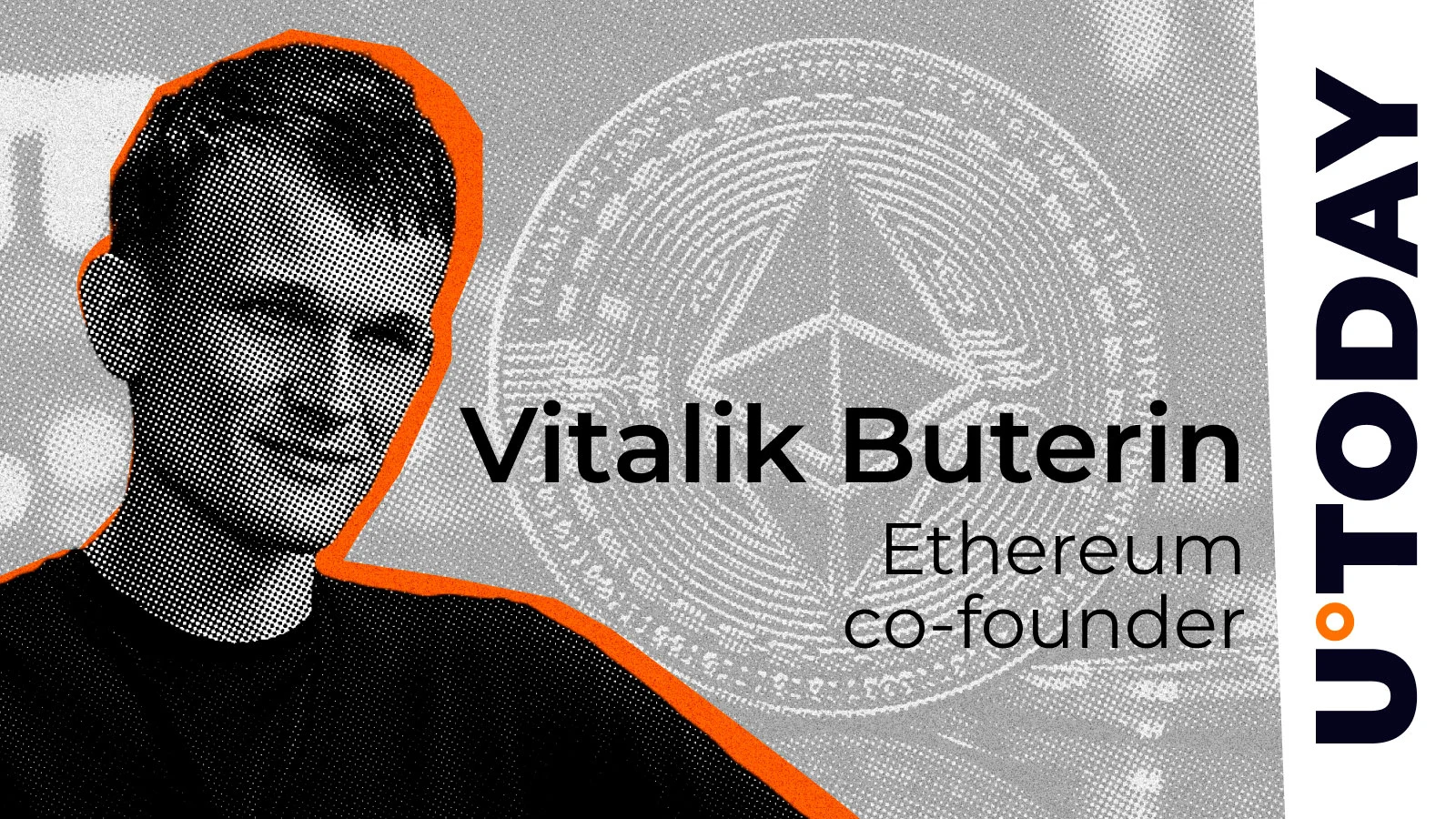
Vitalik Buterin calls for Ethereum to shift focus from tech 'shininess' to sanctuary against authoritarianism. Buterin expresses frustration over Ethereum's limited role in improving lives beyond finance. He suggests Ethereum should act as a defensive perimeter for 'sanctuary technologies'. Buterin pushes back against limiting Ethereum's scope solely to DeFi.

Aave Chan Initiative (ACI) will exit Aave DAO governance after a contested vote. ACI plans to wind down operations over four months, transferring responsibilities. The exit follows a dispute over a $42.5 million funding package and voting power concerns. Aave maintains a dominant DeFi position with $26.51 billion in total value locked.

Bitcoin shows resilience decoupling from traditional equities and gold despite US dollar strength. Robust institutional demand evident with $1.5 billion in Bitcoin ETF net inflows over 7 days. Concerns arise from potential miner liquidations and a shift in focus towards AI data centers. A definitive breakout above $75,000 is needed to confirm the end of the bear market.
OpenAI released GPT-5.3 Instant, updating ChatGPT's default model for improved accuracy and conversational flow. The new model reduces unnecessary refusals and disclaimers, aiming for more direct and helpful user interactions. Internal evaluations show hallucination rates dropped by nearly 30% with web use and 19.7% without. GPT-5.2 Instant will be retired on June 3, marking a transition period for users.

Iranians are increasing self-custody Bitcoin reserves amid geopolitical tensions and currency devaluation. Iran's crypto system valuation rose from $7.4 billion in 2024 to $7.8 billion in 2025. Approximately $10.3 million in crypto was withdrawn from Iranian exchanges to self-custody wallets following a US-Israel strike. An estimated 15 million Iranians, or 20% of the population, are involved with Bitcoin and other cryptocurrencies.
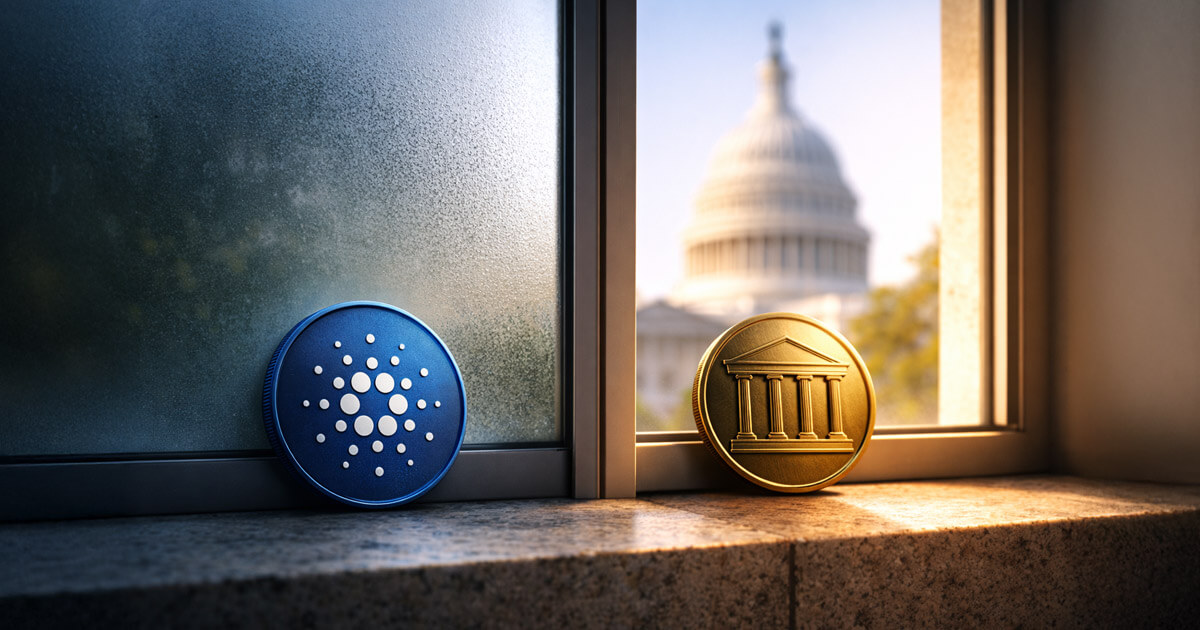
The CLARITY Act (H.R. 3633) aims to provide a federal rulebook for digital assets, replacing regulation by enforcement. JPMorgan believes the bill could be a catalyst for digital assets in H2 2026 by reducing legal uncertainty and encouraging institutional adoption. Charles Hoskinson warns the bill could classify new crypto projects as securities by default, potentially pushing US founders offshore. A key point of contention is stablecoin rewards, with banks opposing offerings that compete with traditional deposit bases.
Signal context only. Validate with price action, liquidity, and risk limits before taking a position.
