
Navigating Crypto News

CoinFeather
Navigating Crypto News
Quick market read from this story
The listing of ETHFI on Upbit with a KRW pair provides direct access to the South Korean retail market, a significant driver for the initial 20% price spike.
While ETHFI experienced a sharp initial surge post-listing, the price has since cooled off, indicating profit-taking and a typical post-listing price action pattern.
Arthur Hayes' accumulation and positive commentary on Ether.fi's revenue growth suggest underlying confidence in the project's fundamentals beyond the immediate listing event.
The sustained activity and market reception in the Korean market post-listing will be crucial for ETHFI's continued price performance, especially after the initial hype subsides.
Deep Dive
Ether.fi's native token, ETHFI, has been listed on South Korea's largest cryptocurrency exchange, Upbit, with a new ETHFI/KRW trading pair. This listing provides direct access to a significant South Korean retail market, a move that typically drives higher trading activity compared to BTC or USDT pairs.
Trading for the ETHFI/KRW pair commenced on March 19 at 12:30 PM KST. Upbit implemented standard launch protocols, including a five-minute restriction on buy orders and limitations on certain low-priced sell orders. Only limit orders were permitted for approximately two hours, with strict deposit rules, including Travel Rule compliance and wallet verification, also in place.
Following the listing announcement, the ETHFI price experienced a sharp increase of over 20%, reaching approximately $0.65, its highest point since mid-January. However, this surge was not sustained, and the price later pulled back to trade within the $0.57–$0.60 range. At the time of reporting, ETHFI was trading around $0.55, still showing a 5% gain for the day. This pattern of a rapid rise followed by a price correction is common for tokens newly listed on major exchanges as early investors take profits.
Ether.fi operates within Ethereum's liquid restaking sector. The platform allows users to stake their ETH while retaining the ability to utilize their staked assets in decentralized finance (DeFi) applications through derivative tokens such as eETH and weETH. The ETHFI token serves as the primary utility and governance token for the platform, influencing its operations and user rewards.
Prominent figure Arthur Hayes, co-founder of BitMEX, also made notable moves just prior to the Upbit listing. On-chain data revealed that Hayes received 132,730 ETHFI tokens, valued at approximately $72,800, shortly before the official announcement. Earlier, he had reportedly sold around 2.15 million ETHFI tokens at approximately $0.47 before repurchasing them near $0.55, suggesting a strategic trading approach.
Hayes had previously expressed confidence in Ether.fi, highlighting its substantial user base and revenue generation. The platform's revenue run rate had reportedly surged from around $18 million to nearly $80 million, a significant achievement for a DeFi project. The current price movement is largely attributed to the Upbit listing, which has increased ETHFI's visibility, particularly within the Korean market.
Source, catalyst, and sector overlap from the latest feed.
Pi Network's Mainnet upgrade to Protocol 20 lays the groundwork for smart contract functionality, signaling a move towards building decentralized applications and DeFi platforms. Despite short-term price fluctuations, the analyst suggests focusing on Pi Network's underlying infrastructure development, indicating that current market price may not reflect the project's long-term utility building. The broader market context highlights a shift towards blockchain integration with traditional finance and other technologies like AI, suggesting that projects with real-world utility and user adoption will drive long-term value.
Amundi's launch of a $100M tokenized fund utilizing Chainlink for data integrity signals significant institutional adoption of blockchain technology within regulated European frameworks. The integration of Chainlink's oracle services for NAV data on-chain highlights the critical role of decentralized infrastructure in bridging traditional finance with blockchain for tokenized real-world assets. The fund's operation across Ethereum and Stellar, coupled with low entry barriers, suggests a broader trend towards increased accessibility and efficiency in institutional-grade digital asset products. Market sentiment indicates that this level of TradFi adoption, particularly from a major asset manager like Amundi, may still be undervalued by the broader crypto market.
The Bank of Japan's decision to maintain interest rates at 0.75% amid global instability and rising oil prices creates a stable, albeit cautious, monetary environment that could indirectly support risk assets like Bitcoin and Ethereum as investors seek yield. While the BOJ's pause might offer some stability to crypto markets, the underlying global tensions and potential for future rate adjustments mean that the impact on Bitcoin and other cryptocurrencies remains uncertain, warranting a watchful approach. The article notes a recent 4.47% dip in the overall crypto market, with Bitcoin falling from $76,000 to $70,223, suggesting that broader market sentiment and macroeconomic factors, rather than just the BOJ's decision, are currently driving price action.
Audius aims to disrupt traditional music streaming by empowering artists with direct control and earnings, a model whose success hinges on broader adoption beyond current Web3 communities. While AUDIO's current price is significantly below its all-time high, projections suggest potential growth to $1+ by 2030 if user activity, creator monetization, and platform features like NFTs and stablecoin integrations gain traction. Technical analysis indicates a downtrend with resistance at $0.022, suggesting a potential short-term bounce to $0.0760 on a breakout, but a breakdown below $0.019 could lead to further declines towards $0.0089. The long-term viability of Audius depends on its ability to transition from a niche experiment to a mainstream music distribution platform, driven by artist adoption and evolving monetization strategies like direct fan payments and NFTs.
Bitcoin's retreat below $71,000 introduces market volatility, creating divergent price action for altcoins like RIVER, DEXE, and QNT. RIVER Coin shows strong bullish momentum driven by system updates and partnerships, with technical indicators suggesting a potential rise to $40. Dexe Coin has achieved a 4-month high, exhibiting robust bullish sentiment and technicals that point towards further upside potential towards $7.5-$8.3. Quant (QNT) is consolidating within a tight pattern, indicating a potential breakout; however, it faces resistance at the 200-day EMA, suggesting a neutral-to-bullish outlook pending confirmation.
Evernorth's planned Nasdaq debut with a billion-dollar XRP treasury signals a significant institutional move, positioning XRP as a balance sheet asset for a publicly traded company. The active treasury model, aiming to generate yield through lending and DeFi, represents a shift from passive asset tracking to strategic value creation within a regulated corporate structure. With regulatory clarity on XRP as a commodity and backing from major players like SBI Holdings and Ripple, this listing could pave the way for a new category of yield-generating digital asset vehicles. The development suggests a broader trend of crypto-native firms seeking integration with traditional capital markets, potentially influencing future investor interaction with digital assets.
Evernorth's planned Nasdaq listing under XRPN, backed by significant XRP and cash investment, signals a major institutional push to provide regulated, stock-based exposure to XRP. The SEC's classification of XRP as a digital commodity, coinciding with Evernorth's S-4 filing, removes a key regulatory overhang, potentially unlocking broader institutional adoption. Evernorth's strategy to actively utilize its XRP holdings through lending, liquidity provision, and DeFi participation, alongside running validators, aims to generate returns beyond simple price appreciation, differentiating it from passive investment vehicles. The convergence of a major SPAC listing, regulatory clarity for XRP, and increasing on-chain activity on the XRP Ledger suggests a potentially bullish near-term outlook for XRP and related ecosystem plays.
The filing of Form S-4 by Evernorth Holdings signals a significant step towards the Nasdaq listing of a novel, actively managed XRP treasury vehicle, potentially increasing institutional interest and demand for XRP. Evernorth's operational model, focusing on yield generation through DeFi, lending, and staking, differentiates it from passive ETFs and could set a precedent for how crypto assets are held and managed within publicly traded corporate structures. The planned Nasdaq listing of Evernorth, led by a former Ripple executive, represents a major public market debut for a crypto-native firm, potentially validating the asset class and influencing future corporate treasury strategies.
While Solana (SOL) and Ethereum (ETH) are experiencing institutional demand and whale accumulation, their large market caps limit potential for explosive, ground-floor returns. The article positions Pepeto's presale as a high-upside opportunity for meme coin holders seeking to replicate past parabolic gains, contrasting its potential with the more modest growth expected from SOL and ETH. Pepeto's presale is highlighted as a potential replacement for faded meme coin positions, driven by its co-founder's track record, upcoming product launches (Swap, Bridge, Exchange), token burns, and high APY staking. The narrative suggests that smaller investors may find greater multiplier potential in early-stage presales like Pepeto, compared to the limited percentage gains from established large-cap cryptocurrencies like SOL and ETH.
The article promotes a new presale token, Pepeto, by contrasting its potential for explosive gains with XRP's more stable but limited upside due to its large market cap. Pepeto's narrative emphasizes a PEPE co-founder's involvement, a SolidProof audit, token burns, and significant presale funding, positioning it as a high-potential meme coin play. While XRP is presented as bullish with analyst targets of $2.36-$5, the core message is that Pepeto offers a 'ground floor' entry with significantly higher potential returns, especially before its upcoming exchange listings. The surge in exchange volume is highlighted as a sign of trader appetite for opportunity, with Pepeto positioned to capture this capital flow more effectively than established assets like XRP.
Evernorth's planned Nasdaq listing via SPAC, backed by significant institutional funding including Ripple and SBI Holdings, aims to create a regulated XRP treasury, potentially unlocking new avenues for institutional XRP exposure. The development leverages recent regulatory clarity classifying XRP as a commodity, which could reduce perceived risk and encourage broader adoption of XRP-related financial products. While the SPAC merger and treasury strategy are positive developments, XRP's price action remains constrained below key resistance levels, suggesting that market sentiment is still cautious despite fundamental and regulatory improvements.
Grayscale's Head of Research indicates that regulated products like ETFs are opening doors for institutional allocation into XRP, signaling a maturing market beyond Bitcoin and Ethereum. Growing client demand for XRP from financial advisors, as reported by Grayscale, suggests increasing institutional interest in diversifying portfolios beyond top-tier cryptocurrencies. The development of XRP ETFs and increased advisor interest implies a potential for broader adoption and price discovery as institutional capital flows into the asset.
Canada's FINTRAC has significantly increased its enforcement actions by revoking 47 crypto-related firm registrations in 2026, signaling a heightened regulatory environment. The intensified crackdown, driven by concerns over money laundering and fraud, suggests increased compliance pressure on crypto exchanges, payment services, and ATMs operating within or serving Canada. This regulatory tightening by Canadian authorities indicates a broader trend of global regulators increasing scrutiny on virtual asset platforms to align with traditional financial compliance standards.
Evernorth Holdings disclosed a significant $233.7 million digital asset impairment, highlighting the substantial unrealized losses on its XRP holdings acquired at higher prices. The company's proactive treasury management strategy, including DeFi activities and options strategies, suggests an attempt to generate yield and offset losses on its large XRP position. The disclosure of 473.1 million XRP holdings, partly contributed by Ripple, provides transparency into a major XRP treasury and its potential market impact.
Crypto.com's decision to cut 12% of its workforce signals a strategic pivot towards AI integration, potentially impacting operational efficiency and future development focus. The layoffs at Crypto.com, mirroring trends in the broader tech and crypto sectors, highlight a significant industry-wide shift prioritizing AI capabilities over traditional roles. While the direct impact on Crypto.com's token is not specified, the company's aggressive AI push and associated restructuring could influence its long-term market positioning and investor sentiment.
Live Feed
Loading the broader stream in the same flow as the homepage feed.
Find out what analysts expect for PulseChain in 2026, with realistic price forecasts, token supply insights, and long-term market outlook.

The CoinDesk 20 Index experienced a 1.6% decline, indicating a broad market downturn driven by underperforming assets like NEAR and HBAR. NEAR Protocol's 3.3% drop and Hedera's 2.9% decline highlight specific project weaknesses within the broader market index. With only two out of twenty assets showing gains, the performance update suggests a prevailing bearish sentiment across the tracked digital assets.
Bitcoin's recent pullback below $70,000 is directly linked to stronger-than-expected US inflation data, signaling that persistent price pressures may delay anticipated Federal Reserve rate cuts. The shift in market expectations away from near-term monetary easing removes a key bullish driver for risk assets like Bitcoin, increasing sensitivity to macroeconomic signals. Profit-taking by short-term holders, evidenced by significant BTC realized profits near $75,000, combined with macro headwinds, is contributing to downside pressure on Bitcoin. Bitcoin's ability to hold above the 200-week EMA near $68,350 is now a critical technical support level, with a failure to maintain this could accelerate further price declines.
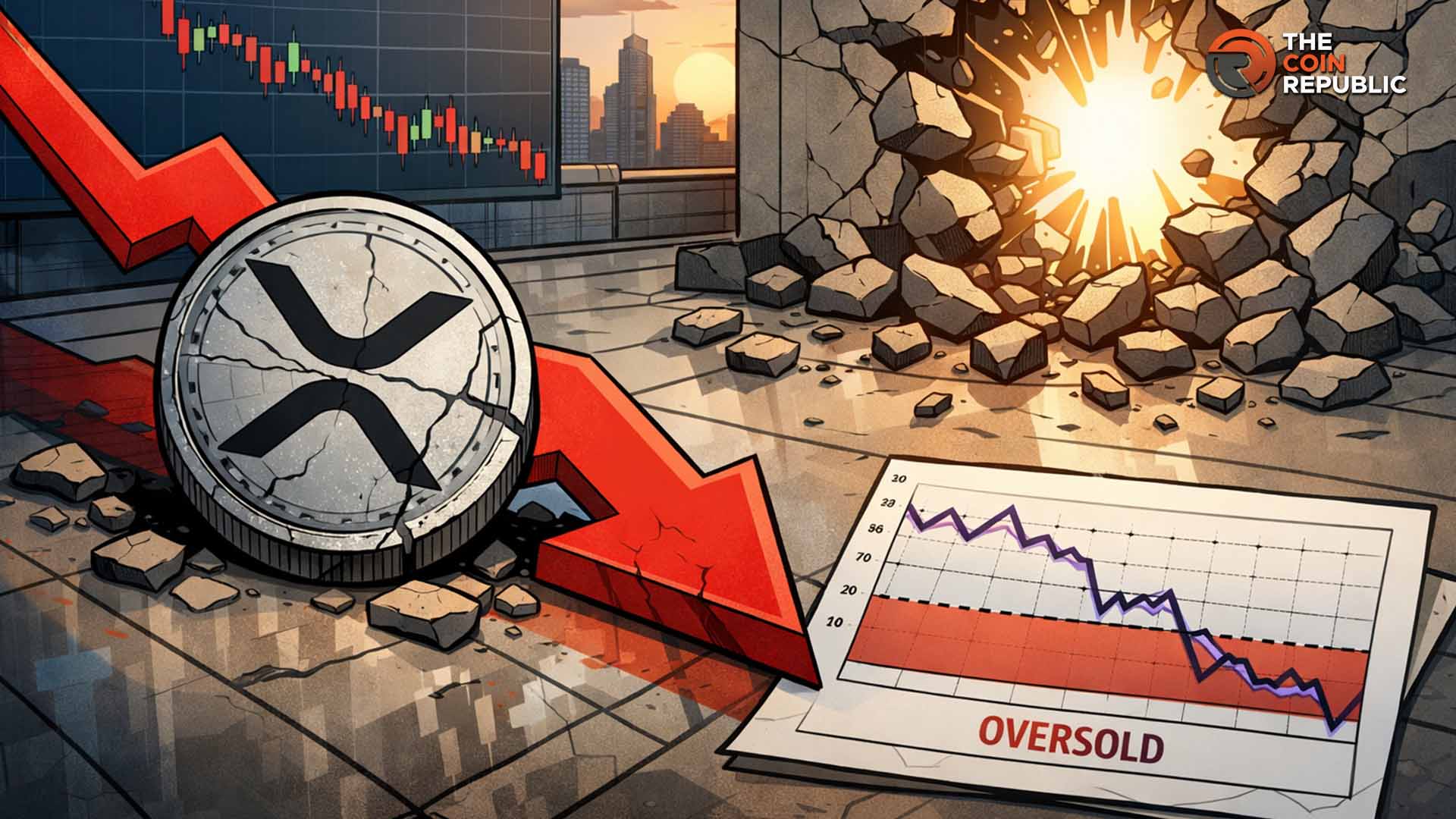
XRP's RSI hitting 2022 bear market lows suggests extreme oversold conditions, historically a precursor to potential reversals, warranting trader attention for momentum shifts. Despite zero daily XRP ETF inflows, the substantial cumulative $1.21 billion indicates sustained institutional interest, with current flat flows likely reflecting market observation rather than disinterest. The surge in XRP Ledger transactions to nearly 3 million daily, coupled with Evernorth's $1 billion XRP treasury plan, signals increasing network utility and growing institutional adoption within the XRP ecosystem. The confluence of technical oversold signals and fundamental on-chain activity growth, alongside institutional treasury plans, presents a potentially bullish setup for XRP if broader market sentiment turns positive.
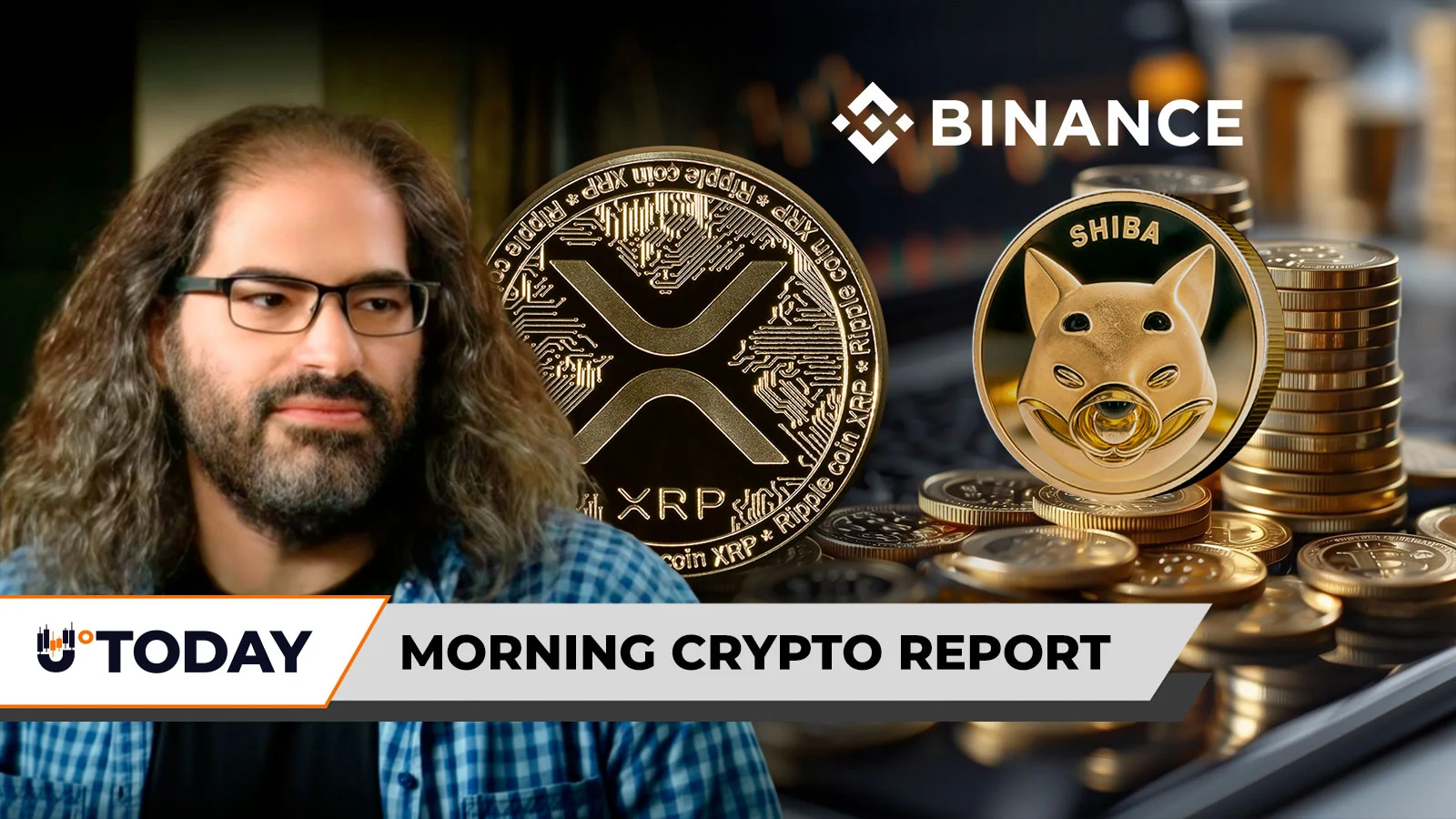
Ripple's CTO Emeritus David Schwartz hinted at a potential euro stablecoin launch, signaled by his social media post of the 'Eurion constellation,' which could expand Ripple's presence in the EU following its EMI license acquisition. Despite hawkish Fed signals, top Binance traders are accumulating Shiba Inu (SHIB), with whale sentiment showing a strong Long/Short ratio, suggesting a bullish outlook near the $0.00000570 support level. Analyst Benjamin Cowen warns that Bitcoin may underperform gold by up to 30%, indicating a potential shift in risk appetite away from BTC towards traditional safe-haven assets in the near term. The crypto market is transitioning from retail-driven euphoria to institutional accumulation post-FOMC, with analysts anticipating the second half of 2026 for the next major bull cycle, contingent on macro stability.

OP_NET has launched a “SlowFi” DeFi stack that runs smart contracts directly in standard Bitcoin transactions with BTC as the only gas asset, avoiding bridges and wrapped BTC.

Beyond immediate losses, attacks often lead to prolonged downtime, liquidity shocks and confidence erosion, as interconnected DeFi systems amplify the impact across markets.

Apex Group’s Tokeny and Polygon Labs are launching T-REX Ledger, a Polygon-based blockchain that aims to centralize compliance for ERC-3643 security tokens.

Cryptocurrency exchange Crypto.com is laying off around 180 employees as it shifts focus to AI-driven operations.

Opera's proposed acquisition of 160 million CELO tokens signifies a strategic shift towards becoming a key stakeholder in the Celo payments network, potentially increasing demand and ecosystem engagement. The move, which represents a substantial portion of Celo's circulating and maximum supply, could be interpreted as a strong vote of confidence in Celo's long-term viability and its MiniPay application's growth, especially given CELO's current low valuation. While the proposal aims to solidify Opera's commitment, the governance cap on voting power suggests a balanced approach to integration, mitigating concerns about concentrated control while still rewarding a significant investment.

Shiba Inu continues to see growing demand, signaled by its negative exchange netflow, which stands at over -141 billion SHIB within 24 hours.
ICICI Bank's redemption of $800 million in debt under its GMTN program, including $16 million in interest, represents a significant financial maneuver that could impact its balance sheet and liquidity metrics. The market reaction, a 2.6% dip in ICICI Bank's share price, suggests investor concern over the substantial cash outflow, despite the bank's overall positive performance over the last five days. This debt redemption event, while primarily affecting traditional finance, highlights the financial health and debt management strategies of major banking institutions, which can indirectly influence investor confidence in broader financial markets.
XRP death cross is confirmed on hourly chart as bears triggers a correction from $1.50.
HDFC Bank's stock experienced a 4% decline following the resignation of its chairman due to ethical concerns, signaling potential governance issues that could impact investor confidence. The appointment of an interim chairman for a three-month period introduces a period of uncertainty for HDFC Bank's leadership, which may lead to continued stock volatility until a permanent successor is named. While the article focuses on a traditional banking entity, the underlying theme of ethical governance and leadership changes can serve as a cautionary tale for the crypto space, where transparency and trust are paramount.
Signal context only. Validate with price action, liquidity, and risk limits before taking a position.
