
Navigating Crypto News

CoinFeather
Navigating Crypto News

Source, catalyst, and sector overlap from the latest feed.
Pi Network's Mainnet upgrade to Protocol 20 lays the groundwork for smart contract functionality, signaling a move towards building decentralized applications and DeFi platforms. Despite short-term price fluctuations, the analyst suggests focusing on Pi Network's underlying infrastructure development, indicating that current market price may not reflect the project's long-term utility building. The broader market context highlights a shift towards blockchain integration with traditional finance and other technologies like AI, suggesting that projects with real-world utility and user adoption will drive long-term value.
Live Feed
Loading the broader stream in the same flow as the homepage feed.

XRP's technical setup suggests a potential 20% rally to $1.70-$1.72 if it holds the mid-$1.40s support, aligning with a bull flag breakout retest. Record XRP withdrawals from South Korea's Upbit exchange, coupled with a shift to positive whale flows, indicate a potential accumulation phase similar to historical rallies. The confluence of a bullish technical pattern and on-chain accumulation signals from Korean retail and large holders suggests a near-term upside potential for XRP.
Geopolitical tensions in the Middle East are driving a significant risk premium in Brent crude, pushing prices to $111/barrel and sparking speculation of $150-$200 levels. Despite the current spike, the futures market suggests traders anticipate a normalization of prices towards the low $100s by Q1 end and mid-$110s over 12 months, indicating a belief that extreme levels are low probability. The tight inventory, limited spare capacity, and prior strategic reserve draws create an upside risk for oil prices if diplomatic efforts fail and shipping lanes remain disrupted. The volatility in oil prices is directly impacting consumer costs and inflation expectations, potentially influencing central bank policy and driving short-term trading activity across related financial instruments.
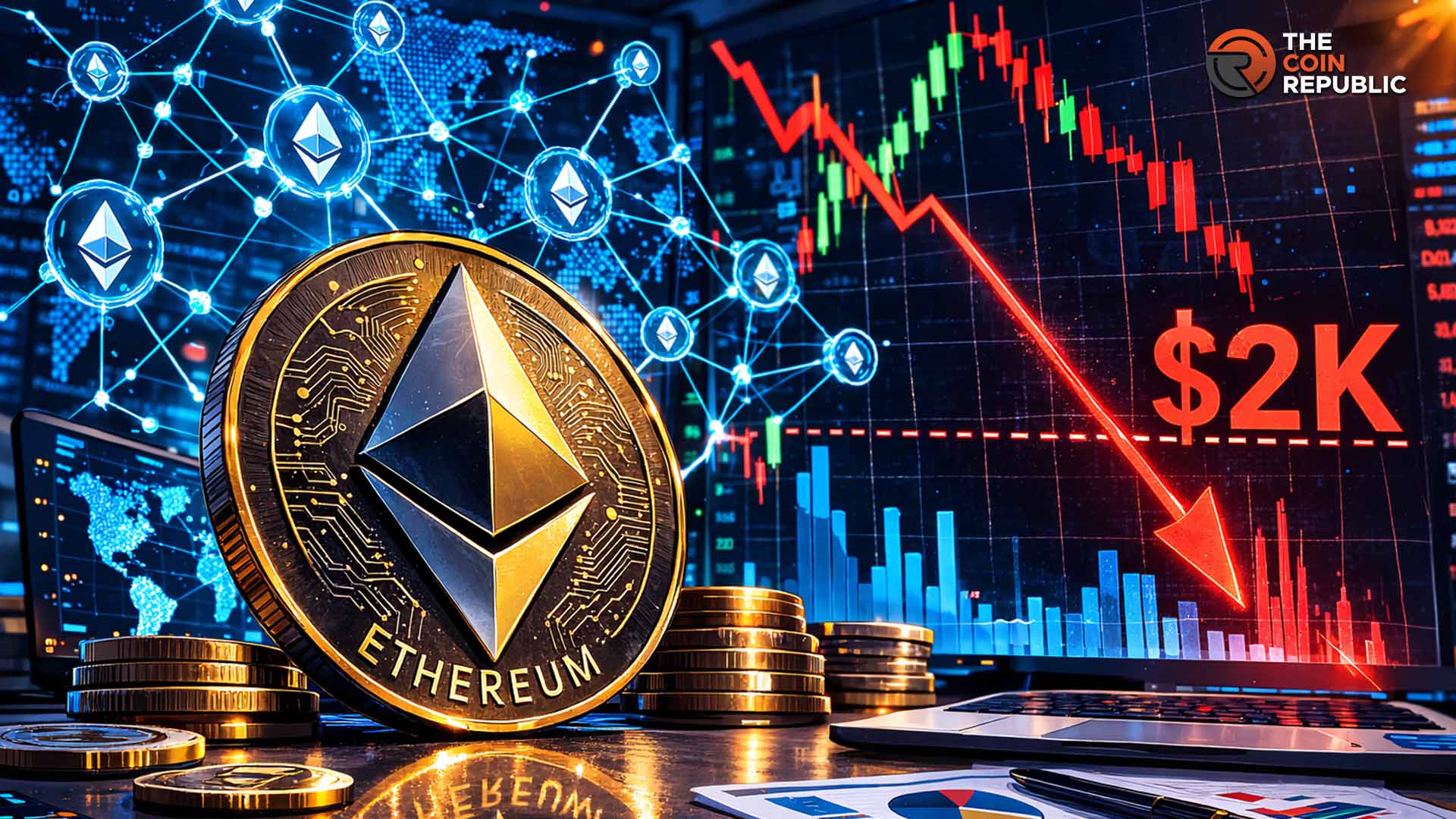
Despite a recent price drop below $2,000, Ethereum's network activity has surged, with daily active addresses reaching 1.1 million in February, indicating accumulation by long-term holders and potential for future price appreciation. The significant increase in staked Ether (37.85 million) and decreasing exchange reserves suggest a tightening liquid supply, which could amplify price movements when demand returns. Ethereum is approaching a key resistance level, and its ability to break through or hold the current support zone will determine its short-term trajectory, with the 21-week EMA near $2,700 as a potential target if momentum builds.
Prediction markets indicate a significant probability, with odds ranging from 65% to 71%, that Bitcoin will fall below $55,000 by the end of 2026, reflecting current market sentiment and macroeconomic concerns. Despite the bearish outlook on price, traders on prediction platforms show low conviction, under 15%, for MicroStrategy to sell its substantial Bitcoin holdings in 2026, suggesting continued accumulation by major corporate holders. Recent net negative flows into US spot Bitcoin ETFs, particularly from Fidelity, coupled with broader macroeconomic uncertainties, are contributing to downward pressure on BTC price, signaling a cautious investor sentiment.

Bitcoin's price discovery has structurally shifted from spot demand to a derivatives-driven market, influenced by futures, options, and ETF hedging mechanics. The increasing correlation with traditional risk assets like the Nasdaq highlights Bitcoin's integration into global macro portfolios, amplifying volatility during liquidity cycles. While scarcity remains a core attribute, Bitcoin's marginal price is now largely set by liquidity dynamics and the cost of capital within the derivatives ecosystem. The evolution of financial products, including ETFs and derivatives, is transforming Bitcoin into a portfolio building block, enabling more sophisticated investor strategies and risk management.
Historical FOMC patterns suggest potential Bitcoin price declines of 6% to 30% in 2026, targeting levels around $67,000 or even $50,000. A dense liquidity cluster in the lower price range acts as a magnet, indicating that downside pressure may persist until these leveraged positions are cleared. The confluence of recurring FOMC selloffs and liquidation heatmap analysis points to significant downside risk for Bitcoin in the near to medium term.
The massive 20 million XRP on-chain transfer at an ultra-low fee highlights XRP Ledger's efficiency for institutional-grade settlements, reinforcing its value proposition for liquidity providers. Recent whale accumulation of XRP, coupled with Ripple's expansion into Brazil and potential VASP license, suggests growing confidence and strategic positioning ahead of potential catalysts. The convergence of institutional interest, such as Evernorth's Nasdaq listing plans, with on-chain activity and global expansion signals a maturing XRP ecosystem and potential for deeper integration with traditional finance. While the large XRP transfer itself is not a definitive signal, its timing and efficiency, alongside broader ecosystem developments, indicate XRP is entering a period of heightened activity and market attention.

The ECB's proactive search for experts to integrate a digital euro into existing payment infrastructure signals a significant step towards potential adoption, indicating a shift from theoretical planning to practical implementation. While the ECB focuses on a digital euro, the parallel development of the Qivalis project by European banks highlights a growing interest in stablecoin solutions for blockchain payments, potentially creating a competitive landscape. The ECB's preparatory work and potential 2029 rollout timeline suggest a long-term strategic play in digital currency, which could influence traditional financial systems and digital asset integration over the next several years.
AI chips need DRAM and HBM, and Micron is a key supplier. Check 2026 price targets, earnings forecasts, and risks before betting on more upside in MU.
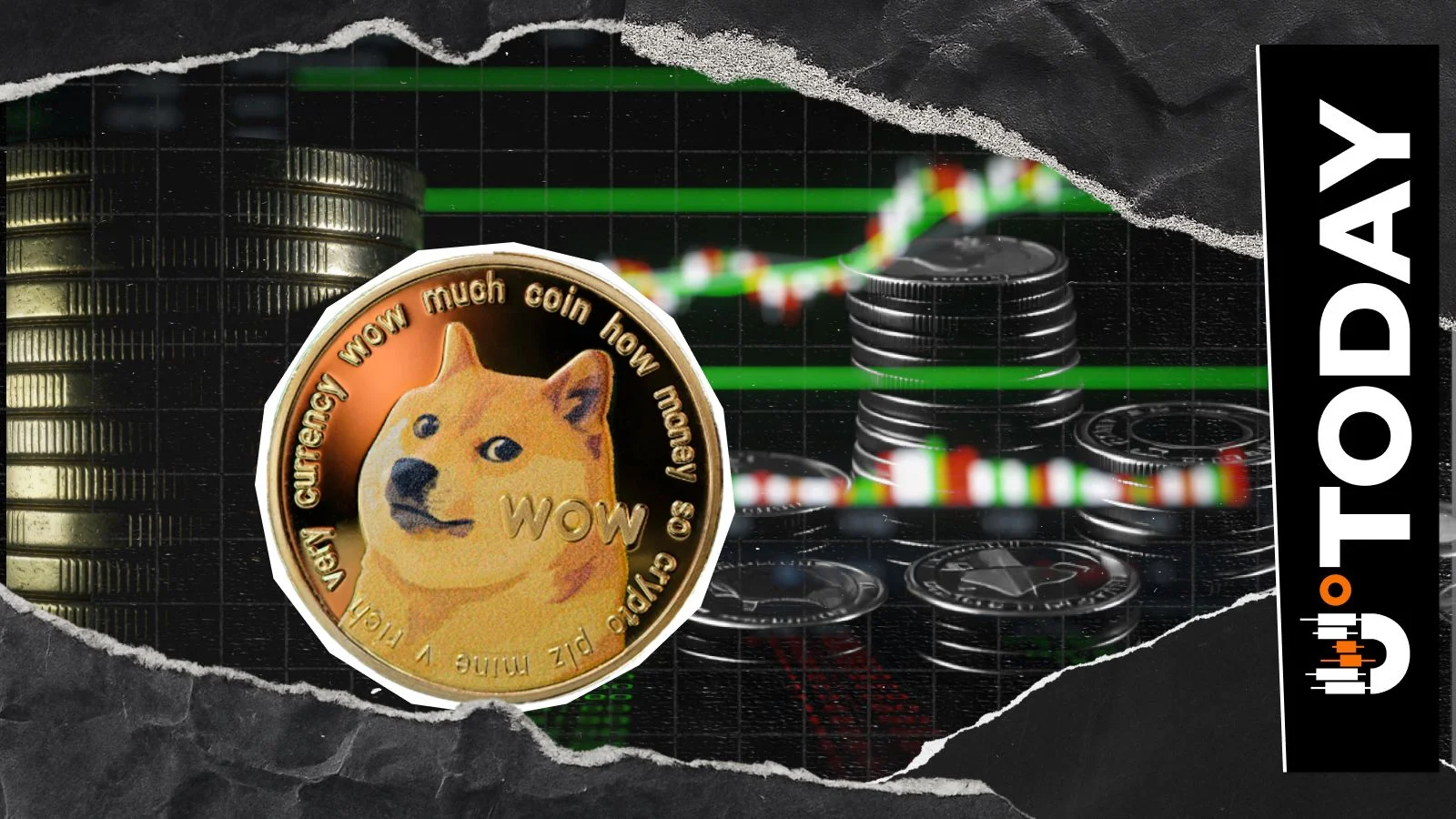
Dogecoin futures open interest hints at a likely price reset as DOGE falls below $0.10.

Significant open interest in deep out-of-the-money Bitcoin put options suggests traders are employing volatility strategies or selling premium rather than outright bearish bets. Despite geopolitical tensions, the overall options market sentiment remains slightly bullish with a put-call ratio below 1, indicating more call options are being traded. The concentration of open interest at $75,000 and $125,000 strikes alongside the $20,000 puts indicates a wide range of market expectations, from upside potential to tail-risk hedging. The $20,000 put option's popularity, while appearing bearish, is likely a premium-selling strategy due to the low probability of such a drastic price drop, suggesting a focus on income generation or volatility plays.

Michael Saylor reiterates Bitcoin as the 'ultimate hedge against chaos' despite recent price drops in BTC, gold, and silver, signaling conviction in its uncorrelated value proposition. Bitcoin's recent price decline to $69,190, a drop of over 8.5% in 24 hours, contrasts with its prior surge to $76,000, indicating market uncertainty and a flight to USD amid geopolitical and policy concerns. MicroStrategy's significant Bitcoin holdings are currently showing an unrealized loss of 8.44% based on an average purchase price of $75,696, yet Saylor views this as an entry opportunity rather than a signal to exit.
Rivian's stock rally is underpinned by a stronger 2026 delivery outlook and the upcoming R2 SUV launch, signaling a potential inflection point for the EV maker. The strategic partnership with Volkswagen, including up to $5.8 billion in funding, provides crucial capital and manufacturing support, aiming to significantly reduce costs and accelerate platform development. Analysts view 2026 as a critical 'inflection year' for Rivian, with R2 deliveries and VW cash infusion targeting substantial improvements in automotive gross margins by 2027. The stock has transitioned from speculative to a high-beta execution play, with its valuation now dependent on Rivian's ability to meet delivery targets, execute the R2 ramp-up, and successfully integrate the VW joint venture.

The CFTC's first information-sharing agreement with a professional sports league, MLB, signals a growing regulatory framework for prediction markets tied to real-world events. This collaboration with MLB and Polymarket as an exclusive partner aims to enhance the integrity of prediction markets by mitigating fraud and manipulation risks. The establishment of a federal regulatory approach for prediction markets, as opposed to state-by-state regulation, simplifies compliance and potentially encourages broader adoption.
Gold has experienced an 8% pullback from recent highs, driven by shifting interest rate expectations and hawkish Fed commentary, which has increased real yields and strengthened the dollar. Despite the short-term correction, major financial institutions maintain a bullish outlook for gold, forecasting a return to higher price levels by year-end, supported by anticipated Fed rate cuts and continued central bank demand. The primary risks to the bullish gold narrative include prolonged high interest rates, a stronger dollar, and a significant slowdown in inflation, which could lead to extended consolidation rather than an immediate resumption of the uptrend. The current pullback is interpreted as a classic bull-market correction within a larger uptrend, rather than a definitive cycle top, suggesting potential buying opportunities at support levels.

US regulators are signaling a bifurcated future for on-chain dollar equivalents, where bank-issued tokenized deposits will retain FDIC insurance while payment stablecoins will not, potentially shifting competitive advantages back to traditional finance infrastructure. This regulatory distinction could lead to market segmentation, with stablecoins potentially dominating open, permissionless networks for payments and transfers, while tokenized deposits become the preferred instrument for institutional settlement and regulated asset markets due to their insured status. The FDIC's proposed stance creates a clear competitive dynamic: banks can offer insured on-chain money, while non-bank stablecoins may lose a key differentiator, forcing them to rely on network effects and programmability to maintain market share.

A Coinbase subdomain linked to its Commerce tool reportedly directed users to a withdrawal page asking to enter their seed phrases, raising concerns among security observers.
Evernorth's planned Nasdaq listing via SPAC, backed by significant institutional funding including Ripple and SBI Holdings, aims to create a regulated XRP treasury, potentially unlocking new avenues for institutional XRP exposure. The development leverages recent regulatory clarity classifying XRP as a commodity, which could reduce perceived risk and encourage broader adoption of XRP-related financial products. While the SPAC merger and treasury strategy are positive developments, XRP's price action remains constrained below key resistance levels, suggesting that market sentiment is still cautious despite fundamental and regulatory improvements.

Tether's new AI framework enables large language model training on consumer smartphones, potentially democratizing AI development and reducing reliance on centralized cloud providers. The framework's use of BitNet architecture and LoRA fine-tuning significantly lowers memory requirements, making AI model development more accessible and cost-effective. This development aligns with a broader trend of crypto firms investing in AI infrastructure, signaling a convergence of blockchain and artificial intelligence technologies. By supporting non-Nvidia hardware and mobile GPUs, Tether's initiative aims to decentralize AI compute power, challenging the dominance of traditional high-performance computing setups.
Find out what analysts expect for PulseChain in 2026, with realistic price forecasts, token supply insights, and long-term market outlook.
Signal context only. Validate with price action, liquidity, and risk limits before taking a position.
Quick market read from this story
The Bank of Japan's decision to maintain interest rates at 0.75% amid global instability and rising oil prices creates a stable, albeit cautious, monetary environment that could indirectly support risk assets like Bitcoin and Ethereum as investors seek yield.
While the BOJ's pause might offer some stability to crypto markets, the underlying global tensions and potential for future rate adjustments mean that the impact on Bitcoin and other cryptocurrencies remains uncertain, warranting a watchful approach.
The article notes a recent 4.47% dip in the overall crypto market, with Bitcoin falling from $76,000 to $70,223, suggesting that broader market sentiment and macroeconomic factors, rather than just the BOJ's decision, are currently driving price action.
Deep Dive
The Bank of Japan (BOJ) has decided to maintain its benchmark interest rate at 0.75%, pausing after a previous hike that brought rates to a 30-year high in December 2025. This decision comes amidst escalating global tensions, particularly in the Middle East, and a surge in oil prices, which are creating market instability and impacting Japan's economy.
Governor Kazuo Ueda cited intensifying risk scenarios as the primary reason for the pause. The central bank is closely monitoring the impact of the Middle East crisis, which has led to concerns about supply disruptions and a sharp increase in oil prices. As Japan is heavily reliant on imported fuel, these rising costs pose a significant inflation risk and could hinder economic growth. Additionally, the Japanese yen has weakened against the U.S. dollar, and Tokyo stock markets have experienced declines, further contributing to the cautious approach.
The BOJ's decision to keep interest rates steady could have a mixed effect on the cryptocurrency market. Stable interest rates in major economies can sometimes encourage investors to seek higher returns in riskier assets like Bitcoin and Ethereum. This comes as the broader crypto market has seen a decline of 4.47%, with its total market value falling to approximately $2.43 trillion. Bitcoin has recently dropped to $70,223 from a high of $76,000, while other major cryptocurrencies such as Ethereum, XRP, Solana, and Dogecoin have experienced losses between 3% and 6%. This market downturn follows the U.S. Federal Reserve's recent decision to also keep its interest rates unchanged.
Amundi's launch of a $100M tokenized fund utilizing Chainlink for data integrity signals significant institutional adoption of blockchain technology within regulated European frameworks. The integration of Chainlink's oracle services for NAV data on-chain highlights the critical role of decentralized infrastructure in bridging traditional finance with blockchain for tokenized real-world assets. The fund's operation across Ethereum and Stellar, coupled with low entry barriers, suggests a broader trend towards increased accessibility and efficiency in institutional-grade digital asset products. Market sentiment indicates that this level of TradFi adoption, particularly from a major asset manager like Amundi, may still be undervalued by the broader crypto market.
